Hey Church, Rethink Your Theology on Mental Health – Questions & Answers Part VI


The Church’s Steps Toward Recovery

Question:  How can the Church offer compassion to those facing Mental Illness?


Today we continue asking questions that need answered in order for the Church to make steps towards it own recovery in mental health?

Answer.  Jesus had his daily routine interrupted by a funeral procession led by a grieving mother of an only child that died.  He was “moved” with compassion and raised the child from the dead.  One of the most famous quotes from the Bible for kids having to memorize Bible versus is, “Jesus wept”. He was “moved” with compassion.   When seeing the multitude following him in the dessert with no food, He was “moved” with compassion for them and the miracle of the fish and the loaves occurred as he met their physical need by feeding them.

I like the verb “moved” beside the words “with compassion” because it infers that an “action” is associated with the emotion.  When “compassion” is released, it requires an action, not just a passive emotion. Often at funerals we say, “I feel sorry for your lost,” but we are not really “moved” to do anything about that, often because we do not know what to “do” to relieve their grief at that time.  The Church finds itself often in the same place today with Mental Health because it does not know what to “do” to show “compassion” to those struggling with mental illnesses.  What can we “do”?

I do not say this out of judgment.  There was a time when I hated visiting someone ill in the hospital because I did not know what to do or say. Saying something stupid like, “How are you feeling today?” deserves a stupid answer like “Great! That is why I am in here, you idiot!”  I had to learn that words did not show compassion toward the sick just my “presence” did because I was “there” for them, or a “touch” knowing that I was “near”.  The same is with mental illness as physical illness, for those suffering just need someone “there”, someone “near” when they feel detached, alone, in a dark place, isolated, scared, insecure, frightened, crying out for help.  The Church’s presence can go so much farther than its judgment.

“Understanding” and “reason” is not effective when showing compassion toward the mentally ill.  You do not have to understand why they are ill, or how they are ill, or try to figure everything out, and there is no reasoning with the one who is detached when ill.  To be effective just be “there”, be supportive, often not even “understanding” what is happening nor questioning why it is happening, but just being there. 

If no one is there, government services, churches, family or friends, homelessness is a very viable option, a distinct possibility. Governments have closed their mental health institutions, churches have isolated, families have abandoned, and the streets become the only option left.  Isolation, detachment, and numbness are common feelings among the mentally ill.  To show compassion the Church, we Christians, must be there for them, so they are not alone where they can endangering themselves or others, or even threatening their own life.  We can and must not detach our selves from their experience because of stigma, but be supportive, and we must “care” during the numbness; the isolation, the hurt; that is compassion. 

Often the caregiver, family, or friends become the victims by the one who is ill. The one ill will argue, blame, and try to control the very people who are trying to help them, their support system, and it is hard to stand by someone who is attacking you, blaming you, controlling you!  There is where compassion is powerful when reaching out to the person in spite of how they are feeling or treating you in their detached ill state. That is unconditional love.  Compassion is “feeling” for the person who is hurting who claims they have “lost all feeling.”  Compassion is not reciprocal! It is “moving” in the direction of helping, caring, and unconditional loving the one who is hurting, who is ill.

Will someone who is facing mental illness interrupt your well-planned, courteous church service? Possibly, no probably, but will you still love them, visit them, actually invite them back, or will you reject them, ostracize them?  Will someone who is facing mental illness begin blaming “the church” for everything and anything? Yes, that is a given, for they do it to anyone, especially to those who are caring, when they are ill, calling out to the very person whom they are victimizing for help!  If you aren’t going to be there for them, who will?  Will someone who is facing mental illness be manipulative? Again possibly or even probably, but can you love them through their manipulation, for only unconditional love breaks those manipulative patterns. Even Jesus’ disciples tried to manipulate him into picking themselves to sit on his right or left in his kingdom, but he saw through them, into them, and unconditionally walked with them through their life’s journey in spite of who they were or what was their background.  We say that believers in Christianity are disciples of Jesus, even those facing mental illness who have had at some time made a profession of faith, so why would Jesus not walk with them through their life’s journey too? So why would the Church not walk with them through their life’s journey too?


Hey Church, Rethink Your Theology on Mental Health – Questions & Answers Part V


The Church’s Steps Toward Recovery

Question:  What does the Church have to offer the Mental Health field?


Today we continue asking questions that need answered in order for the Church to make steps towards it own recovery in mental health?

Answer:  Most often, the Church has opposed the Mental Health field rather than support it, but on the other hand the Church is use to majoring in opposition with in its own ranks bringing division and ineffectiveness.  How can I expect the Church to be effective in the world with their support organizations and systems if it cannot even be effective supporting one another under its own umbrella?  Those are hard questions the Church needs to answer and to which I do not have answers that are not controversial.

I have been taught as a child that “Jesus is the answer”.  Andre Crouch use to sing “Jesus is the answer for the world today. Above Him there’s no other; Jesus is the way (the truth and the life).”  If Jesus is the answer, and Jesus exemplifies himself through his body, the Church, then the Church must come up with answers on how to minister to the mentally ill and those effected by the dreaded disease if they are to offer “Jesus” to the hurting, the confused, those in darkness who cannot comprehend the light at the moment.

Offering Jesus sounds so simplistic.  Is it? Or is it complex?  The Church majors in the complexity of simplicity; nothing ever seems to be “simple”.  We talk about the “simple truth of the gospel”, but when defining it, it becomes rather complex. What is that “simple truth”? What does the Church have to offer the field of mental health that secular social, governmental, and private organizations don’t?  Apparently something, since the mental health field is beginning to be open to a “faith base” influence to mental health.  They are willing to explore the possibility of allowing “faith base” to be part of the solution.  Is the Church willing to be open to work with the secular, scientific, and medical field in an effort to be part of the solution, or will the Church continue to be elitist, aloof, not understanding or sympathetic and uncooperative due to religious beliefs, theology, or even dogma? Some more hard questions for the Church to address!

The Church has the following to offer the mental health field: faith, hope, love, compassion, mercy, grace, a helping hand to the hurting, the poor, the homeless, healing, deliverance, and understanding self esteem on knowing who you are.  More questions arise in how the Church is not only to be the “professor” of the faith and these offerings, but doers of them.  How does the Church release this faith, not only spiritually, but practically in the ever day lives of people facing and fighting mental illness.  Those are the hard questions we have to face as the Church. 


Hey Church, Rethink Your Theology on Mental Health – Questions & Answers Part IV


The Church’s Steps Toward Recovery


Question:  If the “care taker” of someone (physically or mentally) ill doesn’t “take care” of the “care taker”, then eventually no one will be able to “take care” of the one ill!  So how can the Church support, or “take care” of the “caretaker”?

Today we continue asking questions that need answered in order for the Church to make steps towards it own recovery in mental health?

Answer:  I was shocked when nine individuals came together to form the Bachman Bipolar Bear Club, a group of friends, personal family, and religious family members, whose top priority was “to get me (the care giver) back to work (after a 5 month leave of absence) to bring sanity and “normalcy” back into my life, and secondly to support my wife through her recovery.  With my wife’s illness, not only had she become the “victim” of the disease, but so had I, my children, and all who knew us.  We all had been affected by this disease, which directly changed and altered our lives. 

The caretaker, me, was experiencing physical, mental, and spiritual burn out, exhaustion.  Trying to do it all on my own with no support was beginning to bring tragic results to my health and well-being. Not only did my wife need help, but so did I.  Some advised that I now needed “professional help”, but together we were already seeing nine different professional medical doctors (with only me again, the caretaker, being the coordinator integrating all nine different medical voices talking at us) and were forever going to “appointments” as if that was our only social life, filling up my calendar, and, by the way, was sifting me financially. 

The Bachman Bipolar Bear Club met formally only once weekly for only one hour, yet that hour became monumental in my well-being, because through them I got advice, literally personal support during crisis, directions when it seemed that I hit nothing but road blocks or became stagnant, stuck in the place I found myself. The group gave me badly needed assurances and encouragement of what I was doing, hope when faced with hopeless situations, and a badly needed hug when all I needed was a physical touch, something my ill wife could not give me while she was in the depths of her abyss.

As you can see from my past blogs that I believe in the five fold ministry (Ephesians 4) of the Church, and as a caregiver I needed someone from the Church to offer me pastoral care, the day to day oversight of my personal walk through all these daily challenges.  The walking out of my daily life!  I could have used a person with an “evangelistic” point of view to help “birth” or “rebirth” new ideas, strategies, etc. especially when I got stuck and seemed to be in no movement forward. I needed a prophetic word giving me Rhema, living truth in how I can walk out my faith through these trials, rather than receiving only the Logos word, which usually brought judgment, the last thing one needs when working with depression.  I needed an apostolic person to help oversee the maelstrom in my life, to calm the storm, to help coordinate the advise me on how to handle the opinions of nine different doctors in different specific medical fields who often contradicted one another.  I needed the Five Fold, the Church that I have propagated in over 175 blogs now! 

Are we willing, as a Church, to lay down our theological differences and misuderstandings to serve those in need.  We spend so much time being divided by our differences, that it hampers our effectiveness as the Church, “one body” as Paul calls it.  Are we willing to have new mindsets on how the Church should minister or serve?  Are we willing to “equip the saints for the work of service” as the Ephesians 4 commands us to do?  As a Church are we willing to develop the five fold, so that we can serve out of our diversity, that  are actually our strengths? Oh, I thought I was giving answers (which I am), but look at all the questions that arise!  Let’s, as a Church, face these questions so that we can give positive effective answers on how the Church must face mental health.

“What does the Church have to offer the Mental Health field?” is the question we face tomorrow!


Hey Church, Rethink Your Theology on Mental Health – Questions & Answers Part III


The Church’s Steps Toward Recovery


Question:  Who should be the “care taker” of someone fighting mental illness?

Today we continue asking questions that need answered in order for the Church to make steps towards it own recovery in mental health?

Answer:   In the past it would be easy for me to say the government because the Church hasn’t, but with budget cuts and governments facing fiscal challenges, many government and private mental health facilities and organizations are facing scaling back or even eliminated services.  The Church has always been instructed to take care of the poor, the widows, those in need.  Often in mission fields, missionary doctors birth and develop hospitals in third world countries. Orphanages are built and maintained (even though amazingly they have slowly disappeared in the United States).  But the government and the Church are organizations, so it is easy for individual, Christian or not, to count on the charity of organizations rather than on personal charity to help people in need.

As I have said earlier, the U.S. government is founded on the principle of “we, the people,” and the Church is built on “we God’s people”, but the bottom line is “the people”, not the “organization”.  The “organism” is always more effective than the “organization”!  So what are “we” or “I” to do should be our question. Our use of pronouns must change. “What can ‘I’ do, or what can ‘we’ do, rather than what should ‘they’ be doing?

As a care taker, the most effective, empathetic, acts of kindness and support that have come to me as the caretaker, and my wife as the person ill, has come from individuals, not from the Church or from local or state governmental agencies, who were willing to ban and bond together as a support, advisory group to help me as a caregiver maintain my “sanity” while helping my wife towards recovery.  The bottom line as an answer to this questions is “I”, and “you” personally, are called to be “care takers” for the hurting, and together “we” can make a difference without government regulations or Church dogma or doctrine.

Tomorrow's Question:  If the “care taker” of someone (physically or mentally) ill doesn’t “take care” of the “care taker”, then eventually no one will be able to “take care” of the one ill!  So how can the Church support, or “take care” of the “caretaker”?


Hey Church, Rethink Your Theology on Mental Health – Questions & Answers Part II


The Church’s Steps Toward Recovery


Question:  How can the Church as “the light, set on a hill” give illumination to one in so deep a valley of darkness?

Today we continue to ask the questions that need answered in order for the Church to make steps towards it own recovery in mental health? We will continue look at these questions over the next several days.

Answer: Wow, another tough question that raises more questions than answers.  As I stated in an earlier blog, the Bible says, “darkness does not comprehend light”, which through personal experience as a caregiver and spouse of a loved one who has been in the numbing, dark, abyss of all consuming darkness, I know that it is true.  Humor cannot bring one out of severe depression, nor words of hope, nor broad smiles, nor telling one suffering to just “suck it up”, “pull yourself up by your bootstraps”, “rise above your struggles”, etc. When a person is in a severe state of their illness, they cannot find a way out, thus calling for help through all kinds of signals and sometimes even suicidal. No other disease can put the one ill and those around them in such physical dangers as mental illness does. 

You cannot “rationally” talk someone out of their deep depression, so it is no time for theological debates or sermons.  The only thing as a Christian or Church you can do is the pastoral aspect of empathy, compassion, mercy, love, and care taking.  During times of crisis, it is imperative to seek medical help, but after their release from the hospital, it becomes the care takers responsibility to take care of the loved one (if the one ill is fortunate enough to have a caregiver, or homelessness can be a viable option).  This is when the Church can make a presence reaching out to the caregiver and the victim of this illness.

Tomorrow we tackle the question of “Who should be the “care taker” of someone fighting mental illness?”


Hey Church, Rethink Your Theology on Mental Health – Questions & Answers Part I


The Church’s Steps Toward Recovery


Hopefully the last series of blogs has been informational and challenging when facing mental health.  It has made me as a Christian, and hopefully us as the Church rethink our theology and impact on mental illness. We have not had a good track record historically with demon possession, shackling people in jails, or witch hunts, so it is difficult for the world to perceive a compassionate, empathetic, forgiving Church that extends grace and mercy instead of judgment in the name of religious righteousness.  What are some of the mindsets that we need to change or at least need to ask questions about? What are the questions that need answered in order for the Church to make steps towards it own recovery in mental health? Let’s look at these questions over the next several days of blogs.

Question. Is mental illness a “spiritual” condition?

Answer: To a tough question comes only complex answers. Although man is both body, soul, and spirit, we are talking about a disease that attacks all three of those areas.  It attacks the mind, part of our physical body, which research clearly supports today.  It directly effects the soul, our emotions, often through mania or depression, mood swings, etc.  It challenges the very core of our spirit, effecting our perception and belief and moral system, our ethics, and our religious convictions. Curing mental illness is not just “facing ones demons”, relieved only by “casting out demons”, as the Church has practiced in the past, but today is a process of healing of one’s physical brain and how it chemically and electronically works, dealing with one’s emotions caused by the body’s release of stimulants, transmitters, electrical impulses, etc., and relying on one’s faith to help one through “the valley of the shadow of death” as the 23rd Psalm so clearly states.

Tomorrow's Question: How can the Church as “the light, set on a hill” give illumination to one in so deep a valley of darkness?


Mental Illness And Prevention! Is There Such A Possibility?


“Prevention” for Mental Illness?


If mental illness is biological, can it be prevented?

If mental illness is hereditary, can it be prevented?

If mental illness is a mutant gene, can it be replaced?

Should or can “prevention” even be a part of the mental health vocabulary?

In the physical health world of medicine, prevention is a vital part of their programs, for prevention saves millions of dollars in the Health Care world.  We are taught how to prevent heart disease, lung disease, high blood pressure, obesity, etc., but in the mental health world do we talk about preventing a major bipolar or schizophrenic attack?  After full blown episodes we talk about “preventing” another serious setback, or relapse, through medication, diet, exercise, cognitive therapy, etc., but we don’t talk about preventing that first serious blow partially because the psychiatric world can only identify or diagnose the illness after it is full blown.  Maybe the psychiatric world needs to rethink or take a look at the signs that appear early and them prevent what today we think is the inevitable.  A person mentally ill with severe depression emits signs and signals before a suicide attempt, but cannot stop the downward spiral towards that attempt unless they get help quickly and early. A suicide attempt can be and must be prevented. But seeing the signs, understanding the meaning of the signs, and knowing what to do can “prevent” a catastrophe.

As Martin Luther King said, “I have a dream”, but instead of being “on top of the mountain”, I had to first go through “the valley of the shadow of death” to catch a glimpse of this dream. To think that the dream created in a valley not to be a nightmare!  While teaching NAMI’s (National Association for the Mentally Ill) Family to Family class locally, I have heard stories from parents whose children were brilliant, creative, artistic, career motivated, college bound, only to see them derailed by a mental illness which hit them while in college or in their early years. Promises of careers and academic success became shattered dreams, now unrealistic goals, and disappointments.  All have shared that foresight reveals symptoms, signs, signals given, oh so subtly, while in one’s high school years or even earlier.  

I am hoping to put together with another peer an educational in-service program targeted at public high schools and colleges.  It would tip off art teachers of the brilliant colors seen through mania. Tip off English teachers of the dark side that can be revealed through writing and poetry.  Tip off the faculty and staff of the dangers of isolation in a peer-approval atmosphere when a teen. Give tips on how to communicate with someone facing depression or even suicidal, and give hope and offer help through whatever facilities, groups, or services are locally offered.

When the shooting occurred at Virginia Tech several years ago, I knew at the moment what happened.  There were signs of the young man’s illness that were not picked up by his high school teachers, his Resident Counselor or the college campus staff.  I do not even know what services the college had in place on campus for a student like him at that time.  At universities where there are tens of thousands of late teens, early twenties students, I can not help but think of the number of students there, on their own, alone, with the chance of isolation and pressures to academically produce, who may be fighting a mental illness.  Can they get help before spiraling towards suicide or a drastic measure like happened at Virginia Tech?  Can you imagine a student who is taking medication facing the “party” atmosphere of almost every major university in this country. Medications, experimental drugs, and drinking are a dangerous mixture causing disaster.

If students are identified early, before they have a crisis, medication, good health tips, exercise, being around an encouraging, empathetic, compassion, understanding support system of friends, personal family, educators, a religious community, a student could be prepared when going it alone in a new, challenging, pressure packed world of higher education.

All this would be prevention. As an educator by profession, I have been trained what to do if a student talks about death, suicide, etc., but never been taught about early symptoms, warning, etc. where a full blown mental illness attack or even a suicide attempt could be prevented.

Although in its incubation stage, I have a dream. We will see what develops this year!


Mental Illness And Intelligence? Recovery For Only The Intelligent?


From Beautiful Mind, to House, to…..


It is interesting to see how Hollywood has portrayed mental illness in the last several years. The character of Prof. Nash in Beautiful Mind is a portrait of the power of intelligence over disease as he is willing to “ignore” those schizophrenic characters in his life than remain on medication that dulls his intellect.  The film shows his efforts to fight off his demons, his multiple characters that influence him, and the struggles they create, yet in the end he dominates them, appearing to have a very “normal” life, in fact, better than normal life when receiving the Nobel Prize.

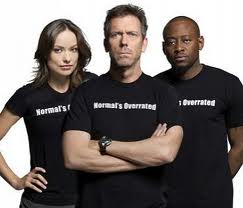
The television program House has not been afraid to have their egocentric main character, Dr. House, end up in a mental ward fighting drug addiction and his own personal pain.  The hospital psychiatrist, also very intellectual, knowing his profession well, hooks horns in the battle of the intellectuals with House.  At the beginning of last season, it appeared that Dr. House was making progress socially, emotionally, and psychologically, but as the season progressed, he “relapsed” into his old character again.  The smartest, most successful, ingenious doctor in the hospital is allowed to be mentally quirky because of his professional results.  People, particularly the staff working with him, allow him to be constantly on the edge of egotistical insanity because he is a genius.   Again it appears that “intellect” can overcome insanity issues.

In my past several blogs I featured Kay Redfield Jamison and Elyn Saks, both are intellectuals in their own right, distinguished as leaders in their fields of expertise, who Charlie Rose is mesmerized with.  He marvels that two intellectual leaders in their professions can have a mental illness yet be so highly successful.  It is a marvel to many of us who have loved ones faced with an illness.

It is hard on a parent to see their child in his/her twenties stricken down with a bipolar or schizophrenic attack, or any of multiple mental diagnosis.  Their dreams, as well as their child’s, are shattered, because with mental illness comes limitations.  A successful father with college degrees stricken in his late forties who is reduced to be unable to hold down a simple job is disastrous.  My wife, who owned and operated her own business, can no longer hold a full time or even a part time job has been a shocker to me personally.

But even Kay Redfield Jamison and Elyn Saks will admit that in spite of their successes, they still have limitations due to their disease. Learning to manage your illness, working with in the limitations presented, continuing a medication regiment needed, can all add up to a productive life.  People severely ill, need our help, but most can move forward toward recovery in a productive life of independence not depending on society.

Intelligence deals with the brain; mental illness deals with the brain.  Beyond that, the similarities cease.  Mental Illness strikes those highly intelligent and those with lower intelligence.  Intelligence can be diminished by a mental disease.  In spite of what Hollywood portrays, I find no evidence that intelligence can “overcome” mental illness.


Grief vs. Depression; Loss vs. Disconnect


Mental Illness Raises Many Questions Spiritually

Questions about Mental Illness And The Christian’s (Church’s) Perspective


Charlie Rose, P.B.S. Charlie Rose ShowYesterday we looked at the medical and genetical perspective of mental health, problems caused, and hope for the future. More questions were probably produced than answers.  Today let’s look at some of the spiritual impacts:

In that same Charlie Rose program on mental health, Kay Redfield Jamison of Johns Hopkins University who leads research on Bipolar Studies, who herself is bipolar, had some interesting insights. The following is from the excerpts from the transcript of this show.

            KAY REDFIELD JAMISON, JOHNS HOPKINS UNIVERSITY: Yes.  Yes.  There’s nothing more motivating in life than nearly dying from an illness, which I did because I tried --

                  CHARLIE ROSE:  Because you know a lot about it. 

                  Kay Redfield Jamison, Johns Hopkins University, Researcher & ConsumerKAY REDFIELD JAMISON:  Because you want to know more.  You really -- you’re a little impatient with the pace of the field, and it’s very motivating.

KAY REDFIELD JAMISON:  You look at how society responds to you if you’re depressed as opposed to grieving.  Everyone can reach out to you -- or almost everyone, unless they’re complete creeps. 

       (LAUGHTER)

       But for the most part people will really reach out to you if they know you have undergone a loss like a death.  And they will do so.  And those rituals will work for a while, not totally but they will work.  And society has evolved ways through religion and friendship and so forth to do that. 

                  In depression people avoid you because it is -- first of all, depression is contagious, the mood is contagious.  And secondly they have a real sense that they can’t connect.  They cannot make a connection with you, you cannot makes a connection with them. 

What an eye opener!  That program gave me a new insight and perspective in the difference between grieving and depression.  In the church, pastors are trained about grief, how to handle funerals properly, how to comfort those mourning, but in the world of mental health with depression there is a total disconnect with the person, and often a disconnect with those trying to reach out to them.  Someone with depression experiences emotional, psychological, and spiritual death while still alive and do not know how to express it, and we, usually, are clueless on how to address it. They can’t emotionally connect with us if they try!

                  Grief:  a touch, holding one hand, a hug, just your presence can bring comfort.

                  Depression: everything emotionally is at a distant, so far, so deep, it is ineffective.

                  Grief:  a word of encouragement, sympathy cards, flowers, etc. are expressions of hope beyond the grave, a hope to move forward from a loss.

                  Depression:  how can you express hope to someone who has lost all hope, disenfranchised themselves from any meaning of hope, even to the point of wanting to take their own life in their hopelessness.

                  Grief:  Even though it comes and goes, grief is still temporal.  Eventually a person comes out of it, faces it, and often overcomes it.

Depression:  It seems to be never-ending, and if untreated leads one into an abyss.

Grief:  Grief can establish relationship, good memories of those lost, feeling good about the relationship one had with the one lost.  It is something you work through.

Depression:  With depression comes nothing but bad memories, guilt, isolation, low self esteem and worth, etc., etc.  It seems like something you can not work through, being hopeless.

As a Church, we have been trained to handle grief, but not major depression. Because of this, a stigma exists about depression; there is no stigma with grief.

Grief Face To Face With Depression:  I personally have discovered that when a loved one is going through depression, the care taker experiences grief, a cruel grief because their loved ones are physically alive, but emotionally disconnected or dead. It’s tough grieving for the living!  In past blogs I have shared how my wife’s illness fragmented how she saw me: the caregiver, the cook, the friend, the person performing household chores, etc.  I was heartbroken, grief stricken when she looked me in the eye and asked, “Where is Anthony, my husband. I cannot find him. I am so confused.”  I felt grieved at my loss, but still had the hope that she would find me again some day. She was depressed, disconnected, disenfranchised from what was happening around her life.  She literally could not find me, her husband. Her experience was totally different from mine, a hard principle to have learned.

Our local church knew my wife for her vibrancy, her strong faith, her warm encouragement, her sensitivity and compassion for the hurting, but did not know how to respond now when she hurt because of the disconnection brought about through the depression.

New questions: 

  -  How are Christians individually, and the church as a whole, to react to someone who was connected so intimately with us when healthy, now disconnected due to a depressive illness?

  -  What are we as Christians individually, and the church as a whole, to do to help a grieving caretaker (a spouse, a parent, a child, any family member) in their time of grief while they are reaching out to their living dead?

  -  How are we to embrace the disconnect associated with depression?

  -  The Church is all about relationships, but how do we handle the broken relationship due to depression?

  -  How can we help save a marriage fragmented by a cruel disease when one realizes that the person they are face to face to is not the person they married?  They are the person you married, but now face the cruelty of mental illness.  When faced with cancer or other deadly physical diseases marriages can become strained, but they can also be strengthened and even bonded better through the illness, but the fragmentation, the disconnection that occurs due to mental illness is usually lethal.

  -  In a depressive world of extreme consuming darkness that we who are healthy can not understand or fathom, what is “the Light of the World” that we can offer them?  The Bible states that, “darkness cannot comprehend light”.  If that is true, how, as a church, can we accept this disconnection as “not comprehending” as part of their illness.  Should we put unrealistic expectations of what we think is spirituality upon them in the moment of non-comprehension? What can we do or should be doing during those times?

Wow! Again more questions than answers.  Your comments to this blog are greatly appreciated!


Mental Illness Raises Many Questions Biologically, Medically, And Genetically


Questions about Mental Health, Drugs, and Genetics


If you have been following my blogs on Mental Illness and the Church, you will realize that I too am on a journey for answers in a complex and misunderstood world of Mental Health, especially when it comes to dealing with my own Christian faith, looking for answers which I will address in tomorrow’s blog. For today, lets look at the psychiatric drug world and the world of genetics for answers, or more questions!

I hear much from the psychiatric world and drug company world with lists of numerous drugs for a large variety of mental illness. TV is inundated with commercials about psychotic medications that you are to “ask your doctor about” while listing side effects that take up 2/3rds of the commercial. The list of side effects covers pages in magazine adds as well as print outs from the pharmacist.  As the horror of institutionalization was in the 20th century for many people facing mental illness, side effects to psychiatric medication are producing this centuries horror stories.

In a comment on line to the Charlie Rose program on Mental Illness discuss in my last blog “oypol” commented:  “I was never made aware that Benzodiazepines were, in fact, tranquilizers.  Had I known that, I would have never taken my first pill. Ever. I was led to believe benzos were a new class of drug – for treating anxiety. I was addicted, latrogenically addicted….. Benzodiazepines are dangerous drugs when given long term, and cause a host of negative symptoms. Doctors tell patients they need them like a diabetic needs insulin. What? Does anyone NEED addictive substances for life? Would they tell an alcoholic they need vodka for the rest of their lives? No! ….. The negative symptoms from these drugs should be labeled as such. Calling them “side effects” minimizes and sugar coats the impact. These aren’t side effects. They are DIRECT EFFECTS that a patient would not be experiencing, were it not for the chemical they are ingesting. “

So medically, what I thought was answers, instead raised multiple questions about safety, longevity, and care for my loved one taking medication to which they have been told they are dependent upon for life.

The new hope is genetic research where mutant genes can be identified that may be the cause to many of these mental disorders.  Charlie Rose interviewed Stephen Warren whose research helped isolate the gene responsible for fragile x syndrome. He is now studying the genetic basis for major psychiatric disorders. The following is from the excerpts from the transcript of this show.

               CHARLIE ROSE:  Steve Warren, what about the genetic underlying of this in heredity? 

               STEPHEN WARREN, EMORY UNIVERSITY:  So we know genetics plays a role by looking at family histories.  So something like schizophrenia occurs in one percent in the normal population, but if you have a sibling with schizophrenia then your risk goes up to about nine percent. 

       Even more striking is if you look at identical twins.  They share 100 percent of their genome and the risk now is nearly 50 percent.        

       What’s important is it’s not 100 percent like it is with a simple genetic trait like cystic fibrosis where identical twins, both twins, would always have the same disorder.  Here half are discordant or don’t share that disease.  That says, then, that there’s other factors playing a role like environmental factors.        

       You can see also looking at non-identical twins who are essentially just siblings but yet they have a higher risk than normal siblings because they share more of an environment.

       So we think of complex disease as now having contributions of the genome as well as contributions of the environment.  Usually it’s easier finding the genetic factors first and then trying to sort out of the environment. 

                  CHARLIE ROSE:  Even though there’s a lot of genes involved here. 

                  STEPHEN WARREN:  Well, the problem is we know it’s not one gene, we don’t know how many genes, but it’s probably a handful of genes.  But we what we’re learning in the last several years is that the brain, unlike many other organs, presents an enormous -- what we call a mutational

target. 

       There’s so many proteins that contribute to how the brain works that if you disrupt any one of them, you might having a similar outcome.  And so the different genes might all lead to the same phenotype, so it gets to be kind of a hard thing to narrow down.        

       But it’s complicated, but I think now with the new technologies that have been emerged in the last couple years, sequencing, being able to sequence genomes rather cheaply and other technologies, that at least gives us optimism that we’ll be able to identify these genes in the future. 

CHARLIE ROSE:  What do you think, Steve? 

                  STEPHEN WARREN: What we’d like to do is to be able to identify the genes that would predispose an individual to these disorders prior to onset so then they can be perhaps more responsive to therapeutics and prevent the onset of --

                  CHARLIE ROSE:  And how are we going on that? 

                  STEPHEN WARREN:  Well, we’re coming along.  I think the idea is to identify a few genes that play a big role, and that gives us a toehold into the biochemistry of what’s going on in the brain.  It’s just like Elyn said.  There’s a lot of circuits and pathways where the genes are contributing. 

                  So it’s a highway with every gene is the stoplight or the stop sign, and each individual gene can be changed.  But it has the same affect on how the traffic flows.  And that’s part of the difficulty in identifying these genes is it’s so complex.  If you just look at the synapse alone, there are

hundreds and hundreds of pro proteins that interact. 

                  CHARLIE ROSE:  So in everything we’re talking about here in terms of depression and disorder and schizophrenia, we’re all talking about treatment so far.  Where is cure? 

                  JEFFREY LIEBERMAN:  Cure is really not immediately on the horizon.  But the illnesses, if they’re identified promptly and treated effectively, can be stopped in their tracks.  So we’re talking about remission, which is within our grasp, if we simply get our act in order.  In terms of cure, cure will depend on the identification of the genes and the ability to preempt the illness prior to the onset. 

                  CHARLIE ROSE:  Prevention.  Prevention. 

                  ERIC KANDEL:  Absolutely.  But there’s an important thing, Charlie, to realize.  And that is many illnesses are like this.  There is no cure for diabetes.  It’s a lifelong illness.  There is no cure for hypertension.  There are dozens of diseases that you can name.  In fact, most of the common diseases, it’s a question of good therapy and then maintaining that therapy with watchful waiting.  And we see two spectacularly rich lives here of people who still suffer from the disease, but it’s under very good control. 

                  So I think one has to come to grips with the fact that for a long time we will not be able to have cures but that doesn’t mean one doesn’t have essentially the effective cures.  That is people living with the disease, struggling periodically, but most of the time being able to lead a rich life. 

CHARLIE ROSE:  What is the question you most want the answer to?

Stephen Warren, Emery UniversitySTEPHEN WARREN:  Well, and same answer, too, probably.  To go from a gene to behavior and understand all the steps in between is just -- would be fantastic, particularly something as come complex as a psychiatric disease.

                  Wow, more questions than answers, so those facing mental illness still have to live on hope, hope for the future to come up with these answers.  It was the first time I have ever heard to words “prevention” used with Mental Health, so maybe we are on some breakthroughs at how we will look at mental illness, particularly if it is genetic, and we know it is hereditary.

                  The Bible looks at faith, hope, and love, and tomorrow we will take a glimpse of the questions and answers from the spiritual side of things.


Mental Illness Myth Buster: The Mentally Ill Can Be Leaders


Leaders Who Live With Mental Illness


Charlie Rose, of PBS fame, is doing an phenomenal series on the brain. Session #9 is about Mental Illness and features Jeffrey Lieberman, Kay Redfield Jamison, Helen Mayberg, Eric Kandel, Elyn Saks, and Stephen Warren, and is a must see. If you do not know much about mental illness, this is an excellent program.


Link: http://www.charlierose.com/view/interview/11078?sponsor_id=1


Charlie is amazed that Kay Redfield Jamison, who is bipolar and heads the bipolar research branch at John Hopkins University, and Elyn Saks, of the University of Southern California Gould School of Law and founder of the Saks Institute of Mental Health Law, Policy, and Ethics at USC, who is schizophrenic lead a highly skilled productive life inspite of their mental illness.  The show also shares the medical, biochemical look at Mental Illness as well as the up and coming field of genetics.

Even though mental illness strips so many of their dreams, aspirations, and skills, many have recovered and gone into leadership.  NAMI has developed a Peer to Peer program and Certified Peer Specialist program to provide an avenue for people in recovery to give back and reach out.  Peer to Peer is a powerful program where people who struggle with mental illness in their personal lives who are stabilized in the recovery stage are trained, share, and lead their peers who are also struggling with recovery in their journey.  Who better understand and empathize than one who has gone through it? A peer leading a peer, and the program is proving to be highly successful.

As a church, maybe we should listen and learn from our parishioners who struggle with mental illness in order to understand them.  Who better to lead a small group than someone who has struggled with pain and darkness, faced pain and darkness, and worked through pain and darkness to experience the light of hope.  Often the church trains people intellectually or through a program how to lead small groups rather than allowing people who have experienced trials and worked through them. Small group ministry is powerful and effective if its leaders are empathizers, compassionate, and can reach people just where they are at because they have been there and can now offer hope and encouragement through their experiences and journey.

Because of the stigma of mental illness, most churches have never thought nor given their parishioners with a mental health background a chance to be a leader.  Many are filled with compassion, empathy, enthusiasm, hope, and a life’s journey who can help others who are struggling. Let them lead!


Mental Illness: How Sad Happiness Can Be


Must Those People In The Pews Be So Happy?


I remember seeing “The Happy Hunters”, Francis and hubby, who always smiled, laughed, and were jovial when on the stage.  When attending church, everyone always seems happy, having it together.  Even if they are hurting, they hide it well. What better place to take a person who is depressed than to a happy place like church! Right? Wrong!

At NAMI-PA’s recent conference I heard Patricia C. Gallagher tell her story.  She wrote a book “Raising Happy Children on a Reasonable Budget”, so her daughter sent a letter to Oprah who sent a film crew to their home, filmed a day with the Gallaghers, and flew Patricia to Chicago for a program.  The Gallaghers looked like the perfect couple with the perfect family until their lives dramatically changed. Patricia’s husband lost his job, thought of jumping off a bridge, and tried to carbon monoxide himself.  When in the hospital his wife brought him family pictures to raise his spirits.  Instead the pictures of everyone smiling triggered his depression even deeper as he jumped out the hospital window trying to end his life, but survived the fall.  The perfect, smiling, happy family image was shattered, forever changing their lives.

To help her deal with her husband’s depression, Patricia started a “Team of Angels” movement designing angel pins on cards with encouraging poems. To date Patricia has handed out over 78,500 pins to help others cope with trying times. Her husband then had her and her children write their stories in their family book “No More Secrets”.

Link - (http://www.speakingaboutdepression.com/pressrelease_UPDATED.pdf)

I use humor as an outlet. When times are tense, I find something at which to laugh.  When my wife was deeply depressed, my jokes and humor were always received listlessly; in fact they had a negative impact. “Why should everyone be happy when I am not?” the depress person thinks. Depressed people can see through our plastered fake smiles, for they can sense the pain we suffer too. 

If the Church is to be effective in their effort to reach out to the mentally ill, they will have to recognize the fact that pain is a part of life and a part of Jesus’ life.  I remember the poster of the “laughing Jesus”, which made me forget of the “painful, suffering Jesus” on the Cross.  True religion accepts pain as part of life; in fact it embraces pain rather than hides it. Pain can bond people. The suffering of the Black community during the slave trade has produced Negro Spirituals with deep emotion, meaning, and feeling.  Suffering and persecution forced a vibrant Church to practice the Great Commission, to move forward in spite of the adverse depressive conditions it faced during persecution.

Compassion, empathy, and acceptance goes much farther than trying to make a depressive person smile and be happy when their “happy tank” is on “E”. When ill, depression grips the soul, strips the person of happiness, and only the comfort from loved ones and the Comforter, the Holy Spirit, can help.  


Reaching Out To The Mentally Ill


The Doers & Don’ts; The Saints & The Ain’ts 

The King will say to those on his right, “Come, you who are blessed by my Father; take your inheritance, the kingdom prepared for you since the creation of the world. For I was hungry and you gave me something to eat. I was thirsty and you game me something to drink. I was a stranger and you invited me in. I needed clothes and you clothed me, I was sick and you looked after me, I was in prison, and you came to visit me.”

The righteous will answer, “When did we see you this way?”

The King will reply, “I tell you the truth, whatever you did for one of the least of these brothers of mine, you did for me.”

Matthew 35:25-40

I have written a book I Was A Stranger And… (about the Ilgenfritz family who have now taken over 350 people into their home over the last 35 years) from this passage and about this theme.  I love Keith Green’s song about the sheep and the goats from this passage.  It is all about the “Doers” and the “Don’ts” who either become the “Saints” or the “Ain’ts” in eternal judgment. And it could all come down as a Church and individual believers on how we handle Christian “brothers” (and sisters) who face the challenge of mental illness!

Is its the Church’s responsibility (our responsibility as individual Christian believers in Jesus Christ) to take care of another believer (or nonbeliever) in Jesus Christ who is facing mental illness? YES! According to the passage above.

Because the Church hasn’t taken the initiative to address the issue of mental illness, the Church has been painted as “witch burners”, jail fillers, and wild hysterical “exorcists” rather than loving care takers.  Because of stigma and lack of knowledge, most Christians do not know how to reach out to the mentally ill.  Did you know:

-        1 of 5 people in jail have a mental illness and isolation is the worst thing for treating it.

-        A large majority of our nations “homeless” have been abandoned by State run hospitals or local communities who do not finance endeavors to care for them.

Are you as a Christian, or your church as a body, reaching out to the homeless, the jailed, those on welfare? Jesus asks, “Did you feed the homeless, give them drink, or clothed them? You do have “pot luck dinners”, don’t you? Did you invite them in? You do know what the gift of hospitality is, don’t you? Did you not only visit the sick, but took care of them personally?  What, you have never been in a prison? What a shame. By the way have you helped anyone who was in prison then released to get a new start on life?  Were you the Good Samaritan, the heathen, or were you the one who passed by, the Pharisee, the good Church person?”

Today’s homeless crisis is a travesty of the Church’s lack to respond.  The government is “We, the people”, but the Church is “We, God’s people”. God’s people ought to be leading the way. The travesty of the number of mentally ill in jails is a result of law enforcement and the judicial system not being taught how to handle the mentally ill, and the church not reaching out to protect those facing mentally illness legally and in accepting them into their community of faith. The Church has always been in the forefront in the fight injustice, and must lead again.

So according to the parable of Matthew 25, judgment comes over the question of being a doer or a don’t on how we treat the “least of these brothers of mine”.   I never thought as a Christian, that the mentally ill and how we handle them could be part of the equation!


Is The Mental Health Community Part Of Your Church Community?


Can We Share Communities Or Are We Part Of The Same Community


The Black Church is very community oriented. Fighting poverty, discrimination, etc., often in an urban setting, the Black Church has been an anchor to the community reaching out to the lost, the unfortunate, the hurting.  It has become a way of life.  Churches use to be community anchors in rural areas too, with the little corner church, or the church with the community cemetery. With America’s society becoming so mobile, I hardly know anyone who goes to the church the closest walking distance from his or her home.  Christians pass each other on their way to congregations dotted throughout the county in which they live.  Today Christians opt to go to bigger churches that have more opportunity to meet “their needs” (ie. good children’s ministry, youth group, with same musical genre of their choice and comfort) rather than stick with a small church in their community where they might have to minister rather than be ministered to.

With this mentality, no wonder the Church is fragmented when trying to understand the Mental Health community where there is such a demand for help, where the need is great, where the pain and conflict of constant trauma may exist.  Working with the mentally ill is often considered as “high maintenance”, thus the Church’s reservation to effectively reach out.  Community is all about relationships, and relationships require time and effort to establish.

Personal Note:  When my wife faced a bipolar manic attack and was returned from the hospital in comatose state on high dosage of three medicines for five months, not getting any help from County Mental Health Services nor from my local church, I became desperate.  Upon the advise of my cousin, I emptied out my email address book inviting anyone to come on Monday to a meeting to help support me in getting back to work as a teacher and helping my wife in recovery. Nine people showed up, and a community was formed. Only one participant had ever had any contact with the mental health world. The rest of us were novices, but each had a gift: one a listener, one staying with an elderly lady, one to make phone calls or do some paper work, another with a contact to help financially, etc.  Everyone added to the effort, and I ended up back at work and my wife moving ahead. We reached our goal.

Churches often have small groups, many very diverse.  It is the perfect setting to prevent isolation and loneliness, a common theme with depression and other mental disorders. A “caring”, “loving”, “supporting”, often “sacrificial” community of friends and family in a small group setting is far more personal and effective than any government social agency can be.  People who know nothing about mental illness learn from the experience and reach out with their giftings.  The group I formed was not a support group of people of like experiences sharing from those experiences, but a group of people very diverse, who may not have experienced mental illness before in their life, but have a common bond of faith, love, and service.

My wife would rather stay home then go out; relationships then become a premium.  A community of believers reaching out to her but also the caretaker, me,  would help alleviate that problem. Depression needs hope; guilt needs forgiveness and acceptance; isolation needs fellowship; trauma needs stability, struggle just needs a helping hand, and the Church can offer all these with faith, hope, charity, and love.

One who is mentally ill is very fortunate if they have a loving spouse or parent, and a loving accepting family around them.  They are blessed if they have on top of that a loving, supporting, faith based community.

If one doesn’t, then they can easily fall into the grips of homelessness, despair, isolation, and even jail.  We will look at that aspect and the church’s responsibility in yet another blog.


Is Any Church Immune From Mental Illness?


A Tough Look At Reality, Or Is It Non-Reality


Is any Church immune from mental illness?  I thought mine was immune until it struck my wife, for I knew nothing about mental illness or how to identify it.  Now I know there are several in the congregation that I attend who face mentally ill challenges in their lives.  My family, who went through NAMI’s (National Association for the Mentally Ill) Family to Family course for people who have loved ones who face mental illness, have had their eyes opened by the course and were shocked to discover other members of their church family who are facing mental health challenges. The Church is for the hurting, so the hurting are in the Church.

Often, even as Christian Church goers, we tend to think of some in our congregation or church family as being different or weird but can not place our finger upon it.  With mental health there is a stigma that needs to be broken, and the Church should be leading the way in this effort. What brings this stigma is ignorance, not understanding mental health, and to tell you the truth, I do not know if you can ever understand it unless it effects you directly.  That is what makes NAMI’s Family to Family course so effective over counseling with professionals. Those teaching the course have experienced it first hand.  What they teach is not theory, but applied practicality through experience. NAMI also has a Peer to Peer Course where those recovering from mental illness teach their peers from not only a proven researched course, but most of all through their personal experiences.

How can the Christian Church reach out to the Mental Health world?  Through understanding.  They also have much more to offer because they should not only be teaching but also practicing grace, mercy, forgiveness, acceptance, friendship, fellowship, etc. 

Mental Illness is filled with moving forward during recovery, but also accepting and facing set backs, reoccurrences of their illnesses.  A member that is bipolar or schizophrenic will experience multiple set backs in their life.  The Church has to change its mindset about the theology of  “back sliding” when dealing with mental health. They need to understand what caused this reversal. The church then needs to “minister” to that person who is again in crisis, in pain, emotional pain, deeper than anything we have never experienced.  Jesus, because of the suffering on the cruel, non-forgiving cross, not only learned about human suffering but also forgiveness. “Father, forgive them, FOR THEY KNOW NOT WHAT THEY DO.”  The Church has a lot to offer in the field of understanding pain and forgiveness if they are really in touch with the Jesus who “suffered” and died for the “forgiveness” of sin. Like Jesus taught about forgiving seventy times seven, the Church needs to reach out to those fighting mental illness in their lives seventy times seven, or multiple times.

The Church must also recognize that mental illness is not a sin; it is an illness. I know some churches who have placed guilt on people teaching their sickness was a punishment for their sin. Balderdash!  They got cancer, diabetes, or became bipolar because they “deserved it” since they are a sinner! Balderdash again! Those who are mentally ill are already condemning themselves, feeling worthless, full of guilt and pain, and they do not need another institution to add to their condemnation, nor guilt, nor pain. If the Church believes in resurrection and newness of life, then they need to build up not condemn, forgive, support and accept rather than pore on more guilt, and help the healing process rather than adding to the pain.

Any Christian church of any substantive size IS NOT immune to mental illness, but tends to choose to turn the other way out of ignorance, lack of understanding, or not practicing what they preach, unless they choose to reach out to those hurting, suffering, in conflict or in crisis.  “Open our eyes, Lord”, and “he who has ears to hear, hear.”


Is The Still Small Voice In Our Spirit Or In Our Brain?


Again The Clash Of Science and Religion in Mental Health


My wife has often challenged me in my spiritual walk through life. Her faith is so simple, so clean, so useful, so sensitive, so personal, so… Yet when ill, the extremities of her faith are reduced by the current mental health field to a symptom or a manifestation of her severe illness.  Not only is she questioning her faith when ill, but so are they.  When her brain is under attack, the circuitry diminished or severely energized, there is still something deeply inside her that is not of rational thought, nor brain induced, but it rises out of her spirit.  It is her faith: in her particular case, her faith in Jesus Christ.

I once ask a mental health worker for coping skills that would get me through not only this day of trauma, but also for tomorrow.  He smiled at me and said, “Do what you have been doing. Rely on your faith. I see that it is very strong in you.”  When faced with the trauma of pain, conflict, uncertainty, and even possibility of physical danger to oneself or one’s loved one, trying to sort out one’s faith in practical experiences is challenging when facing mental illness and its implications. In fact, it digs into the depths of one’s soul.

I am happy that NAMI, National Association for the Mentally Ill, a secular nonprofit organization that has had a tremendous impact on my life when facing and trying to understand mental illness, is beginning to not only recognize but embrace Faith Base influence with mental health.  Recognizing that the mind affects the body, the spirit has often been sideline by the influence of science in the mental health field.  Religion and science have clashed for centuries, but the spirit and science can work together.  Man is composed of mind, body, and spirit if it is to have a holistic approach to health.

My wife has used journaling in her spiritual life, asking the Lord for answers to difficult questions as well as direction, and then writing responses on paper to her questions.  She has often gotten phenomenal supernatural results in those responses, but when faced with the effects of depression producing guilt or mania producing hyper-religiosity, she has had to lay her spiritual journaling aside because she cannot trust her “inner voice”. This has been a precious and difficult thing for her to do.

The strength of one’s faith is “trusting that inner voice” inside you.  Unfortunately that “inner voice” also gets attacked when mentally ill. That is why mental illness is so cruel; it attacks not only your mental, but also physical, emotional, and spiritual connections.  You can get “stripped” of who you are in all those areas when mentally ill.

A person of faith who is mentally ill always has difficulty with the Crisis Intervention Mental Health Professional who ask, “Does God speak to you? Can you hear God’s voice? Do you hear any voices?”  Their questions are necessary, for schizophrenic voices are a reality, but so is that inner spiritual voice. It is difficult for the scientific world to distinguish between the two, and difficult for the consumer, the one ill, to confess or expose their “inner voice” to these professionals.

Amazingly, as a caregiver, it is still that same inner voice that guides me through tough decisions. Some people say it is shooting from your gut or your hip.  I have often found myself having to dig deep when facing challenges, challenges that occur daily or even momentarily, challenges that I have had no control over, and challenges I had no solutions at that moment for.

I have that “inner voice” and am healthy.  My wife too has her “inner voice” that is often cruelly attacked, but I recognize that she still has it.  When recovering, when healthy, I see her “inner voice” coming back, just like her personality coming back, who she “is” coming back. She does have an “inner voice”.

I am beginning to believe that our “inner voices” are connected to both our mind, body, and our spirit.


Did Paul Have Epilepsy?


Religion And The Brain

On Discover Health's Web Page [http://health.howstuffworks.com/mental-health/human-nature/behavior/brain-religion.htm] examines the controversial topic of neurotheology.  It states, “Paul's story is interesting not just to biblical scholars, but to neuro-
scientists as well.

Some scientists claim that the account of this conversion, found in the book of Acts, contains enough evidence to diagnose Paul with temporal lobe epilepsy.

The flash of light, the voices and the fall to the ground are the evidence of a seizure, according to these neuroscientists, with the blindness a result of the postictal state that follows a seizure [source: Brorson, Brewer]… Like the story of Paul, this study seemed to suggest that the temporal lobe has something to do with religious feelings… These examples represent the intersection of science and religion, a field currently known as neurotheology. The goal of neurotheology is to determine what's happening in the brain during a religious experience. Obviously, the field can be a bit controversial; those with deeply spiritual beliefs about the connection between a person and his or her maker aren't thrilled about reducing religion to something happening in the brain. But the work of the scientists does seem to show that there's some connection with our gray matters and our pray matters.”

The article continues, “Because of the work connecting temporal lobe epilepsy and spiritual experiences, scientists previously believed that the temporal lobe was the only part of the brain involved in religious feelings. Recent imaging studies, however, have shown that many parts of the brain are activated during a religious experience.” The study then goes on to track Tibetan Buddhist Monks, Nuns, and Pentecostals during prayer and meditation.

Michael Persinger has even gone so far at to invent the “God Helmet”.  “Persinger has gained attention for his work with the "God Helmet," headgear so named because it may induce a person to feel the presence of God. The God Helmet includes electrodes that Persinger uses to alter the electromagnetic field at the temporal lobes. Persinger claims he can create a religious experience for anyone by disrupting the brain with regular electric pulses. This will cause the left temporal lobe to explain the activity in the right side of the brain as a sensed presence. The sensed presence could be anything from God to demons, and when not told what the experiment involved, about 80 percent of God Helmet wearers reported sensing something nearby [source: BBC].”

I am not sure how neurotheology and religion coorelate, but I do know from experience one thing: Our belief system and moral system is connected with brain activity.  When my wife was in “major depression” she doubted her salvation, experiencing severe guilt over it.  When she went manic her three doctors at the hospital were “the Father”, “the Son”, and “The Holy Spirit” and all her nurses were angels. Yet what has gotten her through her bouts with mental illness? Her Faith!  In the midst of a drug induced comatose period of her recovery she dug deep down inside her spirit and prayed a remarkable prayer that I can not wait to discuss with the Lord when I get to heaven. (I have already done that on earth!) She prayed, “Father, You are faithful; You have always been faithful; By your faithfulness heal me.”

As Christians we have dialogued about our faith coming from “our heart”? Really, physically? Or are we trying to say from “our emotion”? Emotions are connected to our neuro systems, so maybe our faith can be connected to our brains somehow? Brains are so complicated that we are only beginning to touch the surface on how they work and operate.

As Christians we have dialogued about our faith coming from “our spirit”, thus it was easy for the Church in Europe for centuries, and the Puritans in America to look upon mental illness as demon possession. The Brain is part of the body, but how does the “spirit” theology work?  Can the body (science) and the Church (spirit) find common ground to help those suffering from Mental Illness?  I guess that is the question this blog poses?


A Pastor Picks My Brain On Mental Illness

 Pertinent Pastoral Questions

I recently had a pastor pick my brain and experiences over how I have handled mental illness as a caregiver and what I have learned from my wife’s illness.  He was wrestling with what role he should be playing when faced with mental illness in his congregation.  What should he do when one becomes vulgar, violent, or sexually active which are manifestation of various forms of this disease?  He knew of the grace and mercy Jesus gave to these people, but he also knew of the role that he had to play to “fight sin” particularly when it was "in the camp".  This pastor asked some powerful questions?

“When someone is standing nude in the street, yelling profanity at the police, claiming to be a victim of a governmental plot, do they know what they are doing?  Have they lost all control?

This past weekend I attended NAMI-PA’s (National Association for the Mental Ill) Convention. At a workshop on “Recovery”, one man told his story of when he got manic, surrounded by 12 police cars and cops with their guns drawn, begging them to shoot him because at that moment he “just didn’t care” and was anesthetized to everything around him. He felt totally numb. As he confessed, “It feels good to be manic, but it always gets me in trouble.”  His episode did cause an arrest.  NAMI is making very effectives efforts in training law enforcement personnel on how to handle people with mental illness when in crisis.

The pastor continued, “It seems mental health is cyclical, a good side and a dark side.  When a person is passing through the dark side, what should my role be as a pastor?  I am not to condone their actions, but what can I do when it seems they are losing control? Do I overlook what they are doing as a ‘symptom’ or ‘manifestation’ of their disease?  How do I handle confronting them of their actions when they go back to the good side of their cycle? I am a pastor and need to address ‘sin in the camp’.”

We agreed that education and awareness of mental illness is crucial in having any understanding of the disease. There is a part of the brain which affects one’s morals and religious beliefs, but what happens when the wiring there goes haywire.  Clinically depressed people feel they “lost their salvation”, “lose hope”, and often look at suicide as an alternative.  Manic people super-spiritualize everything thinking they are seeing angels or even God himself. Mental illness can mess with one’s theology when a person is sick. 

The question is still asked, “How responsible is a person when they are mentally ill?”  Our court system recognizes “insanity” as a defense during trials, but what is the Church’s stance? 

When educated and trained well, police recognize when a person is mentally ill and react differently than to one who isn’t.  If they learn to recognize the disease, they can aide that person towards the help they need. Uneducated police often use force as they are trained to do, arrest the person, take them to jail, and process them through our judicial system. Now in prison, not on medication, the person reacts even more negatively, gets thrown into solitary confinement making him a loner, just what he doesn’t need. We would be shocked to know exactly how many people in prison, in solitary confinement are fighting a mental illness and not receiving the treatment they need.

It is sad, but our judicial system often shows more GRACE & MERCY than the Church does for the mentally ill. Jesus always extended Grace and Mercy to those whom he met.  Like the police, my pastor friend was ready to apply “justice” for “righteousness’ sake” to keep sin from the camp, when what just may be needed is Grace and Mercy to a person who knows they have lost control, can’t find out how to get the control back, and is actually crying out for help.


From Demonic To Healing?


The Church’s Role with Mental Health

 The Church has been instrumental in infiltrating cultural, seeing the need, the hurting, the broken and then reacting to them.  How many hospitals in the United States and abroad in “mission fields” has the Church birthed, developed and sponsored, later only to grow into independent institutions leaving the influence of the Church.  Founded on the “healing” principle of the gospel, many institutions have compromised into “maintenance” instead when leaving the Church’s sphere of influence.

Socially the Church founded Rescue Missions where a homeless person had to listen to a sermon to meet their spiritual need before being fed or allowed to sleep free at the facility meeting their physical need, and society has reduced it to half way houses and out patient programs.  Old time preaching taught about “freeing” one from alcoholism; today alcoholism is looked upon as an “incurable disease”, “I am a recovering alcoholic”.  The Church looked at homosexuality as a sin; today it is looked at genetically as if it is something inside a person that cannot be changed.

The Church’s attitude toward mental health has also been a challenge.  Historically, the Church has viewed mental illness at demonic.  The demoniac who cut himself and had a “legion” of personalities sounds like today’s schizophrenic.  The Puritanical Church in America looked at women who today would have been under mental health treatment as “witches” to be burned at the stake.  Throughout history mental health patients have been treated as “criminals”, chained, flogged, and imprisoned.  Their actions often cause for incarceration as seen in the increase of mental health patients becoming part of today’s prison population.  

The Church’s attitude toward the sick, the homeless, the alcoholic, the homosexual, and the mentally ill historically has been manifested through judgment. Jesus did not condemn them, but even hung around with them to the demise of the religious establishment of his time.  The difference was that prior to meeting Jesus they (like all of us) were sinners, but when they met Jesus they were changed: Mary Magdalene, a prostitute, changed and lived a righteous life; the adulterous Samaritan woman who went through five husbands now lead a revival in her Gentile community; a crooked tax collect dines with Jesus, changes, and becomes Jesus’ follower, paying back bountifully those to whom he had committed fraud; a sick man who laid by the pool waiting for the healing waters to move having no one to help him, meets Jesus who tells him to take up his bed and walk, and he does so; and on and on…..

So if the Church is the representative of Jesus, how is it to look currently at the issue of mental illness, especially among the brothers and sisters in their congregations, and those outside?  This is what we will look out in the next couple of blogs.


The “C” Out Of YMCA

How Does The Church Maintain Its Influence?


The Village People immortalized San Francisco’s gay community’s hangout out in their infamous “Y.M.C.A.” song.  Today, the song is sung even in ball parks as people of all ages imitate the letters Y.M.C.A. as they sing along.

I still can see LaVinna Wilson, a friend of mine who lived in Dayton, Ohio, back in the 1975, sitting in her living room lecturing to me about “How We Lost The ‘C’ in Y.M.C.A.”  Originally the Y.M.C.A., Young Men’s Christian Association, was founded as an evangelistic tool to reach the lost in England.  That was the nature of its birth.  It was not birthed as a sports complex, or a swimming pool haven, or a glorified gym for physical workout at the central focus point of its existence, but as an evangelistic tool to reach the lost.  As the YMCA’s web page tells it: “Twenty-two-year-old George Williams, a farmer-turned-department store worker, was troubled by what he saw (in London). He joined 11 friends to organize the first Young Men’s Christian Association (YMCA), a refuge of Bible study and prayer for young men seeking escape from the hazards of life on the streets.”1


As a child I even took swimming lessons at the “Y”, in the nude, for bathing suits were not allowed during instruction! I must admit with LaVinna that I do not remember it as a Christian Institution, but rather a social and educational one. I do not recall our local “Y” featuring Bible Studies. Again we have an evangelistic ministry birthed by the church, to only later be institutionalized while dropping the Church’s influence in its organization.

I was saddened last week when I heard a news clip on TV that the Y.M.C.A. had officially changed its brand to just “the Y”, proving the validity to LaVinna’s dissertation to me 35 ago.

Truly, what has happened to the “C” in “the Y”?  How does or can the Church maintain its influence in successful social ministries and not loose it when those ministries become institutionalized? Good question; some more food for thought!

1  [http://www.ymca.net/history/founding.html]