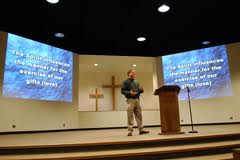
Leadership: Position or Service? Dependent or Independent?


What We Do Rather Than Who We Are Is Important

I believe a leader is a person who has people following for the purpose of their equipping, growing, and nurturing with the ultimate goal of their release into independence, standing on their own, and begin equipping others to reproduce themselves. Leaderhip IS NOT creating a following of dependency on you.

I know a church that has seen the size of their eldership dwindle substantially over the years and not replace them. They are a church where on Sundays the staff and elders do everything the congregation hardly anything: Leads worship, gives the announcements, greetings, and offertory, and sermon.  If there is ministry to be done during the service in the front of the church, the elders are called to do it because the senior pastor wants to expose his elders to his people.  Being an usher is the only non-staff exposure of the morning, but the staff church administrator does the rest.

In a church that was strongly prophetic in the 1990’s who trained their people to hear God for themselves and developed prophetic presbyteries, today hardly a prophetic utterance is given during any service.  The sanctuary is full, yet I cannot reiterate anyone’s testimony of their salvation experience since I have never heard it.  I have no idea what God is doing among his people, for there is no time for them to share testimonies of what God is currently doing in their lives.  A large amount of time is given for announcements of upcoming church programs and activities, but not for the saints to share what Jesus is doing in their lives. 

The pastor of this church told the congregation that his goals for this coming year was to enlarge the elder base of his church and begin training leaders.  He threw out the comments to the men of the congregation, “Where are you?” implying that they should be coming forth as leaders. One fallacy of this mindset is that if you enabled a congregation to be passive, don’t expect them to become aggressive leaders. If they can’t serve unless they are staff, don’t expect them to serve as leaders.

Those attending Sunday church service have been “enabled” to not do or initiate anything on their own, only follow what has been preprogrammed by the staff: sing along following projected lyrics to loud music where only the lead singer and his backup band can be heard, stand when told, be seated when told, give financially when told, and greet one another when told, then sit quietly but look inventive during the sermon given by staff. It is like those in the congregation are puppets on a string.

I contend that just because they are following everything the people on the platform are telling them to do; the people on the platform are not necessarily true leaders just because they are being followed.  What is the purpose of leadership? According to Ephesians 4 it is to “equip the saints for the work of service.” The goal for leadership should be to equip those following them to replace them!  Reproduction should be the goal!  If you are producing dependent robots on your command, you will just get robots who know nothing else but follow your command. They will not be able to stand, mature, on their own.  One of the main goals of the five fold is to bring maturity, Christ-likeness, to believers: develop a believer into the fullness of Jesus Christ, not create religious robots.

If leadership is leading through service, not dictation, followers will imitate their modeling of service toward maturity, and eventually have to be “released” to stand on their own.  Leadership through service, not dictation, reproduces leadership.  I contend that the Christian church fails miserably in equipping the saints for the work of service opting to trust and rely on their paid professional staff producing complacency.  Those in the congregation will never develop toward maturity if they are not allowed to participate, initiate, and serve one another. 

 

What Happened To Diversity In Worship?


Body Ministry Is For Every Believer

Reflecting over the renewal, revival days of the Charismatic Movement of the 1970’s, I could not help wonder what has happened to tongues and interpretation in corporate worship settings or singing in the spirit today?  The church that I am attending was in the forefront during those days, and someone speaking in an unknown tongue with another person interpreting in English was a common practice.  It was an awesome occurrence since the one giving the tongue could not interpret it, relying on another member of the body to validate the word. It prevented the corporate worship session from being a one man show and called for a reverence and respect for the gifts, an accountability through discernment, and faith in the leading of the Holy Spirit among all God’s people.  People who came later to our church knowing our theological stance on the matter, began questioning why these experiences were no longer evident in our meetings. Good question! I cannot recall the last time tongues and interpretation has been evident in our worship experience. Why has it disappeared is a valid question.

I also recall the first time that I heard singing in the spirit.  It was the most corporate angelic sound that I have ever heard as everyone present was praising the Lord verbally any way they wished to express themselves, usually melodically.  With so much diversity, the sound was enriched, full, and harmonious: something very difficult to explain.  It was the ultimate body worship experience that I have ever been engulfed by, for everyone participated individually yet corporately in pure freedom of expression to their Savior and King, Jesus.  I truly believe it is a glimpse of worship of heaven here on earth.

Today, we, the church, have fallen back into the institutionalized, predictable, order-of-worship format when we gather. Usually worship is directed by a worship leader and senior pastor with little if any participation by the believers present except to “follow the lead” of the leadership on the platform.  There is no tongues or interpretation, nor prophetic utterances, nor singing in the spirit which all lead to an unpredictable service led by the Holy Spirit.  Everything is directed and executed as preplanned.

Why has the spontaneity of spiritual gifts in a corporate setting been silenced by the institutional church? Why has the church accepted the stance of toleration of the gifts but not the encouragement of using them? Why the passive stance of doing nothing? What use is a gift if it is not opened nor used?

Much of this free expression of worship had to be found outside of institutional settings during the Charismatic days of the 1970’s & 1980’s. I had to go to conferences, Jesus Rallies, Full Gospel Business Men’s meetings, etc. to worship in this setting of freedom. Does it have to be that way 40 years later?  Why hasn’t the institutional church embraced it?  Simple answer:  It is a question of control.  Who is in control of the service at your church: the leadership on the platform or the Holy Spirit moving amongst God’s people? Who do you, as a believer in Jesus Christ, follow during a corporate worship session: the leadership on the platform or the Holy Spirit moving in his temple, your body?  If the Holy Spirit moves you during a worship service, what outlet during the service do you have to express what He is doing in you or must you remain silent, submissive to the order of worship and under the scrutiny of the leadership that has to “approve” everything before it can be expressed?

If the principle of the Priesthood of Believers is to be activated in the Church, then the freedom of corporate worship by God’s people has to again be interjected into the Church’s worship experiences. Can the church take the risk of trusting the Holy Spirit to move among His people as He chooses, when He chooses, and any way He chooses, or will we keep our protective shield of institutionalized order of worship to prevent such occurrences?

Bottom Line: Who do we as a Church trust? Can we trust the Holy Spirit?  If we trust Him, then why not release Him and His lead. His purpose is to draw all men to Jesus individually and corporately!  We need body ministry to return to worship in our Churches activating the faith, giftings, point of views, passions, and voices of all believers in Jesus Christ!


If It Ain’t Relationships, It Got To Be Religion


Religion Is The Absence Of Relationships

For a belief system based on relationships, Christianity can easily become a religion.  On forms and questionnaires they ask for your religious preference: Protestant, Catholic, Jewish, or other.  It has become a way of identifying different beliefs system, categorizing them for institutional purposes, but what would happen if they would just be relationships.

The center of Christianity is the Cross; the center of the Cross is a relationship between a supernatural God and natural man.  At the core of Christianity is the miracle of restoration of rebirth: a broken relationship between man and his Godhead due to sin and the restoration of that relationship through Jesus, God’s son, hanging and dyeing on the Cross to amend the sinful nature of man.  It is a message of hope to the hopeless and life to the dead. The cross conquered death: “Death where is thy sting?” It restored and offered a “living” relationship to man with his Godhead now guaranteed through eternity, never to be broken again.  It is when we, the believers in Jesus Christ, chose to back away from that relationship or sever that relationship that begins to make one’s faith a religion where one “practices his religion”, that is, goes through the motions.  It is all activity, all image, with little if any substance.  I have found myself falling into that category during my life, and often see the church doing the same.  It must have been awkward for Jesus to visit the Temple that no longer had the Ark of the Covenant, God’s Presence, in it, yet its priesthood still “practicing” the customs of Moses, still going through the motions. God’s Presence through His Son Jesus was in their midst, yet their “practice” prevented them from a relationship with their living God, thus the verbal venom Jesus displaced with the “woe to you scribes, Pharisees, and lawyers” of his time who were “practicing” their religion rather than developing relationships.

The other relationship restored in the Cross was the horizontal relationship between mankind.  Ever since Cain and Able man has been fighting one another.  There is always a war somewhere on this planet bringing devastation between mankind. The Cross was the beginning of the end of that broken relationship, for the New Jerusalem, the new heaven and the new earth, eternity in Jesus is pictured as the lion laying beside the lamb, the cobra beside the ox, enemies now brothers.  Where is this restoration to be birthed? I believe in the Church, for we have a Savior who, while hanging on the Cross, proclaimed, “Father, forgive them, for they know not what they do.” Jesus stopped mankind from playing the “blame game” the core of most conflicts; He extended grace, mercy, and unconditional forgiveness in relationships to, through, and from mankind to one another.


So churches (we) need to stop blaming other churches (them) as not being true to the Christian faith because there is little if any relationships between “opposing” churches in the Body of Christ.  Jesus’ prayer in John 17 is for the unity of the body of Christ, not its demise.  Churches need to do more than “network” and “tolerate” one another, but lay down their lives for each other in relationship.  Within local bodies of Christian faith, believers in Jesus Christ must begin to lay down their lives for one another in relationship if their faith is to produce life.

What better way to do this than through the five fold, where you have different points of views, different passions, different voices, but when “laid down” in “sacrificial, unconditional love” are the very things needed to bring unity and life into the Church!  Evangelism through birth or rebirth comes through a relationship between a believer and nonbeliever in Jesus Christ. Shepherding develops nurture, care, and spiritual growth through relationships between believers.  Teaching thrives on the “experiencing” of one’s living faith rather than just “knowing about it”.  The prophetic develops the relational communication skills needed between God and His people, and the apostolic is all about relationships, tying together, networking, and releasing all this different points of view, passions, and voices in one direction in unity for the spiritual development of its believers into the image of Christ Jesus and for the unity of the entire body.

Without these relationships we can fall in to “practicing our religion”, just going through the motions where one has lost their passion, feel their point of view has been snubbed, and who thinks they have no voice.  I find much of the church “practicing” their “religion” when they corporately meet on Sunday mornings, for there sure isn’t a lot of relationships going on vertically or horizontally, but a lot of “practicing”, going through the motions.

Without relationships we end up with religion. Church let’s quit “practicing our religion” but live out our relationships with our God and with our fellow brothers and sisters in the faith, for Jesus has made a way for that to happen. Church, let’s begin listening to the Holy Spirit in how to “work out our salvation” with our God and “work out our relationships” with our brothers and sisters in the faith. When we are serious about doing this, we will witness true revival, rebirth, and renewal through relationships.


Women Can Understand The Five Fold


There Is A Little Bit Of The Five Fold In All Of Them

When you think of the five fold not as offices, but as passions, points of views, and voices, you begin to recognize it in every day life.  It is not necessarily a religious thing; its just a fact of life.  It is not a foreign concept, but a common one.

You see women know about the birthing process.  It comes natural to them.  They know the process and challenges they face during pregnancy. They know that the birthing process is a painful one, yet a rewarding one that makes one to forget the pain after the fruition of birth, and after a birth they are willing to move on and have more children.  That’s the evangelistic spirit.

You never seem to prepare to become a mother, but when a woman becomes a mother the nurturing process occurs naturally.  She focuses her efforts on the nurture, care and development of her children.  She spends a great amount of time with them in their infancy nurturing, spends hours as a confidant through puberty with care and development, and spends even more hours on their knees praying once they have “released” them into adulthood.  This is the pastor/shepherd spirit.

Even though she never earned a “degree” in parenting or motherhood, she teaches her children throughout their life, not necessarily about academics, although school work is important, but through walking out life with them, teaching by example, by using life’s experiences. That’s the true spirit of a five fold teacher.

Mother’s have a spiritual side that is precious.  A rebellious child can never stop a godly woman from praying for them.  The turn around of many lives have come through mother’s prayers. Mothers have a spiritual sensitivity, and spiritual intuition, a hunger for spiritual intimacy men do not possess.  Not only do they dig deep in their spiritual wells of faith, but try to teach their children how to listen to God for themselves for the time when they are released as adults and hopefully will teach their children. The prophetic spirit is imbedded in motherhood.

Networking is a craft mothers specialize. Not only have they experienced the birth, the nurture, care, and development, the teaching, and the spiritual training of their children, but are able to “release” their children when it is their time to fly.  They “know” each child, and encourage them to do the birthing, nurturing, teaching, and spiritual developing for others.  In her gentleness, in her sensitivity, in her love, she encourages those younger than she to be released into their callings, their destinies, their hopes and dreams, releasing them to become independent and eventually reaching out and reproducing others.  This is the five fold apostolic spirit.

All this is embedded in each woman created by God.  I do not think it “coincidental” that the church is “the Bride of Christ”, an image of a female, for imbedded in her, the Church, are all five entities of the five fold ministry to equip those younger, to develop them into maturity of being like the Groom, and to bring the entire family of God into unity.  The five fold is part of the Bride’s DNA, her make up.

If the five fold is so natural, then why do we, the Church, spend so much time and effort suppressing it instead of releasing it? Why do we fragment it bringing division instead of embracing it to bring unity?  Why do we know so little about it when it is the moral fabric of our being as a Church?  Why don’t we listen to the “mothering” of the Bride of Christ and just release it?


“Thank You Notes To Blessing Bowls”


Josephine Jean Downs: A wonderful wife, caring mother, phenominal mother-in-law, loving sister, and great friend. THANK YOU Jean!A Tribute To Josephine Jean Downs

About a month ago, my mother-in-law, Josephine Jean Down, passed away at the age of 76.  Her memorial service was filled with people who had something of a rarity in common: They all had received a “Thank You Card” from her sometime in their lives.

Thank You Cards are getting to be a rarity during the electronic email age we are now in. To receive a hand written, hand held Thank You Card through snail mail is becoming an obsolete practice.  Jean, sent people Thank You Notes for every imaginable act of kindness.  She even sent my son a thank You Note for sending her a Thank You Note.  “Gratitude” was never overlooked by her; “Appreciation” was always expressed.  In a day when even polite “thank-yous” are becoming an anomaly, taking time to craft a hand written expression of appreciation is a gift of love. 

Her other “gift” was her Blessing Bowl: a ceramic bowl that contain over two hundred two-inch squares of paper that recorded things she saw as blessings: a meal with Donald & Judy, a visit from one of her grand children, a kind word a person had toward her, nothing small or what seemed uneventful was missed. She recorded them all, in thankfulness, in minute writing on two-inch squares. Often at the end of many of the squares was a reminder: Send a Thank-You Note.  She has taught me to take nothing for granted and to be thankful for all things, no matter how insignificant they may seem.  In the hecticness of our day, we are blinded to the blessing that are around us due to the blur of our constant activity, demands on our time, and multi-tasking endeavors.

She was also a seed sower. When healthy she greeted everyone by name, introducing everyone to each other, birthing new relationships between people.  Although usually quiet in nature, she would place gospel tracts with every meal she got at a restaurant, introducing herself to her waitress, learning her waitress’ name, then introducing her by name to the others around the table.  In little ways she would sow her faith by establishing relationships.  I am sure in heaven she is at the pearly gate with St. Peter, introducing him to everyone she knew or met who is also entering heaven on a first name basis!

What is ironic about all this is that her life had been a life often of extreme darkness from depression. She had faced several institutionalizations, had ECT, electro-shock-therapy, administered to her several times, and would often slip into depressive moods of consuming darkness.  Even in her darkness, she introduced people to each other on a first name basis, thanked anyone who brought even a small ray of light into her life, and added more two-inch squares to her blessing bowl at the end of the day.  Often she would read those blessings from that bowl when in the maelstrom of depression to remind herself how blessed she was!

The Bible says that “darkness can not consume the light”. Her life has become her legacy of that truth. We who are so blessed need to record it in thankfulness; we who live in the light of life need to reach out to those whose lives are engulfed in darkness; we who have so much to be thankful about need to start expressing that thankfulness towards others; and we who are networking with so many need to never lose the first names of those with whom we are in contact no matter how shallow the relationships.

As the pastor giving her eulogy pointed out: Like the women who gave the vial of perfume which she poured over Jesus feet and washed it with her hair, to this women the Bible records as “she did what she could”!  Jean “did what she could” never knowing the powerful influence she had on others.  Out of her darkness she gave light; out of her depression she gave others hope; when losing her identity to mental illness she never lost the identity of those around her always knowing them on a first name basis.  She was truly an extraordinary person who “did what she could”!

A challenge to all of us to duplicate!


Without Relationship You Are Bound To Get Religious!


Church Is About Relationships!

It has been quite a while since I have blogged.  The past blogs I wrote about the caterpillar to butterfly stage of the metamorphosis stage of church development I wrote in book form, centering on the cocoon stage, the transitional stage.  How do we get from an organization to an organism, from religion to relationships, from an institution to peer acceptance?  

I am also in the midst of redoing this website so that it will not just be a blog site, but will also offer manuscripts that I have written over the last thirty-five years, tutorial courses on the five fold, and all kinds of interactive possibilities. Stay tune for the upcoming big change.  I will be offering my Metamorphosis E-book at that time!

During this break from blogging, it has become even more apparent to me than ever that Church is all about relationships.  If we are “God’s people” then we must begin to act like “people of God”.  We have to grow and mature into the likeness of Christ individually and corporately.  The institutional church has “enabled” those who attend their structural programs for far too long into becoming passive Christians; the church needs to nurture, care, and develop the believers in Jesus Christ, the priesthood of believers, and then RELEASE them to be active in their destiny in Christ. As this blog site proposes, it can be done through the five fold!

In an age where networking is part of the fabric of our culture, the Church needs to look at how to retool itself by developing a network among believers, not only within the local church walls, but geographically as well as world wide.  Church is about relationships.  Isolation brings religion, sects, divisions, and close mindedness.

So, thanks for your patience during the absence of my writing, anticipate newness to this web site, and continue to build relationships with those who know Jesus Christ as brothers and sisters and those who do not know Jesus Christ, so you can share the gospel with them.


WHAT ARE YOU WILLING TO DIE FOR AND LET DIE?


Transition Only Comes With Sacrifice

All weekend I have been wrestling with the caterpillar to cocoon to butterfly process that I have been blogging about and how it applies to the Church, and its been gut wrenching.  I have been wrestling with Isaiah 57 with the “Build up; build up”, but first “remove every obstacle out of the way of my people.” What are these obstacles, how do you remove them.  What happens if the obstacle has been something that has been good, foundational, a real positive, but now appears to be in the way.  That is tough to admit that something so good, can now be the very thing prohibiting ones move forward.  How do you handle that, dispose and let go of those precious things?  There is a lot of good in tradition, foundational principles are embedded there, but how do you singularly as an individual believer and corporately as a member of the priesthood of believers let it go, take a hands-off approach? It’s tough.

Then I remembered the scripture “to obey is better than sacrifice” and all the Old Testament practices that had become meaningful, the central part of Jewish worship: the festivals, the feasts, the intricate system of animal sacrifices, and God tells his prophet that he is sick of them; they are stench to his nostrils.  Wow, all this good, all these meaningful services that appear to be the very backbone of their faith, and God now says in today’s vernacular, “that sucks”, then concludes, “to obey is better than sacrifice.”

I have painfully learned the lesson to place items on the altar as worship.  Even though the Lord will burn them up and consume them, but then has a choice to give them back as is, give them back transformed, give something totally new back, or not give them back at all.  Some things are easy to lay on the altar, like the garbage in my life, which he consumes and gives grace and forgiveness back instead. That is the transforming power of Jesus Christ.  C.S. Lewis’ classic The Great Divorce is an allegory of showing why it is difficult to give up the very things that prohibit us from wanting the offer of eternal life in heaven.  To a sinner, unless he feels he need for a “savior”, he doesn’t want to give up the very life that is holding him back.  But what about good things?

I remember going to my last Lay Witness Mission weekend as a coordinator. I loved those weekends when a team of “laity” from all over Central Pennsylvania and other states would come to a home church upon their invitation to share their faith journey stories, pray together, sing together, stay in their homes, fellowship together, and most of all eat pot luck dinners together.  I have seen people giving their life to the Lord, dysfunctional, torn families healed, marriages saved, hope restored in discouraged lives, and healing of relationships.  It was a powerful ministry!  As I was praying for the upcoming mission, for these missions’ foundations were built on prayer, the Lord told me to lay this particular mission down on the altar.  I knew what that meant: He’d consume it. What would the result be?  He told me:  He was not planning to give it back to me; that this would be my last one as a coordinator.  Although I felt a moment of grief, of lost, I became “obedient”, laid it down, and moved on.

I believe, the Church is about to go through a cocoon stage in its history.  It’s going to be revolutionary, something it has not experienced before.  If it is to be greater, more impactful that the Reformation, what will be happening to the Church once inside the cocoon?  1) Every movement of God is centered at the Cross, so I think the Lord is going to increase our understanding vertically (John 3:16-17) of who He is, how He works, what is His will, and how we individually as believers in Jesus Christ and corporately as a Church are to worship Him. The biggest transformation is coming horizontally (IJohn 3:16) in our linear relationships as “peers in Jesus Christ” toward one another.  He’s asking, “What are you willing to die for?”  Are you willing “to die” for your brothers and sisters in Christ? That will take sacrifice and discipline like the Church hasn’t experienced since its very early years. 2) He’s also asking, “What are you willing to let die?”  What are you willing to lay on the altar for His consumption?  That’s a tough question individually as a believer, but it is magnified corporately as the Body of Christ.  We know the answer should be that we are willing to lay down our "all", aka "everything", but as a Church, are we willing to lay down our traditions, our history, and the way we have done Church?  The ball is in our court, but we see this as a great risk, for if we lay it down, He will consume it! That fact is a given! 

Our lack of faith and doubt arises in the fear of what He will do with it: give it back as is, transform it into something else, give back something totally knew, or the unthinkable, not give it back at all.  We know the last option is not a feasible one, because the Word, the Bible, says that Jesus is coming back for His Church, a Church without spot or wrinkle. So there is our answer to what he will do if we lay the present Church on the altar.  The Church certainly will be different if we get it back “spotless” and “without wrinkles”.   Individually we know the truth that when we gave him our sins, our garbage, that he gave us back a new life that in his eyes is “spotless” through forgiveness, “wrinkleless” through His grace.  If he can do that individually, he can do even greater corporately.

I exhort the corporate Church, who I so dearly love and am a part of, to please, let’s corporately, together lay down this sacred institution that has meant so much to us, been our foundation, a rock in time of turmoil, our hope in time of darkness, our joy in time of resurrection and praise, and allow the Lord to consume it!  Then, while in our cocoon, watch what the Lord does with it, and marvel together at how it all turns out: as a butterfly!


THE NEED FOR TRUE CHURCH COMMUNITY: THE FIVE FOLD


The Five Fold Build On Communal Relationships

In the last two blogs we have looked at a young girl’s cry for a relationship in church she called “life together.”  This life would be a horizontal relationship of community among peers, not a hierarchal community of professional and nonprofessional people.  The church has created “offices” out of the five fold, nouns, titles.  The five fold is usually adjectives describing what believers are doing, verbs.  What today’s generation is looking for is not professional titles and offices, but a vibrant, living community of faith built on horizonal relationships among peers, Christians.

If we begin to look at the five fold relationally, we can see the passion and point of view of a spiritual gifting that is unique to the individual, but can be supportive, supplemental to the other four to fulfill their callings.  There strengths are usually the individual’s weakness, and together they can fulfill the “full” calling of Jesus Christ.  It is a relation built on peer acceptance and peer service, one giving to the other and accepting what the other has to offer.  It is a reciprocal relationship, that over time builds an accountability system of trust, honor, and respect.  It is far better to do something and accept discipline out of trust, honor and respect as nurtured in a horizonal relationship verses out of fear because of one holding power above another.

The church needs to recognize the power of five very strong passions of birthing, nurturing, instructing, guiding, and overseeing, and how, if they work together on a horizontal plain of acceptance and trust can be a very powerful and effective tool of ministry in the maturing of the saints into the fullness of Christ (individually) and bring unity to the body of Christ (corporately).

Up to now, the church has not allowed the five to “live together”, opting for their confinement and separate callings, offices, professions, and institutions, thus bringing division among them and division to the church.  If the five fold was looked upon relationally as five different, strong passions and points of view that were willing to lay down their lives for the other four by serving one another as well as receiving from one another with grace and humility, a bond of trust, honor, and respect would be developed.  We would experience a community, a fellowship of faith of “life together.”  This would produce a “full life” in Jesus Christ, a maturity of being in his image individually, as well as a “full life together” as a unified body of believers, a holy priesthood of believers.

That “full life together” that birthed the church in Pentecost under the guidance and leading of the Holy Spirit needs to be renewed and “released” back into the church.  The church needs the “full life” of an evangelist who gives, receives, and submits to a shepherd, teacher, prophet, and apostle; the “full life” of a shepherd who gives, receives, and submits to an evangelist, teacher prophet, and apostle; and so forth.  This giving, taking, and submitting creates an accountability of trust, honor, and respect with the obedience of the leading of the Holy Spirit that would create a true Christian community of “life together.” 

The gifting and calling of each of the five fold will take on a different look than it has under a structural institutional church format, for it will be based on horizontal relationships of laying down one’s life for one another for the sake of “life together” in Christ.

I know it is a different mindset than from the past, but we as Christians, owe it to the Father, his son Jesus, and to the precious Holy Spirit, for redeeming the Church vertically, but now we need to allow them to develop the Church relationally horizontally among the brethren.  This is the cry of the young girl in my previous blogs, and the cry of my own heart personally.


THE NEED FOR TRUE CHURCH COMMUNITY: YOUNG ADULTS – Part II

Reaction to “The Generation Of Contrast”

Recently, when reading a Christian blog page about the five fold ministry, a comment by a young lady to the article caught my attention.  It read:

"The church that I attend is unusual in that it teaches organic community, but it seems to me that the only organic community that is happening is with the staff who are together just about everyday. They are the ones who get to do “life together”. Sure we have small groups, but, none of the small groups that I’ve been apart of have ever actually done “life together” which is difficult meeting just once a week or twice a month. I’ve tried to “do life together” with people, but everyone is so consumed with their individual lives, work, family, etc. I often wonder ‘do I HAVE a life?’ They all seem perfectly okay with meeting once or twice (1 week day for small group & Saturday or Sunday for church) a week.

I was being discipled by one of my pastors and we used to meet once a month. But we haven’t met on a regular basis since last August. I wondered why, until I saw that she was “doing life together” with a couple of staffers at the church. I was becoming jealous because I wanted that, too. But, reading your blog, I just realized that what I am really longing for is organic community where I can know and be known completely without the titles of pastors, leaders, etc."

Ephesians 4 exhorts the church to “equip the saints” for the work of “service”, not “equip the staff.”  In the above excerpt, I could not help but to hear this young lady’s cry for meaningful relationships through her church, not sporadic, professional, set a weekly or monthly appointment, relationship with a “staffer”.

It did not take this young lady long to realize that in a huge mega-church, it is hard to establish meaningful “life together” relationships. In reality, she could only get a professional/client relationship.   She also realized that since the staff saw each other daily, their relationships reflected that.  She too seeks a relationship that is not just sporadic: a Sunday morning worship service where there are only casual relationships is a huge crowd, or in a small group that probably was more of an organized Bible study than a group to build meaningful daily relationships.

This young lady’s need for “life together” relationships exemplifies the desire of this generations need for horizontal, linear, and meaningful relationships.  Staff to laity/congregant relationship is looked upon as “doing church” rather than a horizontal, relation of “life together”.  I have witnessed a situation where a need was shared to a senior pastor who began to look for a solution as a “human resource” perspective of which staff member should become involved rather than looking to the saints within his church to minister horizontally to each other.

What this generation is looking for is not a “professional” relationship when it comes to church fellowship, but a cordial relationship among peers that would deepen with time and commitment, a sense of community.


THE NEED FOR TRUE CHURCH COMMUNITY: YOUNG ADULTS – Part I


Reaction to “The Generation Of Contrast”

Recently, when reading a Christian blog page about the five fold ministry, a comment by a young lady to the article caught my attention.  It read:

The church that I attend is unusual in that it teaches organic community, but it seems to me that the only organic community that is happening is with the staff who are together just about everyday. They are the ones who get to do “life together”. Sure we have small groups, but, none of the small groups that I’ve been apart of have ever actually done “life together” which is difficult meeting just once a week or twice a month. I’ve tried to “do life together” with people, but everyone is so consumed with their individual lives, work, family, etc. I often wonder ‘do I HAVE a life?’ They all seem perfectly okay with meeting once or twice (1 week day for small group & Saturday or Sunday for church) a week.

I was being discipled by one of my pastors and we used to meet once a month. But we haven’t met on a regular basis since last August. I wondered why, until I saw that she was “doing life together” with a couple of staffers at the church. I was becoming jealous because I wanted that, too. But, reading your blog, I just realized that what I am really longing for is organic community where I can know and be known completely without the titles of pastors, leaders, etc."

During the first century, the church broke break daily, integrating their daily lives culturally, economically, and socially through their new found faith in Jesus Christ.  It was all about “relationship”, a community of fellowship of faith, daily, seven days a week.  Christians met in homes, shared what they had, sold lands to help those in need, etc.  There was no hierarchy of leadership and power yet, only leadership through horizontal relationships of service and hospitality.  Somehow throughout history, the church has lost doing “life together”, at least that is how the young adult generation of today sees it. 

This generation is hungering for relationships.  Not only are they looking for future mates, spouses to share “life together”, but communal, corporate relationships with peers their own age and older.  This generation so drastically wants “to belong.” 

When my one son reached his late teens and through his twenties, he cried out to the church for an older male to “mentor” him, but few older men could afford the 24/7 demands and late nights that are part of hanging out with twentysomething life style.  Today’s young adults are looking for relationships that go beyond just Sunday morning services with their hand shakes and pats on the back, or a young adult church program that meets once a week. 

My daughter drives me nuts because she is a social creature who wants to “hang out” with someone every moment she gets away from her strenuous, daily, demanding job that is helping her to become self sufficient.  She yearns for fellowship, but finds herself swallowed up in her job, her work, in order to pay her bills at the price of a “social life”.  Opting to work on Sundays for financial reasons of survival, she has lost contact with the local church, who has not reached out to her.  She sees that the expectations is that she is to “go to church”, not the church “go to her”, particularly when she is in need. Like the girl above, she too yearns to find a church whose believers practice “life together”. 

The institutional church has tried to target young twentysomething adults through ministries and programs.  A church plant in a movie theater targeted this group, but when relationships among these twentysomethings began to be entangled, and became a breeding ground for dating, then break ups, causing strained relationships because everyone was in their twenties, “life together” crumbled.  How does the church face the mindset of “hanging out” of the later teens and early twenties age group to become “life together” corporately to young struggling adults who are trying to find meaning in life, direction in life, and acceptable peers in which to share relationships. 

So the battle of these mindsets, and the desire for “life together”, and the need for social acceptance has caused this age group to questions the validity and definition of what is “church”.  They wish to keep their faith in tact, their personal religious convictions, but struggle in how to do it corporately.  It is hard enough for them to find an individual to spend “life together”, but they are also finding it extremely difficult to find a group corporately to spend “life together”, which they would redefine as “church”.


CURRENT CHURCH TRENDS AMONG YOUNG ADULTS

Reaction to “The Generation Of Contrast”

I found reading “The Generation of Contrast” in Relevant Magazine (Issue 53, Oct. 2011, pages 80-87) very insightful, for it was written about trends among the current young adult generation. Under the subhead “Faith” David Kinnaman & Aly Hawkins writes:

“Which brings us to our generations’ turbulent relationship with the church. More than half of the 18-to-29 year-olds with a Christian background say they are less active in church than they were at age 15. Dropping out of church has, for our generation, become the norm.

The first, and smallest, group of dropouts have left the faith entirely. You probably know someone who fits this scenario – he was a passionate Christian coming into college. Then he heard facts that challenged his paradigm and made him question his faith. Or maybe he saw some of the harmful ways Christians have sometimes addressed broken people. Either way, he came to the conclusion that his Christian faith was impossible to hold on to.

For most young Christians, however, walking a way is more like going on walkabout. About 4 out of 10 twentysomething believers are not sure how important church is for their lives but are not ready to sever all ties with Christianity. This is the person who was active in church and youth group during high school but has kind of drifted away. She’s not anti-church – its just that it’s hard for her to see how its relevant to her daily life. Plus, she’s so busy doing work – good work – at her secular job, it’s difficult for her to understand where God is in all that.

A third group is struggling with church involvement for more nuanced reasons. This group is driven by passionate faith to question the priorities, assumptions, and methods of the established Church. (It probably goes without saying that these questions, however well intended, are not always appreciated b y the church.)

These people often feel stuck between the safe world of church and the broken world they feel called to change. This is your friend who serves 3 times a week at the homeless shelter & has Matthew 5 memorized but doesn’t come with you to Sunday services because, in his words, “It makes me crazy.” He deeply invested in the redemption mission of the Church, and can’t understand why so many other churchgoers doesn’t seem to share his drive to help.”

Why are we losing our youth whom many churches have heavily invested in through their youth groups and youth programs? I’ve seen youth groups and youth conferences be “Rah-rah Sessions To Win Their School For Christ”, yet never teach nor equip their youth in how to do that!  What do church youth groups do for Senior High School students to prepare them for culture shock they are about to experience as college freshmen?  What do they do for those who do not go to college to prepared them from going from their pristine, protective church environment into the culture of the work place with profanity, vulgarity, and in appropriate sexual and racial slurs and innuendos?

Three things are very important to this young adult generation: their culture, relationships, and peer communications.  Most church structures fail to train and prepare their youth to be launched into the secular culture, opting to believe that they will maintain to stay in the safe church culture that protected them. That is not happening to over half of them.  At their age, they are looking for relationships, but are finding them outside the protective shell of the church, wanting to reach out and be part of their culture rather than being a Christian introvert apart from their culture.  They also seek peer communication through their Smartphones, IPads, tweets, texts, emails, blogs, etc. not just to their Christian friends, but to an expanded “world” available to them. 

The church has also failed to nurture a true sense of community to their youth.  Youth group was a place to “hang out”, “be cool”, “be accepted”, not a place that taught the values of true community, thus when a young adult is thrust out into the world, into a foreign culture from their youth experiences, they struggle for the relationships that true community has to offer.

Today’s young adults dream of impacting their world, a changing world politically, economically, and socially, but are not allowed to “challenge” the church who also needs to face change, so in frustration they leave it and focus on the changes they feel they can be a part of, then fail to understand why the church isn’t by their side facing the same issues.

This generation has been told that they “are the church”, but are tired of “playing” or “doing” church, while looking for the meaning of “church” in their lives, trying to redefine “church” in their culture and relevant to their generation.  They are facing change and challenge, but do not see the institutional church doing either, thus questioning the church’s validity.  If the church wants to “recapture” the glory of “its youth”, those young adults in their midst, they need to be willing to make changes and face those challenges.  If not, more will be lost.


MISSIONS: RELATIONAL OR STRUCTURAL?

 The Clash Of “Mindsets”: Structural Versus Relational

The way one looks at church, structural verses relational, will effect they look at missions.

Most of us, who have grown up in the Church, look at missions as a place “missionaries” go or a thing do.  Missionaries are people who go around from church to church to raise (actually forced to beg for) money, so that they can be a “professional”, having an income to free them financially while “ministering”.  Unlike Paul, who was a tent maker on his missionary endeavors, a missionary goes forth as a paid professional.  What he builds is a kingdom that depends on him, for he usually remains atop of the pyramidal structure he creates.  A true missionary, like Paul, would move one, allowing those he “equipped” locally to maintain the new work, freeing himself to move on and start, plant, or birth a new work.  A good way to tell if missionary endeavor is relational or pyramidal in structure is by seeing who is leading.  Is the missionary over them, or are the natives ministering relationally to their native neighbors, brothers and sisters, families, and communities.  If missions were structured as a pyramid or hierarchy, the structure will want to stay to keep its structure and maintain its positions.  If the structure is relational, then there is no need for a hierarchal, pyramid, institutional structure because spiritual life flows horizontally among the participants.  The banned underground Church in China is an excellent example when placed beside the institutional Church in China that the government permits.  There are no westernized missionaries “overseeing” the spiritual life of the Chinese Church today, yet it is a vibrant, living organism rather than a highly structured organization partially due to persecution.   A persecuted church is often forced to abandon its structure for survival.

As a person growing up in the American church, I believe that missionaries eventually open up either missionary hospitals or Bible Schools.  The Bible Schools are to train future “pastors” to go out and start, develop and maintain new churches.  That is structural religious thinking.  Relationally, I believe, Ephesians 4 outlines how we are to “equip the saints”, not “equip a staff”, for the work of “service”, not necessarily paid professional service, to bring “maturity” to the saints in being more Christ-like, into the image of Jesus, and to bring “unity” to the body.  Bible Schools preach the doctrine of the churches that finance the endeavor and propagate their uniqueness and correctness of theology doctrine compared to other “sects” of the Church, bringing division in the Body of Christ.

If someone came in and relationally developed and released those believers in the body of Christ to be evangelistic, reaching those in their culture who are lost to find Jesus in terms that their culture understands, to be shepherds, caring physically, mentally, and spiritually to the context of their cultural community, to be teachers of the Word, the Bible, by not only interpreting, but applying the written word to their culture world (in a way like Wycliffe Bible Translators do today), to be prophets so the native people in their own land can hear the voice of God for themselves and claim God to be the God of their nation, region, and community, to be apostles releasing their own people according to their spiritual gifting to their own people in the culture of their own country but under Biblical principles, written and living.  Someone has already done that: Paul, and how he did that is recorded in most of the books in the New Testament after the four gospels.

Saul, like us, first went to where he was familiar when entering a new town, a new culture.  He went to any existing synagogue, to God’s people like his own, only to be rejected by most of them, often thrown out, even stoned by some thinking him dead.  Rejection forced him to then look to the native culture, the gentiles, who accepted his evangelistic message, received and developed his pastoral, shepherding care towards one another, got grounded in the written scriptures of his day through the unified message of the “apostles’ teaching”, grew in the intimacy of a personal relationship with their God through Jesus prophetically, and acceptance the “seeing over” what the Holy Spirit was doing through the apostolic.  Then as one of their “apostles”, Paul “released” them to do the work “of service” for which he had trained and equipped them and moved on.  Other “apostles”, “prophets”, and “teachers” in the body of Christ would pass through to help to continue to “equip” THEM and “release” THEM.  Never did Paul nor any other apostle, prophet, teacher, etc. rule over or control them, or remain there to dictate “apostolic oversight” that controlled a pyramidal, hierarchal, institutional structure, contrary to what the Roman Catholic, pyramidal, institutional church claims.

Paul set up relational “networks” throughout his known world at his time with whom he loved, nurtured, encouraged, and longed to see and be with, but whom he never “controlled”, opting in allowing the Holy Spirit to flow freely and birth, develop, and maintain His Church in a culture through those living in that culture.  The “relational” mission mind is far different than the “structural” mission mind, and the Church needs to allow the Holy Spirit to “teach us all things” in how to birth, maintain, and develop such endeavors through His people in His/their locality.


A QUESTION OF HAVING “VOICE”!

Caterpillar to Butterfly: Voice By Position TO Voice By Your Identity To Jesus

From Caterpillar to Cocoon to Butterfly – Part XVIII

In this series we have been asking the question, “What happens with metamorphosis during the cocoon stage?”  How, structurally, do you get a butterfly from what once was a caterpillar? In my Aug. 20, 2011’s blog, I listed several forms of transformation that I see occurring inside the cocoon of change for the church.   Today we will look at the principle: Identity lies in who or what you are in the system (Caterpillar) TO Your identity lies in who or what you are in Jesus individually & corporately (butterfly).

Caterpillar: In the church today, position means political influence.  Who you are, or better yet, what you are in the church’s pyramidal system determines the influence you are allowed to have in the institutions programs, development, and leadership structures.  In every church, the youth have a voice, but usually not influence in the affairs of the church.  Those older too have a voice, but also have influence because of financially supporting the church system.  Often the lack of vision, and not listening to the voice of youth bring decline, decay, and eventually devastation to the local church.  One of the greatest frustrations among laity is that they have a voice, often are allowed to voice it, only to be ignored, snubbed, or rejected.  Those in “position” have the power of influence, affluence, and supposedly become the “voice” of the church, forgetting that those there are preaching to also have a voice. 

Butterfly:  Voice is also important to those seeking a relational, horizontal, peer accepting linear church structure.  In fact that is what their whole social networking world is about, having a voice that is as valid as everyone else’s voice.  This linear flow of communication has no hierarchal filters to limit it, control it, dictate to it, nor censor it.  Freedom of Speech is a legal right in American because of the Bill of Rights, but the internet is expanding the scope of that freedom to go beyond America’s borders to a world wide audience.  Your identity “on line” will not be by office or position, but in who you are.  How will you conduct yourself among your “peers” of believers in Jesus Christ and your peers of non-Christians who are also “on line”?  How can relationships be established beyond surface communications on line to deeper levels of serving others and receiving back from them? 

The Differences: Old Mentality:  Voice determines who and what you are in the church system.  Who “speaks” from the pulpit, or “speaks” with power and influence a church board meetings, is determined by position and office, not relationships.  In a pyramidal structure people do not want to give up their voice, for fear they will lose it and become with those who have no voice, thus fighting to retain power.  New Mentality: Having “voice” gives one the power of persuasion, dialogue, and distributing facts which is what the linear, horizontal peer relationships are all about with social networking through the internet.   

Implications Today: Jesus asked his disciples, “Who do you say that I am?”  I would ask, “Who are you?” One thing this linear communication does is expose who you are through your biography, photos, Facebook comments, tweets, texts, emails, and blogs.  If you are a Christian, I would ask, how do you portray your self individually as a believer in Jesus Christ and corporately as a member of “the priesthood of believers”?  If you don’t have a hierarchy over you, then how do you conduct and portray yourself as a Christian?  How are you presenting the gospel (the Great Commission) to your peers relationally?  How can you project your “voice” to be corporate as a member of the body of Christ, the priesthood of believers through the internet?

Conclusion:  The way a Christian uses his/her “voice” is dramatically changing the church scene of who and how the gospel is presented.  The “voice” of the church, historically, came from those in power and influence, not those in the pews with little power or influence.  With the social media and networking world, “voice” is now defined by anyone and everyone on a linear, horizontal plain.  With that new freedom also come the responsibility to every believer, every member of the priesthood of believers, to speak properly, effectively, and with the gospel of truth through Jesus Christ.  There is now a new challenge for every believer to fulfill the Great Commission by sharing their faith stories, telling their faith journey, and networking with others in their efforts to walk out their walks and journeys, creating their own stories.


WHO DEFINES WHAT WE ARE TO BELIEVE? – THE WIKIPEDIA PHENOMENON!

Caterpillar to Butterfly: Systematic Definitions– TO – Relational Definitions

From Caterpillar to Cocoon to Butterfly – Part XVII

In this series we have been asking the question, “What happens with metamorphosis during the cocoon stage?”  How, structurally, do you get a butterfly from what once was a caterpillar? In my Aug. 20, 2011’s blog, I listed several forms of transformation that I see occurring inside the cocoon of change for the church.   Today we will look at the principle: Definitions that have been created by scholars (caterpillar) TO the Wikipedia phenomenon (butterfly).

Caterpillar: The institution has defined one’s belief systems over the centuries.  Councils, church leaders, scholars, historians, patriarchs, and others have labored over their tenants of faith, attempting to place on paper what they believed.  The Jewish faith wrote the Talmud to interpret the Torah, their central text of faith.  Christianity has filled libraries with commentaries and theological dissertations to interpret the Bible, their central text of faith.  The Bible, a collection mainly of letters, poems, proverbs, and historical works, became books, chapters, and numbered verses for the purpose of organized scholarly study.  Many versions of the Bible have been translated from Latin, Greek, and Hebrew to be used in present day culture.  The westernized influence of producing learned scholars has fueled the need for Bible colleges and seminaries throughout Church history.  Denominations script official “church papers” to define their beliefs and stands on many social, cultural, and religious matters.  During sermons you will hear the pastor quote great church theologians.  Definitions of what you believed defined the difference between different religious groups or sects.  You knew if you were a Calvinist or Armenian, a pre-, post-, or mid-tribulationist, a pacifist, a predestinationalist, a fundamentalist, or an evangelical, or Pentecostal, or main line denomininational, etc. by how you “defined” your statement of faith.

Butterfly:  With the linear, horizontal, relational internet crowd of today, peer communication and linear acceptance is the norm.  This has affected the world of “definition”, no longer controlled by unabridged printed dictionaries and volumes of encyclopedias.  The “Wikipedia” phenomenon has hit where definitions are presented, not just by scholars, but by anyone.  Footnotes at the bottom of pages give the text some validity, but a slanted scholarly approach is not set in stone as “the” definition, as others with personal experience and personal knowledge on the topic can also add to the definition.  As an educator in language in the public school system, I warn my students of the accuracy and authenticity of Wikipedia, but students go their first because of electronic convenience.  I tell them that Wikipedia is a “starting point” for internet research to other websites, passages, links, blogs, etc. to dig deep into the true meaning of the definition.  Today, this linear crowd of peers not only relies on Wikipedia for their definitions, but helps define them.

The Differences: “Definitions” use to be compiled in printed dictionaries, abridged if shortened, unabridged if a large volume.  Definition of words were compiled by “scholars” of language, linguistic, etymology, etc. The “highly educated” P.H.D.’s did the defining for us.  We only had to look up their definitions in dictionaries, something everyone owned.  Today “scholars” are still fighting for literary and historical accuracy by citing sources, but definitions through Wikipedia, an –ebook compilation of definitions from various sources, also allows average individuals to be part of the defining process in helping to define words, events, famous people, etc. from a personal, or cultural level. Today, Wikipedia, the free encyclopedia, has over 3,724,00 different articles or definitions in its unabridged source. The question becomes “who is the authority” in the process of defining?

Implications Today: I feel the Wikipedia phenomenon has a huge impact on the way people will look at Bible interpretation in the 21st Century.  For centuries the masses of believers have counted on the interpretation of scriptures from their pastors, priests, rectors, parsons, etc. as the official “word of God” as delivered from their pulpits or from scholarly interpretations from the great theologians of their day.  Interpretation of belief was always dictated to the laity from the clergy.   Today, believers in Jesus Christ, can read for themselves the Bible, while relying on the Holy Spirit for interpretation of how those scriptural truths need to be applied and activated in their daily lives rather than just being a academic exercise.  Sharing beliefs, relationally, horizontally, through written form, verbally, or electronically, now holds weight.  My interpretation is looked upon as being as valid as yours as we communicate them back and forth to one another.  We can share our experiences that have come out of our scriptural studies and how it has affected us culturally, personally, and corporately.  Collectively we, together, have begun to “redefine” our definition. 

Conclusion:  I believe we, as a church, are in a process of change where what we believe and how we are to live it out will not be dictated systematically from those in leadership above to be followed without question or opposition.  The “priesthood of believers”, those who believe collectively in Jesus Christ, will begin to “redefine” much of what has been historically instructed to us hierarchally, flushing out dogma in a quest to simplify the gospel and go back to the roots of simplicity of the apostle’s teaching. Instead of every wind of doctrine being blown around us by every different theologian, pastor/teacher, or religious group claiming their point of view to be “THE” truth, there will be an united, corporate effort for simplistic truth, shedding religious interpretation of the past. This will be a radical transformation, a radical reformation in the way we will build our corporate belief systems. I personally believe that the points of view of the five fold (evangelist, pastor, teacher, prophet, apostle) will be a powerful in the way we teach, apply, and oversee our beliefs, as well as preserve scriptural “truth”.  Redefining will keep the truths of its historical past, but will add a flavor of the “culture” to which it is impacting.  Paul “redefined” many beliefs as he traveled throughout different cultures in his known world during his time period. The same is about to happen today, but on a grandeur scale.


WHERE DO YOU GET YOUR INFORMATION?

Information Comes From Clergy TO Information Is A Click Away From Any Search Engine

From Caterpillar to Cocoon to Butterfly – Part XVI

In this series we have been asking the question, “What happens with metamorphosis during the cocoon stage?”  How, structurally, do you get a butterfly from what once was a caterpillar? In my Aug. 20, 2011’s blog, I listed several forms of transformation that I see occurring inside the cocoon of change for the church.   Today we will look at the principle: Information comes from clergy or staff (caterpillar) TO Information is a click away thanks to search engines. (butterfly).

Caterpillar: “The Dark Ages” were aptly named because of keeping people “in the dark”.  Only the wealthy or clergy were literate and educated, the masses were not.  This allowed the hierarchal structure of the Roman Catholic Church to dictate its doctrines and dogma to the masses.  The masses were instructed to “trust” their clergy to give them correct interpretation of the Bible.  You didn’t question a priest.  With the invention of the printing press, literacy grew throughout Europe birthing the Age of Enlightenment. At first these newly printed Bibles were banned and their printers even martyred, but as the masses learned how to read, the Bible became their main source of text. They soon discovered the church dogma that presided over their lives had little Biblical basis, thus the birth of the Reformation, where people read the scriptures themselves, and “protested” by breaking away from the mother church, being tagged as “Protest-ants”.  Martin Luther became one of the first to lead the charge, discovering salvation by grace not works, and advocating the “priesthood of believers”, yet when it came time to establish church government, he copied the same hierarchal, pyramidal structure of clergy (instead of priests) and laity (non-trained or uneducated).  This structured has been followed from Luther’s day into the present with little if any modification.

Butterfly:  I believe that the “priesthood of believers” that Luther advocated will be the structure of the future church on a linear, horizontal plain of relational peers.  Luther’s seed will sprout to this generation.  The emphasis will not be on relying on the clergy and their staff as professionals to “teach” them the word through westernized theological preaching nor being pew sitters nurturing apathy, but will rely on the Holy Spirit to teach each believer as they individually study the word, walking out what they have read in faith in their daily lives, and becoming very active in practicing and sharing their faith in their present culture.  The emphasis of church structure will change as it goal changes. What will now be important is the “equipping of the ‘saints’”, not the clergy and the “staff” for the purpose of “service”.  That reciprocal service of give and take will create accountability through deepened, established horizontal relationships.

The Differences: The differences are obvious:  Under the old system, the trickle down effect was emphasized.  Leadership heard from God and relayed it down to the people through sermons.  Professional leadership’s interpretation of the scriptures always superseded those of the saints in the pews, for they were the “learned”, the “educated”, the studiers of Latin and Greek.  The “sermon” by the educated clergy became the keystone to most church services.  Even Bible studies were highly scripted and guided studies written by clergy, often lead by clergy, and approved by the denomination or sect with which one belonged.  Under the new system, personal inquiry is encouraged; seek the scriptures yourself, ask the Holy Spirit to “teach you all things” about the passage, and access all the Biblical commentaries, etc. available through one click of the mouse through search engines on the internet.

Implications Today:  Today, one can get the Bible in printed form and through the internet on their lap top, IPad, and even Smart Phone in printed and oral form.  Today we are facing the linear age, where communications occurs on a horizontal plain of peers.  Biblical discussions can occur in internet chat rooms, through Facebook entries, through tweets on Twitter with attached links to websites about the discussed passages, and through blogs.  All this electronic communication by passes the screening of today’s clergy.  They use to be able to control the printed material, but today they can’t touch nor control the vastness of the internet. When in the past, when there were carefully planned and taught curriculums supporting one’s religious group or sect, today the average person is faced with an ocean of information at their fingertips through the internet.  The church needs to teach its people how to discern “truth” through “false” or “heretical” teaching.  This will be part of “equipping the saints”. The Bible will still be the standard, but how to sift through all this interpretation will be the challenge.

Conclusion:  As the masses obtain the power to read for themselves, study for themselves, discern for themselves rather than counting on “church professionals” interpreting everything for them in their “expertise”, I believe there will be a sifting out of religious “dogma” imposed by centuries of church indoctrinations, and the “apostle’s teaching”, the simplicity of the gospel, the good news, will again be restored to the church as it had been birthed in the first century.  Systems produce massive amounts of interpretive literature.  The Jewish religion went from the Torah to add the Talmud, interpretations of the Torah.  The Christian Church went from the cannon of scriptures to multitudes of commentaries filling library shelves of their interpretations.  With the age of the internet, that massive amount of information and  everyone’s interpretations are out there.  It will be the job of the “priesthood of believers” to sift through all of it, and restore the apostle’s teachings of simplicity.  The gospel is simple; we, the church have made it complex.  We now need to reverse that pattern.


WHERE DOES YOUR LOYALTY LIE - WHAT HAPPENS IN A COCOON?

Caterpillar to Butterfly: Loyalty Lies In Submission To The System– TO – Loyalty Lies In “Laying Down Your Life For Your Brethren”.

From Caterpillar to Cocoon to Butterfly – Part XV

In this series we have been asking the question, “What happens with metamorphosis during the cocoon stage?”  How, structurally, do you get a butterfly from what once was a caterpillar? In my Aug. 20, 2011’s blog, I listed several forms of transformation that I see occurring inside the cocoon of change for the church.   Today we will look at the principle: Loyalty lies in submission to the system (caterpillar) TO Loyalty lies in “laying down your life for your brethren” (butterfly).

Caterpillar: My parent’s generation was very loyal to their denomination.  You could find a Methodist church on one corner, a Lutheran church on another, and a Presbyterian church on yet another.  Never did the three meet together, and every church “member” remained loyal to their denomination.  Though not as strong as in the past, there is still a loyalty toward one’s local congregation.   Loyalty coincided with “membership”, with belonging.  To be a part of the system, denomination, religious group you had to accept their belief system of theology, adhere to their code of conduct, and attend the systems functions regularly in order to “belong”, to “feel accepted”, to “be a part of that group or family.” If you did that, you were a “loyal” follower or member.

Butterfly:  To the butterfly generation, loyalty means more than just attending service, participating in programs and activities, reciting the tenants of faith, or following dress codes or proper church social etiquette; it means building relationships with those in one’s fellowship circles and beyond.  Although surface relationships may be at first acceptable and beneficial, it demands a deeper commitment of relationship to the point of not only tolerating one another, accepting one another, to laying down one’s life for one another.  In a five fold model, one will “lay down his/her passion, point of view, or spiritual gift” to “serve” those with different passions, points of view, or gifting than theirs as well as receive gratefully from the others. This reciprocal giving and taking in love and service will build up tremendously deep relationships.

Differences: Loyalty through systems will produce works, and works produce Pharisees (see previous blog); loyalty through relationships forces one to die to themselves and live for others as well as receive from others.  There are no Lone Rangers or Pharisees in these relationships because they are linear, horizonal relationships with peers, brothers and sisters in Jesus Christ.  You can be loyal to a system, but you will soon discover that the system may not be loyal to you; while if based on relationships, built on laying down one’s life for their brothers and sisters in Jesus Christ, the reciprocated love returns to develop even deeper, longer, and more meaningful relationships.

Implications Today:  Corporate America demands loyalty to the system and those above you in this pyramidal structure of business when “taking care of business”, but when “downsizing” occurs, often the system is not loyal to its employees, releasing them, not “taking care of them”.  The bottom of the structure that is doing the work is to be loyal to the top, yet the very existence of those at the very bottom can be in jeopardy when faced with the bottom line: efficiency to produce profit for the system. There is no linear loyalty in a pyramidal system where you have to compete and back stab your peers to get to higher paying, elevated positions of power in the corporation.  This system breeds mistrust among peers.  The butterfly generation is building relationships linear, as peers, as equals, not in competition but in communication.  As this linear communication grows, so does the commitment level toward one another, as relationships grow stronger, deeper, more trustworthy, until one is ready to “lay down their life” in that commitment.  Marriage is a good example: today in corporate America we are losing what “laying down your life” for your wife or husband means, thus an enormously high divorce rated with children being groomed in single parent and step parent homes.  Hope for marriage as an institution can grow with this linear, horizontal relationship of total sacrifice of “laying down one’s life” producing solid, long lasting relationships in marriage.

Conclusion:  Bottom line: Where does your loyalty lie” in your work, in your church life, or in your marriage?  Does it lie in the institution where you work, the religious institution you attend, or in the institution of marriage, or does it lie in the relationship with those you work with, those you worship with, and the one whom you are committed in marriage with?  As a Church we have to realize how important relationships are compared to institutions and systems.  The church is all about relationships, yet we have institutionalized them.  Church is going through a structural metamorphosis from systematic institutions to relational and will see that loyalty will be shifting from institutional to relational.


DEVELOPMENT: PAHRISEES OR DISCIPLES - WHAT HAPPENS IN A COCOON?


Caterpillar to Butterfly: Developing “Pharisees” – TO – Developing Disciples

From Caterpillar to Cocoon to Butterfly – Part XIV

In this series we have been asking the question, “What happens with metamorphosis during the cocoon stage?”  How, structurally, do you get a butterfly from what once was a caterpillar? In my Aug. 20, 2011’s blog, I listed several forms of transformation that I see occurring inside the cocoon of change for the church.   Today we will look at the principle: Develops “Pharisees” (caterpillar) TO Develops Disciples (butterfly).

Caterpillar: I must confess: “I am a recovering Pharisee!”  I truly believe that the longer you are in a religious system, you can’t help but become a Pharisee of that system.  A Pharisee is one who becomes a zealot of their religious faith, who does “everything right” according to their religious code, and takes their religion seriously, effecting every area of their life.  I grew up as a church kid, active in the church youth group, went to a church sponsored college, and have been active in many different ministries in my life. Jesus’ most severe criticisms were directed to the “church” people of is day, the Pharisees, comparing them to infected yeast. (See earlier blogs)  Pharisees fervently supports a religious system. They appear squeaky clean; Jesus called them “white washed tombs”. 

Butterfly:  Jesus chose twelve uneducated men from different secular trades to train and develop into what would be the foundation of his kingdom.  For three years he built a relationship with them, training them, nurturing them, instructing them, and revealing His Father to them.  They become known as his disciples, his followers.  Every good rabbi had a following of disciples.  Amazingly, when push came to shove, with Jesus’ arrest and crucifixion, they fled with Peter actually denying that he knew him.  After Jesus’ resurrection and ascension, He sent His Holy Spirit on the Day of Pentecost, and the Holy Spirit transformed 12 disciples into apostles who would “see over” what the Holy Spirit was about to do.  After the four gospels, the next book is the “Acts of the Apostles”, recording the actions of the apostles as they followed the leading of the Holy Spirit.  This would be the pattern of this newly birthed church built on relationships vertically with the Father, through Jesus Christ, by the leading of the Holy Spirit, and horizontally among the believers of Jesus Christ, the Church.

The Differences: Again, the difference between the two is established in where one’s loyalty lies: in an institution or in relationships with others.  Pharisees are zealots about what they believe, think, and do.  They are driven to follow the law or code of their group to achieve acceptance of advancement.  Saul, the Pharisee of Pharisees, had followed every Jewish code possible and even lead the zealous crusade to rid Judaism of this new “sect”. That would all change when he literally gets knocked of his horse, and meets Jesus. With that relationship, his life is changed, and the rest of his life is now dedicated to his vertical relationship with God and his horizontal relationship with the other believers in Jesus.

Implications Today:  How did I know when I became a Pharisee?  When I became defensive, justifying my every action and belief. I always believed my way of thinking was the correct way.  When the Holy Spirit brought it to my attention, my first defensive response was, “prove it to me.”   We care not to admit it, but today’s church is filled with Pharisees who follow their church codes to a tee and are zealous for what they believe.  Listen to Christian radio some time, and you will hear dozens of different preachers all preaching their own doctrine, some times the opposite of one another.  Pharisees nurture division just by their words, attitudes, and actions.  The Church will never be united, one body, as long as the Pharisees get their way. 

Conclusion:  Where is your loyalty: to the religious institution to which you belong or to relationships with the priesthood of believers?  Pharisees always line up with their institution’s guidelines and code of conduct, yet they were the targets of Jesus’ most severe criticisms.  He attacked their mindsets and established traditions calling them “traditions of man.”  On the other hand, the priesthood of believers is all about equality of position and influence, linear, horizontal relationships where one believer has to “lay down his life for his brethren”, another believer.  Pharisees never lay down anything, only defend what they are holding on to!  Are we willing to lay down our traditions, our past, and our very lives, those things we hold on to, at the altar, at the feet of Jesus, before our very brethren for the sake of relationships that the Lord wants to establish in our individual lives and corporately as a priesthood?


CHURCH PROPERTY - WHAT HAPPENS IN A COCOON?

Caterpillar to Butterfly: Having Church Property– TO – No Need For Church Property

From Caterpillar to Cocoon to Butterfly – Part XIII

In this series we have been asking the question, “What happens with metamorphosis during the cocoon stage?”  How, structurally, do you get a butterfly from what once was a caterpillar? In my Aug. 20, 2011’s blog, I listed several forms of transformation that I see occurring inside the cocoon of change for the church.   Today we will look at the principle: From Owning all church property (caterpillar) TO Has no need for church property (butterfly).

Caterpillar: In its hay days, the church built cathedrals, supposedly monuments to their faith but at a drastic cost to its constituents. Today, the church still builds mega-structures at a huge cost to their constituents.  Buildings and Grounds and their maintenance occupies a large part of most church budgets.  As buildings age and congregations dwindled, especially in urban America where entire communities built around church buildings are crumbling under economic conditions, slums are birthed.  Buildings often become albatrosses tied around a congregation’s neck when they become aged, huge, old, in need of repair, and empty and the congregation does not have the needed financial resources any more.  Those hallowed halls may be filled with history, but are empty of people, but strapped financially.  The building often becomes the center of focus, which we even call the “church”, for we attend “church” in a building.  It even becomes central to church activities and church life.

Butterfly:  Relationships are important, not physical facilities.  Relationships are not built around physical building, but in individuals meeting, communicating, and networking with one another.   In the past social life developed around the church building and its activities.  In the future it could revolve around the culture where the church, the people who believe in Jesus Christ, live and are active.  Church will be fused more with community and local culture.  Church could meet in Starbucks because that is where their people drink coffee (with out “doing” church by producing a church service there).  It could meet in the park by the swing sets, at the grocery store, at school, work, etc.  Any place god’s people are, where Christians hang out, technically that is where the “church” is meeting.  It is built on relationships, not location nor buildings.

The Differences: In the past, much of the church’s financial resources turned toward building projects, magnificent cathedrals throughout Europe, beautiful architectural mega-churches in the United States, etc. As buildings age, their financial demands for maintenance can strap the financial resources of the church, those Christian individuals who meet there, and become an albatross around their necks, eventually forcing them to close their doors or sell their facility. On the other hand, if the church is built on relationships among its believers in Jesus Christ, technically, a stationary building is not needed.  All one needs are “two or more” believers in Jesus Christ to gather, hang out, communicate, and you got Church.

Implications Today:  Personally, I have seen where a denominational church office threatened to take away the land and building of a local congregation over heated controversies, because in their charter, the denominations technically owns the building, not the local constituents.  Eventually the denomination backed down, but the ugly head of pyramidal, hierarchal “control” raised its political head.  Many churches today face huge mortgages and paying staff and benefits as the majority of their budget.  I have seen mega-churches build facilities, only to see them emptied in a flick of the eye when a scandal hit their staff or their pastor falls, now leaving those who faithfully remain to face a difficult financial dilemma.

The best example of the church currently built on relationships rather than real estate is the underground church in China, where they can get arrested when relationally meeting together in a house, in a barn, in a park, wherever. The communist party dos not want unauthorized groups to meet; they know the power of assembly.  In China there is an pyramidal, hierarchal, institutional church sanction by the pyramidal, hierarchal, political institution that is allowed to build buildings if approved, but it is a known fact that there is very little spiritual life in that setting.  On the other hand, the church built on relationships, anywhere they can meet, usually hiding in safety, is a vibrant, Spirit led church filled with spiritual life.  In order to understand this phenomenon, we need to look to the underground Church in China to give us Westerners advice in how to live in community of faith and relationships.

Conclusion: God has never requested any permanent structure to be built in his honor; His structures were always moveable as His Spirit moved.  He wanted a mobile tabernacle that could move whenever He chose His Spirit to move or to stay, but the Jews built a permanent structure, the Temple. In fact they have build several of them, but all have been destroyed  Today there is no physical temple on the Temple Mount in Jerusalem, only an empty grave at its base. Paul preached, “Do you not know that your bodies are the temple of the Holy Spirit?” God has chosen mobility, humans who believe in Jesus Christ, for His place of occupancy, not permanent built structures that decay and someday lay in ruin if not maintained.  If the Church is to be fluid, to be mobile, to be penetrating cultures throughout the world, them MUST be built on relationships, not physical structures.  Bottom line: ownership identifies control.  When the church “owns” structure, they seek to control them.  When the church again realized they were bought with a price, Jesus’ blood, that they are now under his ownership, then they will head more to the leading of the Spirit of Jesus Christ, the Holy Spirit, and be free to minister through relationships. What is your religious life wrapped around, the building you call “church” or the relationship with those who meet at not only that location, but also at the mall, the grocery store, the park, etc.? That is the mindset of the butterfly, ready to soar in flight, not tied down by any cumbersome structure.


CONTROL VS. RELEASE - WHAT HAPPENS IN A COCOON?

Caterpillar to Butterfly: Control– TO – Equipping and Releasing

From Caterpillar to Cocoon to Butterfly – Part XII

In this series we have been asking the question, “What happens with metamorphosis during the cocoon stage?”  How, structurally, do you get a butterfly from what once was a caterpillar? In my Aug. 20, 2011’s blog, I listed several forms of transformation that I see occurring inside the cocoon of change for the church.   Today we will look at the principle: Controls people (caterpillar) TO Equipping and releasing people (butterfly).

Caterpillar: Up to now, historically the Church has not done a very good job “equipping the saints for the work of service” (Eph. 4).  With the clergy/laity differential, most of the work is done by the professional clergy and staff asking only their parishioners to “follow their lead.” With a professional staff, much training is done, but that is not necessarily true for the saints.  A church is always excited when a young man decides to go into the “professional” ministry, as his equipping or training begins towards the goal of becoming a professional.  Often churches have attempted to “train” their people, only to not release them once trained.  Mindsets are that the clergy does the work because that is what they are paid to do as professionals has hampered the church.  With a pyramidal church structure, the issue of “control” over a congregation can become more of an influence that training, developing, and releasing them.

Butterfly:  With the five fold, when discovering one’s passion and point of view, the church can equip them to do what drives them, their passion, no matter if it is evangelistic, pastoral, teaching, prophetic, or apostolic.   Equipping comes through serving and being served by each member of the five fold who are also laity and learning to “lay down one’s life for their brethren.”  The apostle has probably experienced the other four passions in his life, but the purpose for his gift is to see the big picture, to network, develop, nurture, support, and edify the other four giftings, then, most importantly, release them to do what they are gifted to do.  Releasing means “hands off”, no control, but remain in a supportive role. Apostle Paul is an excellent example of a man who did all four passions when birthing churches on his missionary journeys, only to physically leave them, release them, and only correspond with them through letters.  Because his techniques were all “relational”” when birthing and developing a new church, he could relationally “release” them with confidence of their giftings in Jesus Christ to carry on and expand the work.

The Differences: Old School church prepares and develops one to be a “professional” in what they call “full time ministry”.  Higher education through westernized teaching philosophies is the route provided to produce a well educated professional rather than a hands on, trained and developed laity. New School church’s mission is to “equip the saints”, not the staff, for the “works of service.”  The goal is to birth, nurture, and develop the skills which goes along with one’s passions.  All this development is of no use unless it is “released”, freed to move ahead in one’s passion.  Even with that freedom will come accountability through relationships to the other four passions and points of view in the five fold ministry.

Implications Today:  Personally, I have been trained with a group of men to become “lay speakers” in a denomination, but few of us in the class ever got the opportunity to fill any pulpits when pastors were away on vacations.  They controlled their pulpits rather than releasing them. I also have been trained to operate prophetically with fifty other people, to be able to be part of a prophetic presbytery, seeking the Holy Spirit, discerning His will for someone’s life, and in faith giving them a prophetic word.  Today, none of us are in prophetic presbyteries anymore.  Training a laity and actually releasing him/her to give one freedom to minister in their gifting and passions has been a rarity in my fifty years as a church attendee.  That needs to change drastically if the church is to take Ephesians 4 and the Great Commission seriously. 

Conclusion:  Instead of “enabling” Christians, the laity, to just “follow” everything the clergy proposes, then criticizing them for being lethargic in living out their faith, the church needs to be better at “equipping the saints” and take that more seriously.  The investment should not be in creating a professional staff, but in equipping and developing the already existing saints, those who make up the local body of Christ.  If we would equip (birth, nurture, teach, spiritually edify, and see over) the saints currently in our churches for service, then release them, we would see a revolutionary change, called revival or reformation, in the church today. You know, a butterfly can never be "free" to "fly" until it is "released" from its cocoon.  Oh, I dream to see the day of that release!


“OVER-SEEING” VERSUS “SEEING-OVER” - WHAT HAPPENS IN A COCOON?

Caterpillar to Butterfly: Pyramidal Leadership “over sees” Church Activities– TO – Relational Leadership “Sees Over” What The Holy Spirit Is Already Doing

From Caterpillar to Cocoon to Butterfly – Part XI

In this series we have been asking the question, “What happens with metamorphosis during the cocoon stage?”  How, structurally, do you get a butterfly from what once was a caterpillar? In my Aug. 20, 2011’s blog, I listed several forms of transformation that I see occurring inside the cocoon of change for the church.   Today we will look at the principle: Pyramidal leadership “over sees” church activities (caterpillar) TO Relational leadership “sees over” what the Holy Spirit is already doing. (butterfly).

Caterpillar: We discussed the influence of “power” in a structural governmental system in a previous blog.  With “power” comes the issue of “control”.  In a pyramidal structure, power always comes from above.  It is important for those in power to “oversee” what is happening below them.  Their position is kind of “all knowing” or “all informed”.  The Papal and Cardinal influence in the Roman Catholic Church is an example of this kind of power structure.  Papal Bull is the official communication from above in that structure.  Protestants often have “official papers” passed at their “annual conferences” to issue their decrees to be implemented by their clergy to their parishioners.  In large churches, senior pastors “oversee” how their institutional structure operates.

Butterfly:   I believe the relational linear five fold model will allow everyone to function on an equal plain of influence. The apostle is only one of the five and does not “head” nor “lead” them.  His passion is to “see over” what the Holy Spirit is doing and “release” those passions that would be most effective toward ministry at hand at that moment.  He doesn’t do it, nor control it, only “seeing over” it.  The apostle’s passion is his vision or point of view of seeing “the big picture”, the body of Christ as a whole, thus giving him the “sight”, the “vision” of what the Holy Spirit is doing relationally in the midst of His people with His people to His people.

The Differences: Currently, under the hierarchal, pyramidal, institutional structure, power and control are dictated from top down.  This has also developed the clergy laity split over the years.  On the other hand, the linear relational structure evens the plain, encourages giving and taking from peers, and has apostles who “sees over” what the Holy Sprit is doing among them, encouraging them by “releasing” them in the passions to do what they do best.

Implications Today:  Personally, I have been under the leadership of a pastor who wanted to know everything that happened in the small groups “under” his leadership which became a control issue.  Later he wondered why no one would stay at his church.  I have another Christian friend who fell under a strong control pastor.  He said that when you see him, he was like a majestic steam roller, gleaming in the sun light, and as long as you ran beside him you were fine, but don’t fall in front of him. He fell! The CEO business model most American churches follow functions on a trickle down power/influence pool from the top down which fosters “control” with oversight where you report to those above you. Unfortunately, I have seen church denominational higher up officials threaten their congregations with taking away their church property and entitlement if they did not follow dictations handed down from the denominational leadership, another sad example that control can create.


Conclusion:  It all depends on the “point of view” and what one does with it.  If one “oversees” those under them from a superior position with power, control, and influence, the creativity and freedom for the Holy Spirit to operate becomes stifled because the “system” will not give up its control.  With a linear relational point of view using a five fold model, the plain is equal, each giving and taking, and the apostle “sees over” what the Holy Spirit is activation while releasing the others in their passions. It all depends how you see it!   Can you trust the Holy Spirit and relinquish control and be content to just “see” what He is doing, or will you want to hold onto the control you have which will quench the Spirit. The choice is yours.