I Have Been Replaced, So I Am Now Free To Move On!


What Does “Equipping The Saints” Mean? – Part XIII

It is easy to find the Senior Pastor during the majority of Christian church services: they are up front, on a platform elevated in front of all, or by the exit door shaking hands receiving compliments, “Nice Sermon”, or in a formal procession at the beginning of the service but is the central figure of everything that happens during the service.  He/she, and only he/she, is entitled to give the sermon, the official interpretation of the Word of God.  He/she is considered “a man/woman of God” unlike any other in the congregation, so he is revered, honored, held in high esteem. When he/she dies or decides to leave “the ministry”, there becomes a huge void, causing a search for another professional out side the confines of the local congregation to be brought in to “fill” the vacuum left by his leaving, but this is not the model of leadership during the first century of the Church. 

I do not know historically when the Church strayed from its Ephesians 4 calling to “equip the saints for works of service”, but it must have happened early in Church history.  By the end of the first century the Church was entrenched in the Bishop clergy/laity hierarchy model, diminishing and eroding the power of the saints ever since.  Although the Church claims “to make disciples of all men”, it has failed in “equipping” them for “service”. A Sunday Church “service” is still basically a “clergy” led “service” with the laity, the saints, being reduced to enabled followers. That is not the Biblical model set out by the 12 apostles in the first half of the first century.

I have yet to belong to, or even visit a church, where the “senior pastor” just sat in the midst of the congregation with “apostolic oversight”, just seeing what the Holy Spirit is doing with His people because the Senior Pastor had trained and equipped his congregation to do everything that they once expected him to do!  What! A laity giving the sermon or homily that had just been revealed to him through the Holy Spirit! A laity singing a prophetically motivated new song that ministered immediately to congregation in the unity of the theme being laid out by the Holy Spirit instead of “special music”, or a choir anthem, or being led by a worship team!  A member of the congregation taking the microphone, telling of a testimony of what Jesus was doing currently in their life that just so happened to go along with the Holy Spirit’s theme!  Someone sharing an originally written poem!  Someone painting, drawing, etching, or molding an original piece of art during the service!  Members of the congregation not having to be ushers to “collect” offerings, but every member of the congregation giving into containers during the time of worship as their “acts of worship”, their “acts of giving”!  The gifts of the spirit flowing among the congregation to minister to the hurting, to meet needs, to give directions, to give encouragement and edification, to make the Logos Word, the written Word, now become the Rhema Word, or the living Word, among them!  Members of the congregation “breaking bread” together and “sharing the cup” as a communal body of faith rather than a religious rite or practice!  All this happening while the Senior Pastor and his laity leadership team just blend into the congregation, “seeing over” in amazement what the Holy Spirit is doing in their midst, bringing unity through worship and purpose among themselves!

If leadership has “equipped the saints for works of service”, then leadership needs to “release” their congregation “to serve”.  Where is the safest place to release them to serve? Amongst the body of believers when they are gathered, for if they fall and stumble, which often is the best way to learn and practice, then “grace” and “mercy” can be extended so that they do not look at their stumbling as a “set back”, or “back sliding” as carnal Christians call it, but as a positive teaching method, to show them correction, to “equip” them to get up and stand strong so they do not stumble again!  We claim “Christians aren’t perfect; just forgiven”, but in our church services we propagate a climate of perfection: everyone smiles, everyone hides their hurts, everyone shakes hands and pats each other on the back as if they are old buddies. If the service is planned to the “T”, basically controlled, there will be no evident problems. If anything “unpredictable” happens, we will subdue it, for if someone is “out of line” we bring immediate judgment and condemnation to bring correction instead of allowing mercy and grace to weave their healing balms.  We claim that Jesus’ precious Holy Spirit is the pilot of our program and we the co-pilot, but we fly the plane, not allowing the Holy Spirit to break free or through our scheduled, protected, well-organized programs.

Why do God’s people, Christians, fear, as in fright, not reverence, the Holy Spirit? They are afraid if they release the Holy Spirit amongst themselves things will get “out of line”, “out of order”, people will “swing from the chandeliers” even though the church has only fluorescent lighting!  We fear chaos and confusion instead of expecting peace and unity, and we forget that the Holy Spirit’s goal is to bring “all men” to Jesus Christ, producing unity, not division!  We belittle the person of the Holy Spirit because of our lack of trust in Him, thus we belittle the person of Jesus Christ, because the Holy Spirit IS the SPIRIT OF JESUS CHRIST!
Leadership complains about how much is expected of them, and no one is going to do it if they don’t! That’s a lie: equip your saints, then release those saints which will also release leadership to move on to the next things Jesus through His Holy Spirit has for them to do!  Paul operated this way when starting churches: equipping the new saints over approximately a two year period, then released them to stand on their own so that he could move on to the next place the Holy Spirit was leading him toward to birth, equip, and release even more!  Church, maybe we should step back and examine Paul’s example as an apostle to understand the power of the laity, the saints, if they are properly equipped, trained, encouraged, nurtured, guided, then released to do ministry.  If you do that, you are blessed when you just sit amongst them and watch them “do it”! Wow! What a blessing that would be!


Surrounded By Care; The Five Fold Phenomenon


What Does “Equipping The Saints” Mean? – Part XII

We have been looking at what it means to “equip the saints for works of service” as out lined in Ephesians 4.  Part of equipping is surrounding a person with those things that will make them successful.  That is the power and beauty of the five fold; the strengths of many support the weaknesses of one.  Because the five fold is a team effort, a family effort, a community effort, no man is an island.    Personally, I have learned to realize that several attempts at ministry in the past to which I have been involved were not as successful as they could have been because I did not have that support of diverse passions, desires, and ministries around me. My weaknesses help hinder the success of ministry, but I had no one around me to support and lift me up through their diverse passion in the time of my weakness.

Let’s say that you have the pastoral passion of shepherding; you love to care for others and nurture them physically, emotionally, and spiritually toward maturity in Jesus Christ.  To get the full potential results of your ministry, you need the other four (evangelist, teacher, prophet, & apostle) components of the five fold to aid, abate, support, and equip your ministry.  You need an evangelist to birth “babes in Christ” so that you have someone to nurture.  You need the aide of the teacher to “ground” these new believers in the Word of God, the Bible, the aide of the prophet to teach them to hear the voice of the Holy Spirit for themselves and how to make the Logos Word a Rhema, or Living, Word, and the aide of apostolic oversight to monitor their spiritual growth from birth through maturity.  Shepherding is only one part of the entire picture in equipping a saint in his spiritual journey!

Without added support, one can feel swamped, over extended, and eventually burnt out trying to be all things to all men. Often in the current pastor/laity model of most small churches, the burn out rate among clergy is staggering because the congregation expects their pastor to be strong in all five areas when he/she may be gifted in just one or two of them, and we expect him/her to do it alone because he is a professional.  We need to change our perspective of ministry from a solo effort to a team approach of five.  Ministry should be a “team effort”: the strengths of those around you should shore up your weaknesses and free you to minister in and through your strength.  Ministry should be a “family approach” where all are members of the family of God; as in most families, members count on one another in order to succeed. Ministry should be a “community”: a community is made up of many different, diverse components that aide each other for the good of the group.

The key word of “equipping the saints for the work of service” is the word “service”.  We have to learn not only how to serve, but also be served.  If we become too arrogant, to independent, rejecting help from our brethren, we will rob them of the joy of servicing us. The reciprocal serving back and forth is the key to the success of the five fold ministry as a team ministry. It is a give and take situation. One’s strength and passion, mixed with compassion, can be a very effective tool at aiding, abetting, and supporting another brother or sister in the lord with a different passion than our own.

In conclusion, we need to accept the fact that we cannot do it alone; the kingdom of God is too big for just me or you to do it all. We are a body in Christ, the Church, so there are many other parts, people, whose gifting, though drastically different from our own, are needed to maximize the ministry of the gospel. Divisions will diminish if divergent passions serve one another, draw from one another, aide one another, and equip one another. Truly, then will we see a powerful Church with effective ministry.


Rethinking Our Theology


What Does “Equipping The Saints” Mean? – Part XI

In Greek Theo = God; ology = Study of; thus theology = study of God, yet if we take a higher level graduate theology course at a seminary we discover it is a collection of a lot of theologian’s, men who claim to be studying God, views on various religious topics.  It is all about how we, man, have interpreted scriptures.  It is basically what we as an individual believes about God.  Every man has his own theology: how he perceives God at that moment.  I have discovered that my theology has changed over the years, for I have often boxed in God, trivialized my faith, sought to systematically place things in order so they made intellectual sense, organize, characterize, even politicize my religious experience. 

Like Saul, who later became Paul, I have sat under and read the works of some remarkable religious theologians who have molded what I believe God to be, sat under thousands of hours of religious training during my 50 years as a Christian believer, often being doctrinated by the religious camp who was doing the teaching. The Westernized Church honors the theologian for his highly intellectual interpretation of the Scriptures. Introduction to the Bible 101 is an entry level course, but Theology 502 is a high level graduate course.  Saul and I both have sat under some incredible theological teachers, but where did it get us?

We, the Church, honor our scribes and Pharisees, the intellectual religious leaders of our day, just as the Jewish people honored theirs in Jesus’ day, yet they are the very people Jesus criticizes heavily, “Woe, you scribes and Pharisees…..”  It was the theologians of his day that received his verbal wrath.  Saul, “the Pharisee of Pharisees”, has to literally get knocked off his horse and blinded before he is willing to see the deception of his religious zeal of persecuting the very thing he should be advocating.  He was forced to rethink his thinking!  This experience led him to he wilderness to rethink and cleans himself of his old beliefs and reestablish and build upon the new before being released to become one of the greatest apostles and theologians of his time.

A friend once had a vision of me in a bird cage with the door to the cage open, but I remained inside perched in peace, unwilling to fly to my freedom. Why? After struggling for an answer, the Holy Spirit spoke to my friend who said I was the bird inside, the cage was the religious structure I had build around myself.  In it I found safety, comfort, and peace, so I chose to remain content, perched inside.  Who knows what would happen if I left the cage and became free?  Where would I perch? Is there a haven of safety somewhere else? What would being free really mean to me?  I realized that I had become a Pharisee like Saul, and a transformation from the safe confines of my religious experience would be needed in order to “fly in the spirit” on “wings as eagles”. That flying in the unknown would change my theology, the way I perceived God in my life’s experience.  God was still God, faith, unchanging; it was my perception of him that changed!

It is that perception of who God is in our individual lives that is so important.  That is why it is so important to “trust” the Holy Spirit of Jesus Christ to “teach us all things”, for He, and only He can be the revealer of Truth to us through the Word of God.  Equipping the saints is all about guiding a person, directing someone, releasing them to discover for themselves the Truth, the Revelation of Jesus Christ, in their personal lives so their life becomes a “Living Gospel”, not a legalistic, written, intellectually driven gospel.  It is different “to know God”, to experience God, than it is “to know about God” or study, or theologize God!

But “What are we to believe?” you may ask. “What do we know is truth?” Ask the Holy Spirit to reveal that to you through the Logos Word, the Bible, and make it the Rhema Word, the living word in your life.  I believe, in the five fold, the Holy Spirit gives the apostolic passion of the Church the wisdom to “know the mysteries of God”, the truths, the nuggets of the gospel that brings unity. That is what I call the Apostolic Teaching!  It is not doctrinal teaching that has divided the church into its many sects, divisions, and denominations.  I have learned over the year that doctrine divides, the Holy Spirit unites, so we must “trust” and “rely” on the Holy Spirit to reveal “apostolic” truth for the “entire Church” in order to see sectarianism diminish and eventually disappear.

In order “to equip the church for the work of service” we must equip our future evangelists, shepherds, teachers, prophets, and apostles with the knowledge on how to “trust the Holy Spirit” of Jesus Christ, the Revealor, to reveal universal truths to His entire Church, truths that will be shared and honored by every member of the Body of Christ, truths that will draw all men toward Jesus Christ, truths that will unite not divide.

Going through such a drastic change from intellectualism to practical experience, the living out of the gospel will bring radical change. When Saul met the “living God”, he was literally knocked off his horse.  The transformation from what he “knew about God” to “knowing God” caused such a radical change in his life, like his Father Abram who changed his name to Abraham, Saul changed his name to Paul and started “life anew”, a life transformed, a life free of studying about God, to a life of intimately knowing God.  That is one of the goals for preparation and equipping the saints.


What Does “Equipping The Saints” Mean? – Part X


Equipping Through Community

Can you imaging your local church going from approximately 120 to 3,120 in one weekend. That is what happened to the church at Jerusalem because of Pentecost.  Churches today pray for “revival”, but if 3,000 were saved in one weekend, what would your church do with these new converts?  How would they nurture them, disciple them, effectively teach them the Word particularly if they did not have a religious background, and live out what they learn?  Initially everyone would gather because of the excitement of the newness of the movement, but eventually numbers would begin to dwindle. With the new income from 3,000 people coming into their coffers, today’s churches would react by hiring more staff and starting a new building program to house all the people. All looks glorious at the beginning, but as numbers dwindle, so does the financial support, and soon layoffs occur and the huge building becomes a fiscal albatross.

In the Old Testament, priests were created to commune with God. They were a select group, one-tenth of the population, exclusively from the tribe of Levi.  In the New Testament the priesthood was no longer a selective group but a collective group of anyone who had accepted Jesus as their Lord and Savior.  The Old Testament elevates the priest, but nowhere in the New Testament does it talk about being a priest, only establishing a “royal priesthood”.  It is the collective group that is elevated.  It is the community of faith, the believers corporately in Jesus Christ, the Church. I contend that it is the Church’s job to prepare and equip these new believers corporately to do the corporate work of service. How did this community get established?

The book of Acts vividly points out in its early chapters that this new movement of believers in Jesus Christ met in homes.  They “continued to break bread together”, in other words, fellowshipped with each other. They just did not “hang out” with one another on Sundays, but daily ate meals together, fellowshipped with one another, talked with one another, shared their day, their lives, intricately becoming a part of each other.  They accepted their differences, but began to blend into a group, a community, a family, a body, the Body of Christ, the Church. 

They began to sacrificially give, not to build a “church” building to hold the growing numbers in their congregation, not to add new staff, for there was no staff with academic degrees to hire, not to build a Bible School or Theological Seminary to advance the academia of this new movement, but they laid their finances at the feet of Jesus, literally at the feet of the Apostles, who used it to feed the poor, take care of the needy, the widows, the homeless, and the hurting. Deacons arose “to serve tables”, or do the work of service to those in need.

By fellowshipping together, living together, participating in each other’s lives on a daily basis, “relationships” were born and established.  Christianity is all about “relationships”.  John 3:16 points us to our relationships with God the Father through his son, Jesus Christ, re-establishing a broken relationship caused by sin, yet sanctified through the Cross.  The vertical relationship with God and man has been restored. I John 3:16 points us to our relationship with each other through the principle of “laying down one’s life” for each other.  People who are willing to sacrificially do that, as Jesus had done during his life, will discover that it develops a very close community, a community that even persecution can not dissolve, a community built on intimate, committed relationships.

Soon passions of “service” arose from this new group: some wanting to go out and evangelize, telling those who have not heard about this gospel, this “good news”; some wanting to nurture those who were already in their midst, to help them grow toward maturity in their new faith in Jesus Christ; some who discovered that all this had been foreshadowed and written about in the Torah, the Old Testament, among the prophets and the writings of David and Solomon, and diligently began to search the scriptures to reveal the truth; some to make sure this new revealed scriptural truth did not become just academic nor legalistic, but continue to be pliable, active, living.  In spite of this diversity, they continued to fellowship in unity of faith and purpose. They learned to give to one another and take from one another, thus causing their relationships to deepen even further.

When persecution finally did hit Jerusalem, the Church had already prepared and equipped their believers to move on in their flight for safety to all different regions throughout the world, and the Church continued to grow, develop, mature, preparing and equipping another generation to “serve” their God and “serve” one another.  Soon the Church was no longer looked upon as a new Jewish sect, but a vibrant, living, organism to be reckoned with, challenging all the already existing religions and leaders of its day.

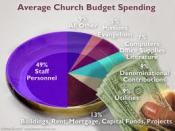
 As we have institutionalized the Church over the centuries we have lost the sense of community among believers, instead establishing divisions among us through clergy and laity and through denominational distinctions, labels and beliefs.  We claim to be one body, but are so fragmented, divided, and even hostile towards one another because of our divisions.  Large portions of our church budgets finance large institutions and magnificent edifices while minimal amounts go toward the poor, the widows, the homeless, and the hurting.  To reestablish the power of the first century Church back into our institutions, we will have to first again establish community and the willingness to “lay down our lives” for one another, breaking bread with one another, fellowshipping daily among one another.  We will have to establish community back into the Church.


Preparing And Equipping Toward Maturity


What Does “Equipping The Saints” Mean? – Part IX

It is basic to human nature to want to feel needed, to fulfill a purpose, to feel appreciated, to hear someone say, “What would we do without you?”  Unfortunately we often enable people in order to get the gratitude we think we deserve. What kind of parent would we be if our twenty-eight year old son still thanked us for doing their wash, feeding him, financially supporting him while he plays computer games all day, drive him everywhere, and are a part of every decisions he makes, but he shows his gratitude by saying, “What would I do without you?”  We would be considered a failure as a parent. The adult child is nowhere close to becoming independent because he has learned that you will enable him every step of the way.

Most church’s attempt at spiritually parenting is usually a disaster, for we enable those who come into our door. We greet them, pamper them, preach to them, pray for them, tell them what to do, when to financially give, when to stand, when to sit, when to be social, and when quietness is reverence.  We teach submission to authority to the point that authority tells one everything they should or should not do, never allowing them to figure it out themselves or let their conscious be their compass. When that authority or leadership leaves, everyone gasps, “What are we going to do without you?” while beginning to look for a replacement.

Enabling and equipping are opposites. When we equip people, we are preparing them to stand alone, no longer needing our assistance and care, and actually propelling them to accomplish feats beyond our capabilities. Enabling enslaves the person, keeping them in a position of control, continuing to draw them toward dependency. Jesus never enabled. He prepared and equipped his disciples to be able to stand alone once he left earth to return to his rightful place beside his Father in heaven. He built their faith on the Word of God while releasing the Holy Spirit to “teach them all things”.  In fact, he said that they would do “greater things” than he did during his earthly stay.

Apostle Paul would kick into the evangelistic mode when entering a new town or city. When new followers accepted Christ he kicked into the shepherding/pastoral mode and began to nurture them in the faith, using his teaching skills to make the written Word relevant while prophetically living it. He would see over what the Holy Spirit was doing amongst the whole group before leaving.  When he left, he left a fully sufficient, independent church of believers standing on their own faith. They did not have to have Paul around any more. They freed him to move on to his next evangelistic project. He had prepared them and equipped them.

Paul, and older brother in the faith, also prepared and equipped others younger in the faith in becoming apostles, future leaders. He and Barnabas journeyed together, but eventually Paul took young Mark under his care. Even though their relationship was rocky on his first missionary journey because of Mark’s immaturity, Paul eventually praises Mark, supports Mark, encourages Mark to continue in leadership, and the rest is history.  Preparing and equipping means walking beside a brother or sister in the Lord in their journey, not preaching at them or having them read numerous books on the topic.  As we have scene Paul used this principle and so did Jesus who walked with the 12 disciples.  It is not an academic exercise but a physical and spiritual one. It is the walking out, and working out, of one’s faith walk together. It is a daily walk, an intimate walk, a relational walk that prepares, builds, and equips others.

A key component after preparation and equipping is releasing.  Paul had to release each new church to stand on its own. He equipped them with the Word, the Holy Spirit, with spiritual gifts, with community, and the tools needed for leadership; now they had to stand alone.  All that preparation and equipping would be useless if he had not released them.

We as a Church need to rethink what preparing, equipping, and releasing means in our relationships of discipling and nurturing our brothers and sisters in their spiritual growth. As parents we celebrate when our sibling graduates from high school or college, gets married, and becomes a parent, all steps in growing up and becoming independent from our parental care.  The empty nest syndrome is the realization that our sibling has left the nest, our home, and established their own, gotten married or become independent, and may become parents themselves now supporting their own siblings. Most churches I know do not experience an empty nest syndrome as they have prepared and equipped their own laity, their own believers in Jesus, to become independent enough to go out and start their own church, their own ministry, their own acts of service producing growth. They do not reproduce others to replay themselves!

As we learn about the passions of our fellow believers in Jesus, we need to encourage them to grow in their passion, to develop relationships of equality with others who have different passions than their own, to learn to support one another by laying down their lives for one another, to prepare them by encouraging self reflection, developing a private discipline devotional time of Bible study and prayer, giving them an outlet to share what they have seen and heard during these times. We need to equip them with the Word, the Bible, teach them the literal Word of God, the Logos Word, and how to live it, the Rhema Word, and surround them with community, the Church. Then we may see a change, a transformation, from dead-beat Christians, enabled Christians to active, living, growing, nurturing, and supporting Christians. If we see those changes, we have prepared and equipped successfully.


Equipping The Saints Soccer Analogy


What Does “Equipping The Saints” Mean? – Part VIII

In Elizabethtown College Soccer History it has been eulogized as “The Game”!  The year before Elizabethtown College battled Hartwick College for the Division III NCAA National Soccer Championship to a nil-nil tie after six overtime periods. To prevent another tie when they met for a rematch for the National Division III title again, they started the game an hour early, just incase history would repeat itself.  It did! When regulation play ended, neither team had put the ball into the goal for the second straight year. In the fifth overtime period, during an offensive attack by Hartwick the Etown goalie was drawn out from his net and a Hartwick attacker fired a thunderous shot taking the breath out of every Etown fan. A sigh of relief was replaced by thunderous exaltation when big Dale Beiber, the son of an African missionary, placed his enormous thigh in front of the ball, knocking it down, and then kicking it down the field to safety.

After playing 90 minutes of regulation play, and 5 ten-minute overtime periods, every player, exhausted, was running on pure adrenaline. Each team was looking for the “break” that would tip the scale. That came when Sandy Kilo, the shortest player on the field, drew the Hartwick goalie out of his goal on a break away, and lobbed the ball gently over his head into the goal! Elizabethtown won 1-0! A front page pictorial of their victory lap on the Etownian, the official weekly Elizabethtown College paper, recorded history.

Why did Etown win? They were in phenomenal physical shape which provided the stamina needed and one-third of the student body weathered the 7 hour trip to create a “home game” atmosphere . Months earlier, before the student body arrived for the fall semester, the team had extensive two-time a day practices and drills. I recall one soccer player’s return from the late afternoon practice, where he took off his soccer spikes and collapsed on the hard stone porch, falling a sleep there in spite of the student traffic throughout the evening. Those exhaustive practices prepared the team for the stamina needed later.  I also was part of the masses who crammed into any vehicle heading towards New England for the game and the long, joyous, return home before the team bus arrived for a victory celebration like the College had never experienced before.

Elizabethtown had been better “equipped” for the game.  They had invested their time in physical conditioning, had worked hours upon hours on their soccer skills, had worked hard on developing a “team” concept, and had built a radical fan base that would travel anywhere to support them. They were prepared; they were equipped.

We, the Church, can learn from their experience.  We should be “equipping the saints for works of service.”  “Prepare ye the way!” is the cry heard throughout the Bible.  Preparation always precedes ministry. Jesus prepared his disciples for when he would leave the earth: he prepared them for apostleship; he prepared them to be the foundation of this new movement, the Church.  He not only prepared them, he equipped them with the Holy Spirit to “teach them all things”; he equipped them through the Word; he equipped them by teaching them the principle of laying down your life for your brethren (IJohn 3:16) so that they would establish community, a community that would survive even the most brutal persecution possible.  Preparing and equipping were essential principles needed in birthing and establishing the Church.  They are still needed today in the maintaining of the Body of Christ, the Church.

Any good building needs a foundation and needs the proper equipment to build that foundation. God knows what foundation the Church needed and equipped the Church with evangelists, shepherds, teachers, prophets, and apostles.  I personally believe that evangelists, shepherds, teachers, prophets, and apostles are still currently in most churches, but we need to equip them for service, then release them to do the calling they have been prepared and equipped for.  The more we prepare them, the higher we raise the bar for success, the more effective the Church will become.  Instead of dead-beat Christians who are enabled by a professional staff, we need to develop a new mindset of how to prepare them, equip them, and release them for works of service.

Life sometimes seems as exhaustive as a six overtime period soccer match, a tug of war, back and forth free-for-all that we can only win if we have been properly prepared and equipped. Like the terrific fan support, the Church needs to rally around each other as a community of faith, of believers, as priests unto the Holy Spirit, who are willing to “lay down our lives” for one another.  When that occurs, the Church will be ready to obtain that definitive score that will win the match, or “The Game” of “life”.


What Does “Equipping The Saints” Mean? – Part VII

Stop, Look, and LISTEN! The Art of Listening

In earlier blogs I have written about the power of being in God’s “Rest” as outlined in Hebrews 3. The formula is simple, for it is written on signs at railroad crossings: Stop, Look, & Listen.  Often we need to just stop what we are doing, look for the answers and look to God to reveal those answers, and listen for His small voice, the voice of the Holy Spirit to tell us the answers to which we so desperately seek.  The hardest part of the formula comes after those three steps, for being “obedient” to what we have seen and heard is the key to its success.  We then have to be the “doers” of the word, “doers” of the revelation for it to be completed.

If we want to equip the saints for the works of service, we need to teach the saints how to “listen”.  There is so much “noise” around our lives today, we have lost the art of fine tune listening.  We play music on our IPads, our Iphones, our computers, our stereos or surround sound wired rooms.  We don’t hear honking horns when in the car due to the volume of our radios.  I can be typing this article while having the television on watching a sports event while wearing headsets listening to music. We call it “multi-tasking”, and somehow through it all, we have lost the art of focusing on one item, on one sound, on one message.  I know a lot of songs by tune, but not by lyrics because I do not listen close enough to catch the lyrics.

One of the assets of having a wife is she demands that I listen to her.  In the early years of our marriage she would often say, “You aren’t listening to me. You didn’t hear what I said,” even though I was looking at her and heard every word she had spoken, but somehow the “message” of what she said was lost or didn’t register. 

We are great at telling others what we think, but fail to stop and really listen to them. That is the way most of us do prayer.  We think prayer is petitioning God, pleading with God, telling him about our day, what we need, what we think He should do for us, or what we think is the answer to solutions that we want Him to bless. We don’t think of prayer as the art of listening.  Maybe we shouldn’t speak until we hear something!  For example: Let’s say we have been asked to pray for the Christians being persecuted by Muslim extremists in Africa. How should we pray? Particularly if I know little of Africa, its culture, the Muslim faith, or the clash of extremism there? I can do a generic prayer asking for God to save them, protect them, and bless them, or I can just sit and listen and pray, “Holy Spirit reveal to me what is on Your heart, being led by Your Spirit, then just sit and listen and say nothing until told. Prayer is just communicating with God, and communicating requires speaking and listening.  We need to learn how to listen.

If we teach the saints to listen, then they can go directly to the source, the Holy Spirit, for answers.  We may not have the answers, but “all things are possible in Christ Jesus who strengthens us.”  He has the answers; let’s allow him to tell them to us.  We just need to be obedient then to what he has said and revealed.

Jesus’ prayer life was built around listening.  Often he would STOP what he was doing and go into seclusion away from his disciples and the crowd who demanded so much from him.  He would then LOOK to his Father, seeking his will in all maters, and He would LISTEN to His Father’s directions.  He would be obedient.  Jesus often knew what lay ahead because the Father revealed it to him in these times of stopping, looking, and listening.  He knew his life’s mission, the Cross, before it physically happened, and discussed it with his disciples, and was obedient to that revelation.  Once revealed, all things led to the cross:  He had LOOKED to His Father and LISTENED to the revelation given, and was OBEDIENT to the point of death.  He had mastered the art of listening.

Jesus, as a human, learned to listen to people, to hear their cries, hear their pleas, hear their hearts, hear their requests, hear exactly the message they were trying to convey.  On the contrary his disciples did not perfect the art of listening until after Pentecost for they often floundered, failed, and wabbled in their faith.  After Pentecost they learned to LOOK to the Jesus for answers, allow the Holy Spirit to speak to them while they just LISTENED, and then became OBEDIENT to what had been revealed.  Jesus, while a human, taught his disciples the art of listening, equipping them for after his ascension. He then sent the Holy Spirit to “teach them all things” if they were willing to listen, and the 12 disciples became the 12 apostles because of the equipping Jesus did when on earth.

We need to equip the younger saints in the Lord for the works of service, and teaching them the art of listening, which a key component. Let’s not be so quick as to give them books, nor tapes, nor video, etc. on topics they need, but give them the Word, the Bible, and allow the Holy Spirit to speak to them through His Word.  We need not do the teaching, the Holy Spirit will; we need to “equip” the saints with the art of listening. With them, we need to model how to STOP what we are doing in our multi-tasking busy lives, LOOK to Jesus for everything, LISTEN to the voice of the Holy Spirit, and then be OBEDIENT to what we have seen and heard, our revelation.  By doing it WITH other believers, our faith increases, so does theirs, and we are equipping them for their spiritual journey, to eventually stand away from us, not be dependent on our faith, but become dependent on the voice of the Holy Spirit.

What Does “Equipping The Saints” Mean? – Part VI

The Church’s Role In Releasing The Saints For The Work Of Service

What is the Church’s role corporately in “preparing”, “equipping”, and “releasing” the saints for the work of service?

Preparing:  The Church needs to get away from its program and organizational way of thinking, developing programs and structures that then need to be filled by positions and bodies.  Instead they need to begin to look at each individual member’s spiritual DNA, that which makes them up spiritually.  What is their passion, their desire, their dream, their calling, their goal, their point of view?  What spiritually makes them tick? How do they best function?

If they have a strong evangelistic strain in their spiritual DNA, what can the Church corporately do to prepare them to “live” and “give” the message of spiritual “birth” and “rebirth” that will be the core of their being?  The Church will have to guide them in learning what it means to “lay down your life for your brethren” (IJohn 3:16) so that believer can “live out” as an example the principle of what Jesus did for those who do not know him: “But God demonstrates his own love for us in this: While we were still sinners, Christ died for us.” (Romans 5:8) What safer place to learn this kingdom of God place, than in the midst of the Church?  That’s preparing an evangelist to be an evangelist. The pastor/shepherd can nurture the practical life experiences of this dying and resurrecting principle, the teacher grounding it in the Word, the Bible, while the prophet can bring spiritual life to the principle, and the apostle coordinate is activity in the Christian believer’s life through the working of the Holy Spirit.

The same can be true for those strong with the pastoral/shepherding spiritual DNA strain, or teaching, prophetic, and apostolic DNA strains. The other four spiritual strains can exemplify, support, and strengthen the spiritual genetic make up of a believers growth in Jesus Christ toward maturity.

Equipping: While being prepared, the Church also needs to “equip” the believer toward his diverse unique calling in Jesus Christ. Corporately, the church can offer facilities, finances, mutual support from other believers and their giftings, callings, and DNA make up, as well as materials needed to support the effort of the individual calling of a believer.  In the Church “no man is an island; no man can stand alone.”  God has developed a body with different parts, different functions, different purposes that all work toward the health, stability, and function of the entire body. He has developed a priesthood of believers, a corporate function of all involved for one general purpose. When a person is about to be release into maturity, he knows he will not be sent alone, but with the blessing, the support, and the full backing of other believers which will serve him and whom he will serve.  When this occurs, he is now equipped.

Releasing: Now that the Holy Spirit has prepared the believer, the body of Christ, the Church has surrounded the believer in equipping him, the mature Christian is now ready to be released.  Even though released on his own, he still is, and always will be part of a corporate body of believers, the Church, who will surround him/her when needed to help fulfill their destiny and calling in Jesus Christ.  If when in the heat of spiritual battle, if one falls, they will fall into the arms of another Christian believer, another priest in the priesthood, who can administrate immediately what is needed to bring back their healing, their preparation, their equipping, to stand again in the faith.

In Conclusion: That in summary is the calling, the purpose, the direction of the five fold ministry, to prepare the individual believer for his calling in the corporate Church, to equip the individual believer by and through the corporate Church, to be released to do “works of service” glorifying the corporate Church, the Bride of Christ, the Body of Jesus Christ today!


What Does “Equipping The Saints” Mean? – Part V

 Releasing Different Personalities

In a previous blog, I have written about the song “Little Boxes”, where they all came out the same.  The Church as an institution is great at producing little boxes.  Baptist create little Baptist boxes. Lutheran boxes are different from Baptist boxes but all look the same. There are Pentecostal boxes, Roman Catholic boxes, even nondenominational boxes.  I don’t think those labels will be on the boxes when God’s UPS truck takes us to heaven!

If you are a parent having “several siblings”, you quickly learn that none of them are the same even though they possess the same DNA from the same parents!  The “perfect” child who slept throughout the night since birth is followed by the “child from hell” who screams, cries, and demands a feeding, diaper job, and cradling every two hours, twenty-four hours a day!  That is enough to quit having children, but then you stretch your limits and end up having a third child because you don’t remember making love while you both were sleep deprived!  The third child is even different from his/her other siblings!  How can this be?

There are spiritual parallels. Even though we have the same spiritual DNA of our Father God, it is amazing that almost every Christian I have ever met is different!  We have different drives, different passions, different looks, different cultures, different styles of dress, accents, and personalities.  Even though we carry the same label, Christian, we act differently, think differently, are motivated differently, etc.  We have come to learn that even though we are a Church, a body of Christ, maintaining the same image, that of Jesus Christ, we are still all uniquely made, uniquely designed, uniquely wired, physically, spiritually, and emotionally.  It is amazing how God loves us individually, accepts us unconditionally, yet sees us corporately!

If we are “to equip the saints for service”, then what is that to look like? What are we shaping, molding, developing, transforming? When we are finished, what does a mature Christian look like?  The answer is as nebulous as a painted portrait of Jesus Christ.  We do not know what he actually “physically” looked like, but we do know “spiritually” and even “emotionally” what that looks like? Then why do we as a church so often look at the “physical” appearance of what a mature Christian looks like rather than developing the “spiritual” or “emotional” Christian which we are supposedly preparing and equipping?  I suppose, because of the diversity of the human experience we all come out differently.

So maybe we need to learn to accept our diversity.  Maybe we should first see what the DNA make up of a person is before we try to transform them into “little boxes”, cloned images of what we think a Christian should appear or be. One person’s DNA may hold the passion and drive for the lost as a predominate gene, while another may possess the drive to care for others, to shepherd as their predominate gene.  Another may find the combination of spiritual molecules to make them strong in teaching, or the prophetic, or even the apostolic.  Each Christian has a different drive, a different bent, a different spiritual personality that still exemplifies Jesus, but in diverse ways with diverse degrees of emphasis.  The key to “equipping the saints” is giving them, “equipping them”, with what they need to be successful on their spiritual journey.

As the Body of Christ, the evangelist needs the equipping of a pastor/shepherd to nurture their spiritual growth and the growth of those they “birth” into the kingdom as well as a teacher to anchor their work and drive in the Logos Word, the written Word, making it a prophetic Rhema Word, a living Word, while being guided by the apostolic over sight of what and how the Holy Spirit is doing in one’s life in edifying the Body of Christ.  The laying down of the lives of the pastor/shepherd, teacher, prophet, and apostle around the evangelist is the “equipping” of that person, giving them what they need to have a mature, balanced ministry in the kingdom of God, the body of Christ, the Church.

The “equipping of the saint for the work of service” can be diversely different for every believer in Christ that could be a logistical nightmare for the way we do church today, but is not difficult for the Holy Spirit who sees over the entire body of Christ, individually and corporately.

With the proper preparation needed, and the equipping of the five fold around them, believers in Christ can be “released” to allow their passion, their drive, their point of view, their motivation to arise, develop, and to flourish. This step is crucial in the development of every believer!

What does a “prepared” “equipped” believer in Jesus Christ, a mature Christian look like?  Because of the diversity of God’s DNA, it may look as varied as each grain of sand in the ocean!  That is why we need the Holy Spirit who is in each individual who professes Jesus Christ as their Savior and Lord to arise and bring out the uniqueness of each individual to be combined with his corporate ability of unify and develop his Church into the image of Jesus Christ to be the agent, the teacher, the drive behind the development of believer in Jesus Christ individually and the Church as a whole corporately.  Only then will the diversity of the body of Christ be accepted, respected, and released!


What Does “Equipping The Saints” Mean? – Part IV

 The Only Way To Be Released Is To Release

One of the hardest things about parenting is releasing!  What! They’re 16 already, and its natural to want to be released from the “bondage” of going everywhere with your parents and counting on them for everything! They want the car keys, a driver’s license, to drive on their own? If we want them to be successful adults, we have to release them!  What! An 18 year old going off to college where there is drinking, partying, peer socializing in ways that were taboo when they lived at home! Can they morally stand on their own?  Be responsible enough to make 8 o’clock classes, develop their own proper study habits, hygiene habits? Release them!  I think it is harder for the parent experiencing an empty nest, than it is for the yearling to establish his/her own nest.  Both need to release each other: the caregiver from constantly giving, and the recipient from always receiving. It is a process called “growing up”!

Paul even is fascinated by what it takes for an immature Christian to “Grow Up” in the faith. When they are young in the faith, new in the experience of faith walking, they often stumble as new walkers do when first learning to stand on their own.  Paul calls them “carnal Christians”, those who would rather remain spoon-fed, diaper changed, cuddled and pampered rather than “growing up” and standing on their own.

The key to a Christian believer “growing up” from the perspective of the five fold who has birth them (evangelist), help them develop and grow in the faith (pastor/shepherd), taught them the Word, the Bible (teacher), guided them into how to hear from the Lord on their own (prophet), and help them to see the big picture of the Church, the family of God, as a corporate group (apostle) needing one another, is to “RELEASE”.  If we have done a proper job of “preparing” and “equipping”, no one can stand on their own unless “released”!

If we have become “enablers”, it is difficult to release, because who will do it for them if they cannot do it themselves?  Most church leadership looks at their members as never being “mature” enough to be released, thus constantly enabling them, then wonder why they haven’t grown or become independent from them! In spite of having a “heavy foot” on the gas pedal, a parent has to “release” their son/daughter to drive, even if it takes an accident to teach them why they need safe driving habits. Who hasn’t done “really stupid things” in their 20’s that they never want to admit about in their 40’s or 50’s as part of their learning process of “standing alone”, “growing up”!

When Jesus “discipled” his 12 disciples, they acted like 20 year olds, fighting for positions, trying to figure things out practically on their own, inserting foot in mouth, and often lacking the “faith” needed for the coming call.  Jesus, the Teacher, the Shepherd, had not only called them, birthed them, their Evangelist, he now was in the process of nurturing and developing them.  He was preparing them, equipping them, for what lay ahead. He didn’t freak out over their falls, their failures, their short comings, he kept pouring himself into them, willing to lay down his life for them.  He was “preparing” them!  Once he ascended into heaven, he then “equipped” them, sending His Holy Spirit. Now they were ready!

On Pentecost he RELEASED them! They were on their own, now grown up!  They were no longer called disciples nor thought of as disciples; they were apostles and began to walk, think, and act like apostles, standing tall, standing on their own.  They had been released, and were now called to “see over” what the Holy Spirit was doing to the Body of Christ, His Church, His Bride, for the purpose of “preparing” and “equipping” others to be “released” for the “kingdom of God” was no longer at hand; it was in full “Acts-tion”! They were released, a live moving forward. 

The book of Acts does not record the stupid 20-year old actions of their Pre-Pentecost experience, but records the “Acts-ions” of what they are doing as “grown up” Christians!

That is the goal of the five fold: To help the believers “Grow Up”!

And the only way to allow a child, a teen, an adolescent, to “grow up” is to eventually “release” them!  The final step to the “equipping the saints for the work of service” is the “releasing” of them.  It’s a “hands-off” policy, so the hand of God can be on them for the rest of their Christian lives of “service”.


What Does “Equipping The Saints” Mean? – Part III


Then How Is A Teacher To Be An Equipper?

After reading my last blog, you might have asked, “What is the role of the teacher in the five fold if they are ‘NOT THE TEACHER’”?  It is a different mindset than what the Westernized intellect has established.  The key may be found in how we define “equipping”?

Hypothetically, let’s say you want to “explore the North Pole”, the top of the world.  How do we prepare you for the trip; how do we equip you?  Well, Westernized intellectual thought would say to study, research, dig out all the information we can find about the North Pole, sub-zero weather conditions, climate, etc.  We want to “know”, intellectually, everything we can!  We go to school, earn a Bachelor’s, Master’s, even a Doctorate Degree in a specified area so that we become experts in the field. We rent a dog sled, because that is how early explorers got there, and go on our journey only to die by hardships; we freeze to death!  We knew everything about the journey, but did not “equip” ourselves for survival!  It takes more than intellectually “knowing” about a topic, but actually “experiencing” a topic.  If we survived enough to recuperate to go on a second expedition, we would invest in proper parkas, insulated boots and specialized gloves, proper heated, motorized equipment instead of dog sleds, etc. We will have learned from “experience” what is needed to succeed. It is a harsh climate out there! Those who follow us can read our written works, our journals, study our efforts, but it would not hurt them to call, visit, interview, and ask in depth questions from us about our “experience”.  Even with that, until they “experience” the frigid North for themselves will they truly be able to relate, to “know” what it is all about.

So it is in “learning” about faith in our spiritual journey.  Even though we have written accounts from the patriarch, Abraham, Isaac, & Jacob, and accounts of Moses’ journey, Samson’s story, Daniel’s faith adventures, the many prophet’s journey, the disciples walk, and even the church’s history in the book of Acts, we still do not fully understand the truths these men have learned until we “experience it ourselves”!  That is where the rubber meets the road; where it all is transformed from theory to actuality.

The drive of a five fold teacher is to “prepare” a person for their personal journey that he is about to “experience”.  To “equip” the person with all he needs for when he is ready to do the journey alone.   Walking with a brother/sister in the Lord, beside him, next to him through life’s experiences, teaching Kingdom of God principles to practical life applications is Jesus method of teaching his disciples. When the teacher is gone, hopefully you can stand on your own for he has “prepared” you to do so.  It is more than mentoring, for IJohn 3:16 says we ought to “lay down our lives for our brethren”.  I have had several Christian mentors in my life, but they were not willing to sacrificially lay down their lives for me when needed. Jesus, the ultimate teacher, was ready to “lay down his life” so his pupils, students, disciples, apostles, so they could stand on their own after his resurrection and ascension. He had prepared them.

He also “equipped” them.  He gave them everything that they needed upon his departure to stand on their own.  The same Spirit that descended upon Him at his baptism was given to them when the Holy Spirit fell upon them!  He had been led by the Spirit to the dessert, to places of quietness, to crowded areas, places of mass ministry, to the sick to heal them, and even to Jerusalem to the Cross to fulfill his life’s calling!  He has given each Christian believer that same Holy Spirit to “teach him all things”, to “say the right things for them when needed”, to “lead them, guide them”.  He has “equipped” them with “spiritual gifts” for effective communications with Him and through Him.  He has given them “faith”, “hope”, “love”, “peace”, “spiritual armor”, purpose, etc. Like the parka’s, transportation, etc. of the North Pole explorers, Jesus has given those things not only to “survive”, but those things needed to “strive”, to succeed to the goal!

The ultimate dream of a five fold teacher is to have his students “experience” God, faith, agape love, forgiveness, repentance, righteousness, holiness, obedience, etc. on his own, using the principles of the kingdom of God that they were taught when walking next to them in life’s experiences.  When they “experience” God on their own, standing firm in the faith, moving forward in the Spirit, toward the goal, the prize of the Kingdom, Jesus, as a five fold teacher you can have the satisfaction that you have succeeded!  That is the goal of a five fold teacher.


What Does “Equipping The Saints” Mean? – Part II

 It’s Not Your Job To Be The Teacher

I have been a public school teacher for 40 years!  For forty years teaching has been my job.  That is how I financially supported my family.  It became my identity, defining who I am.  I would introduce myself as, “I am Anthony Bachman; I teach 8th grade at Spring Grove Middle School.” Being acknowledged as “Teacher of the Year” by my school district during the last year of my career was a fulfilling honor, signifying my professional growth as a struggling “new teacher”, maturing into a master teacher, gleaning from other educators that I admired, being willing to change with the times, the climate, the new swing in educational philosophy over a four decade experience.  All that changed in June of 2011 when I retired”.  Then I discovered that I was still a teacher, in spite of my new employment status, for it was what drives me; it’s my passion.

I was fortunate having Clarence Barnhart who received the honor of being one of the Top 10 Qualifiers for Teacher Of The Year for the state of Pennsylvania as my educational mentor.  He was dynamic, creative, highly organized, motivated, loved kids, love coaching by introducing track to athletes and developing them for High School, great at intramurals, willing to try new ideas while incorporating multi-disciplines into his teaching style.  Rather than lecturing and showing filmstrips and films about the Revolutionary War, he taught students how to research history for themselves, how to dig for answers, how to discover history nationally, state wide, and even locally.  His students not only “knew” their history but “experienced” it!  That is what teaching is all about: not only knowing your subject matter, but experiencing it, living it, consuming it, making it part of your being!

As I began my retirement, I spent time reading my Bible.  I soon realized that Jesus’ model of teaching differed from my Westernized thought and experience.  Jesus never took a “course” or “earned a degree”, but confounded the spiritual intellects of his day at the Temple when he was only 12 years old!  He “earned the respect” of being called “rabbi”, teacher, for what he taught and how he taught with “power”.  Now a successful rabbi, he never founded a College or University on “new Jewish thought”, but chose 12 of the most unlikely candidates in which to invest his “teaching” career. He walked with them, discussed one on one with them, lived with them, ate with them, taught them through life experiences, even taking them to Jerusalem and to face the cross and his resurrection.  Their education continued on the Road to Emmaus, as they were explained “all things” and the fulfillment of the gospel by Jesus.  With his ascension, their education came through the Holy Spirit who taught them that in Christ there is no difference between male nor female, Jew or gentile, master or slave, nor rich or poor.  How I taught for forty years as a public school teacher was so foreign to the way Jesus taught in his three-year career as a rabbi, or teacher.  I taught academics; Jesus taught experience.  I taught intellectual theory; Jesus taught practical everyday life style.  I taught through my intellect; Jesus taught through His Spirit!

Just as I became a “professional” educator and thought my way was the correct way; it is easy to become a “professional” Christian, a member of the clergy, who can feel his way is the correct way.  We have been “trained” to think and act “professionally”, intellectually.  It’s our job!  It is the way we identify ourselves.  It becomes who we are, and if the Holy Spirit shows us that our mind set is foreign to the actual ways of teaching the gospel, we become defensive and personally assaulted. At least I did as a professional educator.  All my higher educated role models, professors, lectured “what they knew through their P.H.D. degrees” to us students; all our higher elevated role models, senior pastors, Bishops, etc., preach, religiously lecture, to us “what they know through their theological doctorate degrees”. Their methods of teaching are the same, yet “lecturing” has been proven one of the most ineffective ways of teaching! Having students “experience” their material is far more effective.

In “equipping the saints for the work of service,” we often feel we, the teachers in the Church, have to teach the materials that we are most comfortable with in our own faith journeys.  Here is the hard lesson that I have had to learn: I AM NOT the teacher; Jesus, His Holy Spirit, IS the teacher. Jesus, upon his ascension to heaven to sit at the right hand of God, promised to send the Holy Spirit “who will teach you all things”. He is the teacher. Jesus continually taught through example while being a human on earth. His teaching HAS NOT ceased, for His Holy Spirit has been sent to CONTINUE the job.  We need to get out of the way and allow the Holy Spirit to teach!

If someone opens the Bible on their own, the Holy Spirit can teach them its truth; it is called “revelation”. He, the Holy Spirit, is the “revealer of truth”!  Some of the best teaching comes through private daily devotions when it is only the individual believer with the Holy Spirit reading the Word, the Bible, together privately.  The Holy Spirit “recalls” those passages in the believers every day life, making the Logos Word, the written Word, the Rhema Word, the living word.  Not only does the Holy Spirit help the believer in Jesus to “hear” the Word in their private time together, but calls them to be “doers” of the Word, experiencing it!

Bottom Line: If we are to be teachers helping to “equip the saints for the work of service”, we need to teach them how to hear the Holy Spirit on their own, how to be obedient to what has been “revealed”, seen & heard, and learn to walk out their faith on their own, relying only on the Holy Spirit.  Then we have “equipped” them properly.  It has nothing to do with the intellect; it has everything to do with “obedience” to the Holy Spirit, so let’s allow the HOLY SPIRIT to be the TEACHER! It’s just NOT our job! It’s HIS!


What Does “Equipping The Saints” Mean? – Part I


Our Spiritual Library’s Story

I’ve been thinking about what does it mean to “equip the saints for the work of service”?  In most Westernize churches that means intellectual training: reading books, taking courses, and holding intellectual discussions.  If I am in a men’s ministry group, I will probably have to read a book called “10 Ways To Be A Better Christian Man” or “How To Be A Better Christian Husband”. If in a small home group atmosphere, I may be asked to read a book that every small group is reading to keep the message consistent throughout the body or read articles that complement the Pastor’s sermons.  If in a youth group, “How To Win Your School For Christ” may be the reading of choice. If in a women’s group, “Thousands Of Ways To Submit To Your Husband” could be another satirical title. If being a new attender, you might be asked to read, “What We Believe” book, or if you are a developing church leader, you might be asked to read “25 Steps Towards Righteous Leadership”!  If you attend a mid-week service, you might read “Missions, A Call To The World” to keep you informed of the church’s missionary endeavors.  If you are an “active” member, you could be reading multiple books at one time!  Then when meeting as a small group, you discuss whatever book you have read: “meet & discuss” sessions.  Application of what you have read will probably be done on your own, but at least you got to discuss the matter.

Being a Christian of over 50 years, I now have accumulated a large library of books (most of which I have now discarded), have taken a multitude of courses, have sat through thousands of teachings and sermons, have taken online/workbook individualized courses, have attended a multitude of conferences, to specifically train me for what?  When I get to heaven, will I have to read “10 Steps To Get Into Heaven” so Peter and I can discuss it before allowing me to enter?

The Bible says that we are not only to be hearers of the Word, but doers! Unfortunately, very seldom has reading a Christian themed book lead me to become a doer of its material.  I have become “aware” of its topics, “informed” of its topics, and maybe even “intellectually stimulated” by its themes, but usually not motivated to actually “do it”!  Why does almost everything in Western Christendom have to be intellectualized?  The Jewish culture, which is where God decided to immerse Himself, operates out of the heart, the emotion. King David is known as a man with God’s heart, not God’s head.  His son, Solomon, is known as the intellect, constantly trying to intellectualize his faith unlike his father. Knowing God with your heart means experiencing God!  Experience goes beyond just intellectualizing it, for if you feel it, you “do it” in order to “know it”!

Maybe to start out asking how we are “to equip the saints for the work of service”, we should ask how we can help people “experience” God for themselves, and stand beside them, behind them, next to them in “their” walk of faith, in “their” unique faith journey.  What can we do to “support” them in their walk, their growth, their journey?  Finally, can we “release” them to “do it” on their own, without our guidance, in other words, “grow up spiritually”, become mature in the faith?  How can we teach them to depend on the faithfulness of the Father, depend on Jesus, depend on the Holy Spirit rather than depending on an older mature Christian or a professional staff member?  Can we “release” them so we can move on as well as they move on in our faith walks?

Being an English teacher who emphasized reading good meaningful literature, it is ironic that I am saying that we need to at some time place aside the books written by other authors, and begin to write about our “Acts” of faith, our spiritual walk, what we are “doing” for the kingdom of God. This is not to put us under legalism of a “works” kick, but to free us to walks the journeys we are equipped to walk. 

In order to understand how “to equip the saints for works of service”, I propose that we need to first understand that this journey will NOT just be just an intellectual journey, but a journey of the heart, a journey of our emotions, a journey of experiencing our faith, a faith journey in Jesus, lead by the Holy Spirit.  We will continue to walk in this journey in the next series of blogs!


Lesson Learned From The Church In China


Thoughts By Watchman Nee

I’ve been reading some of Watchman Nee’s writings, seeing how the Holy Spirit was preparing the Church of China for the upcoming persecution with the coming of the Chinese Communist Party coming into power in the 1950’s. They would outlaw westernized religion while imprisoning their leaders and later any believer professing faith in Jesus Christ. Watchman Nee, as well as countless others professing Christians would die in prisons because of their faith.

Active vs. passive:  Some unique insights that I have seen through his writings is his emphasis on never allowing Christian believers to be “passive” in their faith. He was not a fan of the sermon from the pulpit to the congregations passively sitting in their seats that he called “worker’s meetings”.  He encouraged active participation by all Christian believers that he called “church meetings” because the entire church, the body of Christ, the priesthood of believers, the average Christian would participate.  This set the groundwork for every believer to be responsible to be active for Christ once persecution hit the Church. When Christian organizations were destroyed, the faith of individuals could not be diminished.

Meeting Places: He did not believe in building buildings called churches. He thought the Church was God’s people, and where ever they met they had church. This philosophy became vitally important when persecution hit, because it is easy to burn down and destroy a building, but it is harder to tear down and destroy one’s faith, particularly if it is an active faith. The church met in homes, rented rooms, public buildings, etc. It became fluid. I understand that today the underground Chinese Church still meets in homes, rented rooms, warehouses, etc. whereever they can.

Organizations: Unlike his Westernized counterparts, Nee did not feel obligated to form Missionary Societies or highly structured organizations, but gave “workers” leave way to birth and develop new churches as the Holy Spirit led.  When the Communist Party came to power, there was no central organization or leadership for the party to direct its persecutions toward. This set the groundwork for the “fluidity” that the Chinese Church exhibits today.

Finances:  Nee felt faith for one’s finances was mandatory for every full time worker of the gospel. A set salary with “benefits”, he felt, hurt one’s faith for believing God to provide all one’s needs.  Also costs of ministry wer also upon the “worker”. This prevented debt, budgets, perks, and the power of enablement through entitlements. Again, this turned out to be a powerful principle for the underground church to utilize during a time of persecution.

Unity & Division: Nee frowned on the theology that constantly divided the unity of the Church as a whole. He felt that the only division would be geographical.  All the Christians who fluidly met in, lets say, Washington, D.C. would be known as the Church of Washington, while those in Baltimore, MD, would be the Church of Baltimore. There was to be no divisions between sects meeting in a given locality.  If you were a Christian, one who was saved, redeemed, and sanctified through Jesus Christ was a member of His Church, your were part of that local body of Christ. This kept sectarianism from dividing the body, and is monumental in the way Christians in China think of themselves individually, locally, and corporately today.

Holy Spirit:  The listening to the voice of the Holy Spirit and being obedient to that voice was crucial in Nee’s ministry, and is crucial in the ministry of local churches today in China.

Because of the silence of the underground Church in China, which is understandable even today because of persecution, I personally do not know how and if these principles are being used, but I do know that they probably were and are effective for ministry in this setting today.

The  Church of China has been tried and tested through persecution. The way they “do” church and “are” the Church may look and feel quite different their Western Christian counterparts, but, I feel, we in the West can learn much from them about being active or passive, where to meet, setting up our organizations and finances, dealing with Unity and Division in the body, and trusting and being obedient to the Holy Spirit for all things and guidance. 

When the communist walls of the U.S.S.R. fell, many westernized churches sent missionaries back there to establish westernized formed churches; when the walls of communism eventually fall in China, I think that it will be the Chinese underground Church who will send missionaries to the United States rather than the West returning to their land.

I pray for the day when I can see and verify how the five fold is operating in the free, underground Church of China. I know it is there!


Church Pigeon Hole Politics


Putting The Cart Before The Horse

Most American churches are programmatic, that is, as an institution they design programs often run by volunteers but administrated by the professional staff.  Programs make positions, and positions must be filled by people, thus titles and job descriptions are developed.  As laity, we are often told by our clergy that we should be willing to serve, to do anything for the kingdom, thus under that premise, many volunteer to fill vacant positions as nursery attenders, Sunday school teachers, youth advisors, children’s church workers, back ground singers or choir members, ushers, and other menial positions, and get stuck there for life or until they are burned out or bored. Many times people who are placed in positions don’t have the knowledge to do that position well, or don’t have the passion or drive to push themselves in that position. When there is no life in the program, we begin questioning why?

I believe that the five fold is for the laity because it is just identifying the passions that drive them, and the mentality or point of view from which they think and operate. A person whose passion is to win the lost doesn’t need motivation, they are driven by the Holy Spirit to do just it. They can’t help themselves. They think continually about winning the lost. They just need equipped by their local church, then released.  If a person is passionate about shepherding, caring for others, we need not find a “position” for them; just equip them and release them! The same with someone driven by the prophetic, or a teacher, or apostolic oversight of seeing the big picture.

The church needs to identify the passions, drives, and points of view by the people who are already active in their congregation, give them what they need to succeed, whatever that would be, alias the equipping, then release them to do their thing!  They will do it with gusto, determination, striving for success, wanting only the best, and be happy and fulfilled doing it.  The church should not place a pastoral/shepherding saint in children’s ministry just because no one else will do it, but allow them to develop a small group ministry to disciple people as they are driven to do so. If some one sees the big picture, apostolic in vision, drive, and point of view, making them an usher to see over people financially given during the offering just because the position needs filled, does not enhance their chances for ministry, and stifles their drive to use their passion effectively for the kingdom of God.

The church needs to reprioritize its efforts. People should go ahead of programs! Developing their talents and equipping them for ministry should come ahead of developing programs and asking them to fill positions.  Releasing them to go with their passion and fulfill their desire to minister effectively in their own giftings and talents should trump having to teach them, design them, and train them to successfully fill a position that drives a program.

In the world of professional public education, you have teachers who are “driven” with “passion” to teach children when they graduate with their teaching degrees. They are driven to evaluate what is best for their students and adjust their multiple teaching styles to meet that student’s need. They are in the classroom because they love teaching, are driven to do it, and are fulfilled by seeing their student’s succeed. Yet in spite of teachers earning four year degrees in higher education and multiple graduate courses and  graduate degrees, today’s public school administrators think they have to bring “programs” in for “professional development” to tell their teachers how to teach, as if they aren’t qualified to do so in spite all the education they have received.  This is thwarting and devastating many teacher’s drive, their passion to creatively and professionally teach, feeling muted, downgraded, and frustrated by always being told the administrator’s ways are always better than their own inclass proven ways. Administrators decades ago use to do anything they could to “equip” their teachers to teach, fighting for materials for their teachers and their classrooms, provided the best schedules and class sizes to be effective, not telling their teachers how to teach.

Today’s churches find themselves in a parallel position. Instead of allowing the people in their congregation to go with their passions, use their already established talents, free them to be who they are in Christ to do the works of service and “be the church”, they establish positions and tell their people ‘how to do church”! “Leadership Conferences” for pastors and staff teach “professional development” on professionally how to “do church” rather than teaching them how to equip their saints to be who they are in Christ, equip their saints with resources to succeed in their passions and endeavors, equip their saints to be successful, nor how to release their saints without micromanaging them. 

If we want the church, the people of God, to be the church, the people of God, then we got to allow the church, the people to God, to be the people of God by releasing them to be so!

We got to learn how to let the Holy Spirit be the motivator, the passion within the saint, to be the trainer and developer of the saint, to be the equipper giving the saint whatever he/she needs to succeed.  The professional staff has to quit trying to be the Holy Spirit for the saints! That never works!

We have to develop a new mindset: Instead of investing in church programs, instead of investing in more staff or “professional development” for the staff, let’s start investing in the saints, the Church, the people of God!  Let’s start equipping them for success, and releasing them to be what God has created them to be! Let’s put the horse again in front of the cart! 

 

Store House Tithing: A Lost Art In Christendom Today


Preparing A Church For Rough Times

In the first book of the Old Testament, Genesis, Chapter 41 portrays the powerful narrative of how Joseph goes from imprisonment to be second only to Pharaoh in power. He interprets Pharaoh’s dream of 7 years of abundance and 7 years of famine. Pharaoh places him in charge of “store housing” 1/5 of Egypt’s grain during the years of plenty to be distributed during the years of famine. By the time the famine subsides, the Egyptians have sold their souls for grain, and Pharaoh owns all of Egypt and begins building a great empire built on tyrannical control.

By the time we get to the last book of the Old Testament, Malachi, Chapter 3 God asks, “Will a man rob God? Yet you rob me. But you ask me ‘How do we rob you?’ In tithes and offerings. Bring the whole tithe into the storehouse, that there may be food in my house.”  Israel is being challenged to use the very principle that God had Joseph use in Egypt. I call it store house economics: creating a store house in times of wealth to be drained during times of need.

Watchman Nee was a Bible teacher and leader of the church in China before the Communist take over. I enjoy his teachings in the context that he is preparing a Church for persecution.  What Nee teaches would be monumental in the Church’s survival under extremely harsh persecution.

Many Christian church leaders want you to read his “Normal Christian Life” book because it is about submission to authority which they want their people to dutifully do, but very few recommend his book “The Normal Christian Church Life” which is about apostles, elders, the basis of union and division, and store house tithing, topics that are not propagated by most American churches, particularly financially. 

I do not personally know of a Christian church that practices store house economics here in America. During times of plenty we have built monumental cathedrals called mega-churches, increase professional staffing, invested in theatrical lighting, sound, and technological advances to create a highly professional worship service.  During times of plenty we have created marvelous monuments of awe, but when the size of the congregation dwindles, the economic hard times arrive, budget cuts are the buzz word, and our edifices are mere replicas of former years, the cry of need arises, but there is no funding for the now drastic programs needed for survival. We failed to heed the call of store house economics. During the time of prosperity we have heard the mantra over and over again of “give, give, give” financially from your blessings, and as downward economic times hit that of “give sacrificially”, yet there is no store house from which to draw in time of need. The fat of America’s churches has been squandered, and during the recent economic downturn their colors have shown. Churches have faced budget cuts, downsizing of staff and personnel, aging buildings, yet try to maintain pre-lean year budgets.

We have invested in our buildings and properties, in taking care of our professional leaders financially, and in developing our staffs, but have we invested in our people, those who attend our churches?  Have we effectively taught them discipleship to stand on their own faith, read the Word on their own, listen to the still voice of the Holy Spirit on their own and corporately, then act obediently to what they have seen and heard? Have we equipped the “saints” for the work of service (Eph. 4) or have we financed a professional staff to do that work for us?  If the professional staff is eliminated due to economic strains, can the common committed brethren stand on their own?  If the church doors would be closed, where would they go to congregate, to pray, to get teaching, to corporately hear from God and worship?

A church that invests in its people will survive any economic downturn, persecution, famine, or time of difficulty. God says, “test me” in Malachi to see if store house economics works! He promises only blessings if the Church practices it!  If economic recovery returns to America, will the church's wasteful spending and grandiose projects come back, or will it have learned to make “store houses” for the next economic down turn, the next time for need!

During down times, we naturally look to the Lord to provide our needs; we got to naturally look to the Lord in good times to provide from our excesses and store it for times of need. For America and most of the Westernized world, that is a totally radical mindset, but a mindset we MUST embrace if we are to be good stewards of God’s kingdom.


Who/What Is Your Church Investing In?


Should Church Budgets Reflect Christian Development Or Staff Needs?

This past Sunday, the church that I attend had a “Family Talk” instead of the sermon which basically was a dissertation from the pastor with a few supportive comments from the three elders that now comprise the church’s board.  There was no input from the family sitting in the pews, no feedback, no questions, just a one way dialogue. The presentation showed the direction leadership would like to the congregation to take in the next year by outlining the budget items that would reflect their direction, and a plea for those in the pew to finance those endeavors through generous financial contributions this year.  90% of the budget was nontouchable, already designated areas of commitment, whose details were not disclosed at the meeting. New initiatives comprised 10% of the budget.  Only 2% of the budget was designated for “Equipping” or training the saints, the pew sitters, toward Christian and leadership development.  More money was designated for developing relationships with New Frontiers networking, for developing Life Groups by training leadership through an 18 month course commitment on counseling to have them certified, for establishing “programs” to draw people to the church, and for deferral of payroll cuts than were designated for “equipping” or developing the saints, the common believer, the pew sitter!

I don’t think their budget is much different than most of today’s Christian Church budgets for buildings and grounds, mortgage payments, payroll commitments, staff professional development and needs, and maintenance supplies comprise a greater load of the budget with other commitments like missions, administrative pledges to overseeing organizations, and benevolence funds.  Very seldom is there a major commitment financially for “laity development”.

I thought a major mission of the church was to “develop disciples”, to develop the saints? Fully funding Pastor(s) and staff to Christian Leadership Growth Conferences is the norm, but financially funding the development of the saints toward Christian discipleship has been neglected by the local church.

So what are we developing the saints to become?  Future professional clergy? Future staff? Future Leaders (of what?)? If we developed them to be evangelists would we allow them to give “evangelistic messages” ie. sermons or personal testimonies during Sunday Worship Services, or develop their own outreach programs? If we developed them to be pastors/shepherds, would we allow them to mentor other Christians without being under the micromanaging microscope of the pastor and staff?  If we developed them to be teachers of the Word, the Bible, would we allow them to actually preach from the pulpit? What would they be allowed to teach? How do we overcome this fear that their teaching would be heretical, off base, unprofessional? If we developed them to be prophets, what outlet would we give them to prophecy, to flow in the Spirit in freedom? Of course, we would never allow them to develop apostolic skills, for the professional pastoral staff and senior pastor feels that is their exclusive role, not laity’s! A nonskilled, nontrained, nonprofessional seeing over the work of an entire church would be unthinkable!

Most Christian church’s produce “enablers”, for the professional staff does everything for them: prays for them, preaches to them, teaches them, does visitations for them, extend hospitality through the church’s coffee bar to them, provides “programs” for them so they can meet socially, tells them in a service when to sit, when to stand, when to sing, when to pray, when to greet one another, and when to give financially while announcing all the church events because they believe their flock is to ignorant to read or understand the printed bulletin they gave them to read.  We don’t develop disciples of Christ, nor leaders if all we do is enable them; and then we get frustrated when they don’t do anything or respond to a preordained programs.

We, Christians churches, must begin to “invest” in the people who are “financially investing” in their “professional staff” to do all things for them!  Pew sitters, the saints, must begin to do more than just “pay the bills”!  But how?

Professional Development is designed to develop the professional in what he does in his profession!  Getting a college degree, a proper certification, an academic title directly influences one salary and leadership position. That is for the professional staff, but what do those in the congregation have to do to earn positions of favorability, positions of freedom to serve, positions to minister in freedom?

I know of no church staff that tries to equip the saints to do what they do, thus putting themselves out of a job! Instead of focusing in “equipping” or “preparing” the saints for service, the professional staff gets caught up in doing it themselves, for they are better trained, better equipped, and more highly educated to do the task than their counterparts in the pew.  What message is the church sending when they want their parishioners to financially support their budget to pay their salaries, their expenses, their benefits, their professional development, yet the budget holds little to financially support the laity’s own personal development in their faith, their journey, their spiritual growth?

Check your church budget. What does it reveal? What or who are you investing in? Are the saints lost in your budget? Oh, I forgot, they aren’t lost; they just have to finance is sacrificially through their tithes and offerings, usually under the premise of feeling guilty through funding drives and pleas every Sunday before the offering.

Where you put your money exposes your heart, your treasures, your priorities, and your goals and dreams. Church budgets reveal the heart and treasure of the church.  Unfortunately, we should be shocked at what they reveal, and begin to rethink how we should readjust our priorities in them.


My Reaction To Pete Earley's Book "Crazy: A Father's Search Through America's Mental Health Madness"

 I wrote a letter on January 21, 2013 to Deborah "Sunny" Mentelson, a Clinical Social worker of Psychiatry and Behavioral Sciences at Johns Hopkins Hospital in Baltimore Maryland, thanking her for sharing a copy of her book Crazy: A Father's Search Through America's Mental Health Madness with me.  I highly recomment the book.  Here is the letter:

        Thank you for sharing with me your copy of Crazy: A Father’s Search Through America’s Mental Health Madness.  Although I have heard so many personal true, real life horror stories from those taking the Family to Family class that I teach through NAMI, it is always difficult emotionally to hear yet another one. Pete Earley’s book is right on! Journalistically accurate.

        Two things strongly spoke to me through the book: “In the end, Mullen himself stripped away the mystery of why Passageway works. The answer proved to be rather basic. He created a community where the mentally ill ARE NOT ALONE, a community that genuinely cares about how the weakest among us are treated.”  (page 358)

        I have made attempts to make the religious communities aware of mental illness, because they are usually community based, community minded, should understand the principles of “grace” and “mercy”, both of which are needed to make a community reaching out to the mentally ill work. I have written over 31 blogs on the topic of Mental Health & the Church’s view on my blog site, fiverevealed.com. Check the “categories” menu on the right side of the page under “mental illness”.

        I will echo Earley’s cry that we need to “created a community where the mentally ill ARE NOT ALONE, a community that genuinely cares about how the weakest among us are treated.”  That is a powerful message.

        I just listened to Obama’s Presidential Inauguration speech and the voice of the mentally ill has been lost on Capital Hill again in spite of the Sandy Hook massacres. Gun control is the political hot button. Bottom line: a disease killed a mother, her ill son, and numerous children and teachers. The disease caused the tragic results. We in the mental health world know the ill one would have found another weapon to fulfill his delusion if untreated. If we do not want another massacre to happen, then we must deal with the issue of Mental Health in America! It is imperative for our safety and the safety of all involved.

        The other strong impact on me was the last line of the book: “I had my son back.”  I gasped when I read it and cried.  The cruel reality of mental illness is the “detachment” it brings to its victims: the one ill, the loved ones who support him/her, and those around them who they affect.  My manuscript that I gave you, Stripped, supports that reality in my life.  All of us who have loved ones who fight mental illness dream of having our loved one “back” again.  Recently facing my father’s death, having to give his eulogy at his memorial service, the hardest emotional thing for me was attending the memorial service with out my wife by my side or emotionally being able to give me comfort in the time of need.  I was by her side in the ECT Recovery Room the moment he passed away, yet she was not able to be by my side physically or emotionally the day we honored and celebrated his life. Grieving the living who are mentally ill is harder then grieving the dead, for at least with the dead there is finality; with mental illness there is no end, only continual loss of the one living facing mental illness.

        Again, thanks for sharing the book and your care and concern with and for me. We in the mental health world face it daily and need to continually support one another through our journeys, no matter clinically, professionally, or personally.

                                                Sincerely

                                                Anthony Bachman

A Christian Response To The Mentally Ill


A Reaction To The Newtown Shootings

Another mass shooting in the U.S., another news spectacle, and another tie with mental illness.  True, the tragedy of twenty young innocent children and six adults is horrific, and the news media is placing the magnitude of the pain of the parents, family, and community under the microscope as if it is incomprehensible, but can you imagine the pain, the guilt, the embarrassment, the shame, etc. that the brother of the shooter is feeling who lost his mother, and estranged, mentally anguished troubled brother while being blamed at first for the shooting because of stolen identity. Those of us who have loved ones who face severe mental illness cringed because it just could have been our loved one who made the news.  We are use to blame, to manipulation, to fear, to ridicule, to misunderstanding, to embarrassment, to the pain and stigma that mental illness can bring when engulfing our loved one. The secular world is questioning gun control as a possible solution, but missing the underlining cause for the shooting: mental illness. What should the Christian response be to all of this blackness, darkness, abyssfull behavior?

Mercy: God’s Presence in the Temple’s Holy of Holies was above the “mercy” seat protected by two cherubim. What is mercy? Police officers at a Crisis Intervention Training course sponsored by the National Alliance for the Mentally Ill recently could identify. If someone has a gun against your temples in your head, you are at their “mercy”; you have no control over if they will pull the trigger or not. It is out of your hands, and you are at the total will and actions of the one whose finger is on the trigger. Then you beg for “mercy”. For one facing severe mental illness, the mental disorder they are facing is the finger on the trigger; they are at the “mercy” of the disease, but God never pulls the trigger; He extends “mercy” often through forgiveness, unmerited favor and kindness in spite of who we are, what we are like, or what we have done.  Our actions, attitudes, and sin qualify us for the trigger to be pulled, but God opts to not pull it, drop the gun, and extend a hand of help and hope instead. In the midst of darkness, He is light; in the midst of hopelessness, He is hope; in the midst of confusion, He brings clarity; in the midst of insanity, He can bring sanity.

Grace:  In the midst of all the pain, confusion, and maelstrom of emotions, God extends unmerited favor, kindness, and love. When we deserve the worst, He extends His best.  In place of judgment and condemnation, He extends unmerited favor. In place of engulfing guilt, He extends forgiveness and peace. In place of bondage, He gives freedom. Those fighting mental illness probably know more about grace than we who don’t have to face it.  Depression brings darkness, hopelessness, anxiety, fears, and uncertainty, yet God’s “grace” offers light, hope, stability, and peace in the midst off all this.  Often many negative deeds and actions by one fighting mental illness is actually a cry for help and “grace” to be extended their way.

Connectivity:  Mental illness brings disconnectivity. There is a feeling of detachment from one’s feelings, social relationships, family, friends, and life in general.  Those standing in the peripheral circles around one’s life now look distant, as they withdraw, not sure how to respond, creating even more disconnectedness. Soon the one fighting mental illness feels “detached” from everyone; he/she becomes a loner.  This is when they find themselves in a dangerous position.  The Christian Gospel is all about “connectivity”: 1) man disconnected from their God can be reconnected through forgiveness from the Father, God, through the shed blood of Jesus Christ, their sacrificial lamb; 2) man disconnected from each other can be reconnected through reconciliation, forgiveness by each other, bringing restored relationships; 3) man disconnected with his mind, his emotions, himself can be restored through God’s healing touch restoring “the mind of Christ” in one’s mind and a “heart for God” with one’s emotions.  The Body of Christ, the Church, is all about connecting with one another, reaching out to one another, and restoration of relationships.  It is exactly what those battling mental illness need.  Instead of isolation and loneliness, the Church must offer them fellowship and acceptance.

Often when one battling dark depression picks suicide as a viable option they do not want their attempt to succeed; they want someone to intervene because it is actually a cry for help?  Judgment, criticism, and isolation are just what the person doesn’t need, but usually gets from us who do not understand their conflict, the darkness that they are experiencing, nor the emotional pain that torments their very existence. We Christians, the Church, need at those moments to not ostracize them, criticize them, nor ban them to isolation and loneliness. It is then that we need to “connect” with them, for that is the gospel. That is the hope they are looking for.

Many are asking, “What can we do to prevent another disaster like the one this weekend?” Hopefully we will extend “grace”, show “mercy”, and help them to connect with their God, their family, and people who will extend “grace” and “mercy”.  


“Follow Me” – The Tweeter Generation

 Qualifications For The Five Fold – Part II

In our last blog we discussed the principle: Jesus spoke; they followed!  What does “following” mean to this generation?

You gain prestige on “Twitter” by how many people are following you, and your sphere of learning comes from how many people you are following.  Linking with one another is crucial in this Twitter age.  You link the stories that you have read, the cites that have caught your eye, the Influential quotes that you have read to your “friends”, spreading or broadcasting the message you “liked” or felt important. 

The church has also embraced the “Twitter” mentality because the number of followers that attend their services determine the influence of the church.  They talk of breaking the 100 attendance barrier, 250 barrier, 500 barrier, 1,000 barrier etc. just like today’s generation speaks of the number of followers they have following them on Twitter.  As I heard one pastor say when explaining his church growth, “Numbers don’t matter, BUT…..”

Ironically, thousands followed Jesus to remote areas to be taught, masses came with the sick to be healed, yet Jesus most effective ministry was directed not toward the thousands, but the twelve!  He focused on only twelve to be the foundation of this new kingdom that he was establishing. 

Unlike Facebook where you acquire numbers of “friends”, some you label “bf” for “best friends”, in order to talk and network socially, Jesus focused on a few, investing his earthly time in them, intimately sharing and walking with them through their journeys, preparing them for His departure, equipping and empowering them for the Great Commission.  Social networking does exactly as it names implies: networks socially.  Some relationships may be built on a superficial level, but they are still on a social level.  It is the beginning of dialoguing, the establishing and reestablishing of contacts, the accepting of one another on an equal horizontal plane as peers. Today’s churches need to begin to communicate amongst themselves on this level breaking the sectarian spirit that has divided the church for centuries. But it cannot develop deep relationships, nor mature the saints, nor bring unity in faith through these means. It needs to invest in deeper relationships.

Jesus did not empty his address book, or Twitter followers, nor calling all his Facebook friends to acquire numbers to gain influence; He concentrated on a few, just twelve.  If the church is to “equip the saints for service” it has to learn how to get a few and concentrate on their development and maturity in Christ. The few will multiply causing not only the numbers they dreamed about earlier, but will also develop quality people, maturing in the image of Christ while bringing unity to the body of Christ who will be tremendously effective.

How deep does the church really want relationships to be amongst the brethren? Do we want to remain on the “social” networking level, or do we want to dig deeper? What will developing a deep relationship with someone cost us? (“The laying down of your life for your brethren.” IJohn 3:16) Jesus was willing to count that cost, are we as his followers?