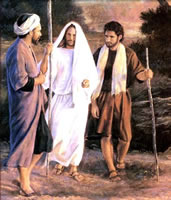
Nurturing: Hanging Out

Is This My Childhood?Hood or Holy?

As a kid living in the city, the neighborhood kids hung out at the street corner.  We didn’t do much, it was a social thing, and as teens we were social.  I remember getting reprimanded by my mother because of its “image”.  She was worried. I guess she thought we were turning into hoods in a gang.  We were in our teens, bored, and desired a social life.  What the hanging out did was establish relationships and friendships for a lifetime.

The Great Commission is basically go out to all the world to “hang out” with them with the gospel, the good news.  Paul had the method down. He hung out at Mars Hill in Greece to introduce them to the “unknown God”, then throughout Asia met people in public places, often getting stoned or thrown out of town.  We, as the Church, got it backward.  We expect the world to “come in” to our church buildings instead of having the Church go out and hang out with the world. The attitude of “God forbid going to a bar; what would happened if Jesus returned and caught you there?” instilled holy fear into me preventing me from ever going out to be with sinners, yet that is exactly where Jesus went. I sought the safety of the cocoon my church created isolating myself from the world to be “holy” while Jesus went out!

Jesus' first miracle was while “partying” at a wedding, making “good wine” for the boys! That doesn’t sound very holy! My church wouldn’t practice that!  Jesus “partied” with the Zacheus and his peers, tax collectors, the I.R.S. boys of his day, and I am sure those boys know how to party after April 15th! That would be a non-approved activity by my church too! 

 Jesus “hung out” with a Samaritan woman, alone, at a well, while his disciples were away. That was a social taboo of his day, a real no-no, but he did it. You know the story of the woman at the well.  It only brought her into the kingdom, revealed his Messiahship, and brought a revival to the town in which she lived, all because he was willing to “hang out” with her.

Jesus “hung out” with lepers, demon possessed people, the sick, the rejects of his society only to have positive, life changing, results!  Meanwhile, his disciples, whom he had been shepherding, watched intently.

Maybe we need to rethink, have a different mindset, on what shepherding is as a Church. Church, in my memory, is talking-the-talk through sermons, courses, programs, Bible studies, small groups, etc.  There was little walking-the-walk beside you in every day living.  Walking with you “through the valley of he shadow of death” (Psalms 23) rather than preaching or teaching you about the valley is what the Church needs to strive for. 

“Hanging Out” is repulsed by large Crusades, large church complexes where hundreds meet weekly, organized “programs”, and pristine orchestrated “services”.  It can only be done with a few, no more than twelve to be effective, is informal, and can happen wherever a few people are at the present time. We need to change our mindset.

Nurturing: The Twelve


Rerun of the Silent Years?

The Silent Years: “Jesus grew in wisdom and stature and in favor with God and men,” is all that is recorded about the Jesus’ growth as a child and youth.  We know little if anything about Joseph’s and Mary parenting skills other than they finally discovered after three days on a trip home he was missing and had to go back to the Temple to retrieve him.

Rerun of the Silent Years:  How did Jesus nurture the twelve from tax collector, fishermen, common everyday folk into disciples and eventually evolve into apostles?  Jesus did not start a discipleship school based out of Galilee, teaching the twelve how to do Church on Sunday between nine and noon.  He traveled all around the See of Galilee and Israel for a little over two years with the twelve “following him”.  He was the leader; they were the followers.  What were they following?

As a young adult, I use to think the disciples were twelve single men in their late 20’s with no strings attached who just left their professions and families and followed him. I was shocked when reading the passage in the Bible that Jesus “healed” Peter’s mother-in-law! That meant Peter was MARRIED!  Did he drag his wife along with the 12? Did he abandon her like a traveling salesman does for two years?  I doubt it. He was on good terms with his mother-in-law, for as soon as she was healed, she “served” the twelve, not give Peter lip for leaving!

What is the “Jesus way” to shepherd or nurture a growing believer?  Jesus never wrote the book “The 10 Step Plan Toward Greater Discipleship”, or “Shepherding for Idiots”. If he had, the Church would have made “programs” and “courses” out of it, making it a “legal” requirement for “joining” Church.

This doesn’t sound like a good answer, but Jesus just “hung out” with these guys, something every person in their late teens and early twenties knows how to do.  Jesus did not “model” who he is, he just remained true to himself and be himself.  In order to become “Jesus-like” you got to “like Jesus”, so that means “hanging out” with him. Relationships are so important to twenty year olds, because they want to be “liked”, accepted, by their peers, and want to be understood even though they don’t understand themselves.  Shepherding is getting to “like” and accept you, drawing one to grow in your “likeness” as well as getting to “like” oneself.  Relationships are the key; shepherding is “liking” Jesus to the point of wanting to become intimate in one’s relationship with him, growing in the “likeness” of Jesus, and learning “who we are” in Jesus!  It is all about relationships!


Nurturing: The Price! Part II

Vulnerable


Vulnerable

Before jumping into the field of shepherding, one must also look at the price of vulnerability.  People are looking for someone to mentor, disciple, lead them by example, thus allowing their life to be vulnerable.  They do not want to follow a hypocrite.  Ted Haggard’s fell hard and fast because he was not vulnerable.  His image was the voice of evangelicalism, which high-ranking politicians sought, yet his life was a lie criticizing the homosexual and drug life and yet living secretly in that life.  When he finally became vulnerable, only then could he move forward.

The twelve disciples walked with Jesus daily, and as their shepherd, he exposed all, warning them ahead of time of his impending crucifixion and trials.  Can you imagine how the twelve felt when their leader who they thought would be their political Messiah fell, was arrested, beaten, crucified.  What did the disciples do? Ran. “Run Forrest Run!” They scattered rather than gathered. They were depressed, forlorn, confused to the point that when the women told them about the resurrection they did not believe them until they personally investigated it. Their leader has fallen. What do you do with a fallen leader?  Often the movement, cause, etc. collapses and dies if its leader falls, or out of the ashes of the leader’s falling comes a legacy stronger than when he was alive.

On the road to Emmaus, Jesus began teaching two of the believers the truth of the crucifixion and resurrection. Jesus kept His promise that unless he goes to the Father, the Holy Spirit could not be release to teach you “all things.”

When the smoked cleared, the vulnerability of Jesus shone in glory. The disciples discovered that he who had been found guilty was truly innocent.  He that had no sin bore all the sins of the world as their sacrificial lamb.  He that hung naked on the cross, beaten beyond recognition, was now clothed in glory.  He that now went to sit beside the Father to intercede for the saints did not leave his believers as orphans, but released the Holy Spirit just as he promised.

A shepherd is human.  We all fall at some time in our lives, because we wrestle against the flesh, our sin nature, all our lives.  Often when shepherds have fallen in the Church, hurt prevails to those who elevated them.  What a shepherd has to be is vulnerable, so that all that his sheep see is Jesus in his life, and if he falls, then the sheep will also learn about grace and mercy.  If Jesus is central to a believer’s life, then he must be vulnerable, so that Jesus is exposed to others.

When you die and meet the lord, all will be exposed.  You will be totally vulnerable before the Lord your maker.  What will be exposed that day?  Will it be those things hidden, or those things shining the glory of Jesus in your life.

Vulnerability, what a price!


Nurturing: The Price!


Can I Afford The Time?

Although all five (evangelist, shepherd, teacher, prophet, apostle) are demanding, I think that shepherding is the most demanding because it requires your time.  Time is the most precious commodity in America today.  Everyone is so busy with their lives, their agendas, their careers, their hobbies and interests that to offer unconditional “time” with unconditional “love” is quite a price to pay.

Unlike a government agency where you have to schedule an appointment during nine to five if you get through their screening phone system, a shepherd has to be available at all hours.  If a crisis happens at two in the morning, he needs to respond. Dealing with college age youth and young adults, much of their social life occurs after dark. 

Apparently, when Jesus shepherd his twelve disciples, he spent large amount of time with them, walking, talking, demonstrating kingdom truth through day-to-day adventures.  After having a “quiet time” with his Father, he had to walk on the water during a storm to deal with his disciple’s fears.  Often he would say, “Oh, you of little faith,” when seeing the dilemmas his disciples faced. Jesus, as the true shepherd, is always available, always there.

I remember when in my twenties, when I found another man who offered his time. He said I could call him on the phone at any time, at any hour if needed.  I had to take him up on his offer, but those late night phone calls were life changing during the time when I was molding my own personal moral and faith based values for my life.

Because of having to pay the price of time, many shy away from the shepherding gifting, and although demanding, I still contend that it is also one of the most rewarding.  It is said, “What goes around, comes around,” and it is so rewarding as a shepherd to see a sheep eventually become a shepherd to his or her generation.   The evangelist may major in birthing, but the shepherd revels in reproduction too!  In fact he does more; he nurtures.


Nurturing: Stretching You!

What What You Pray

Once when I was part of a small church group, we had gotten to know one another, so we prayed to expand our group. Our prayer was answered when we received a call from our pastor who asked if I could pick up a single mom and her three children and bring them to church.

That is when *Loretta, a single mother who had fled to a women’s shelter from the father of her children who was a crack king pin, ended up in our lap! In the next couple of years we would take her and her children to the doctors, to welfare, and to church. We baby-sat her children as she went to a community college and earned a degree as a medical assistant, getting her off of welfare and on her own two feet.  We had to support her when the father of her children came to “kidnap” his children at Christmas, only to visit then leave.  When the court granted him summer visitation right, we helped her take the children to meet him at Altlantic City in June and pick them up in late August.

I remember right after she accepted the Lord, she began sharing her faith with the people of the street that she knew.  Her enthusiasm was right on, although her theology was quite distorted.  We had to take this new babe in Jesus, and help nurture her through her daily life, but her faith walk.

Coming from a background that I could not personally identify with, she stretched me far beyond where I had ever been, but one of the most fulfilling blessings came when the other male who lead our group and myself got to lead her down the aisle to give her away in marriage to a neat Christian husband.

Bottom Line: Years later, Loretta had a successful career as a medical assistant, happily married, following the Lord, and is still one of our closest friends. Looking back, I think she did more for me, making me go out of my comfort zone, than I did for her.  Shepherding has it challenges, but also has its rewards. 

*Not Real Name


Nurturing "Young'uns"

 Mamma & Poppa B

Even "Ma & Pa" can nurture "young'ns"!     Shepherding can be very simple.  It can mean just being there when needed, hanging out with the twenty-somethings, being yourself.  Just because of being older in the Lord, or just older in age, my wife and I have had several sets of spiritual “young’ns” in our life.

First Young’ns: In our twenties, just married, we opened up our apartment on Friday nights just to hang out.  On the first night a nurse from a local nursing school, a blind boy, and “Butter”, a young man on methadone, all three total strangers to me, knocked on my door, but out of the group of kids that came over the next few weeks became the nucleus for a Christian Coffee staff and lasting friendships.

Second Young’ns:  When we moved to the country, we opened up our farm house on Fridays for a Bible study, and eventually fixed up the barn for hayrides, making cider, and showing movies off of a screen made up of six queen size sheets sewn together and hung on the side of the barn.  I remember when “Jumping Jack Flash”, as we called one young man, knocked on our second floor bedroom door in the middle of the night to seek help from us, and “Jakie” who we found drunk on our porch whom we learn to love like one of our kids.

Third Young’ns: Now as parents, it was a “natural” for kids to hand out at our house with our children, many just to swim in our above ground pool.  My small dining room stuffed with young musicians having their own “worship” jam-out.

Fourth Young’ns: With my children now in their twenties, I would hand out with my son at a 20-30’s church group function, and those attending got to know us, even inviting us to their weddings.

Throughout the years we have had the honor of being called Mamma B & Poppa B by four different groups of youth, all who look up to us because we cared, because we shared, and because we were just ourselves opening up our lives, willing to give of our time, while making each one feel safe and loved.  That is shepherding in its simplest form!


Nurturing: A Green Thumb

 Plant Growth

 The Sower and the Seed, The Mustard Seed are all parables Jesus taught.  Nurturing is like growing a plant.  You need the right fertile soil, proper growing conditions, weeding and maintenance.  It still amazes me how you put a seed in a pot of soil, water it, give it sunshine, and it grows on its own.

Spiritual nurturing, of shepherding, has many of the same parallels.  The spiritual shepherd has to create the right environment for growth, feed the new believer, develop growing conditions, “see over” his journey to aide when needed. Then just sit back and watch one grow.

You can just plant a garden and produce fruit, but if you “nurture” your garden with T.L.C., your fruit will so much better.  I once had a garden that I nurtured. I grew some huge well-watered Charleston Grey watermelons that I would use as wave offerings of thanks.  We never canned so much as when I took care of that garden.  In fact, my wife still does not want to do any more canning. She suffers from “canning burn out”!

Often we refer to a gardener as having a “green thumb” because everything they nurture becomes extremely fruitful.  We need people, believers, who are pastor/shepherds who have “spiritual green thumbs” because they have the passion to see believers grow in the likeness of Jesus Christ.  They have the point of view of always seeing how they can help other. The Ilgenfritz family that I previously blogged about is a perfect example.

Once our church planned on offering small groups, training leaders, but became frustrated when no one in the congregation would open up and offer their home for a place to meet.  Hospitality is a strong gift a shepherd must have.

The cross is all about being exposed and vulnerable.  A person driven a pastoral, shepherding passion must be a person who is willing to expose his daily walk in Christ as well as be vulnerable to those whom he disciples.

The evangelist births, but the shepherd nurtures, develops, and cares. Together the garden is planted, nurtured and grows.


Nurturing: The Question Of “Control”

Fort Lauderdale Five

In light of my last blog, an example of “overseeing” versus “control” came over the question of pastoring/shepherding in the 1970’s with the Fort Lauderdale Five.  In light of some of the chaos and messiness of the charismatic movement, five leaders decided to bond together to help bring discipline and accountability.  The idea at its inception sounded like a good idea.

Emphasizing small groups, the five lead a movement labeled “the Discipleship Movement”.  Here leaders shepherd or mentored those under their care, but eventually that entailed marriages, relationships, and personal decisions. Because of the tight control of leaderships, many were hurt and scared.

I believe there needs to be accountability, but to what extent? Although I parented three children, one of my sons looked for a spiritual mentor when he reached his 20’s.  He wanted someone who would “see over” his spiritual growth, give advice, care, and love, but not “parent” him.  Shepherding is not “parenting” where you are disciplining a child or juvenile, but it is an “art” of “nurturing”.  It is a gifting, a passion, a point of view, a person whose drive is to aid the development of a believer towards being Christ-like.

A person in his twenties is no longer a teenage, thus the “youth group” hype approach no longer proves relevant nor effective. Being in your 20’s means you are now establishing “your own” morals, goals, career, and faith.  You are no longer a product of your parent’s faith upbringing.  Often in your 20’s and 30’s you set your own path, thus you need someone to “see over” your journey, your decisions, your struggles.  We will see that everyone of the five fold gifting are for the “seeing over” of people at different levels to equip them for the work of the service. 

As a public school teacher for almost 39 years, I have had the opportunity to “see over” 3,500 students in my life, not controlling their lives, but developing and nurturing them in their reading and writing skills. In a pastoral/shepherding sense, the Church needs to learn to develop and nurture (equip) the saints in the work of the service without “controlling” them.

“Micro-management” is one of the most damaging and unproductive forms of management or administration.  The C.E.O., Sr. Pastor, boss, etc. does not have to be involved in everything to “control” it to be the way he wants it to be done, but needs to give those under his leadership freedom as he “sees over” what they do.  Micromanagers don’t develop or nurture, they enforce.

My concern about the next “revival” or “movement” that the Church faces is that the Church may again try to “control” what the Holy Spirit is doing either through micro-management, opposition, or through persecution. Have we learned from history?


Nurturing: The Question Of “Control”

"Control" vs. "Seeing Over"

 Usually the first thing the Church tries to do is “control” the new movement. After decades of extreme “control” causing the Dark Ages, the Spirit of God was penetrating the darkness with its Light. When the Reformation Age burst forth, the Church opposed it and tried to control it. When prayer and praise small groups flourished in the ‘70’s, the church tried to control it. When experiencing the prophetic and apostolic movements, I have seen strong leadership use control. Control can stop the “weirdness” of a movement, but it also quenches the Holy Spirit’s control.  We try to control the situation rather than letting God do it.  The Bible warns to “quench not the Holy Spirit”, yet how is order to be maintained.

As we look at each of the five fold, evangelist, pastor/shepherd, teacher, prophet, and apostle, we will feel this tension between newness, creativity, messiness, and freedom versus order and control. 

On the day of Pentecost, the day the Church received the power of the Rhema Word, the active living word, that paralleled the truths of the Logos Word, the written Word, it came in an unexpectant form:  Tongues of fire, foreign languages spoken by people who knew not what they were saying, and the accusation that these believers were drunk at mid-day.  It happened in an upper room, not in the Temple itself, among common folk, not among the Pharisees and Sadducees and leaders of the Sanhedrin, and the established religion of the time tried to “control” it arresting the apostles, warning them and beating them, later sending Saul to persecute them, etc.

One of the concepts we will have to understand is how “overseers” are to “see-over” their sphere of influence, not control it.  The question will always be, “Who is in control?”  Is the Holy Spirit in control? If so, then as a Church, as a personal believer in Jesus Christ, let’s not oppose it. Why do we want to take the “control” away from God?  Can we trust God’s precious Holy Spirit?  If we can trust the Holy Spirit, then why do we work so hard to take His control away for the sake of our agenda, to bring the situation back to what we think is normal, acceptable?

Nurturing: Learning From History


"Five" History Lesson

Often I have heard the quote, “If you don’t know history, it is bound to repeat itself.”  We think we should learn “about” history in school, not learn “from” history.  Case in point:  If you are heading a small group or mentoring an individual, what should your relationship be?

In my Christian walk, I have always sought the cutting edge of revival in the Church, experiencing the Jesus Movement, the charismatic movement, and helping start an inner-city church in the ‘70’s, participating in denominational revival movements and helping a church plant in the ‘80’s, being in the midst of the Word movement, the Prophetic movement, and the Apostolic movement of the ‘90’s, and now in this century immersing myself in the five fold.

Bill Hammon of Christian International in his book Prophets and the Prophetic Movement: God’s Prophetic Move Today (Shippensburg, PA: Destiny Image, 1990, page 24) meticulously outlined the progression in history of the releasing of each of the five fold gifts:

Decade             Five Fold Ministry          Movement/Revival

1950’s                     Evangelist                                 Deliverance Evangelism

1960’s                     Pastor                                       Charismatic Renewal

1970’s                     Teacher                                     Faith Teaching Movement

1980’s                     Prophet                                      Prophetic Movement

1990’s                     Apostle                                       Apostolic Movement

I verify the truth of this time table, for the thrust of deliverance/healing evangelism with Oral Roberts came in the ‘50’s, shepherding in the charismatic movement and pasturing in the denominational movements in the 60’s, having boxes full of “teaching tapes” and listening to multitudes of Full Gospel speakers in the ‘70’s, my wife going to the “School of the Prophet” and Bill Hammons influence prophetically in the ‘80’s, and the world wide vision laid by the apostolic in the ‘90’s.  In this century, now, I have found myself focusing on how to bring the five together, in unity, fulfilling Ephesians 4.

I also believe we are on the verge of another historic movement for the Church, one of unification, the bringing together of the body so they can mature the saints into the fullness of Christ, and prepare a Bride for its Bridegroom, but we need to learn from the past in order to move forward.  We need to examine the history of the pastor/shepherd and where it is heading today


Decade 20’s

Oh To Be In My 20's Again!

Author’s Note:  During my morning time alone, I pulled this out of the archives of my journals on my computer.  Even though it is over 5 years ago since writing it, it is timely for anyone in their 20’s or beginning their 30’s.  Enjoy it; I did today!

Sunday, June 18, 2004

Isn’t amazing to see the amount of time the Church spends on developing a children’s program, a youth program, and an adult program.  We are to develop the children, guide them through their teens, and teach and direct them as adults.  Unfortunately the weakest link in this chain is the young adult years of the twenties.            

Where Are They Now? Where Are They Now?Second five year class reunions take on a gentler flavor.  In the ten years since graduation everyone, now in their late twenties, approaching their 30’s has grooved their own path, some successfully, so it appears, and others struggling every step of the way.  The dreams on graduation day, and the optimism at the first reunion are now replaced with a complacency of settling in to life.  Now approaching their thirties, one has had to “find” himself, set his own pace, develop his own personal values, morals, and priorities in life.  The partying, exploring, adventurous spirit of the early twenties has given way to responsibility of family and marriage, development of a career, and setting a course that will take one through the decade of their thirties as spouse, parent, and provider.  Some common ground is being struck at this reunion:  most now have experienced marriage, surprisingly some a second marriage; most have started families; women pass around pictures of children instead of pictures of boyfriends like in high school; men boast of sports they are play, hunting and fishing to get away from the pressures of work, a career; some are still trying to find their way no yet ready to settle to what they see the others as having a standard mundane life.  All eat, drink, and be merry, dancing away the evening vaguely reminiscing a senior prom that now seems father back in their memory.  Stories are told reminiscing those days in and out of class, now slightly exaggerated, before biding farewell for five years.

This is the decade of development, setting one’s own directions, cementing one’s own morals, and owning up to personal responsibility, becoming one’s own man or women.  This is the decade one likes to hang out with others, establish relationships, personal, business, or casual, some lasting a short time, others a lifetime.  This is the decade where Jesus hangs out with his peers and picks them to be his disciples as he enters his early thirties.  He pulls them out of their jobs, their projected careers, their political dreams, their spiritual searches and calls them to his.  Men give up careers of fishing to be fishers of men.  Men give up ludicrous financial careers as tax collectors to follow him. Men who are searching for answers for themselves find them in intimate times of hanging out and talking with their friend.  In fact, they work on establishing relationships with each other and with him.  I can see a good Jewish mother complaining, “My son had a good career in the fishing industry, only to give it up and follow this guy from Galilee while searching for himself!” or “My son, my son was doing so well financially with the government and gave up the security of that job to wander around with a gang of guys doing who knows what!  What security is it there for him?”

Jesus did not pick any “old fogies” from the Sanhedrin, or even established leaders in his community, but called our those in their late twenties or early thirties to follow him, be his disciples, because he knew they were in the stage of life of cementing their own morals, having to own up to their own personal responsibilities, becoming their own man, and he had to mold them into what his Father wanted them to become.  These same men who struggled, complained, debated, and fought one another when walking with Jesus were the same men who would later, with age, experience, and a new found leading by the Holy Spirit would become apostles and leaders of the Church, His Body, in the near future.

As twenty year olds, they were strongly opinionated; put foot in mouth often; boasted that they would never do a certain thing, then do it, and then have to face how to handle their mistakes and blunders; run when times were rough only to return and stand strong later; scatter separately when faced with the cross, but brought back together in unity on Pentecost; steeped in religious traditions, but freed by the lifestyle, cross, and resurrection of the one who they hung out with, Jesus Christ.

I want to encourage those in their twenties to hang out with Jesus.   Hang out with other believers, disciples, and experience Jesus privately and corporately.  That is what the disciples did two centuries ago, and still do today.  You will have your own personal battles with Jesus as the twelve did back then, but you can also experience hanging in there with the battle of the whole group as the disciples did too back then.  Allow the Holy Spirit to work with you individually, as he did with the disciples and others later like Saul, and together corporately, which he did at Pentecost.  After each person deal individually with what the cross and resurrection meant to them, then they came together expecting God to do more, not knowing what that form that was to be in.  Every generations Pentecost comes differently, but just as powerfully, which develops the Church for that generation. You are now going through that stage in your life now!


I remember may experiences in my twenties, sitting in my empty living room apartment alone, having no furniture, no TV, no sound system, only one knife, fork, and spoon to my name, having to wash it if I wished to share food with someone!  I remember my spiritual struggles at that time, having to face the cross and resurrection, having to face Jesus on my own.  I remember not wanting to do another “religious act”, for me lifting hands just because others did, yet caught myself in the quietness of an empty room lifting my hands after being broken before Jesus.  Those years cemented who I am today.


Nurturing: Joyce & Morgan Ilgenfritz


Shepherding At The Grass Root Level

Shepherding is nurturing people in their day to day life so that they will reflect the image of Jesus to everyone to whom they interact.  It can be done at a grass roots level.  It need not be a program.  I have learned that first hand.

Back in 1988 I had the privilege to write a book "I Was A Strange And..." about Morgan and Joyce Ilgenfritz of York, Pennsylvania.  They have opened their home to whomever the lord has brought their way.  There have been over 350 people from all over the world over the last 35 years who have lived with them for a month or more.  I wrote about the first 100 of them during the first 10 years.  My wife and I, with the birth of our son were three of them!

Joyce has ministered to pregnant women, oriental girls, single girls, etc. helping them learn the ins and outs of keeping their house.  Morgan has taught young boys how to become men, change the oil in their cars, take on responsibilities rather than running from them, etc.  People who have never heard of Jesus before coming to the Lighthouse, as the Ilgenfritz's call it, leave with an intimate relationship with Jesus by the time they leave.  Joyce and Morgan teach those under their roof how to live out their faith in a day to day existence.

Although very evangelistic at heart, they have allowed the Lord to bring the mission field to their own very house.  Now they are driven to nurture young people in trusting Jesus as they grow into adulthood.  They don't control people who come to their home, they just love on them.  Their rule is that you have to be part of the family to live with them, and they enforce that rule.  Since many who have lived there really do not have godly family; it is a breath of fresh air to have someone accept them in the Grace and Mercy that Jesus gives.

When I think of "shepherding" or having a "pastoral gifting", I think of Joyce and Morgan because they serve: the homeless, those needing fed, those needing clothes, those needing baby supplies, visiting people who have been in jail, and those who just needed a family to accept them.  There is always someone in their home.  Nurturing over 350 people! What a gift.

Nurturing: Terminology


I Am Not Against Your Pastor!

Due to most of Christendom referring to the head of their local congregation as being their “Pastor” as a “position” or “job description” or “title of some kind of leadership”, I will refrain from using the term “pastor” in preference to “shepherd” when referring to the person in the Five Fold who “nurtures”.  Since most of us personally know nothing about sheep or how to raise them, but do know that a shepherd, by trade, at least in Bible times, lived with their sheep, led the sheep to good feeding grounds, help heal the sheep when ill, watched over their flock, and prevented and protected them from harm.  In that spirit, I will refer to this passion or point of view as “shepherding”.

So do not take my comments, thoughts, ideas, blogs, etc. as being anti-pastor, aiming at them men who lead churches.  Some of the most nurturing men in Jesus I know are in the “profession”.  I highly respect them, for they are men of God, reacting to the calling of God in their lives. Unfortunately, I do not agree that the title or office of “pastor” as “a professional” is Biblically accurate. It is something the church has created in its hierarchy of professionalism.  I will discuss this later.

I believe a “pastor/shepherd” is any believer, paid or not, in leadership or not, who has a passion, a desire to nurture a babe in Christ toward maturity in Jesus.  Their point of view is “nurturing”; that is the focal point of how they see ministry.  They want to make the Christian walk as practical as in Jesus day when he walked with the twelve that he was personally “nurturing”. 


Nurturing: Indoctrinating or Serving?

 What Pastoring/Shepherding Is/Ain't?

John WesleyMartin LutherOver the years the Church has tried to indoctrinate their new saints into their religious tenants of faith rather than nurture their growth in Jesus.  “New Believers Classes”, “New Members Classes” often reflect this philosophy.  When attending a Lutheran Church, one learns about Luther and his beliefs. When attending a Methodist Church one can not help but learn about Wesley and his Tenants of Faith.  In the Church of the Brethren one learns of Alexander Mack and the Anabaptists.  The Roman Catholic Church has built a whole parochial school system to indoctrinate their youth.  The Greek Orthodox Church not only teaches doctrine, but  the Greek language and Greek culture.  Rather than learning about Jesus, one learns about what makes that Church group, sect, or denomination different from other Christian groups.

Where does the nurturing in the likeness of Christ Jesus come in?  In Discipleship Training Courses?  Sunday School Material?  Children’s Church Programs?  Vacation Bible Schools? 

Before knowing what Pastoring/Shepherding is, let’s look at what a Pastor/Shepherd is not:

… a professional Christian, meaning a paid position, a career.

… a person who has an “inside tract” on hearing and believing God that is far above the ones that he/she is nurturing.

… a controller over his sheep, but a servant.

A Pastor/Shepherd is:

… person, like you and me, who has a passion and a point of view to nurture others in the likeness of Christ. 

… person who teaches others to read the Bible for themselves, while teaching others to listen to the still small voice of the Holy Spirit to be their teacher.

… servant, teaching service by not only being “hearers of the Word, but doers”.  Not only are their words important, but their life style speak louder than their words.

… person who day to day models the living out their daily routines and existence through Jesus.

Nurturing: Birth to Adult

 A Diaper Change, Anyone?

How Good It Smells! Only I Can Laugh!There is no doubt that a newborn needs nurturing or it will die.  Newborn humans are pathetic. They have to be taught to eat, diapered until potty-trained, taught to walk, talk, and read.  When first born, all a baby has to do is smile when having gas, and the family rejoices thinking that the baby is enjoying life!

Once born, the process of the baby is to wean itself from its mother.  It may be weaning from breast-feeding to solid food, mom spooning in that food to feeding oneself, eventually potty training procuring urinary independence.  By the time it hits it teens, weaning means socially pulling away from mom and dad, becoming independent, getting a set of car keys, and maybe, eventually a job, though not a “real job” as dad professes. The goal is to have them mature into an adult. The ultimate insult, after working so hard to become independent and create one’s own identity, is when someone says, “You are just like your mom (or dad)!”  Ugh! That which you worked so hard to become independent from, you have become! How ironic!

Spiritually, it is not that much different. Newborns in the faith have to be taught to eat (private devotions of personally reading the Bible), picked up when then fall and have their “boo-boo’s” fixed (taught grace and mercy), and taught to become independent from those who have spiritually parented them.  Hopefully, someday, you can tell them, “You look like your Dad, Father God”.  There is a “God-likeness”, a “Godliness” about your presence.  “I can see Jesus in you; you look like him!”  We all want to grow into the fullness of Christ Jesus.

As a Church, how do we take a newborn from an evangelist, and get him to the prize of being in “the fullness of Christ”?  What mentors does he need on this journey?  If it is not the evangelist’s responsibility for his growth, then whose is it?

I have been in a baby-dedication service where the parents take a stand before a congregation that they will try to raise their newborn in the best Christian environment possible, leading them to the time when the child can make a personal profession of Jesus Christ for themself.  Then the congregation stands and vows that they will stand beside the parents in this spiritual journey.  Is that “stand” only symbolic?  As a congregation, a church, how are we to stand beside parents in the nurture of their children spiritually? Who can best help nurture that child next to the parents?  That is what we are going to be looking at in the next series of blogs as we study the pastor/shepherd, the one whose passion and point of view is to nurture those who have been born through the evangelist’s passion.

Join me on this next step of our spiritual journey through the “Five” as the Holy Spirit “reveals” each one of them to us.

Spirit of Evangelism: New Horizons


What Is On The Horizon?Who Is Beside You?

I have look at evangelism from several different angles over the last dozen and a half blogs.  It has been a fascinating and enlightening experience to study the history of evangelism from outdoor meetings that Wesley vehemently rejected at first only to embrace and perfect later to the refinement of mass evangelistic crusades reaching thousands in large sports complexes. In spite of all our efforts to reach large groups with a single swoop, one-on-one evangelism still proves to be the most effective method because it requires us to be a part of it.  One of the greatest thrills in a Christian’s life is leading someone else into the kingdom.  Seeing the physical birth of one’s child is an unbelievable experience, so is witnessing someone’s spiritual birth.  The Birthing Process is a beautiful experience, physically and spiritually.

Yet in the midst of this beauty the Church has also witnessed controversies: large evangelistic crusade teams ripping off financially local towns, churches, and municipalities; huge “reaping” of the lost only to lose them back to the world again because of lack of follow up after the evangelistic endeavor; the evangelist being a parachurch ministry, leaving town after the evangelistic endeavor instead of being part of the ongoing ministry of the local congregation; because of the lack of follow up the need to have yet another evangelistic endeavor again and again to fill in for those who dropped out of the church or returned to the world. 

Personally, I have been involved in all kinds of evangelistic endeavors as I have shared in my blogs, but looking back, their failures glare with their successes.  With televangelists flooding America’s airwaves, Christian radio easily found on America’s radio dials, Christian blogs, tweets, web sites, chat rooms, and streams on the Internet, then why is America progressing away from being a Christian nation? 

     An evangelist needs a pastor/shepherd to “feed my sheep” or nurture them in growth.  An evangelist needs a teacher to teach these newly born sheep in the tenants of faith according to the Holy Spirit’s teaching of all truth through the Bible.  An evangelist needs a prophet to hear the revelation of truth, teaching one how to live the Rhema Word, the living word, beside the Logos Word, or written word.  An evangelist needs someone with apostolic insight, or point of view, to “see over” the whole process of nurturing a believer from birth towards being in the likeness of Jesus. 

If an evangelist is missing one of these components, one of these passions, one of these points of views from encircling him in love and mercy in the Church, he will never see the fullness of the harvest he has dreamt of. 

Stick with me in future blogs, as we examine those who support and are grateful for the evangelist and how they work together to “equip the saints” now that they are birthed.

Spirit of Evangelism: Creative Evangelism

 Satan Counterfeits; Only God Can Create

Palm reading, or palmistry, is an ancient practice used throughout the world, but how about Psalm reading, or Psalministry?  This is definitely creative evangelism.

I once heard a speaker, Ken, (sorry I do not recall his last name) who goes to Salem, Massachusetts in October with a contingent of Bible students.  Ken is not intimidated by the occult as so many Christians are, but challenges them.  His evangelistic team sets up a tent and a stage to do drama and to give personal prophetic words to people.  He has been so successful that even local witches have come into their tent to see what it is all about.  One witch even sent a customer to them because she felt they could do more for her than she could.

Last year he tried something different, where he would look at someone’s palm, but recite scripture from the book of Psalms instead. The Psalm with prophetic insight has led several people to the Lord, thus Psalms Reading instead of Palm Reading.

The accuracy of their prophetic words, the love they have shown everyone, and the grace they have displayed have earned them respect among the Salem community while they were there.  Often evangelistic endeavors bring animosity from the locals, but that is not the case here.

Often we give the occult too much credit, when in reality satan is not a creator.  He cannot create anything.  Only God can create, thus satan is a counterfeiter while God is the creator.  If we allow the Holy Spirit to “creatively” bring out the “creation” the “Creator” has “created” in us, evangelism could be drastically different than it is today. I would like to challenge you to listen to the Creator to see what he would want you to do creatively to bring others into his saving grace.

Spirit of Evangelism: Lost In The Shuffle


Take Time To Smell The Roses, Or Is That Fish?

It ceases to amaze me that Jesus’ disciples saw him feed thousands, yet miss the miracle of it all.  It happened a second time before Jesus stopped them and made them refocus.  I can imagine the twelve got caught up in the “How To” of the actual feeding of the thousands.  They had to go through groups of 50 and 100, continually breaking bread and fish, which seemed a never-ending chore. Then they had clean up duty collecting basketfuls of leftovers and wondering what to do with it all.

I am sure they were dumbfounded when later Jesus rebukes them for their unbelief.  He fed thousands, yet they freaked out when seeing him walk on water.  They had witnessed water into wine, healings of leprosy, deliverance from demons, and even the raising of the dead, yet they were so busying in the “doing” of all of this, that they missed out the significance of the moment.

How often do we get caught up “doing church” that we miss “being the Church”?  or administrating and doing the programs that we miss what God did during them?  When I was Lay Witness Missions Coordinator, I got so busy overseeing the weekend as the focal point of leadership, I would often ask my wife when leaving the church where we had just ministered, “What happened this weekend?”  I had to learn to stop, during the weekend, and smell the roses.  I had to stop from breaking the loaves and fish to realize the significance of what the Holy Spirit was doing at that moment.

When there is a new work, a new church being birthed, a new ministry, there is excitement.  Often when we get caught up in the excitement we miss the significance of the moment. An effective evangelist has to learn to not get caught up in the “how-tos” of the moment, but learn how to cherish the moment, smell the roses, the fresh loaves, the fish.  Unlike the disciples, let’s not miss Jesus when caught up in the midst of the “doing” of the work.  If we miss Jesus, the doing means nothing.

Spirit of Evangelism: Rebirthing?

 Do I And The Church Need To Be "Born Again"?

     When Jesus came to earth he never established an institution, a structure, a program, a model, he majored in people.  He touched the sick, not only taught the multitudes but fed them, mourned over the death of an only child raising that child from the dead for the glory of its mother, even exhorted John to take care of his mother while hanging on the cross.  One of the keys to Jesus ministry was “the human element”.

  • ·      What happens when we lose “the human element”? Is an institution born, a structure birthed and set in order, a program put in place to be practiced? 
  • ·      What happens when “streaming the Sunday Services over the internet” becomes more important than visiting the shut-ins?  How many shut-ins do you know? When was the last time you visited one?
  • ·      What happens when watching the National Geographic Channel’s excellent programs on Maximum Security Prisons, Locked Up Abroad, and doing Hard Time takes the place of actually visiting the prisoners in prison.  How many people in prison do you know? Have you ever visited your local prison?  When a prisoner is released, where are they to go, back to the streets, back to the environment that has poisoned them? And in our pious attitudes we wonder why they “don’t make it” and eventually become a “repeater”!
  • ·      What happens to orphans? Jesus said, “Let the little ones come unto me.”  Orphanages, do they even exist today? Instead we have “programs” and “human services”?  Have you ever participated in a Big Brother or Big Sister Program?  Is the lost child to be taken care of by our government through “Children’s Services” or by the Church?
  • ·      How about the widow?  Is she the Church’s responsibility? According to the Bible, YES!  The Welfare System, A.A.R.P. or Medicare was not God’s best effort to help the widow; it was our way of creating a system to detach us from our responsibilities.

The first century Church fed one another, took care of their orphans and widows, addressed the issues of the oppressed, the prisoners, the down trodden, clothed the naked, healed the sick.  They did not count on Caesar, although still instructed to pay taxes to him to support “his system”, but counted on Jesus Christ and His kingdom to meet their needs.  Jesus always focused on “the human element”.

So I ask, “Does the Church, itself, need a rebirth?”  Do we, the Church, especially I, a believer in Jesus Christ, need to rebirth, rekindle, redirect, refocus on the human element of “loving my neighbor”, even “loving my enemy”? Do I need to birth if I have never done it before, or rebirth, if I have but lost the passion, a desire to visit the sick, the imprisoned, the orphan, the elderly, and the widow?  Do I need to birth or rebirth my lifestyle to include them?  Or do I just “go to church” enjoy the benefits of the structure, institution, and services?  Has “church” become “convenient”?  Has the church you attend become program-matic, institutionalized, so structured that you attending it allows you to not really get involved in the daily life and activities of the others who attend?  Has it, better yet, have you lost “the human element”?  If so, then maybe you need to have that be “birthed” or “born again” in you!  Yes the Church itself, and me, as a believer needs to be “born again”, experience a rebirth?

Spirit of Evangelism: Birthing


Nicodemus Complex

 
Nicodemus was a religious scholar and leader of his time, a member of the Sanhedrin, the ruling Jewish body. He had a keen interest in this Jesus and his teaching. Jesus looked at him and proclaimed, “You must be born again.”

Nicodemus knew that physically that was impossible. One cannot go back into their mother’s womb and be reborn. He was entirely perplexed by what Jesus asked him to do.

Often I have heard this passage taught explaining the spiritual birth. One is born physically, but needs to be born spiritual, thus Christians teach about rebirth. How often has Billy Graham preached, “You must be born again”?

One of the mindsets towards evangelism we might examine is that of “birthing”. Evangelists know how to birth. Birthing is what drives them, their passion. They are like midwives wanting to birth. After the birth the nursery staff can begin the new one’s development, for there are more births out there.

If birthing is so important to the evangelist, I would like you to brainstorm ideas at how an evangelism might use the birthing process in the Church other than just “leading people to the Lord”. If those in the church listen to what the Holy Spirit want to do among them, who better to birth that vision, that passion, than the evangelist. After the evangelists “ignites” the vision, others in the church will move forward to implement it.

As we look at the five fold ministry in future blogs, we will discover that “birthing” is the key, the passion, the point of view of the Evangelist that will free him to be what he was created to be, yet serve the others in the body bringing unity.