A Challenge To Churches Outside the U.S. To Respond


How Is The Five Fold Being Released Among You?

Before a spiritual revival hits an area, there must first be a spiritual hunger.  Unfortunately, even though the economic mood is tense, unemployment as a challenge, health care for everyone a national debate, I do not feel that the American Church is hungry enough for revival.  Revival brings change, and most of the churches in the U.S. feel they are doing fine, still feel they are spiritual leaders globally, feel elitist to most of the churches in third world countries and the rest of the world.  There is not that desperation nor brokenness that comes with a need for God.  The U.S. Church lacks to desperation for God that fuels revival.

The U.S. still feels it leads in spiritual teachers, worship music and musicians, finances, technology, and mega-church structures and organizations, but it lacks the grass roots hunger that ignites revival: brokenness, hunger and thirst.  Something like embracing the reality of the five fold passions, vision, and points of view that already exist in their edifices is foreign to the U.S. church because it would demand change in structure and the way it does “church”.

I follow on my Facebook page Alan Hirsch because of his experience with the five fold when he lived down under in New Zealand before coming to the U.S.  I try to glean from his experiences and wisdom.  There are places in this world where the Church is allowing the five fold gifting, passion, points of view, and passions to arise and be birthed, nurtured, and released within the Body of Christ.  Unfortunately, the American church has not been that receptive to the change that such an acknowledgement would bring if the five fold was embraced and the Holy Spirit released to initiate, orchestrate, develop, and be released in American churches.

I am calling to the Church outside the United States.  If you are seeing the release of the five fold in your church, could you please comment back as an encouragement to we believers in Jesus here in America. Place an entry on Fiverevealed.com Facebook page, so that I and other believers in Jesus can dialogue with you. 

I truly believe that the five fold already exists in our churches; we just need to recognize that fact.  Then we need to ask the Holy Spirit how to make Ephesians 4 applicable to our churches today.  How are we to equip the saints for the work of the service, win the lost in the 21st Century, nurture and care for those in the Church, teach with an apostolic anointing of unity, prophetically move forward and listen to he voice of the Holy Spirit and the heartbeat of the Father, and be able to see over all that the Spirit of Jesus Christ is doing in his Bride, his Body, the Church?

I also believe that the Church outside the U.S. borders will probably be more open to this movement in God than the American Church.  Much of the spiritual leadership will arise through experiencing the five fold in this new dimension, then releasing those who have practiced it, experienced it, to share with the rest of the global Christian community.

Church outside the borders of the U.S., I ask you to respond!


Believers In Jesus Christ: Accept My Apology For Being Narrow Minded Not Global?


New Mindsets For Me and the Church

One of the purpose of these now over 300 blogs over the last two years has been to challenge mind sets that we have established in the current church setting.  Before this website, my vision for the Church was focused around my local congregation or the Church of this area.  Posting on the website has made me think beyond York, Pennsylvania to the entire United States, but now I have had to “upgrade” my mindset to think internationally.  I have noticed that many of the hits to this site have come between 1 and 5 in the morning E.S.T.  which means Europe has shown an interest.  So to those members of the body of Christ outside the U.S., I apologize for limiting my view, but hope to develop a larger, world wide view of the Church as I address the use of the five fold to the entire Church, the Body of Christ.

This does not mean we need a “Global Council of Churches” to dialogue and recognize each other. Facebook allows normal everyday believers to dialogue and recognize each other with only one bond of unity: Jesus.  We, believers in Jesus Christ, can talk about Jesus to each other.  It is all about establishing relationships, not religious structures, so we do not need to create a Facebook, Text, Tweet, or Blog for Jesus as an established, official structure, webpage, or web site, but allow the Holy Spirit to flow freely among its believers to communicate, network, and bond together.  It is amazing that technology has been created to do this!

Just two decades ago, radio and television were still the only method to get the gospel out to the entire world.  Today any individual who has an Iphone with GPS capability can communicate with anyone throughout the world.  The way the Church thinks of evangelism to the world is “upgrading” from Church Evangelism.1 to the new and improved Church Evangelism.5.5! We must be open to new methods of evangelism as the world opens up to every believer. The most effective evangelism has always been one-to-one communication, and today’s technology allows that, so we need to rethink our mindset.

As far as pastoral/shepherding, I know I need to rethink how I communicate with brothers and sisters in the Lord globally.  How to encourage, communicate, and bond in fellowship with believers in Europe, Asia, the Far East, down under in Australia, and even with my brothers in the Lord in China!  The world is only a click away on my computer or Iphone!  Facebook has allowed a networking that needs to be developed effectively by the Church to communicate with its many members the world over. So I invite any believer in Jesus Christ to be “my friend”, my “brother/sister in the Lord” on my Fiverevealed Facebook Page.

Prophetically, living out the gospel is of extreme importance.  Getting or receiving a “word from the Lord” to or from another brother or sister in the Lord from anywhere in the world is powerful.  Knowing what the Spirit of Jesus Christ, the Holy Spirit, is doing throughout the world must be shared, and we are in an era of being in the realm of that possibility. If I get a prophetic word about something outside the U.S., I will take the step of faith and post it!  That new mindset will even stretch me and my faith.

The Apostles teaching brought unity in a very small area of the world at its birth in the first century.  The only way to bring unity is again establish the simplistic gospel of truth that unites the Church, not propagate the doctrines and dogmas that have divided it.  World Wide teachers of the Word need to concentrate on the truths of simplicity of the gospel to bring unity! The apostolic needs to arise.  The seeing over the entire body of Christ, the Church is drastically needed to prevent more schisms and divisions.  Revivals in the 21st century must bring unity, not division if the Bride of Christ is to come together to usher in the age of the Lord’s returned as prophesied in the Bible.  A 21st Century apostle needs to discern the prophetic and they need to encourage, help coordinate, facilitate, and network this huge global body of believers to be as effective as it can be in changing the world globally for Jesus Christ, flow within the global church, sense the urge of evangelism to key areas of the world that have not heard the gospel, feel the need for nurture and care to the global body of Christ in their development. They need to bring unity through apostolic teaching, 

Forgive me for my narrow sightedness; Lord open my eyes, my mind, and my spirit to what you are doing globally and to the Church as a whole.


Can the Muslim God Be The Christian & Jewish God Too?


Allah, Yaweh, and the Father

In religion we emphasize our differences thus dividing us.  The Muslim faith has its Sunni and Shite factions, Christianity Protestant and Catholic, and Jewish its Orthodox and Reform.  Even under each of these banners there are multiple sects with distinctions of division themselves.  After a while it is hard to distinguish who are why all the divisions, often built on theology. But is there any common ground?

The three all have the same patriarch, Abraham, who wondered with his people to a land that was foreign to him.  Abraham and his wife Sarah had a problem: they had no children, no heir to Abraham’s fortunes.  Dismayed over the dilemma, Sarah suggests that Abraham have a child to Hagar, her hand maiden, which he did producing his first off spring, Ishmael. Later an angel visits Abraham and Sarah and prophesies that in spite of her elderly age Sarah will bear a child, which she does, and names him Isaac. In her jealousy she demands that Hagar and Ishmael be kicked out of the family, thus the beginnings of the Arab/Israeli conflict and later Muslim/Jewish faiths that exist today.

Abraham believed in one God, and even attempted to sacrifice his only son to him until God supplied a lamb in the thicket to become the sacrificial lamb.  The Muslim and Jewish faith claim that this happened on what is now known as the Temple Mount in Jerusalem, thus today there is a Muslim Mosque on top of the edifice and the Wailing Wall, a section of Herod’s Temple, beneath. It is also the place where Mount Calvary, the site where Jesus was crucified and the Garden Tomb is located.  All three religions claim that real estate as sacred grounds to their faith.  That is one thing the three have in common.

The other commonality is that father Abraham was a monotheist, one who believed in one God, and all three also recognize that as a tenant of their faith.  Muslims call him Allah, Jews Yaweh, and Christians the Father.  All three recognize the same Godhead, but with a different name. God having different names in not new, for in the Jewish faith the name for God El is used 250 times in the old testament, Elohim over 2570 times, El Shaddai 48 times, and Adonai over 300 times. So in essence, can we surmise that all three faiths worship the same God, the God of Abraham?

The difference comes in the way they perceive the role of Jesus.  To the Muslims, Mohammad is their sacred prophet. They recognize Jesus as a prophet, but not to the degree of Mohammad.  To the Jew, Jesus was a good rabbi or maybe even a prophet.  But to the Christian Jesus is the Son of God, the Sacrificial Lamb for the sins of mankind; he is more than a prophet. 

So if the Christian Church is to evangelize the world dominated by these three religions, could it not start by drawing together our similarities, father Abraham and his faith, then build on his legacy of redemption, salvation, forgiveness, reconciliation, etc. through Jesus as a fulfillment of Abraham’s faith? Instead of throwing rabbis, imams, and pastors into the theological rings of debate to battle it out through theology quoting from their Korans, Torahs, and Bibles, should we not focus on Jesus and his fulfillment of their faith?   Should we not look at relationship rather than religion?  Like the three major religions, there is a separation of faith, a schism, a divide, that can only come through one source, Jesus.  Jesus is recognized in all three religions, so we can build on that recognition to share his real role in relationship to Allah, Yaweh, the Father.

While on earth, Jesus tried desperately to teach about his Father, Yaweh, Allah, whatever man called him.  Over and over again the Jew rejected his teachings, but some got it, some understood.  It amazes me that in Jewish cultures, they will embrace many religions, but will reject even their own who recognize Jesus as their Messiah.  A tool for a global, world wide evangelism could be just examining the relationship of Jesus to the God of Abraham as the item that could unite us in faith.

It amazes me that on Mount Zion the Jewish faith built their temples, the Muslim faith built their mosque, and if allowed, the Christian faith would have built its cathedral, but on that very same site Abraham received a sacrificial lamb for his son Isaac and all three faiths received their sacrificial lamb in Jesus on the Cross on that very site.  Maybe the beginning of world wide evangelism should begin with our similarities, the recognition of Abraham as their patriarch of our faith, his belief in one God, the same God of our faith, and the role of Jesus as the fulfillment of our faith.  I know of an effective Christian ministry to the Arabs in the Middle East whose foundation is the recognition of our similarities of faith, but the fulfillment of our faith in Jesus.

In a time of anti-semitism and muslim-bashing in America, the American Christian Church needs to find a way to reach out to their Jewish and Muslim Americans to find common ground in faith with them.  As relationships are built, barriers fall, trust begins to be established, and then the door opens to share the fulfillment of our faiths in Jesus. This may be a key in the 21st Century world view of evangelism.


Social Networking: Needs A Pastor; Needs A Savior?


Intrapersonal or Interpersonal Skills?

I’ve marveled when standing on the bus ramp at our Middle School, student’s texting and tweeting each other while standing only 10 feet apart!  One girl bawled out a guy for not answering her texts even though she sat only two tables away from him in the cafeteria.  There is prestige to having a huge following on Tweet or have hundreds of “friends” on Facebook.  What has happened to the eye to eye oral communication skills?  How many friends of bf’s, best friends, can one have on Facebook?  We can know a lot about somebody through social networking, but how much of them do we really know?  How long will it be before someone “proposes” marriage through a Tweet or Text or Facebook entry? How many tweets would that generate?  How many replies on a Facebook strain would it create?

The pastoral/shepherding aspect of the five fold is getting to be more and more needed to teach “caring” and “nurturing” skills to people who chose communication on an intrapersonal level.  “Being there for someone” is important to the 20-somethings, not only on a communications level, but on an emotional level.  Social networking allows 24/7 access to communicate, but lacks eye to eye, physical touch, oral communications and body language that makes communications personal and intimate.

How does a person know that you really care for them unless you are physically present at the moment?  Everyone needs a shoulder to cry on at times.  Physical shoulders are not available on social networking.   Women love a “good cry” where they don’t want verbal communication or even someone to solve their problems.  They just want another human to “feel their pain”, empathize with them, just “be there” for them.

With a culture that is getting more physically detached from one another, how will that effect the mental health of individuals when in need?  How will it effect the hurting when the physical or mental pain is beyond strain? 

Because of the mentality of 24/7 communication needs, how will the spiritual shepherd have to change his mentality of availability to a generation that demands 24/7 availability?  What does “being available” even mean to this generation?  How is “fellowship” being redefined? 

“In the beginning was the Word….” Christian spirituality has always been around the “Word”, alias communications.  How is the “Word” to be communicated to this generation? The rolling 3 point sermon resonating in a Southern Billy Graham style is being replaced by what? His message of a broken relationship with God can still resonate as this generation looks at salvation as restoring that communication that was lost because of sin.  How is the evangelistic message to be communicated to this social networking generation?

To my generation, Peter, Paul, & Mary sang, “The Times They Are A Changing” accusing parents for not understanding the new language, the new communications of the youth and their movement.  With a new generation comes new forms of music, new forms of speech, new forms of messages or communications around old themes and new ones.  We, the Church, need to acquire new mindsets, new avenues of communicating age-old messages:  Jesus, salvation, the gospel, sanctification, etc., particularly if we are to reach, nurture, care, equip, train, and release this generation for Jesus.


Purpose Of The Five Fold: To Grow Up!


Infant or Adult?  Isn’t It time To GROW UP?

Purpose of the five fold according to Ephesians 4:12-16  ….. “to prepare God’s people for works of service, so that the body of Christ may be built up until we all reach unity in the faith and in the knowledge of the Son of God and become mature, attaining to the whole measure of the fullness of Christ. Then we will no longer be infants, tossed back and forth by the waves, and blown here and there by every wind of teaching and by the cunning and craftiness of men in their deceitful scheming.  Instead speaking the truth in love, we will in all things grow up into him who is the Head, that is Christ.  From him the whole body, joined and held together by every supporting ligament, grows and builds itself up in love, as each part does its work."

Infants or adults in Christ: I Corinthians 1:10-13 ….. “I appeal to you, brothers, in the name of our Lord Jesus Christ, that all of you agree with one another so that there may be no divisions among you and that you may be perfectly united in mind and thought. My brothers, some of Chloe’s household have informed me that there are quarrels among you. What I mean is this: One of you says, ‘I follow Paul’; another, ‘I follow Apollos’; still another, ‘I follow Christ.’ Is Christ divided?”

Infants or adults in Christ: I Corinthians 1:1-9 ….. “Brothers, I could not address you as spiritual but as worldly – mere infants in Christ.  I gave you milk, not solid food, for you were not yet ready for it.  Indeed, you are still not ready. You are still worldly. For since there are jealousy and quarreling among you, are you not worldly?  Are you not acting like mere men?  For when one says, ‘I follow Paul,’ and another, ‘I follow Apollos,’ are you not mere men? What after all, is Apollos? What is Paul?  Only servants, through whom you came to believe – as the Lord has assigned to each his task. I planted the seed, Apollos watered it, but God made it grow. So neither he who plants nor he who waters is anything, but only God who makes things grow. The man who plants and the man who waters have one purpose, and each will be rewarded according to his own labor. For we are God’s fellow workers; you are God’s field. God’s building.”

Church, we need “to prepare God’s people for works of service, so that the body of Christ may be built up until we all reach unity in the faith and in the knowledge of the Son of God and become mature, attaining to the whole measure of the fullness of Christ.”   We need “in all things grow up into him who is the Head, that is Christ.”  How long are we going to be “infants, tossed back and forth by the waves, and blown here and there by every wind of teaching and by the cunning and craftiness of men in their deceitful scheming?  Instead speaking the truth in love”? “Is Christ divided?” How long will we be a divided church, “For since there are jealousy and quarreling among you, are you not worldly?  Are you not acting like mere men?”

Why does the Church need the five fold? To GROW UP!  To train, equip, prepare the saints so that “we all reach unity in the faith and in the knowledge of the Son of God and become mature, attaining to the whole measure of the fullness of Christ.”  To bring unity instead of being tossed by “every wind of teaching and by the cunning and craftiness of men in their deceitful scheming?”

Paul address the Christians at Corinth as “Brothers, I could not address you as spiritual but as worldly – mere infants in Christ.  I gave you milk, not solid food, for you were not yet ready for it.  Indeed, you are still not ready. You are still worldly. For since there are jealousy and quarreling among you, are you not worldly?  Are you not acting like mere men?”  Would he say the same to our churches today?  Unfortunately, I would think he would.  The mentality of Christian churches today only brings divisions not unity, church splits instead of growth, doctrinal and theological debate rather than unity of the message of good news, the gospel.  What applied in Paul’s day, still applies to the Church today.  Isn’t it time to “GROW UP”?

Let’s allow believers to grow up through acknowledging the five fold among us, encouraging one another, nurturing one enough, being accountable to one another, serving one another, laying down our lives for each other, equipping and preparing one another, and releasing one another for works of service.   That is a totally different mentality and attitude than the church currently embraces.

The scriptures above speak for themselves.  How do we as individual Christians and corporately as the body of Christ respond to them?  How long must the Holy Spirit treat us as infants before we are willing to eat meat.  Must we be enabled like the Children of Disobedience in the wilderness after leaving Egypt where they only had manna to eat.  We can feast at the Lord’s table because of Jesus.  So much more is available to us if we only grow up!

Isn’t it time to “GROW UP”?


Again, I Repeat: “Passion” Released Brings “Productivity”


The Releasing of Passion in the Five Fold

Recently I met with my local pastor, contemplating my future upon retiring from being a public educator for forty years, asking him how I would now fit into the local body of Christ that he was leading.  His response was to ask me a question, “What are you passionate about?”  My response, “teaching!”

I ask you today, “What are you passionate about in your walk with Jesus?”  What drives you?  What gives you a sense of fulfillment?  For some its missions, others evangelism, hospitality, visitations, caring and nurturing, teaching, seeking God through worship, listening to the voice of God through obedience, marveling at the workings of the Church as a whole, etc.  There are many things one can be passionate about in Jesus. What is your passion?

I believe one of the keys to the five fold is the “releasing” of these “passions” among the saints.  Ephesians 4 challenges us to “equip”, prepare, the saints, the everyday believers in Jesus Christ, for the work of “service.”  If we prepare the saints and allow them to be passionate about the work of the gospel through service, we will witness a productive Church. 

Often the church has based itself around a certain day to worship, a certain building or place in which to worship, a certain group of people, the staff, to perform needed duties, rather than releasing those who worship, whose bodies are the Temple of the Holy Spirit, and who have been called to perform the work of service: the saints, the people who ARE the CHURCH! 

This time of year there are graduations everywhere, celebrations of years of preparation, only to now be released.  Students who are clueless about survival in the world as adults, but academically prepared, released to become adults, released to use those things they were taught in real world situations.  If they have been “prepared” effectively they will become productive.  If what they learned has become their “passion,” that passion released will produce “productivity” and they will earn the title of becoming successful.  Without passion, they become just another cog in the system.

When you think of Church, what drives you?  What are you passionate about?  If released, what would you want to do?  What preparation do you need to dove tail with your passion so that you can be productive for Jesus? Those are the questions each of us and the Church as a whole needs to be asking! 

The church must also ask the question, “What structures my be in place for this to happen, and what current structures have to be removed for this to happen?”  In urban renewal, often old structures must be condemned, torn down, and removed, before new structures can be built to bring life back into that urban area.  The church does not do a very effective job at condemning existing structures that were once productive but have become “traditions” now blocking “renewal”.  Urban renewal always brings opposition from the established entrenched ones, and so does spiritual renewal. 

I believe the five fold is a possible structure that would bring renewal to the Church if allowed to be led by the Holy Spirit at the cost of its members be willing to lay down their lives for one another, a high price for the prize.  All through these 300 blogs I have written, I have challenged you and I as believers, and you and I as the Church to tear down some old structures, once valued with reverence, but now becoming a blockage for spiritual renewal.  I have learned it is easy to lay on the altar the waste, the sin, and the failures of our lives for Jesus to renew, but find it difficult to lay on the altar things that I love, things that have been productive in the past, things that I value, yet they are the very things that must be laid on the altar for the Church to continue to move forward.  Ask the Holy Spirit to reveal those structures and how to remove them; then ask the Holy Spirit to reveal the new structures you are to be “passionate” about and release that passion.


“Passion” Released Brings “Productivity”


The Power Of the Teacher in the Five Fold

When Jesus was on earth, if you were Jewish, you would follow a rabbi, a teacher, who would instruct you on the teachings of the Torah and Talmud.  You became a “follower” of him, thus the 12 “followed” this young rabbi named Jesus and became known as his “followers.”  Jesus taught those who followed him about the kingdom of God.  Parables were his most effective tool, for some understood them, others were baffled. What gave some understanding and others frustration? 

Once Jesus asked them, “Who do you say that I am?” Only Peter got the correct answer, the Messiah.  Then Jesus tells him that “flesh and blood” did not reveal this, but the “Spirit” did.  Most of Jesus’ teachings were misunderstood while he was alive. His disciples argued over who would be the greatest in this kingdom, looking for a political Messiah.  Only after seeing their Messiah die for them on the Cross and miraculously raise from the dead, ascending into heaven, and receiving the gift of the Holy Spirit at Pentecost did they finally “understand” Jesus’ teaching, because Jesus had told them that unless he goes back to the Father, the Holy Spirit can not be released, but when released, he will teach them all things.  The key to teaching in the Five Fold is allowing the Holy Spirit to do it, and the physical teacher is just a vessel in the process.

I Corinthians 2:10-16 fills us in about the role of the Holy Spirit as a teacher:  “…..but God has revealed it to us by the Spirit. The Spirit searches all things, even the deep things of God. For who among men knows the thoughts of a man except the man’s spirit within him?  In the same way no one knows the thoughts of God except the Spirit of God.  We have not received the spirit of the world, but the Spirit who is from God, that we may understand what God has freely given us.  This is what we speak, not in words taught us by human wisdom but in words taught by the Spirit, expressing spiritual truths in spiritual words.  The man without the Spirit does not accept the things that come from the Spirit of God, for they are foolishness to him, and he cannot understand them, because they are spiritually discerned. The spiritual man makes judgments about all things, but he himself is not subject to any man’s judgment: ‘For who has known the mind of the Lord that he may instruct him?’ But we have the mind of Christ.”

On my way to earning a Masters Degree in Biblical Studies, I had to take “theology” courses, which comprised of studying what Biblical scholars had studied and debated over the centuries.  Often the content was hard to understand, complex in speech and word, based on quoting one “scholar” against another over supposedly Christian principles and doctrines.  Often I would have to read a paragraph several times before understanding its meaning.  You have to be an “academic scholar” to understand it, that is why it is a “graduate” course.  On the other hand when I received the Baptism in the Holy Spirit, my first reaction was to read through the Bible allowing the Holy Spirit to teach me.  I saw the threads of truth about Jesus, salvation, the Holy Spirit, the revelation of the Father, and more throughout all sixty-six books.  I highlighted them in different colors as truth continued to be unveiled to me through the Holy Spirit.  This learning had simplicity to it, not the complexity of what later became theology.  This learning brought life to my daily living, not isolation in Academiaville.  This type of learning challenged me to “walk out” my faith journey in my daily living with my actual neighbors and friends, not seclude myself in bookwork.   Passages that once were only theological in nature, often misunderstood by me, now became revelations that brought understanding and life.

After forty years of teaching, a Bachelor’s Degree, two Master’s Degrees, and thirty additional graduate course credits, I have come to realize that it wasn’t necessarily all those degrees that made me the teacher I am, though they had some merit, but the “passion” that was in me.  Did it take me almost four academic degrees to “understand” grammar, literature, poetry, and the writing process that made a difference in how I reached my students, or was it the “passion” with in me, that love for language that developed in me, the yearning to write and grammatically write well that touched my students?

I contend the “power” of “effectiveness” of “teaching” came “from within”!  Student’s responded to me when they saw how I “valued” what I taught.  Just teaching the subject for the subject’s sake became lifeless, meaningless, of little value, but teaching my passion spilled over to become the passion of my students.  Because I love to write, my passion for writing soon became “effective” as my students became willing to not only let ideas flow from their pens, but were now willing to spend endless hours laboriously editing their work to produce a composition, an essay that would be well written, a piece to be proud of, a treasure to be honored and shared.  “Passion” released brings “Productivity”.

The Church needs to “release” the “spirit of teaching” among its “saints” again, so that the passion from within them will spill out, overflow, to others.  Although the content is important, the passion that drives teaching that content is what is “effective”.  Students remember teachers who “inspired” them as well as the content they taught.  The Church needs to “release” the Holy Spirit to again be its teacher creating many “Road to Emmaus” for its believers, again revealing the truths it has dug deep to find, understand, and teach, again “releasing” those truths with understanding spiritually and in their practical lives, and again establishing apostolic teaching to bring unity in the body of Christ.  Holy Spirit be my teacher, be my passion! I release you to teach me and the Church as a whole.


How Does The Church Guard Itself Against False Evangelists, Teachers, Pastors, Prophets, and Apostles?


The Power Of Accountability of the Five Fold

In my last bog I asked, “How can the Church prepare, equip, prepare its saints for the ‘next’ group of false prophets, false teachers, self-proclaimed evangelists and apostles all under the title of ‘pastor’ or elite Church leader?

I have been a Christian for 50 years now, and I have witnessed the rise and fall of several well known, once famous Christian leaders who have risen in power, influence, and affluence, only to tragically fall in shame and disgrace hurting thousands of Christian believers.  Most of these men were very sincere in their Christian faith and beliefs, often starting as humble men, servants, doctrinally sound, but as they grew in stature gaining positions of influence and proclaiming titles and offices, rising up the corporate ladder of the Christian Church, subtle changes began to occur.  Once they gained the “titles” and “offices”, they began to immune themselves from other Christians, particularly those of “lower position”.  They felt “empowered” to “lead” those of less or lower caliber in the family of faith.  Soon they became hard to “get to”, particularly for the common believer.  They had build a cocoon of protection through isolation, self Bible study, individual meditation, and private worship, building even a greater distance between themselves and the “people” of God, their supposedly family.  Soon those “people” would only be needed to “finance” the teachings, the ministry, and their affluence of their leader.   Red flags begin to appear, but who is to stop this leadership, reprimand, correct, or guide this independent leader to bring accountability to his ministry, cause, or platform?

The emphasis of the “Body of Christ” is its “many members”, different parts, different gifting, different talents, different points of view all working “together” for the “unity” of the Spirit of Jesus Christ.  Its emphasis is not on one man, nor on just leadership.  Ephesians 4 calls us to “equip the saints”, not the staff, not just the leadership.  We are to “equip” the “body of Christ” for the “work of service”, not control, not position, not influence or affluence. We need to “equip” or prepare the “saints”, individual members, for “group”, “body”, ministry, not isolated individual ministry for the purpose of “maturing” the saints into the “likeness of Jesus Christ” while bringing “unity” to the “body of Christ”. 

We need to teach the saints the importance of their “new birth” in Jesus Christ, what it means, how it impacted their lives, how to share and tell their story, and how to build “relationships” with non-believers in Jesus Christ, so we can share the “good news”, the gospel.  Then we need to “release” their evangelistic passion under proper accountability of service not control.

We need to teach the saints the importance of “nurture” and “care” in Jesus, how to have a shepherding heart, how to release hospitality to the sick, the afflicted, the poor, the hungry, the wondering, the unemployed, those released from prison or still in prison.  When major disasters hit, like hurricanes, tornadoes, earthquakes, etc., American’s respond generously.  We need to respond daily to the needs of those around us, not just during disasters.  Finally we need to “release” the saints to “serve”, not as a project, nor a program, nor an evangelistic effort, but as a common everyday life.

We need to teach the saints the importance of daily devotions and Bible reading, teaching the saints discipline themselves to the “manna” of our day, teaching them to allow the Holy Spirit to be their teacher while speaking to them the truth about the passages they read.  We need to teach the saints on how to “dig” for answers in the Bible, how to do effective Bible study.  Then we need to “release” them to share the Word with others.

We need to teach the saints the importance of making that Logos, written Word, the Bible, into the Rhema Word, the living Word, living out the principles taught in the Bible in their daily lives.  We need to take the saints from a theological, academic dissertation of the Bible into a practical, daily, experiential, living out of the Bible through the guidance of the Holy Spirit.  We are to not only “talk” the “talk”, but “walk” the “walk.”  Actually we need to “walk” the “talk”, experience the life, the journey, in Jesus.  Then we need to “release” the saints to actually live out their faith journey in Jesus through the Holy Spirit of Jesus Christ.

We need to teach the saints the importance of “Body Ministry” and the “seeing over”, or oversight of the Body.  What we do is for the common good of the body, the Church, not ourselves.  Jesus “died” for the Church, we need to “lay down our lives for our brethren.” (I John 3:16)  The five fold is not only for the “maturing” of the saints into the likeness of Jesus, but also to bring “unity” to the Body of Christ.  The gospel is about “dying to self” in order to “lay down our life” through service to our brethren, our family members of faith through Jesus.  It is not about “me”, #1 as we say in America, but about “us”, the Church, the body of Christ.  After we equip the saints towards this endeavor, we then need to “release” them to bring that unity.

Finally, if each of the five fold passions and points of view would subject themselves to serve the other four and be served by them in their daily lives and faith journeys, there would be established a powerful bond of accountability to serve and be served, preventing the isolation, inwardness, self-seeking, proclaimed self-enlightenment, independent spirit that has brought down so many Christian leaders in the past.

If there was ever a time the Church needs the five fold, it is now!


Why Didn’t The World Come To An End?


How Did Harold Camping Go Wrong?

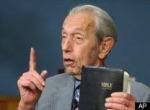
May 21st  came and has gone, and all the saints are still on earth!  The rapture did not take place.  The Bible warns that the dates and times of his return are not revealed, yet there are those who have attempted to “predict” the return of the Lord.  It amazes me how many people believed his message, sold all they had, only to be left now with nothing materially, hope lost, and faith damaged.  In spite of that, Harold Camping has told his followers on Family Radio that there was a “spiritual” beginning of the end and now moved the actual date of destruction to October.  What credibility does he have as a soothsayer of future predictions? Why would anyone listen to him or follow him?  Is it just because he heads a Christian radio station?

I have always been skeptical of self-proclaimed “prophets” who outline “end times” theories.  I remember in the ‘70’s when someone predicted Henry Kissinger to be the “antichrist” claiming that if you place the letters in his name with their numerical values, the end result added up to 666.  Well, it has been decades since Henry has had major political influence, and again Christianity has looked foolish in its predictions.  We have Christians who have made a mint writing dozen upon dozens of books claiming the mysteries of the book of Daniel and Revelation, outlining the course of the end times, both fictional and supposedly nonfictional.  Who are you to believe?

Why the interest, the fascination?  I have been taught that when I die, I will immediately be with Jesus.  If that is the case, then why do I need the rapture when I know I have the assurance of being in his presence after death. “Death, where is thy sting?”  I am looking forward to passing from life to death because of the assurances I have been taught about being in His Presence.  I have also grown up in churches that preach that a believer can be in “His Presence” now, just through worship.  Really, I guess, the focus should be on Jesus, not just on his return.  The book of Revelations in some Bibles is entitled the “Revelation of Jesus Christ.”  Could the book possibly be a symbolic metaphoric revelation of the person and presence of Jesus Christ, revealing who he is, his nature, not focusing on his return and end times theories.  I know the last two chapters of Revelation are metaphoric reflections of all sixty-six books into one passage, reflecting who Jesus is in the entirety of the Bible, which is remarkable.

I admired Dr. Carl Zeigler, a religious professor, when I went to Elizabethtown College for being a real Biblical scholar.  He was a brilliant man, yet he would not touch the book of Revelation because of its controversies.  He would rather reveal Jesus Christ through the Gospels than speculate about the coming apocalypse.

Mr. Camping broke away from the body of Christ, using the airwaves to propagate his theories to the general body of Christian believers, and would not subject himself to other Christian teachers for accountability.  These are all the ingredients that can lead to heresy or a cult.

Cults are not new.  I remember the Children of God (http://www.thefamily.org/en/),  the Forever Family (http://avehurley.wordpress.com/2007/03/10/forever-family-became-cobuthen-turned-to-a-cult/),  the Moonies (http://freedomofmind.com/resourcecenter/groups/m/moonies/),  etc. to my generation during my youth. I recall the Jim Jones and the People’s Temple massacres in Guiana (http://www.religioustolerance.org/dc_jones.htm).   I have seen Christian leaders elevate themselves to begin to think they have an inside tract on God only to fall.  The tactic that worked on Lucifer that brought his fall still is influential today.  I was wondering what cults are out there today, and Camping’s teachings have been exposed, bringing tragically down many sincere Christian followers, damaging their loyalty and faith, ruining them financially.

Could this have been avoided if the Church practiced the five fold?  Mr. Camping’s evangelistic and teaching zeal would have been tempered by the nurturing heart of a pastor/shepherd who would have warned him of how his actions this would damage the sheep.  Even today he does not show regret to those who have been stung financially by his actions. The prophet who would have exposed his teachings for what they were, not life giving words but destructive words.  A true prophet would have discerned the dark side of his teachings, exposing them while warning the saints.  An apostle, or over seer, would have seen over what was happening and would have warned Camping of the results of his impending actions, but I am sure Camping would not have listened for he became his own self-proclaimed evangelist, teacher, shepherd, prophet, and apostle, and that is dangerous.  No man is to take on all those passions as a self-proclaimed leader.  Each of the five fold is a “body” ministry to the “body of Christ”, for the “body of Christ”, to empower the “body of Christ”, the saints, not just single, powerful leaders.

I do not see Mr. Camping willing to “lay down his life” for his brethren, for during his current press conference he showed no regret, no remorse for those stung by his false teachings and predictions.  He did not expose a pastoral heart of a shepherd.  I saw no remorse, not a willing spirit to admit error, only a “new” justification.  I did not see a willingness to “step down” from Family Radio, but a controlling spirit to continue to use it to spread his newly justified propaganda.  I am sorry, but I did not see “Jesus” through Mr. Camping at his press conference. 

There will be more Camping’s in the future. How can the Church prepare, equip, prepare its saints for the “next” group of false prophets, false teachers, self-proclaimed evangelists and apostles all under the title of “pastor” or elite Church leader?  That will be the topic of my next blog.

What Grade Do You Give The Church On “Equipping/Preparing”?


Church, A Time For Self Examination.

Early “last” century, most people who attended a local village or town church grew up in the church, attended church all through their adolescence, married in the same church, and raised their families in that church, and got buried on that church’s grounds.  Culturally, that is not the trend in the 21st century as Americans are more mobile, seek jobs away from their upbringing roots, do not live where they were raised, and feel Facebook, MySpace, Skype, and other social media networks keep them informed of their roots thought they are not there physically.  With this change in cultural trends, the Church also needs to examine what they are “equipping” or “preparing” those who are under their wings for.  Some food to stimulate discussion:

Christian youth groups “hang out” together, establishing relationships.  Peer pressure and peer acceptance are at the forefront.  When going to Christian Youth Conferences, they are told to save every person in their school, change the world, and win the world for Christ.  Sounds good, but how?  Do our churches look beyond their teen years to equip, prepare, or train our teens for their independence and self-searching 20’s.  Do we equip them by teaching each one of them how to read the Word, the Bible, on their own and allow the Holy Spirit to teach them, so when they go off to college, or in the army, or move away for a starter position job they can be grounded in the Word and in their faith?  Do our churches equip, prepare, or train our teens how to establish a daily, vibrant prayer life, a life of worship, a life of intimate relationship with Jesus?  When they go off to seek who they are, trying to find themselves, their identities, will they have to tools, the equipment needed spiritually to establish their own sound beliefs through the Bible while trusting the Holy Spirit, or will they stray from the church in their search?

What if on the church door hung a sign “Building Condemned, Do Not Enter” or “The Practice of Religion Is Prohibited At This Place”?  What would those in your congregation do?  Has the local church equipped, prepared, and trained each of its members to stand on their own faith?  What is that faith?  Now is the time to test the depths of that faith?  If they couldn’t call the pastor or his staff, what would they do to survive on their own?  If no one has been trained to lead, who will lead?  If no one has been equipped or developed to serve, who will serve? If one felt lost in the large mega-church crowd on Sundays, who will they seek out to fellowship with?

If you had to leave your church today, what would be in your spiritual toolbox that you would pull out to use in your new life’s adventure?  What has your local church “invested” that is now part of you?  Who would preach or teach the Word? Could you?  Do you need to be “lead” into worship, or can you do it on your own?  If you can’t call on others, what would your prayer life look like?  If those you have been fellowshipping with were no longer around, who would you begin fellowshipping with?  Would your social life change?  

As a 21st Century Church we must ask, “What are we equipping, preparing, or training those in our church to do?” How are we to equip, prepare, and train them if we do not know what we are training them for?  What do we “really” need to move ahead in our faith journey if our circumstances or location changes?  If church activities were stripped from your life because of circumstances, sickness, moving, etc., what would you be able to do spiritually? 

These are some tough questions, but I ask, “What have we, as Christians, been called to do horizontally in relationship with one another that would prepare our faith for life’s surprises and the next step in our faith journeys?”  Church is about our vertical relationship with God, our understanding of Him, and how we relate to Him and worship Him.  Church is also about horizontal relationships, and the challenge of these blogs has been to question how we are to “equip”, prepare, or train one another “for the work of the service”, establishing, maintaining, and moving the kingdom of God forward.  That is the challenge of the 21st Century Church!


Why Does Learning Have To Be Academic?


How Do We Learn To Experience Life?

In America we equate academics with book learning, head knowledge, degrees earned, but how do we learn most of our life skills?  We can read self-help books or how-to-do books, but usually we learn through experience.  We learn to speak a particular language because of those around us speaking that way.  We learn to eat by first being fed and later wanting the independence to do it ourselves.  We don’t learn to walk through the academics; we learn through trial and error.  We don’t learn to ride a bike by reading and studying on the physics behind balance, we hop on the bike, get pushed by a parent, and learn through experience.  At 16 we read the rules on driving a car, but that doesn’t teach us how to actually drive that car; our parents sitting beside us saying “gas, no break, no gas, no turn right, right, right, no break….., etc.” teaches us. 

So how do we teach life skills.  In public school we would have to read a text book and take tests on what we read.  In Church we would read Sunday School or Children’s Church material during our lesson.  But how did Jesus teach?  What textbook did he use? The Talmud? The Torah?  The intellectuals of his time who knew those books spend countless hours debating their meanings.  Today, we Christians still do the same, debating countless hours over Biblical interpretations.  Those books are need for moral and spiritual direction, but most learning is done through experience.  I can’t spelunk because I never went spelunking although I have read about it.  I can’t water ski because I never went water skiing, even though I have read about it and may understand the physics behind it.

“When I grow up, I will never be like my parents,” we boast until we are adults parenting and eat our words because where did we learn parenting?  We learned it from experiencing it as a child through our parents.  How do we learn to be a “Christian”? Do we learn it from reading books on Christianity, Discipleship, Sanctification, etc.? Usually we learn it from being around other Christians whom we model.  That is why Christian fellowship is so important to the Church.  So as Christians, in a sense, we all are teachers, for others are watching, modeling, critiquing.

Now I do not want to minimize Bible reading and studying, reading devotions or devotionals, or even reading Christian literature, for we desperately need that. I contend that most of our learning is from experience, so maybe we, as the Church, need to reexamine how we teach the saints in their development toward maturity in Jesus Christ.  The ultimate goal is not to have someone go into full time ministry through Bible College and Seminary, but have someone grow in the image of Jesus Christ, so others see Jesus in them and their lifestyle.  The best way to teach lifestyle is to live, and to live is to experience.


Relevancy, the 21st Century Church, & the Five Fold (Part 7)


The 21st Century Church’s Identity Crisis?


In my May 13th blog I wrote, “After writing almost 300 blogs over the last few years about the Church from the perspective of the five fold not being “offices” by “church officials” but “passions” and “points of view” that drive believers in Jesus Christ, why wouldn’t the Church want to examine the relevancy of.....  actually “building relationships, not on likeness, but on different giftings to share in service to one another and to draw on in time of need.  In marriage we often chose opposites to augment our strengths and weaknesses, why not in other relationships?

Let’s look at that question.

When are the many parts of the body of Christ finally going to admit that “we need each other?”  Why do our differences draw us apart rather than bring us together?  Why are they so divisive?  In the natural, as a parent, I have worked hard teaching my children that family is important, relationships with kin is significant, love and acceptance trumps petty grudges and self centeredness.  It must have had an impact because my boys claim they never had a “slug fest”, an all and out fisticuff brawl between them. When raising fists, they laughed at each other.  Today they thrive in peace in a family setting, not division, strife, hurt, jealousies, grudges, etc. that dysfunctional families possess.  I cannot say that is true for the Church for it is strewn with divisions, critical of each other, and are known for shooting their wounded.   How can we be a light to the world, a Bride ready for the return of its Groom if that is its image?

In the natural the mystery of marriage is the bringing together two opposites and making them one.  In the natural it looks like it can’t be done, for it would bring strife.  In the supernatural it is a spiritual principle taught throughout the Bible.  The Church has an identity crisis.  The Groom is telling the Bride that she is beautiful (read Song of Solomon), but today’s bride, the Church, doesn’t believe it because of all of its internal turmoil.  Because of its lack of unity, striving to be uniform rather than united, the Groom is in disarray.  To the Bride, looking at the turmoil with in itself, it looks defiled, but the 21st Century Church, the Bride of Christ, must begin to look at itself as the Holy Spirit reveals it.  The Holy Spirit will reveal what the Groom looks like, and the Bride will transform into the likeness of the Groom bringing it into union.

Church, we got to stop looking at our differences, our past histories, our vain traditions, and allow the Holy Spirit to give us the revelation of who Jesus Christ is on this earth.  The Church is the extension of Jesus Christ on earth, so we need to get a supernatural revelation of what that really is!  A groom is always dazzled by the bride’s looks. It is breath taking to him. The same is with Jesus, the way He looks at His Church, so we need to get that same vision of who we are in Christ as an individual and corporately as a Body of Christ, the Church.

The purpose of the five fold according to Ephesians 4 is for individual believers to grow into the maturity and likeness of Christ and corporately for the Church to become united as one.  If that is its purpose, then maybe as a Church we should embrace it. Maybe we need to “equip”, “prepare”, “train” the “saints”, the believers in Jesus Christ and release their “evangelistic,” “pastoral,” “teaching,” “prophetic”, and “apostolic” spirits, or passions, or point of view to bring maturity to its believers and unity to its Body.  It is worth a try, particularly since what we have tried in the past has not proven to produce good fruit but hurt among its believers and division among its ranks.

We need to look vertical, heavenward for the inspiration on what to do supernaturally (John 3:16), but we need to look relationally horizontal (I John 3:16) to recognize in the natural the passions, giftings, and the way we view things differently to draw us together by “laying down our lives” for each other.  That, my friend, is the CROSS.  We are at the intersection of the supernatural dissecting the natural in history, I believe, the Cross the 21st Century Church must face. How will we respond to this challenge?

How is it all to work? Not our problem if we allow ourselves to listen to the Holy Spirit, the Spirit of Jesus Christ, and be obedient to His directions and calls.  If there was ever a time for the church to “trust and obey, for there is no other way” as the old 19th century hymn proclaimed it is in the 21st century. Let’s quit fighting the Holy Spirit, begin trusting Him, listening to Him, and be obedient to the revelation of Jesus Christ that he will unveil.  This will produce a new look for the Church to prepare it as a Bride.

21st Century Church….. let’s do it!

(This is the 7th part, the last, of a 7 part series.  I invite you to look back at the previous blogs and join me in future blogs about the relevancy of the five fold to the 21st Century Church.)


Relevancy, the 21st Century Church, & the Five Fold (Part 6)


Allowing the Holy Spirit to be the Holy Spirit?

In my May 13th blog I wrote, “After writing almost 300 blogs over the last few years about the Church from the perspective of the five fold not being “offices” by “church officials” but “passions” and “points of view” that drive believers in Jesus Christ, why wouldn’t the Church want to examine the relevancy of.....  actually “cherishing its historical tradition, but allowing the Holy Spirit to teach, guide, and speak to the relevant Church of today, the 21st Century, in how to be effective in a lost and dying world?” Let’s look at that question.

I think one of the biggest challenges for the 21st Century Church is to allow the Holy Spirit to just be the Holy Spirit and allow Him to do what He has been sent to do: Bring glory to Jesus Christ and revelation of Jesus Christ to the saints, those who believe in Jesus Christ.  We so often oppose the workings and leading of the Holy Spirit because we give up control.  It really is a control issue.  Who is in control, you or the Holy Spirit, the Spirit of Jesus Christ?  I have repeated over and over again in numerous blogs, “Can you trust the Holy Spirit?”  If you can, then do it!  Release Him to do His thing.

I know there is richness in traditions, for traditions are established by the ways people exposed their faith over centuries of history.  When they were alive it was just living out their faith, but to us it became an acceptable “style”, a “pattern”, a “program” that proved successful, or just the way we always do it not knowing why.  It is nice to know where we have come from, for that established our history, our foundation, but the question remains to where we are going?  What lies ahead?

The American Church today is so different than the founding Pilgrims in Massachusetts, or the Catholics in Maryland, or Quakers with religious freedom in Pennsylvania.  They came seeking religious “freedom” from the dictations of the established church with its traditions in their time.  Americans today still revere their “freedom of religion” although they still think their way of practicing their religion to be the true way.  There is a richness in the historical traditions of these different “faiths” or “sects”of Christianity, but I still pose the questions of where the American church is going now that there are millions in America instead of just thousands?

Culture changes with time.  Today’s fast pace, entertainment centered, internet driven, money driven, multi-tasked American culture is far different than what our Founding Father’s faced, so how is the Church to respond to the change in culture in the 21st Century?

The Holy Spirit birthed the Church at Pentecost.  Since that time it has been busy trying to establish the Kingdom of God on earth as it is in heaven, often against the resistance of the established church of its time. The early Church grew when lead by the Holy Spirit.  When the established church began replacing the Holy Spirit with rituals, traditions, and dogma, the Holy Spirit’s influence diminished leading the church into what we call today the Dark Ages.  The Reformation brought renewal and life to the church’s acceptance to the Holy Spirit’s leading, and the church began to again flourish. 

Abraham fresh faith established the Jewish faith, full of rich history with Moses and the prophets, but by the time of Christ, that very religion opposed that faith Abraham established.  Instead of the “Order of Melchizedek” as Paul preached about, Jews claimed to be followers of Moses, and opposed this Jesus Movement.  Over history, God had destroyed the Jewish Temple, the system of priesthood from the tribe of Aaron, the sacred genealogies, all sacred and central to the Jewish faith for a new and living way.  Traditional Judahism still opposes that the old testament, the old covenant, has been replaced by a new testament, a new covenant.  The very things God destroyed he fulfilled in Jesus Christ, yet tradition has been the biggest opposing force in allowing the Jew to accept Jesus as their true Messiah.

Today’s Church is facing some of the same issues.  Do we need our temples, our church buildings, our cathedrals destroyed, or our clergy or priesthood system changed, or our historical genealogies of men and movements that now carry their denominational names disbanded? What is the Holy Spirit up to in order to refocus the Church of Jesus Christ back on Jesus Christ and not its traditions as He prepares the Church, the Bride of Christ, for the Groom’s return?  That is the question we should be asking!

The 21st Century Church needs to ask, “What is the Holy Spirit up to?”  When He tells us, which He always does as a revelation of who Jesus Christ is, then will we be obedient to that revelation and actual “prepare” or “equip” the Church for that moment?  That is a question only we, as the Church, can answer, and to that answer comes the individual challenge to each believer in Jesus Christ, “Can you trust the Holy Spirit?  Will You Trust the Holy Spirit?”  If you say yes, to that challenge, then start listening, start obeying, and start trusting, for the Church will have to cloth itself in Bridal clothing that only the Holy Spirit can provide.

21st Century Church, believers in Jesus Christ, are you ready to respond?  “Can you trust………”

(This is the 6th part of a 7 part series.  I invite you to look back at the previous blogs, especially the priesthood, and join me in future blogs about the relevancy of the five fold to the 21st Century Church.)


Relevancy, the 21st Century Church, & the Five Fold (Part 5)


Can “Releasing” Be That Difficult?

 In my May 13th blog I wrote, “After writing almost 300 blogs over the last few years about the Church from the perspective of the five fold not being “offices” by “church officials” but “passions” and “points of view” that drive believers in Jesus Christ, why wouldn’t the Church want to examine the relevancy of .....  actually “releasing those already in the Church to do the work of an evangelist, or shepherding, being pastoral, or teaching the Word, or bringing spiritual relevancy and life to the Word, or “seeing over” what the Holy Spirit is doing with the corporate body of Christ?” Let’s look at that question.

The last blog we looked at “equipping” or preparing the saints for the work of the service, but what happens if we have done the preparation work?  If we “prepare” but do not “release”, our efforts are in vain!  We, the 21st Century Church, needs to learn how to “release.”

As a public educator, watching a High School Graduation Ceremony is a challenge.  You have spent 12 years in their life to “prepare” or “equip” them for the real world, but if you don’t release them (graduate them) they will never mature into adults!  Although a senior thinks he knows it all, he is in for a real shock when being released.  A new challenge begins, and he can’t return back to high school anymore? That is right! Now is the real test to see if we really “prepared” the student or not.

In the church world we, too, have often prepared people for ministry, but fear releasing them as if they are not ready!  In a past blog I told of the Lay Speaker’s courses I took through the United Methodist Church when I was young, but very few of those of us who took the course ever got to fill a pulpit to give a sermon.  The pastors were afraid to “release” their pulpits to non-clergy, fearing heresy, false teaching, or something….?  I have often asked, “Why were we even trained if they were not willing to release us upon graduation?”

I have seen churches who have released their members to move on in a ministry with the laying on of hands, financially supporting them, and blessing them by continual correspondence.  That was powerful.  It is far different being sent out as a “Lone Ranger” into a ministry rather than with the blessing of a caring, loving church as a covering.  Even the Lone Ranger had Tonto!  Instead of church splits, we would see church growths without disunity, hurt, and dissention. 

In the natural, the “empty nest syndrome” is tough on a parent who has nurtured and cared for a child, pouring everything physically, spiritually, and financially into their child, only to face an empty bedroom never to be lived in again by that child, for that child is no more; he has become an adult! That child will move on to their own apartment, eventually owning their own home, and maybe even building a grandparent’s suite on to their home to take care of their aging parent!  Children cannot become adults unless they are “released.”  Often, as a church, we have not only enabled other believers from spiritually growing, but we have held on to them too long, unable to release them. This has produced negative results.

As a church we spend countless hours, finances, and resources on our “Youth Groups”, the “future generation” of church leaders as we call them, but lose them when they hit their 20’s.  This is the decade of their growth, maturing into becoming an independent adult, and we, the church, don’t know what to do with them trying to fit them into our molds of the way we think and “do” church when they are looking for their own expressions of faith and truth, though in different ways than we deem “acceptable” or even “reasonable”.  What did we “equip” our youth to do in their teens that we could release them toward maturity in their 20’s?  Most Church Teen Conferences are hyped up to save one’s High School, change the world, and be a history maker.  They are not geared to “equip” or “prepare” those teens for their 20’s, thus they leave the church and search for the meaning of life when I thought the church already gave them that meaning!

If we are truly “equipping” or “preparing” our youth for the “work of the service”, then why are they leaving the church that supposedly equipped them when they work out their maturity, their adulthood?  The 21st Century Church needs to rethink how it “equips” and “releases” its future generation or it will lose them and the church becomes a spiritual “assisted living” building for the aged.

Again I would like to blog about Doris Dolheimer, who taught me a lot about equipping and releasing. Although an excellent Pentecostal pianist in her own right, she was willing to take those in their early teens under her wing to teach them worship, not as a style of music, but as a principle, equipping them to “hear the voice of the conductor”, the Holy Spirit and to be obedient to the conductor’s leading.  When those youth grew to become good musicians and began to practice some of the spiritual principles that she taught, she released them.  She walked off the stage, allowing the sound of the music to change to their expression, more “rockier,” and even watching her beloved baby grand piano be replaced with drums, electronic instruments, amps and monitors.  The sound and style of worship may have changed, but the principles she “equipped” them with haven’t.  Today she still remains in the pew and worships, while many of those that she has “equipped” have rocked on with Jesus with the desire to create a worshipful atmosphere.

21st Century Church needs to better equip and then release, let go with a blessing.

(This is the 5th part of a 7 part series.  I invite you to look back at the previous blogs and join me in future blogs about the relevancy of the five fold to the 21st Century Church.)


Relevancy, the 21st Century Church, & the Five Fold (Part 4)

 The Big “E”: “Equipping” or “Enabling”?

In my May 13th blog I wrote, “After writing almost 300 blogs over the last few years about the Church from the perspective of the five fold not being “offices” by “church officials” but “passions” and “points of view” that drive believers in Jesus Christ, why wouldn’t the Church want to examine the relevancy of.....  actually “equipping”, preparing the “saints”, not church staff’s, for the work of “service” as outlined in Ephesians 4?” Let’s look at that question.

There is an addiction in the American church today, dependency on their clergy or professional staff which often enables them.  The American church has done a poor job at “equipping” the “saints” for the work of service here in America by just “serving” them.  This may sound like a paradox, but by constantly “serving” their congregations, they constantly give out, give out, give out, then burn out!  That is not the fruit of serving.

We feed, diaper, and burp our children as newborns. From their birth, parents just give out, give out, give out, but there is the hope, the prayer, the belief that someday the child will be potty trained, feed himself at the table, and say “excuse me” when he/she burps alone!  Part of “growing up” is taking on responsibility, learning to stand alone, and eventually taking care of others.  It thrilled me to see a friend of ours helplessly going through childhood, only to one day stand on his own, in fact, getting married, and today is a “foster” parent, reaching out to others.  That is growing up.

There are members of many of our churches who have not, and often refuse to “grow up” spiritually.  They want the pastor to feed them through sermons and teachings rather than self-Bible reading and study.  They would rather call the pastor for the prayer list so that the pastor or staff can pray for their loved ones rather than nurture a private, vibrant prayer life of their own.  They would rather give financially when they can or what they want rather than practice a disciplined financial life of tithing.  These people frustrate their church leadership, but today’s church leadership style is to take some of the blame, because we are doing a poor job of “equipping”, preparing, developing, and nurturing the “saints”, the ordinary grass root believers in Jesus, to “do” the work of the service.  We have “enabled” them into their present condition.  Most “discipleship courses” in churches have failed.  Often it becomes easier to equip the “staff” than it is to equip the “saints” to “do” it.  I have seen this principle as a public educator where administrators are more into equipping their staff through staff development than releasing their staff to do what they are best at doing, teaching,  equipping their students for real world lessons. In education, students now “expect” the teaching staff to do alot for them, which is sad, but we have “enabled” that attitude. This is also true with the American church.

So the challenge is, “How do we “equip the saints for the work of the service” as a church?  How can we introduce, then develop, care, and nurture believers in their God given talents, then have the “trust” and “faith” in them to release them, allow them to grow up and be “mature” in Christ and eventually become leaders in the Church?

I contend through the five fold!  We need apostles to oversee or “see over” what the Holy Spirit is doing in individual lives as well corporately with in the local body of Christ. Apostles love to “see over” one’s development then “release” them. They are never to control nor manipulate, but allow the Holy Spirit to develop each believer.  Apostles naturally want to “release” one into ministry.  We need shepherds, teachers, and prophets to help in the day-to-day development of a believer to be grounded in the Word, the Bible, yet activate it into a “living”, Rhema Word, with proper nurture and care through daily living experiences. This is what Jesus did to the twelve.  He never sent them off to rabbinical school, or seminary, nor gave a “discipleship course” to his disciples; he walked, talked, and taught them through parables of common life experiences to teach kingdom principles.  We need evangelists to ignite, revive, and bring renewal and rebirth to that which the Holy Spirit is leading.  All five of these passions and points of view would develop believers toward a greater maturity in Jesus Christ.

As a church, we have got to quit enabling, and begin developing.  This takes an investment of our time, our talents, and our resources through establishing personal relationships, not programs as today’s institutional church looks for. “Equipping” or preparing someone takes time, care, nurture, respect, trust, development, and faith.  Are we, the Church, willing to give such a great price for the “equipping of the saints?”  That is the question for the 21st Century Church.

(This is the 4th part of a 7 part series.  I invite you to look back at the previous blogs, particularly on equipping, and join me in future blogs about the relevancy of the five fold to the 21st Century Church.)


Relevancy, the 21st Century Church, & the Five Fold (Part 3)

A Different Look At Accountability

In my May 13th blog I wrote, “After writing almost 300 blogs over the last few years about the Church from the perspective of the five fold not being “offices” by “church officials” but “passions” and “points of view” that drive believers in Jesus Christ, why wouldn’t the Church want to examine the relevancy of …… bringing “accountability” to those in the Church through “service” by “laying down your life for your brethren” (I John 3:16)?” Let’s look at that question.

In my private life I feel accountable to the leadership of my local church, but I do not feel them necessarily accountable to me.  I can call for an “appointment” if I need to communicate with them during business hours or if I have a need, or I will email, tweet, or Facebook them, but I never expect them to personally do that to me. Why? Often leadership in most churches is by position rather than relationship.  (Ratio between professional staff and laity can become ineffective for personal ministry when it grows in size.)  I must admit, my current pastor and I get to sit down and square off about once every three months.  I don’t know if that is enough to build a strong relationship of service and receiving. Those with whom I am in daily relationship I learn to respect because of their life style, their commitment to Jesus, their faith journey they display each day and how they portray Jesus to me in their daily life.  Often laity feel “out of the loop” with their professionals.   Personally, over the last 20 years, I have developed a mindset where I didn’t feel I had a personal relationship with our pastor that would warrant an invitation over for supper with his family, nor would I ever expect an invitation from him to dine with his family. I would feel calling him in the evening would fringe on his badly needed family time, but because of my work schedule I could not call him during business hours at the church office.  That relationship has changed with our current pastor, but the breaking of an old mindset is in order!

Accountability for leadership in most churches comes from with in their own structure.  Church Boards, Ministerial Advisory Committees, etc. are created as well as oversight by bishops, district supervisors, etc. for clergy.  But I have discovered that being a pastor, a clergy, is a very lonely position.  What has caused that dilemma?

Some denominations teach their clergy not to get close to their people because they move so often in their career.  I know of laity who have been hurt, learning to mistrust their clergy, because every time they get close to one as a person, build a relationship of faith and trust, the clergy has been assigned to another location, another parish, creating a void that had previously been fulfilled.

Why couldn’t accountability in leadership be built on “service”, “sacrifice”, and “laying down one’s life” for each other through relationships? I know of church boards and leadership that will host “Pastor Appreciation Sundays”, take special offerings to “bless” their pastors, even sending them on a “Cruise” to bless them for a badly needed vacation, but will not yield or lay down their lives for that pastor when diversity and differences arise during leadership meetings and church politics become the “norm” rather than “service”, “sacrifice”, or “laying down one’s life.” That superficial cruise often becomes the Titanic of their relationship.  What would leadership meetings be like if everyone was “free” to minister from their strengths to each other, and receive the strengths of others to bolster their weaknesses?  The power to “release” everyone to be who they are in Jesus and the giftings He has given them as well as “receive” openly and willingly from others their strengths would change how leadership is done in the church.  “Accountability” would occur with the “giving” to others while “receiving” openly from them.  That builds relationships; that builds trust; that builds strong bonds of “service” as featured in Ephesians 4.

There need not be a great divide between those in leadership and those not in leadership in the body of Christ.  We need each other, to serve each other, and to receive from each other.  Part of leadership is allowing a relationship to develop where one will receive as well as give.  This has to be practiced in our daily lives, our daily walks of faith!  How can a believer learn to “serve”, to nurture, care, and give hospitality than to those they are following as well as receive from them?  The church should be a “safe” place of us to practice on one another, so we can be effective when we reach out to others outside our little “safe” church world and be challenged.

Relationship among believes, the giving and taking of our different giftings and strengths is the key to the Church’s effectiveness and affluence in the 21st Century, and to bringing accountability to the church.

(This is the 3rd part of a 7 part series.  I invite you to look back at the previous blogs, particularly on accountability, and join me in future blogs about the relevancy of the five fold to the 21st Century Church.)


Relevancy, the 21st Century Church, & the Five Fold (Part 2)


Diversity Can Bring Unity, Not Division

In my May 13th blog I wrote, “After writing almost 300 blogs over the last few years about the Church from the perspective of the five fold not being “offices” by “church officials” but “passions” and “points of view” that drive believers in Jesus Christ, why wouldn’t the Church want to examine the relevancy of ……  using the diversity with in the Church that historically brought its divisions to become the very strength of bringing its unity?” Let’s look at that question.

The yellow pages of my phone book are filled with pages of subdivided “categories” of Christian Churches in my local city.  It attempts to compartmentalize the different “divisions” with in the Church by topics.  Similar churches are listed under similar titles, but different from other churches in the area, and proud of their differences rather than their similarities. 

There are listed “evangelical” churches with a strong emphasis for evangelism, “pastoral” churches that emphasize small group ministries, more person to person contact and care, “Word” churches that boast how they teach the “Word of God” uncompromisingly, “spirit-led” churches that are open to the prophetic and free style of worship, and even “apostolic” churches claiming to be the “true” church.  All recognize their strengths, boast in it, and emphasize it, but are unwilling to yield to those other “members of the body of Christ” who have strengths that flair up as their weaknesses.  The Church looks as a group that is independent from one another that doesn’t “need” one another, nor want to “fellowship” with those not under the same banner of strength, yet they try to talk a good talk about the “unity of the body of Christ”.  They might be united in heaven, for there is no “sections” in heaven like there are at sporting arenas, but they certainly are not united in any way on earth!  Though they claim to be preaching about the same Jesus, they proclaim different “gospels,” thus emphasizing their differences. What happened to the section of the Lord Prayer that states, “thy kingdom come on earth as it is in heaven?”

Rather than the church as an institution, let’s look at individual believers in Jesus.  Every believer needed an evangelist to “introduce them to Jesus!”  No “rebirth”; no “new life”!  You can’t deny the gospel, the good news, that an evangelist brings.  Every believer needs a “shepherd” with a pastoral heart to guide, nurture, & care for them through their spiritual walk.  Often we call these individuals our “spiritual parents.”  Every believer needs to be grounded in the Word, the Bible, individually, through daily Bible reading and studying allowing the Holy Spirit to speak to them, and with sound Biblical teaching. The 1st Century called this teaching the “Apostles’ Teachings” that became the groundwork for the new Church.  Every believer needs the prophetic, making their “theological” life a “living, vibrant” life of faith, a daily walking out of their salvation, a daily need to feed and grow on Jesus.  Every believer needs the “over sight” of an “overseer” to “see over” what the Holy Spirit is doing in individual lives and corporately in the gathering of the saints.  I must admit, as a believer in Jesus, I need all five of these passions, all five of these points of view to help me grow into the maturity and image of Jesus Christ while I live here on earth.

Now, as an individual believer, I can admit that I need the diversity of the body of Christ; then why can the Church corporately admit it too?  Why can’t we, the church, embrace one another in Jesus, serving one another in Jesus, and drawing from the strength of other believers in Jesus together?  Only when we drop our prejudices against our own brethren, can we embrace them in the love of Christ.  Individually we need one another; corporately we, the CHURCH, also need one another to full fill the calling of Ephesians 4 to bring unity to the Body of Christ.

Only through diversity can the Church of Jesus Christ be strong.  Let’s embrace that truth, and quit joining in the fight against it! Let’s eliminate the “secular” subdivisions that the Yellow Book, and so many others, believers and nonbelievers, see.  Let’s not only embrace one another, but begin to practice I John 3:16 of “laying down our lives for our brethren,” because that is his definition of true love!

(This is the second part of a 7 part series.  I invite you to look back at the previous blogs and join me in future blogs about the relevancy of the five fold to the 21st Century Church.)


Relevancy, the 21st Century Church, & the Five Fold


A New Vision In Our Current Time!


Home at 5 in the morning fighting a cold & aches, waiting for the doctor’s office to open to call for an appointment, I went on my Tweet account to see if anyone was talking about the 21st Century Church, the relevancy of today’s Church, or the five fold ministry in the Church.  There was discussion on the first two topics, but none on the third, when the third topic could be the key to the relevancy of the Church in the 21st Century.  After writing almost 300 blogs over the last few years about the Church from the perspective of the five fold not being “offices” by “church officials” but “passions” and “points of view” that drive believers in Jesus Christ, why wouldn’t the Church want to examine the relevancy of ……

                  -  using the diversity with in the Church that historically brought its divisions to become the very strength of brining its unity?

                  -  bringing “accountability” to those in the Church through “service” by “laying down your life for your brethren” (I John 3:16)?

                  -  actually “equipping”, preparing the “saints”, not church staff’s, for the work of “service” as outlined in Ephesians 4?

                  -  releasing those already in the Church to do the work of an evangelist, or shepherding, being pastoral, or teaching the Word, or bringing spiritual relevancy and life to the Word, or “seeing over” what the Holy Spirit is doing with the corporate body of Christ?

                  -  cherishing its historical tradition, but allowing the Holy Spirit to teach, guide, and speak to the relevant Church of today, the 21st Century, in how to be effective in a lost and dying world?

                  - building relationships, not on likeness, but on different giftings to share in service to one another and to draw on in time of need.  In marriage we often chose opposites to augment our strengths and weaknesses, why not in other relationships?

I just may have to re-examine those six reasons in blog entries over the next six days!  Join me, don’t be afraid to comment, and feel free to search any of my previous blogs for information and my insights.


What Does Worship Look Like To The Five Fold?


Different Passions, Point of Views, But One United Vision!

With the different passions and points of view, what does worship look like to the five fold?

Evangelist:  The passion of the evangelist is to “win the lost”, so worship to him/her might look like the lost coming to the foot of the cross and accepting the “evangelistic” offering of the “first fruits” of their lives, resulting in the crossing of the great chasm of belief and unbelief.  Unlike C.S. Lewis’ Great Divorce, those who have rejected the gospel would now accept it in an embrace with their loved ones who have entered the kingdom of God.  To an evangelist the celebration of “new birth” and “newness” would be central to their framework of worship.

Pastor/Shepherd:  To the shepherd, worship would be the daily “living out” of their salvation, their lifestyles.  Their “doing” the gospel would be an act of worship.  The practical daily practice of their faith while releasing it in daily situations and challenges would be central to their form of worship.

Teacher:  The teacher would feel the Logos Word of God, the Bible, is the centrality of all worship.  He/she would feel that everything would evolve around the centrality of the Bible in their lives, thus the reading of the Word would be of great importance in a corporate setting.  The testimonies of the saints living out the Word in their daily lives would augment everyone’s faith.

Prophet:  Prophets think worship is ascending to the heavenlies, experiencing revelation through Spirit and Truth which would unlock the mysteries of God.  They would emphasize making the Logos, living Word, a Rhema, or living Word. 

Apostle:  The vision of an apostle’s view of worship would be corporate, universal, all encompassing the many giftings and diversity within the Body of Christ in unity.  He would want to release the evangelistic spirit in corporate worship, as well as the pastoral spirit of nurture, development, care, and growth.  He would bring balance and unity between the teacher and the prophet in centralizing the worship around the Logos Word, but releasing the Rhema Word for current day revelation of gospel truths.  His view of worship is purely corporate unity in Jesus to proclaim a living gospel allowing the releasing of all the passions.

Together:  What an unique experience worship would be if all five giftings, passions, and points of view were allowed to be released in one setting at the same time!  The Church would experience the lost being saved, the found being developed into the maturity of Jesus Christ, and together unity in lifting up Jesus.  With the Holy Spirit orchestrating our worship, Church would never be the same.  Bring it on…….


Corporate Christian Worship Is But A Dream?


Can Old Men Dream Dreams? 

Because we upgraded our cable tv line to get more HD channels, I now get a channel that basically shows live rock concerts from around the world with tens of thousands of people in mash pits jumping up and down because they have been orchestrated to do so by the entertainer.  It is impressive to see the massive sea of people, as far as the eye can see and the front third pogo-sticking in unity.   There is a Christian counterpart called Creation (and the year) held at Agape Farm in Shirleysburg, Pennsylvania every year that attracts over 100,000 people to it.  It too is quite a theatrical production of continuous Christian bands and artists for three and one half days.

This made me reflect to my presence at Creation’s first year of existence and the Jesus rallies of the 1970’s which I faithfully attended in my youth.  Being among tens of thousands of people at a concert is an experience one never forgets.  Worshiping among that many believers in unity is life changing.  I remember worshiping beside a lady who claimed to be a Byzantine Catholic.  I did not know what a Byzantine Catholic was, or stood for, or believed, but I knew Jesus and so did she, so we worshiped Jesus together in unity. When in worship, there were no labels, no age barriers, no theological differences,  no sexual or economical preferences, just believers with raised hands or holding hands on bended knees praying in unity. That corporate worship experience is phenomenal.

At one Jesus rally in the ‘70’s, worship superseded the jamming of a Contemporary Christian Rock band until someone on stage actually pulled their electrical plug, shutting down their power source, sending the rock band huffing off the stage. Amongst the worshipers, entire Youth Groups were being slain in the spirit, physical healings occurred as well as deliverances.  Brothers and sisters in the Lord kept ministering to one another.  There was laying on of hands in ministry, raising of hands in worship, and holding of hands in unity.  Fellowship continued when returning back to one’s campsite where campfires were lit and little mini-worship services continued through the late night.  I remember one year a Hill Billy, spoon playing, fiddle fiddling youth group beside me broke out in worship, while a messianic Jewish group toting tambourines amidst continuous clapping worshiped on the other side of my tent. What cultural diversity in the Body of Christ, and it was all O.K.!

I miss the days of corporate worship with believers of different labels with one purpose in mind: to lift up the name of Jesus.  Worshiping in my own little Sunday morning church service can become so inclusive, and one can believe that they way one worships in that setting is the only “acceptable” way to worship.  How wrong! 

Where is the American Christian worship experience going today?  My sons, and my friend’s son who attends a Christian college for sound recording have challenged the worship band mentality that currently fills our airwaves as all sounding the same.  Where has the creativity, diversity, and uniqueness gone?  Does the Christian recording industry have that much of a grip on what is being produced as “worship”?  What does worship sound like in Africa, in the underground Church in China, in the small group homes in Russia, in prison cells in Muslim countries, in the back rooms of India, in Central and South America, in places where playing of instruments would give away one’s hiding place since Christian gatherings must be done in secret?

According to the book of Acts, “old men dream dreams”, and one of my fantasy dreams was to organize a worship session out in an open field with a stage in the shape of a pentagon, each side projecting worship in a different language (ie. English, Spanish, Mandarin Chinese, Arabic, and Hindi), so that all tongues and races could worship together. That is in the natural.  In the supernatural, worshiping in “the speaking with tongues” would take care of all of that!  In a world wide, computer, internet driven world that is bringing the world together by language and tongue, could this supernatural dream ever become a reality?

I long for corporate worship on a large scale.  I picture heaven being that way, so “thy kingdom come; thy will be done on EARTH as it is in HEAVEN.”  Why not practice a little heaven on earth?  Old men dream dreams….. This old man continually does that!