Is One's Personal Narrative the Key to Evangelism


A Look at Kent Hunter’s “The Future Is Now: How God Is Moving In The 21st Century Church

I came across an ebook by Kent R. Hunter of Church Doctor Ministries entitled “The Future Is Now: How God Is Moving In The 21st Century Church.”  I would like to quote from this source since it is so good, and then add a few of my analysis to it.

From Chapter 7 – Church As A Movement, Hunter says:  “Witnessing, in the true sense — what Jesus says in Acts 1:8 — is the key. This means that one of the most revolutionary and powerful “evangelistic programs” any church in the 21st century can accomplish is to patiently, gently, and continually ask people to share what God has done in their lives lately. In time, that becomes a cultural lifestyle for everyone in the church. In the early stages of the spiritual journey, witnessing does not include Bible passages or preaching. What receptive and interested people want to hear is how God has worked in your life recently. Witnessing has become much easier and must become, once again, the lifestyle of all Christians — not a program, effort, or the pre-occupation of just a committee.”

As a retired English teacher, I love narratives.  I have taught them, wrote about them, and even written them.  Narratives have always been an effective way of just telling one’s personal story. The four gospels are basically narrative accounts of experiencing Jesus’ life on earth and the book of Acts, a narrative of the birth of the Church. As a child at church, I remember singing the old church hymn “I Love To Tell The Story”.  Is the power of the narrative coming back?

In the 1980’s I was part of the Lay Witness Movement through the Board of Discipleship of the United Methodist Church.  Lay Witness Missions were basically teams of laity who were invited to invade a local church for a weekend to stay in the homes of the locals, participate in small group discussions, fellowship over pot luck, cover dish dinners, and share their personal narratives of what Jesus was doing in their lives.  It was a powerful ministry.  Common people, the saints of the Church, shared their narratives with one another for an entire weekend.  Even the Sunday sermon was replaced by someone sharing their personal testimony and allowing response to it.

In 1993 I got to go to South Africa for 16 days at the invitation of the United Methodist in South Africa to participate in Lay Witness Weekends in Pretoria and Capetown during the elections when Mandella was running for President.  I could fill blog pages telling of the power of that movement and trip.  I do remember that  South African Missioners, as they were called, or South Africans who would share their testimony or narratives at these weekends, had what I called “canned” testimonies. They recited their narrative to their coordinator just as they would always recite it if called to share.  We, Americans, on the other hand, would not just give our “salvation story” but also what Jesus was doing in our lives now.  We would go with the flow of the Holy Spirit, sharing differently each time we were called.

I did not know it, but we were under the South African Church’s microscope during those missions.  I remember getting a thank you note when returning back in the states.  Included were reflections on their part of what they observed from the weekends.  I was fascinated by one comment, “there is freedom in Holy Spirit.”  They saw the power of sharing our narratives in the “now” rather than reciting a planned dissertation.

I love to tell my stories: how I accepted Jesus, the need for more empowerment in my spiritual walk, wrestling with the supernatural in my natural world, the physical healing of being burned by the hot water from a car radiator, how I prayed with a man in the Super Dome in New Orleans who was healed instantly, how my 10 year old son gave prophetic words to a lady changing her life, my Lay Witness Weekend Missions to well over 50 local congregations, my trip to South Africa, leading a Bible School parade in Jamaica through their small town, going from not being able to physically talk about Jesus to one who can’t be quiet now, etc., etc., etc.

I sit in the church I currently attend that has approximately 350 people attending, and am shocked that I can not tell you the personal stories of more than five people in that congregation.  I wonder, “Who are these people? How did they get here?  How did they get to know Jesus?” Where are they in their spiritual walk?”  Churches need to allow the saints to tell their stories, so their brothers and sisters in the Lord can know who they are in Jesus.

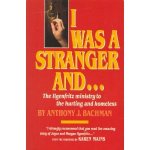
It is good to see that Mr. Hunter recognizes the need for the return of the narrative.  In the ‘70’s, Christian testimony books like The Cross And The Switchblade and The Gentle Breeze of Jesus were powerful narratives that influenced my Christian walk.  I even wrote and published I Was A Stranger And…., a narrative account of the Ilgenfritz family taking in to their personal home and lives over 100 people over a ten year period including my wife and I and the birth of our oldest son.  Christian publishers shy away from printing narratives today, yet the narrative still has the power of being personal, being about a real person, being just a story, and being an effective tool of evangelism.


Low Control and High Accountability is Crucial in the 21st Century Church


A Look at Kent Hunter’s “The Future Is Now: How God Is Moving In The 21st Century Church

I came across an ebook by Kent R. Hunter of Church Doctor Ministries entitled “The Future Is Now: How God Is Moving In The 21st Century Church.”  I would like to quote from this source since it is so good, and then add a few of my analysis to it.

From Chapter 7 – Church As A Movement, Hunter says:  “Ironically, most modern churches operate from a position of high-control and low-accountability. With boards, committees, votes, nominations, and meetings, many churches represent a very high-control posture. Some denominations represent the epitome of high control. They are disasters waiting to happen, with an extreme level of organizational bureaucracy.

At the other end of the balance, most present modern-era churches reflect low-accountability. People can gossip frequently and no one will hold them accountable. Many feel an independent isolationism from one another in the church. They have inherited an environment in which “your fellow Christian’s sinful behavior is none of your business.” This is the exact opposite of the New Testament approach to church culture, which is low-control, but with high-accountability. The New Testament teaches we should “speak the truth in a spirit of love” (Ephesians 4:15). Jesus taught that we should follow His teaching in Matthew: confront one another privately; if that does not work, take a witness; if it continues, take it to the church — or church leadership (Matthew 18:15-17).

The reemphasis of proper balance in control and accountability explains why many of the new and cutting-edge movements of Christianity include accountability groups.”

Hunter advocates low control, high accountability as keys to the effectiveness of the 21st Century Church.  In old Charismatic jargon, one might ask how to keep the flow flowing in each believer.  During the Charismatic Movement many spiritual gifts that had been dormant for centuries began to again to surface in the Body of Christ.  But often “freedom in the Spirit” was directly opposed by the high control of the hierarchy of the institutional Church which eventually capped this freedom of flow by control.  Independent Prayer And Praise Groups that sprung up everywhere producing spiritual life, increased prayer life individually and corporately, and encouragement for regular believers to grow in Christ were eventually controlled by the institutional church by becoming “home groups” or “small groups”, closely and heavily monitored by the institutional church.  Anything outside their doctrinal code or comfort zone was diminished.

The key to the success of the five fold in the 21st Century Church is the Church’s willingness to “equip” then “release” these five giftings, passions, and points of view.  Those in leadership have to allow the saint whose passion and point of view is to evangelize to evangelize.  To allow the saint whose passion and point of view is to shepherd, nurture, care, and develop to be pastoral in his gifting and passion.  To allow the saint whose passion is to bring the Logos Word, Biblical interpretation to become a Rhema Word, an experiential living out the Word.  To allow the passion of the saint whose desire is to commune with God to be prophetic. Finally, to allow the saint who sees the big picture, the body of Christ, locally or nationally, to be able to “release” the others, in freedom, to do it without control, only “seeing over”, not “overseeing” what the Holy Spirit is doing in their lives.  That is low control.

High accountability comes when the believers of faith, those in communion as the local body of Christ, are willing to practice I John 3:16, knowing love as being willing “to lay down your life for your brethren.”  In the five fold, that accountability comes in “serving” the other four out of your passion, gifting, and point of view, but it also means “receiving” the “service” from the others whose strengths are your weaknesses.  Only when one “dies to himself” can he become “alive to the service of his brethren.”  This concept is so foreign to the current Church, but I believe will become a cornerstone in the 21st Century Church as it develops.  The five fold could be the ultimate accountability group for the Church in this century.

Unlike today’s institutional church leadership structure where Board meetings, Pastor/Parish Committee Meetings, or Elder’s Meetings become business meetings, often featuring a strong dose of church politics, the five fold structure is not built on a power structure of oversight, but on a “service” structure to and from each other through relationship and laying down ones life for each other.  I have never experienced a church leadership meeting of death, everyone dieing to themselves for the sake of serving the others, though I have attended some dead leadership meetings where everyone pushed their agenda, opinion, or power position.

Low Control and High Accountability are keynotes to the five fold structure of “equipping the saints for works of service.” (Eph. 4)


Relationships in the 21st Century Church

 A Look at Kent Hunter’s “The Future Is Now: How God Is Moving In The 21st Century Church

I came across an ebook by Kent R. Hunter of Church Doctor Ministries entitled “The Future Is Now: How God Is Moving In The 21st Century Church.”  I would like to quote from this source since it is so good, and then add a few of my analysis to it. 

From Chapter 6 – Flat Changes Everything, Hunter says:  “The flat world reflects the repulsion today’s young adults have for institutions that act institutionally. The key for understanding this is that if a church persists to be hierarchical, it will not attract young adults. This concept is reflected in the teaching of low-control/high-accountability. Most churches from the modern era have become extreme, with layers of bureaucracy, politics, bylaws, rules and regulations, titles, offices, and all the trappings of institutionalism. This does not fit the relational world that now exists. It is not an effective platform for sharing the Gospel. The flat world Thomas Friedman [his book The World is Flat (Farrar, Straus, and Giroux, 2005)] describes simply indicates that now people relate horizontally. Not so many decades ago, it was required to get the “secret information” held, for example, by seminary professors at a seminary institution. Now, students can find any of those books on Amazon while sitting in the comfort of their own bedrooms. The flat realities of our present world are a great blessing for the church that returns to the biblical realities of the priesthood of all believers…. The way churches operate and make decisions is often called church government. The institutional and corporate models that betray biblical truth — on more levels than one can imagine — will be replaced by a way of decision-making that models an apostolic theocracy.  The word “theocracy” means the rule of God or will of God. It reflects the primary driving force in which churches make decisions: seeking what God wants.”
Hunter hits on several themes I have reiterated throughout these blogs: “This (flat world) concept is reflected in the teaching of low control/high accountability.”  The five fold, as I propose it, is a process of “releasing” individual believers in Jesus Christ to do their passion, exercise their point of view, with all the gusto, energy, and heart and spirit felt motivation that is in them with the accountability piece of submitting to the other four passions/points of view through “service”, serving one another.  Low control, freedom in being released in the Church, with high accountability, submitting through service and being served by four distinctly different passions and points of view that differ from your own by laying down one’s life for their brethren.

Another key theme: the priesthood of all believers.  In my ebook, The Blue Print and my accessory workbook, Breakthrough To His Presence, which I hope to soon offer through this web site, I address this topic. The premise of these books is a study of the actual blue print of Herod’s Temple, the temple Christ himself personally visited, and how the physical divisions of the inner courts exemplifies the walls and barriers that keeps a believer from entering the Holy of Holies. When Christ died on the Cross, the veil in the Holy of Holies was torn from top down, breaking down all these barriers, allowing His Spirit to dwell in any and all believers in Jesus Christ. The Blue Print is a fictional account of this principle while Breakthrough To His Presence is a Bible study workbook of scriptures that actually break down these barriers.  In essence, Jesus broke down hierarchal barriers of his time to free the priesthood of believers according to the order of Melchizedek. 

The last principle he described as “an apostolic theocracy” model of “seeking what God wants.”  Although we may differ on the role of the apostle, it excites me that Hunter recognizes the importance of the five fold in a “God’s Will” seeking model.  I believer that all five are empowered to lead when called upon by the Holy Spirit with the backing of the other four to help implement it.  If something is to be birthed, the evangelist will rise and lead with the support of the others.  If something needs nurturing, care, or developing, the pastoral shepherd will arise. If something needs to be Biblically based, the teacher arises.  The prophet arises when the relationship through communication between God and mankind needs emphasis. Finally the apostle will arise to see the big picture, releasing the other four to do their passions freely as he “sees over” what the Holy Spirit is doing. 

Hunter is correct in his assumption that the church must become relational rather than hierarchal. I John 3:16 of “laying down your life for your brethren” is relational and brings accountability.  The Church must struggle with the reality of what I John 3:16 (horizontal relationships) mean to John 3:16 (vertical relationship) in order to understand how the Cross effects the 21st Century Church.

Good stuff Mr. Hunter!

(Since my ebooks are not yet uploaded, if you email me at popnozall@gmail.com, I will send you a copy in PDF format of The Blue Print and/or Breakthrough To His Presence FREE if requested by the end of June, 2011 [if I am tech savvy enough to do that!).


Why The Five Fold As The Next Movement or Revival to the 21st Century Church?


A Review Of History From Dr. Bill Hamon

As the Church faces a new century and new movements of God, how will it respond?  Dr. Bill Hamon claims, “When this occurs [a new movement], some of the pastors and denominational leaders will take a neutral attitude, ‘Hold steady; do nothing; wait and see.’  Others will accept the new truths and ministries and incorporate them into their own teachings, ministry, and ways of worship, but some will reject and condemn the movement.

Those who do not like the movement and want nothing to do with it will find examples of ministers or members who have been confused or hurt by their involvement in the movement to prove that it is not of God.  They will also focus on little phrases or particular teachings of the leaders of the movement and make them sound unscriptural, out of order or cultic.  Those who oppose and persecute the movement will declare publicly that it is not of God and forbid their members to participate. The leaders of past movements, independent groups, and denominations will finally issue an official document declaring that this movement is not condoned by them and is therefore not of God.  Those who were leaders of God’s established order until the new movement came along are the ones who fight what is new the hardest.1

 So why do I, the author of this blog, propose the five fold as the next movement of God.  Hamon takes a historical view at this proposal.  Hamon has charted the change produced by the Restoration Movement since its inception in the 1500s with the Reformation.1

                  Year Restoration Movement               Major Truth Restored

                  1500 Protestant Movement                      Salvation by grace through faith (Eph. 2:8,9)

                  1600 Puritan Movement                           Water Baptism, separation of Church and State

                  1700 Holiness Movement                          Sanctification, Church set apart from the world

                  1800 Faith Healing Movement                   Divine healing for the physical body

                  1900 Pentecostal Movement                      Holy Spirit baptism and speaking in tongues

                  1950 Latter Rain Movement                       Prophetic presbytery, praise and worship

                  1960 Charismatic Movement                      Renewal of all restored truth

                  1970 Faith Movement                                 Faith confessions, prosperity

                  1980 Prophetic Movement                           Prophets and gifts of the Holy Spirit

With this Hamon also teaches that in each of the last five decades of the twentieth century, one of the five fold ministries (Eph. 4:11) has been reemphasized or restored, and certain Biblical truths and ways of worship have been reactivated in the Church by the Holy Spirit.2

                  Decade Five Fold Ministry                  Movement/Revival

                  1950’s Evangelist                                 Deliverance Evangelism

                  1960’s Pastor                                       Charismatic Renewal

                  1970’s Teacher                                     Faith Teaching Movement

                  1980’s Prophet                                     Prophetic Movement

                  1990’s Apostle                                     Apostolic Movement

I, the author of this blog, have personally experienced the effects of all five of these movements during my life time.  Because of the institutional mentality of the church, I have seen the church make “offices” out of the five fold, usually held by positions of leadership, usually the senior pastor, bishop, staff, etc., not the grass roots laity.  When there is a movement of God, it affects the grassroots of every believer, the priesthood of believers, not just the institutional hierarchy. This, I believe, is the biggest change to Hamon’s chart.  God’s Spirit through this next move of God will continue to be upon all flesh. (Acts 2)

I believe the Holy Spirit is shaking out, developing, teaching the five fold as passions and points of view that, when equipped, developed, and released, can bring maturity in individual believers while bringing unity among the five if they are willing to “lay down their lives for their brethren.” (I John 3:16).

The five fold will bring accountability to the Church unlike it has experienced since the first century because its foundation is on “service”, different passions “serving” each other and receiving the “services” from each other.  This accountability is based on “relationship” not on hierarchy of position of power or influence.

I agree with Kent R. Hunter and Dr. Bill Hamon that the wind of change, the wind of the Holy Spirit, is blowing, and we are seeing just the beginnings of the next great move of God upon the 21st Century Church.

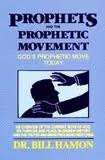
 1 Dr. Bill Hamon, Prophets and the Prophetic Movement:  God’s Prophetic Move Today  (Shippensburg, Pa: Destiny Image, 1990), 107.

 2 Ibid., 44-45.


A Look At How God Is Moving in the 21st Century Church


A Look at Kent Hunter’s “The Future Is Now: How God Is Moving In The 21st Century Church

Kent R. HunterI came across an ebook recently that spoke to my spirit.  I said “Right on!  Someone is receiving an insight of what the Holy Spirit is doing in this century.”  Kent R. Hunter of Church Doctor Ministries posted an ebook entitled “The Future Is Now: How God Is Moving In The 21st Century Church.”  I would like to quote from this source since it is so good, and then add a few of my analysis to it.

 From Chapter 3 – Holy Discontent:  “What is the work of the Holy Spirit that occurs underground, before an awakening in a church? It is a move of God with certain individuals within churches. It represents a holy discontent, which can also be described as a spiritual restlessness.”

“Those individuals who feel holy discontent, however, are core members of the church. They are the tithers, generous givers, volunteers, love the pastor, are loyal to the church. But they wrestle with holy discontent. Because they are mature Christians, they do not vocalize this discontent to others. But, to themselves, they often express their discontent by saying, “I just think our church could do better.” They feel their church under-achieves: “I really believe our church should have a greater impact on our community.” They would say, “In the big picture of things, I just feel Christianity should have a greater impact on our culture.” Because they are loyalists, they do not want to spread what seems to be negative feelings. 

In truth, these individuals have been spiritually marked, in my perception, as frontline leaders for an awakening. The key for churches is to identify these people and provide a platform for them to know there are others who have this same holy discontent: they are extraordinarily loyal to their church, but want it to become more effective. Their “restlessness” is not only holy, but positive. They are beginning seeds of what will grow into a spiritual movement in the church. But it will happen if, and only if, they are nurtured, provided a platform, and encouraged by the leadership! Therefore, it is my perception, as an analyst, that these are people who should be brought together into a Vision Team (which is a more positive approach than calling it a “Holy Discontent Committee” — anybody want to join?).

On the other hand, people with holy discontent, if not nurtured, will eventually leave the church. Not in an angry or even public fashion. They still love their pastor and feel loyalty to the church. They leave with extreme frustration, recognizing there is no platform, no outlet, and no one seems to want to listen. It appears, to them, that no one wants to make their church more effective for reaching the lost and impacting the culture. They seek another church for missional stewardship reasons: “I only have one life to live, and only so much money to give. I want to invest in a church that is making a difference. I’ve tried everything, and it just doesn’t seem like our church wants to move forward...or can’t. I have to go where I can contribute, making a Kingdom difference.”

Those churches that provide a platform — a Vision Team — develop a direction that will lead the church in the coming awakening and the subsequent revival. Those churches that miss this opportunity and do not provide an environment for those with holy discontent will actually lose some of the most valuable contributors (in every way) to their church and will actually become weaker, increasing the demise of their churches. This is the “pruning of the vineyard.” Jesus taught about branches that are cut off, which do not produce fruit (John 15:2). Leaders in churches who recognize the work of the Holy Spirit in these people will provide a platform and harness what the Holy Spirit is doing, or, they will lose them.”

Many who I know who love the Lord, love the Church, who are foundations in their local church, and are seeking the next move of God have experienced this discontent over the last couple of years, trying to figure out what is happening, where the Spirit is leading, what is the next revival.  They fear that if revival does come, it usually happens outside the borders set by the current institutional Church, and usually brings more division, more denominations.  What many of my friends desire is a movement of God, a revival that will bring unity in the body of Christ , not discontent and division. 

I remember the Charismatic movement, which touched my life, and I became frustrated because there was no platform provided by the institutional church at that time to share the fruit of what was happening in my changed life in Jesus.  I only felt resistance to what God was doing from the church.  Decades later the church embraced those changes when “proven”, but unfortunately lost out in the freshness of the movement. 

I truly believe the five fold will part of this next movement of God because as Ephesians 4 so amply shows the fruit of the five fold to be maturity of the saints into the image of Jesus and unity in the body of Christ.  I have seen maturity, or spiritual growth, from past revivals in the lives of the saints they touched, but never unity.  That is why I feel this next movement of God to be different. 


Five Fold In The Business World

Why Does The Financial World Embrace The Five Fold Before The Church Does?

 I have listened to my son as he has learned about the business world in America and sometimes marvel that they use principles that should be anchored in the Church, but the church does not embrace or practice.  Churches are known to be “cheap” in the business world, wanting hand outs, cut rates, volunteers in stead of paid staff even though they run their institution as a business.  There is a business side to the American church: budgets, staffing requirements, property management, pensions, office expenses, etc.  The budget dictates often what a church can and cannot do.  Yes, God does speak through finances!  Like the business world, it too has created a hierarchy: senior pastor, associate pastors, office staff, and at the bottom, of course, janitorial staff, all who are paid hierarchically by position.  Who ever heard of a janitor getting paid as much as the senior pastor even though both do their work equally as “unto the Lord”?

If the bottom line of American business is to make money, then what is the bottom line for most American churches?  The more money they make, the “more they can do for the kingdom,” we are told.  In Jesus time, the growth of the kingdom of God did not hinge on the Church’s wealth.  When the Church obtained wealth, it was plunged into the Dark Ages of corruption and heresy.  So really, what is the bottom line for the business branch of most churches?

It amazes me that a successful business has a C.E.O. to run it, a visionary in the company to constantly produce new products or new ways to market their product, a C.P.A. who knows and follows financial laws in minute detail and will not waiver, a Business Manager to maintain the infrastructure of the corporation, and salesmen who enthusiastically proclaims and endorses the product to be sold.  It appears to be a five fold model.  Often, the American church has modeled their institutional structure after this capitalistic model: a Senior Pastor to oversee it, a business manager plotting where the church can go next financially, a biblically based teacher (unfortunately often the Senior Pastor through sermons or teaching classes, as if he already doesn’t have enough to do), a pastor (again the Senior Pastor unless he has Associate Pastors on his staff), and an evangelist (again often the Senior Pastor on Sunday mornings).  In the business world power is determined by who “controls” what.  The bottom line is control.  Unfortunately the institutional church has fallen into the same category.

So what makes the five fold as I propagate it among all believers in Jesus Christ as their passionate point of view different from the business world or the institutional church?  The answer: Through their bottom line.  The capitalist’s bottom line is to make a financial profit.  Often for the institutional church’s bottom line is growing in numbers and in their budget.  But to the five fold it is “equipping the saints for the work of service.”  What is each of these groups “investing” in and to gain what?  Business invests in people to acquire wealth; institutional churches invest in people to grow in number and finances; the five fold invests in people to “mature” them into the image of Jesus Christ and to bring “unity” in the body of Christ.

Allowing the evangelistic, pastoral, teaching, prophetic, and apostolic spirits to flow and move effectively has nothing to do with money; it has to do with “releasing” the saints, the everyday believers in Jesus, and trusting in the Holy Spirit to orchestrate that leading.  Unlike the C.E.O. who controls every facet of the business, the apostle only “sees over” what the Holy Spirit is doing because the Holy Spirit is in control.  Unlike the Business Manager “controlling” finances, the pastor/shepherd doesn’t control those he is over, but serves them, nurtures them, cares for them, is willing to die for them.  Unlike the C.P.A. who is controlled by financial laws, the five fold teacher is freed from being under the Law through grace in order to live life fulfilling the Law.  The envisionary businessman looking ahead in the business world to “reveal” future profits falls short to the five fold prophet whose passion it is to “reveal” Jesus Christ to the lost and to the Church.  The salesman whose goal is to sell the product, falls short of the five fold evangelist who not only proclaims and endorses what he knows, but also births the new things through the Holy Spirit. 

Accountability!  The business world is accountable to its bottom line, how much money it makes.  The institutional church is accountable it its church boards, elder boards, ministerial management boards, congregations, etc.  The five fold is accountable to each other through service, giving to each other, receiving from each other, and laying down their lives for each other.

The business world has embraced the five fold in ways that will profit their bottom line in order to be a successful business model making money to the envy of the rest of the business world with the goal of making the top ten Fortune 500 List.  Why has the Church been so reluctant to also embrace a five fold model that will profit the lost, those who need nurturing and developing, those who need grounded, those who need proper relationships, and those who need over sight?  The bottom line: the lost will be found, the hurting nurtured and cared for, those blown ever which way grounded, those with little or no self image or self worth valued in their relationship to Jesus and His Church, and those who are incomplete, become complete in the maturity, the fullness of Jesus Christ!  Why would the Church not embrace the five fold if these were Church’s results, the Church’s bottom line?

Are we investing in the kingdom of God, or are we investing in an institution?


Equipping Series – Part VI: Accountability In The Church

 “Ephesians 4” Call To Equip The Saints For The Work Of Service Through Accountability:

I believe the five fold passions and points of view are in every believer in Jesus Christ since the Holy Spirit of Jesus Christ indwells them.  So how do we allow the artesian well of the Holy Spirit to surface effectively in all believers to bring maturity and unity to the Body of Christ?  That is the calling of the five fold ministry of the Church.

If you allow each of the five fold to arise as a separate entity, you have set yourself up for church splits, theological battles, divisions, and spiritual anarchy in the Church which has been the pattern historically for centuries.  How can five passions that are so different and can be so divisive if practiced alone, be so powerful and unifying to the Body of Christ, His Church?  The answer is in one word: accountability

Each of the five must be accountable to the other four through service, through humility, with a spirit of receiving not rejecting, with a spirit of encouragement not criticism, with open accepting arms, not closed ones in opposition. In short, practicing I John 3:16-18, “This is how we know what love is: Jesus Christ laid down his life for us. We ought to lay down our lives for our brothers.  If anyone has material possessions and sees his brother in need but has not pity on him, how can the love of God be in him?  Dear children, let us not love with words or tongue but with actions and in the truth.”  I am tired of the Church talking about unity, claiming to be one Church under Jesus Christ, but never practicing it.  The Church needs to take "actions" in the "truth" of the gospel and start brining maturity to its believers and unity to the Body.

In other words, we can’t “pick up” anything until we “lay it down”.  Let’s lay down our lives, lay down our previous mindsets, lay down traditions, lay down previous theologies that have divided the Body of Christ, lay down our defensive critical spirits towards other camps, groups, etc. under the banner of Christianity.  Let’s lay them on the altar of as an act of worship.  Allow Jesus to do with them as He wills: either burn up and destroy them, or like Daniel’s personal experience in the lion’s den, protect them and allow them to arise with life, or make them totally new and give them back to us.  Allow the Holy Spirit of Jesus Christ then to teach, implement, and develop in the Church what Jesus’ will is for that which you have been willing to lay down.   Jesus had to lay down his life in order to become resurrected.  The Cross always precedes resurrection.  Let’s lay down horizontally everything in our spiritual and physical lives and allow the supernatural power of God, vertically, to intersect, invade that which we laid down, horizontally, and we have “The Cross”.  Only through The Cross whose vertical intersection (John 3:16) of our horizontal relationships with our own brethren (I John 3:16) can bring the humbleness, the brokenness, that which is needed to make five different passionate points of view to “see in unity” in the “Revelation of Jesus Christ”, the Church, as a whole!

Each of the five fold must serve the other four in humility, to minister to their points of weakness, so they can be effective in their callings, their missions, their passions.  Each of the five fold must allow the other four to serve them in humility, to minister to their points of weakness, so they can be strong and effective in their mission, calling, and passion in the Kingdom of God.  Accountability comes through giving and taking through service!  Each must give through service to the other four and receive through service from the other four in order for the five fold to be effective.

The Church has not seen this kind of accountability since its birth centuries ago, for this form of accountability is not through hierarchal leadership but broken servanthood from and to one another, nor is it through power or position but through equality.  You not only use your passion to serve others but are freed to develop, grow, and use your passion by being served by other brothers/sisters in the Lord.  No one passion or point of view is “the leader” or “the head” under this form of accountability, but is shared jointly and rises to leadership only when called upon by the Holy Spirit.  When the spirit of evangelism is needed, the evangelist will arise with the backing of a pastor/shepherd, teacher, prophet, and apostle and will be free to minister in their evangelistic calling.  When the spirit of shepherding, of teaching, of prophecy, and the apostolic spirit is needed, they can arise with the backing and support of the other four.  Their backs are always covered while being free to do what they do best, their passion to serve Jesus Christ in his gifting to them!  What a refreshing, healthy, harmonious way to minister.

Although we do not see it in our current system of leadership and hierarchy in our church structures, the five fold can become a reality when everyone is willing to lay down their lives for each other.  That happened in the book of Acts where they freely gave, freely received, freely ministered, and felt freedom and support when the Holy Spirit released them into ministry. Trusting the lead of the Holy Spirit individually and corporately is the key to the effectiveness of this accountability system and the power behind its success.

My prayer is that we, the Church, embrace what already exists in our churches, the evangelistic, pastoral, teaching, prophetic, and apostolic spirits which already exist in its individual believers in Jesus, begin to lay them down on the altar, relinquish control to the Holy Spirit, allowing our Supernatural God to vertically dissect our horizontal world of relationships, The Cross, to produce a powerful resurrected Church. Let's quit talking about it; let's just do it! 

Equipping Series – Part V: Apostles


“Ephesians 4” Call To Equip The Saints For The Work Of Service As A Apostles:

I believe the five fold passions and points of view are in every believer in Jesus Christ since the Holy Spirit of Jesus Christ indwells them.  So how do we allow the artesian well of the Holy Spirit to surface the apostolic spirit that is in all believers?  That is the calling of the five fold ministry of the Church.

If there was ever a time in Church history for one to be called to “see over” what the Holy Spirit is doing in the body of Christ, to release the various giftings in the Body of Christ, to bring maturity to individual Christians into the likeness and image of Jesus Christ, to bring unity to the Bride of Christ to usher in his return, it is now!  So, how can we, the 21st century Church allow the creative apostolic spirit to arise in believers, aiding, caring, developing, and then releasing him to produce fruit for the Kingdom of God?

I certainly don’t have all the answers, but encourage you to ask the creative Holy Spirit of Jesus Christ to give you “revelation” of who He is and how to show that to others.  I only offer a few suggestions:

The Price Is Heavy:  Read in the gospels what it cost Saul when he became Paul, the apostle to the Gentiles: ridicule, rejections, being stoned near death several times, constant conflict, opposition, and travel.  He had to “die to self” in order to “live in Jesus Christ.”  I personally believe the only way five different passions and points of view can be effectively used in unity is by those involved practicing I John 3:16, “laying down your life for your brethren.”  To be an apostle you major in death to bring life, a heavy price.  You have to lay down your life for your brethren to give them life; lay down your giftings to allow your brethren’s giftings to arise and be released; laying down doing it yourself to let others develop, grow, and mature into the image of Jesus Christ, and lay down your personal life to see the Body of Christ corporately have life in unity.  It is an awesome price!

“Seeing Over”, Not “Oversight”, An Issue Of Control:  A Christian with a true apostolic calling enjoys “seeing over” what the Holy Spirit is doing, and constantly releasing the Holy Spirit to do so.  They lose all control to the Holy Spirit, instead listening to the still small voice prophetically to the Holy Spirit, being grounded in the Logos Word, while teaching how the Rhema Word is the living Logos Word, exemplified through his own life, while caring for, nurturing and developing the saints towards maturity in Jesus Christ, while allowing birthing, newness, and renewal to always be present in the Body of Christ.  They give up all control to the Holy Spirit, only to be obedient to Him!  If the Holy Spirit is to be in control, the apostles must forfeit all control.

The Power Of Releasing Others, Not Doing It Yourself:  Want it done right?  Then it is easier to do it yourself, at least until you become overwhelmed with too much to do!  The apostle oversees the nurturing and developing of the corporate body of Christ by overseeing the nurturing and developing of individuals in the body of Christ towards their “maturity” in the likeness of Christ.  The most powerful tool an apostle has is that of “releasing”: releasing the Holy Spirit to teach and minister, releasing individual members in the body of Christ to use their passions and points of view for “service”, and releasing the Body of Christ as a whole in its efforts to become the Bride of Christ.  Apostles can birth, can nurture, can teach, can give revelation of Jesus Christ to individuals and the body, but chose not to do so in order to release others to do it!  This way the Church grows.

A Wider Visions:  An apostle can not help himself, because it is not at all about him personally, only his vision, his passion, how he pictures the Body of Christ as a whole.  If Jesus is exemplifying and revealing who He is on the earth right now through His Church, then the apostle must see the Body of Christ as a Revelation of Jesus Christ!  An apostle is allowed to see this wide vision, because that is who he is in Jesus.

Release The Apostle:  The worst thing to do after training or equipping someone is then to stifle their vision, their enthusiasm, their drive, their passion, and just let them sit back. RELEASE THEM TO SERVE!  You have equipped the apostolic for the “works of service”, so let them serve!  Let them do what drives them: Release the five different passions and points of view for the maturity of believers in Jesus Christ to be like Jesus Christ and the Church to be unified to be the unified Body of Christ!  As he released the other four, they will effectively serve the body and mature in Jesus. Release them. Will we ever think one is “ready” to be an apostle? Probably not, for apostles have awesome responsibilities and insights. Will they make mistakes? We hope not, but the answer, of course is yes, we all do. Peter majored in mistakes when leading the infant, newly born, developing, but listening Church in the 1st century.  Submission and service is a two way street, and the apostle will serve and be served by the other four bringing unity and accountability to the Church.  Church, lets equip, nurture, care, then release, while continuing serve the apostle bringing accountability and unity, and we see a “new day” in a “new way” that the Church does church!


Equipping Series – Part IV: Prophets

“Ephesians 4” Call To Equip The Saints For The Work Of Service As A Prophet:

I believe the five fold passions and points of view are in every believer in Jesus Christ since the Holy Spirit of Jesus Christ indwells them.  So how do we allow the artesian well of the Holy Spirit to surface the prophetic spirit that is in all believers?  That is the calling of the five fold ministry of the Church.

If it weren’t for the prophet, heresies, or cults would thrive in the body of Christ, dead religion would reign instead of a living church, and the spiritual revelation of “Jesus Christ” would be lost to academia and a political system as occurred in the Dark Ages when the prophetic word was silenced.  So, how can we, the 21st century Church learn from the past, and allow the creative prophetic spirit to arise in believers, aiding, caring, developing, and then releasing him to produce fruit for the Kingdom of God?

I certainly don’t have all the answers, but encourage you to ask the creative Holy Spirit of Jesus Christ to give you “revelation” of who He is and how to show that to others.  I only offer a few suggestions:

Be Grounded in the Logos Word: Like the five fold teacher, the prophet too must be grounded in the Logos World.  If their “prophetic revelations” do not line up with the Logos Word, then they are in error.  The purpose of the prophet is to bring “revelation” to the Logos Word, and that must always be “revealing Jesus Christ”, who and what He is, and his fulfillment of the Logos Word.  Jesus is the alpha & omega, the first and last Word, so all “revelation” should be about him!

Don’t Be A Samuel, The Only One Hearing The Voice Of God:  The most effective five fold prophet will be one who teaches each and every believer in Jesus Christ that he/she can hear God for themselves.  In a time of darkness and dryness in Israel, only Samuel heard the voice of God.  But today, the veil in the Temple has been rent; God’s spirit and voice is no longer confined to the priesthood of Israel, but to all believers in Jesus Christ.  If God’s Holy Spirit of Jesus Christ is in you, then the voice of God is in you.  Prophets need to teach all believers how to hear that inner voice and be obedient to it.  Being in God’s “rest” is learning how to prophetically stop, look, and listen to that inner voice, then practice obedience.  As Jesus would say, “it is written, ‘to obey is better than sacrifice.’”  This is a prophet’s contribution to the five fold.

Your Mission Is To Bring Revelation of Jesus Christ.  Do It Practically, Not With You Head Stuck In The Heavenlies:  I have heard some prophets give utterances in prophetic “jargon” that only those who claimed to be prophets could understand.  Again “practicality” is far more effective than “religious jargon.”  The prophet should try to make the “revelation of Jesus Christ” that they attained to be as understandable by all in the body of Christ than just among their band of prophets.  As the saying goes, “one can be too heavenly minded for our earthly good.”  The prophetic is powerful: the practical revelation of one’s life, like the Woman at the Well, the laying on of hands and the Holy Spirit falling on Jew and Gentile, and the understanding of a practical experience in the terms of a “revelation of Jesus Christ” to them that is scripturally sound!  When this gift is misused, it ushers in disastrous results, but when used practically, insightfully, in a humble spirit of service, it is one of the most powerful ones in the body of Christ.

Releasing The Prophet:  The worst thing to do after training or equipping someone is then to stifle their vision, their enthusiasm, their drive, their passion, and just let them sit back. RELEASE THEM TO SERVE!  You have equipped the prophet for the “works of service”, so let them serve!  They can serve the lost through prophetic evangelism or the Church by revealing Jesus Christ in a living way.  Let them do what drives them: Serve the Body of Christ through Revelations of Jesus Christ!  Don’t place restraints on them that the other four in the five fold could do for them.  They need not have to birth, nurture, teach, or see over developing Christians.  The passions of the others can aide them in the development of Christians spiritually by releasing them to teach the body how to hear the voice of the Lord personally and corporately and be obedient to what they have seen or heard.  Release them.  Will we ever think one is “ready” to be a prophet? Probably not; will they make mistakes? Yes, of course, we all do, but the evangelist will energize them through their excitement for birthing, the pastor/shepherd will nurture and care for them, the teacher will ground them in the Logos Word, and the apostle will give proper oversight, “seeing over” what and how the Holy Spirit is doing in the prophet’s life.  The prophet will submit to the ministry of the other four as they minister to him bringing proper accountability in his/her life.

Church, let equip, nurture, care, then release, while continuing serve the prophet bringing accountability, and we see a “new day” in a “new way” that the Church does church!

Equipping Series – Part III: Teachers


“Ephesians 4” Call To Equip The Saints For The Work Of Service As A Teacher:

I believe the five fold passions and points of view are in every believer in Jesus Christ since the Holy Spirit of Jesus Christ indwells them.  So how do we allow the artesian well of the Holy Spirit to surface the teaching spirit that is in all believers?  That is the calling of the five fold ministry of the Church.

If it weren’t for the teacher to teach and set a standard through the Logos Word, The Bible, there would be chaos and no foundation of one’s faith. How can we, the 21st century Church allow the creative teaching spirit to arise in believers, aiding, caring, developing, and then releasing him to produce fruit for the Kingdom of God?

I certainly don’t have all the answers, but encourage you to ask the creative Holy Spirit of Jesus Christ to give you “revelation” of who He is and how to show that to others.  I only offer a few suggestions:

Be Grounded in the Logos Word:  A five fold teacher must be Biblically based, a disciplined reader of the Bible, a hungry student of the Bible, and one willing to have the “revelation” of “truth”, a revelation of “Jesus Christ”, by the Holy Spirit who Jesus promised would teach you “all things.”  Loving to memorize the Bible is an effective tool.  “Knowing” in his “knower” that he “knows” that he “knows” the Word, the Bible, will allow him to quote scripture whenever needed.

Minister out of the Rhema Word:  But working out of just knowing scripture will only bring “legalism,” making him a Pharisee, like Saul before he became Paul.  A five fold teacher must Live the Logos Word, which I call the Rhema Word, the living out in practical daily life.  Jesus wants us to not only be hearers of the Logos Word, but doers, of the Rhema Word.  Jesus wants a “living gospel” with power from on high.  Jesus “lived out” the gospel to a tee, fulfilling the Logos Word by being the Rhema Word to mankind.  The five fold teacher must live out what he teaches in his daily life, or all is in vain.  Saul, the Pharisee who knew and could quote his Logos Word, became Paul, the apostle, who lived out the Rhema Word of a crucified, yet resurrected and empowered Savior, Lord, and King.

Teach Out of Practical Experience, Not Academic Theology: Jesus never founded a Theological Seminary, Bible College or School, nor training center, not even a Rabbinical Center.  He just walked with 12 men teaching spiritual Kingdom of God principles through practical living.  He took them to harvest fields to teach them about the sower & the seed, to the sea of Galilee to teach them faith by walking on water, taking them in the midst of a hungry multitude to teach them his Father’s provisions by feeding the 5,000, and making them visit an empty tomb to teach them the power of the resurrection.  If it wasn’t practical experience, it wasn’t spiritual truth.  That is the difference between the five fold teacher and today’s academically driven Biblical teachers.  You not only need to be able to quote the scriptures, but more importantly teach their principles by living them out!  Jesus, the Teacher, is the prime example of how to do it.

Releasing The Rhema Five Fold Teacher:  The worst thing to do after training or equipping someone is then to stifle their vision, their enthusiasm, their drive, their passion, and just let them sit back. RELEASE THEM TO SERVE!  You have equipped the teacher for the “works of service”, so let him serve!  Let the teacher teach through service, practically living out the gospel. Let them do what drives them: Teach by doing!  Don’t tie a noose of academia around their neck demanding academic degrees.   Don’t place restraints on them that the other four in the five fold could do for them.  They need not have to birth, nurture, give prophetic insight, or see over developing Christians.  The passions of the others can aide them in the development of these baby Christians by releasing them to teach and live the Word.  Release them.  Will we ever think one is “ready” for teaching? Probably not; will they make mistakes? Yes, of course, we all do, but the evangelist will energize those with calling to teach through their excitement for birthing, the pastor/shepherd will nurture and care for them, the prophet will continually refresh his teaching spirit, and the apostle will give proper oversight, “seeing over” what and how the Holy Spirit is doing in the teacher’s life.  The teacher will submit to the ministry of the other four as they minister to him bringing proper accountability in his/her life.

Church, let equip, nurture, care, then release, while continuing serve the teacher bringing accountability, and we see a “new day” in a “new way” that the Church does church!


Equipping Series – Part 2: Pastor/Shepherds


“Ephesians 4” Call To Equip The Saints For The Work Of Service As A Pastor/Shepherd:

I believe the five fold passions and points of view are in every believer in Jesus Christ since the Holy Spirit of Jesus Christ indwells them.  So how do we allow the artesian well of the Holy Spirit to surface the pastoral spirit and gifts that are in all believers?  That is the calling of the five fold ministry of the Church.

If it weren’t for the spiritually birthing process of the pastor/shepherd, most of us would never have grown in Jesus Christ with the goal of “maturing into the image of Jesus Christ.”  We needed “a spiritual mommy or daddy” to model and guide us through this new walk of faith in Jesus.  That pastor/shepherding spirit is in all who believe in Jesus Christ as their savior and Lord.  How can we, the 21st century Church allow the creative pastoral spirit to arise in believers, aid in nurturing it, caring for it, developing it, and then releasing it to produce fruit for the Kingdom of God?

I certainly don’t have all the answers, but encourage you to ask the creative Holy Spirit of Jesus Christ to give you “revelation” of who He is and how to show that to others.  I only offer a few suggestions:

Begin With The Gift Of Hospitality:  Just open up your home and practice the scripture, “I was a stranger, and you invited me in…”  (Read my book I Was A Stranger And… Get out of print copies on Amazon.com for pennies!) When you make people feel like part of the family, they become comfortable. If they are new converts, you can model the Christian walk, help them practice their new faith, walk out spiritual principles in their daily lives, and build a bond that is special in the Family of God.  I opened my apartment when I was single and got results!  Just as your home may be a comfortable atmosphere to share the gospel, your home is an excellent atmosphere in developing a walk in faith with  “new” family members.

Hanging Out, Listening, Caring, & Empathy Makes A Good Bar Tender: Often I think of Bars as “secular churches” and bar tenders as their “pastors”.  Bar tenders don’t judge; they will sell a beer to anyone.  While wiping glasses they are great listeners, showing empathy, often very caring.  When you cry in your beer, they listen, nod, showing care and concern. They only give advice to those who seek advice. Those who frequent the bar become like family.  The old TV sitcom Cheers so effectively showed that aspect as its viewers were drawn into their family, knowing the characters as if friends.  When someone comes to your home do you stay nonjudgmental no matter what or who they are, listen, show empathy, care, and concern, and only give advice and opinions when asked? We, as pastor/shepherds, who to have more to offer than bars must impact our culture.  Ask the Holy Spirit how you can be hospitable to everyone and anyone.

The Pastoral/Shepherding Spirit Is In Investment: As a public school teacher, I look at every student as an investment in the future of America, the future of our local community, and the future of each and every life of every student that comes under my care and influence.  The Church must look at each new believer as an “investment” in the Kingdom of God.  Your nurturing, caring, counseling, talk with, listening to, aiding, and developing of every believer placed into your care to help grow into maturity, that is in to the fullness of Jesus Christ, is a monumental calling of time, patience, sacrifice, and care that only one with a pastoral/shepherding spirit can handle through the leading of the Holy Spirit. The Price: Time!  Being there 24/7, when needed, is a demand that new Christians pose.  Jesus spent 3 years teaching pastoral skills to his disciples by walking with them daily. Most of the time they fumbled, fell, look like men lacking faith, fighting amongst each other, yet Jesus knew what he was doing “in their development”, for he “nurtured” and “developed” them into becoming the pillars of the Kingdom of God.  They were quite an investment! If you are a Christian, take time to thank those “spiritual parents” who helped you are your spiritual journey, your faith walk, for they were truly five fold pastors/shepherds.

Practicality - Being Real Rather Than Religious:  Being an effective pastor/shepherd is one willing to drop their “religiousity” to become “real”.  Changing a flat tire without swearing is more effective than quoting scripture to the tire.  People want “real” faith exemplified through “real” people, not through people with religious facades.  Some of the best ways to disciple someone is by just being practical.  Help someone learn how to get a job, write a proper resume, and practice an interview.  Teach males in their 20’s how to properly respect women, do the right things to impress them, serve them, show care for them, not dominate and be macho about it.  Teach females in their 20’s how to be attractive physically without being provocative or a stumbling block, how to take care of their home and later possibly a family, how to develop self worth, etc. These are good pastoral skills. Just be real and practical.

Release The Pastor/Shepherd:  The worst thing to do after training or equipping someone is then to stifle their vision, their enthusiasm, their drive, their passion, and just let them sit back. RELEASE THEM TO SERVE!  You have equipped the pastor/teacher for the “works of service”, so let them serve!  Let them do what drives them: Nurture, develop, care, aide, basically serve others in an effort to help them mature into the likeness of Jesus Christ. Don’t place restraints on them that the other four in the five fold could do for them.  They need not have to birth, teach, give prophetic insight, or see over new converts.  The passions of the others can aide them in the development of these baby Christians.  Release them.  Will we ever think one is “ready” for ministry? Probably Not; will they make mistakes? Yes, of course, we all do, but the evangelist will energize those with pastoral callings through their excitement for birthing, the teacher to teach truth into the pastor/shepherd’s life, the prophet continually refreshing the pastoral/shepherding spirit, and the apostle to give proper oversight, “seeing over” what and how the Holy Spirit is doing in the pastor/shepherd’s life.  The pastor/shepherd will submit to the ministry of the other four as they minister to him bringing proper accountability in his/her life.

Church, let equip, nurture, care, then release, while continuing serve the pastor/shepherd bringing accountability, and we see a “new day” in a “new way” that the Church does church!


Equipping Series: Part I - Evangelists


“Ephesians 4” Call To Equip The Saints For The Work Of Service As A Evangelist:

I believe the five fold passions and points of view are in every believer in Jesus Christ since the Holy Spirit of Jesus Christ indwells them.  So how do we allow the artesian well of the Holy Spirit to surface the evangelistic spirit that is in all believers?  That is the calling of the five fold ministry of the Church.

If it weren’t for the spiritually birthing process of the evangelist, most of us would never have heard the saving gospel of Jesus Christ and how it would transform our lives, dramatically.  That evangelistic spirit is in all who believe in Jesus Christ as their savior and Lord.  How can we, the 21st century Church allow the creative evangelistic spirit to arise in believers, then help to nurture it, care for it, develop it, and then release it to produce fruit for the Kingdom of God?

I certainly don’t have all the answers, but encourage you to ask the creative Holy Spirit of Jesus Christ to give you “revelation” of who He is and how to show that to others.  I only offer a few suggestions:

Walk The Walk With Believers:  Actually invite those you are mentoring, preparing, and equipping to bring forth the evangelistic spirit to your home to have an informal time of conversation, modeling how you can talk about one’s faith, how you can have people share their narrative stories about their faith or lack of faith, and what to do with their responses.  Model how to bring the conversation back to Jesus and our need for Him, inviting your guest to accept Jesus as a friend, a listener, a savior, a lord, a care taker, etc.  Show scripture like “The Romans Road”, so you know how Biblically to lead to salvation, if needed.  Encourage them after they make a decision for Jesus to share their new narrative with someone else to solidify their experience.  Then welcome them back A.S.A.P. to share their new walk with you.  If you model the power of one-on-one evangelism, they will feel more comfortable when they are placed in that situation.

Live The Walk, Inviting One To Walk With You:  Most people are lead to the Lord by personal contact with a believer.  Believers must walk the walk in their daily lives and walk with others in theirs.  Walking beside nonbelievers in their daily walk allows you to build trust, help them when they fall, practice your faith in needed situations, and learn to just be “real” with people, not “religious”.  Soon they will see a difference, hopefully, in our life compared to their, and a need for a savior and a change, and then have a model from which to begin their new walk when they feel the need for Jesus.  The price: time!  This method takes “time” and “commitment”, but the results are astounding and fruitful.  Practice this living out your walk around the fellowship of believers as your equipping process before being released to walk it out with non-believers.

Personal Narratives Are Powerful:  We all have a story, a personal narrative, an unique tale that pertains only to us, created by us, and lived by us.  No one else has your story, but there can be some commonalities to everyone’s stories.  Personal narratives allow people to know who you are, how you became that person, and what is important to you because of your story.  In other words, it exposes you, makes you vulnerable, and allows others to see who you were B.C., Before Christ, and after you have known him.  The most powerful evangelistic tool you have is your story because it is how you lived life, and its meaning to you.  You don’t need tracts, nor huge Crusade meetings in sports venues, nor Billy Graham television reruns.  All you need is your own story, for it is powerful, meaningful, which offers life, the life in Jesus you now live.  Practice telling your story to believers as an equipping process to build up your confidence and comfort level.

Birthing Is A Process, Not A Religious Practice:  A true evangelist majors in birthing!  They love new things.  They love starting new things.  New project stimulate them.  Taking someone or something from the “old” to the “new” brings them joy.  Allow people whose evangelistic spirit has risen to birth, start, initiate prayers, visions, insights, and directions that the local congregation as a whole is doing.  Their contribution to the “body of Christ” is not just “biological evangelism”, but the entire birthing process.  They know how to handle “birthing pains”, spiritual contractions.  They can be like Barnabas, the encourager, because they can encourage one to see the birth beyond the birthing pains.  They have a vital role in the body to the body of Christ.

Release The Evangelist:  The worst thing to do after training or equipping someone is then to stifle their vision, their enthusiasm, their drive, their passion, and just let them sit back. RELEASE THEM TO SERVE!  You have equipped the evangelist for the “works of service”, so let them serve!  Let them do what drives them: Birth!  Don’t place restraints on them that the other four in the five fold could do for them.  They need not have to shepherd, teach, give prophetic insight, or see over new converts.  Their passion is to win the lost and birth things in the Spirit of Jesus Christ.  Release them.  Will we ever think one is “ready” for ministry? Probably not, for we are called to just let them “do it” after being hearers and seers of what they were to do!  Will they make mistakes? Yes, of course, we all do, but that is the role of the shepherd to give pastoral advice and direction to the evangelist, the teacher to teach truth into the evangelist’s life, the prophet to refresh the evangelist’s spirit, and the apostle to give proper oversight, “seeing over” what and how the Holy Spirit is doing in the evangelist’s life.  The evangelist will submit to the ministry of the other four as they minister to him bringing proper accountability in his/her life.

Church, let equip, nurture, care, then release, while continuing serve the evangelist bringing accountability, and we see a “new day” in a “new way” that the Church does church!


Are We Preparing Christians To Be Professional Clergy, Church Leaders, Energetic Participants, or Enablers?

 What Are We Preparing Christians To Become? Or Are We Preparing At All?

What does today’s Church prepare those who come through their doors, into their fellowship and family to be?  For some churches, the ultimate is to have someone get the “calling” to go into “full time ministry” (alias professional ministry).  For other churches it is leadership training.  Still others hope that everyone who comes through their doors will become energetic participants who are in tact with what programs the church is offering.  Unfortunately most church become enablers, where leadership is doing most of the work and those coming expect them to do it for them.

I have personally felt the pressure of being labeled a good candidate for professional ministry since my teens and have been approached to make that decision in my life.  In my career interest survey given in high school, College Minister ranked #1 among my career choices.  Why have I not chosen ministry or being a campus chaplain as a career move?  Because of prayer where I got a red flags and a distinctive “no” at an invitation for a calling to professional ministry.  Seeking the Lord’s will for my life, I knew that I was to be a teacher of the “word,” and for 40 years I have taught 8th grade grammar, spelling, reading, writing and literature. Upon retirement, I still feel led to be a “teacher” of the Word, but not necessarily professionally, thus this blog.

I have been through leadership training in the Church of the Brethren, the Mennonite Church, and even United Methodist Church, as well as in Church Planting, and have helped in the birthing of an inner city church, and two home group churches, yet in the current church that I have attended I have had very few leadership opportunities over the last 14 years, but have had a lot of training.

I have responded to invitations to be involved or engaged in various church programs.  I even had the opportunity to head the youth branch of the only major evangelistic Crusade to ever be held in the city where I reside.  I have helped out with Bible Schools, Sunday Schools, prophetic conferences, etc.  I have responded to requests of need to help supplement a church program.

When involved with birthing new churches, or maintaining small group churches, or developing church plants, a vibrancy of spiritual life has help propel me into leadership because of meeting overwhelming “needs” when there is only one pastor and no staff in ministry.  Unfortunately, with the growth churches, and the expanding of staff, the “need” for my services has not been as great, thus a season of inactivity.  It is so easy to allow the pastor and his staff to supply spiritual food through sermons or teachings rather than individual disciplined Bible Study, having them pray for you or tap into prayer chains instead of individual intercessory prayer or personal quiet times of listening for the voice of the Holy Spirit to speak to me personally, or to visit the sick, do prison ministry, open my home for hospitality or ministry, etc. because of my busy schedule.  It is so easy to go to large churches to “blend in”, not being asked to do anything but having all their “ministries” available for “my needs”.

So what is the Church suppose to be doing?  Ephesians 4 claims it is to “equip, prepare, train the saints, those who believer in Jesus Christ, to do the work of service.”  The saints, the everyday believers, are not just to be “hearers of the Word, but doers.”  They are to become the Rhema Word, living out of the Logos, Biblical Word.  They are to be equipped, trained, and prepared to win the lost (evangelism), to nurture, care, and comfort (pastoral/shepherding), to discipline their lives through reading, studying, and allowing the Holy Spirit to teach them the Logos, the written Word (teacher), to profess and carry out the Living Word, the Rhema Word in their daily lives (prophetically), and to “see over” what the Lord is doing with his body, the Church, corporately.  They cannot be a Lone Rangers.  Then once trained, they need to be RELEASED  to DO IT, the work of service! 

Is your pastor the in-resident evangelist, pastor, teacher, hearer of the voice of God, and over seer of the local church?  If he leaves, gets sick, or dies, who is to replace him, another professional?  Or has he trained others under his leadership to do the “work of service” as an evangelist, shepherd, teacher, prophet, or apostle? Does everyone in leadership have to have a college, seminary, Bible College, or online Biblical degree? Or have they “earned” the title of evangelist, shepherd, teacher, prophet, or apostle because the are “doing” the “works of service”?  They are doing it.  The doing earns the adjective in front of them, not the “degree” or the “title of office”.

So I close by asking the question again, “What are we preparing our Christian brothers and sisters to be: professional ministers, trained church leaders, energetic, active participants, or enablers?”  How can the church begin to “equip” the every day believer in Christ so they become “active, equal participants submitting to one another while serving one another” to develop others into the spiritual likeness, called maturity, in Jesus and brining unity to the Body of Christ?


The Church Needs A Chiropractic Approach To Revival: An Adjustment!


How The Church Can Adjust To An Artesian Well Flow

The Holy Spirit is in the Church because it dwells in the “temples”, the bodies, of believers in Jesus Christ.  But how is the church as an institution to react when the Holy Spirit surfaces as a flow out of the believers in their structure?  History shows that most of the time, the institutional church tries to “cap” it rather than let it flow.  By “capping” it, one “controls” it.  The question always falls on “who is in control” and “can you trust the Holy Spirit” to be in “control”?

Almost every church Sunday Morning Worship Service is a very controlled environment.  I joke that it is a morning “controlled” by the pastor, worship leader/choir director, and a scripted program.  In most churches there is given very little room, if any, for the flow of the Holy Spirit to surface from the average pew sitter in the church, except at offering time when the institutional church hopes for a large flow of money to support its institutional system. 

This past weekend I attended my nephew’s confirmation celebration in a traditional Lutheran church.  Given a bulletin, every part of the service was preplanned.  Prayers were written and read by the pastor, congregation knew how to respond in unison verbally or in song, when to stand or sit, when to sing, when to be quiet, when to turn during the processional and recessional, when to participate in communion, etc.  Several scriptures were read, all liturgy was ecclesiastically correct, all passages theologically sound.  It was Pentecost Sunday, the celebration of when the Holy Spirit was released on the Church, yet in this service there were no cracks in the preplanned service for the artesian well to surface, to flow out of the “participants” at the service.  The service was all about receiving, even receiving communion, but not about giving nor allowing the flow of the Holy Spirit from its so called “participants”.  Church members are allowed to be acolytes, altar boys, carrier of the Bible or cross in processions, lay reader of scripture, and ushers, all pre-orchestrated planned positions, but the pastor controlled the flow of the service.  The Holy Spirit can flow out of him through his sermon, comments, the laying on of hands, etc., but not the “congregates”, thus an established the dreaded line between clergy and laity and what each can and can not do.

I am not just picking on the Lutherans, for last night I attended a "worship/prayer" service in the I.H.O.P. style where almost the entire service was scripted. Each participant received the script when entering. Confession, repenting, and intercessory prayers were all read by participants. When the mic was open for "spontaneous" prayer, no one responded because the scripted prayers and the pre-chosen scriptures had covered every point. Music was fantastic; program went smooth, but the artesian well was never tapped nor flowed. The preplanned, well scripted, well thought out program capped the well.

It is a little different at the present church that I attend though the services aren’t as scripted through a bulletin, but the pastor and the worship leader drive 95% of the service.  The congregation is allowed to give their monetary offering, greet one another through hand shakes, hugs, and informal chit chat, and even allow if someone flows prophetically through giving a prophetic word, which is starting to become more of a rarity and only being done by some of the “old timers”.  In a church rich in Pentecostal, Word, Prophetic, and Apostolic history, spiritual gifts flowing in the Sunday morning service is getting scarcer and scarcer.

How is the institutional church to respond to an artesian flow of the Spirit of Jesus Christ arising from the tombs of inactivity in believers?  What happens if a “pew sitter” gets a prophetic message arising from with in?  Can he give that message instead of the sermon? Probably not! Everyone knows the pulpit is a guarded commodity of its pastor.  Even when absent on vacation, illness, etc., it is filled by guest speakers, other pastors, and very seldom from those with in their own local spiritual family.  Most churches don’t equip, prepare, or train any of their members to “replace” the pastor and the sermon if needed.  What if a “pew sitter” gets a “new song”, an original scripture based song arising from within?  Where in the service could that song come forth?  Would it have to be first approved by the worship leader, then written down so the worship team could play it?  That is not spontaneous!  What if a “pew sitter” has an original poem flow out of himself/herself?  Where can they spontaneously give it? Oh, they are to write it down, give it to the pastor, have it submitted to and approved by the worship committee, and printed in the bulletin several weeks later!  An artist? Forget it, for there is no outlet to paint a picture, sketch a drawing, allow a flow of visual artistic creativity to spontaneously flow during a Sunday morning worship service in most churches!

I remember the beauty of hearing an entire congregation “singing in the spirit” in the ‘70’s & early 80’s!  The harmonies were angelic, never to be repeated, powerful with passion and compassion.  Where is there an avenue for “corporate” spontaneous flow of the Spirit in today’s church services? 

If we truly want the flow of the Holy Spirit to arise from the tombs of inactivity, tombs of doubt and disbelief, tombs of complacency, tombs that lacked spiritual self discipline, then we need to give permission to allow the Holy Spirit to dig deep into the wells of every believer in our congregations, into my life and yours, to expose the silt of sin laying dormant on the bottom, and allow the Holy Spirit to erupt from with in, clean up the silt of sin, then rise and flow out of each believer to overflow onto others who are spiritually dry.  If this be the case, then we will have to reexamine how we “do” church, how we “do” worship, how we “relate” to one another in the body of Christ, how we “serve” one another, and how we “lay down our lives” for our brethren.  This simple flow of the Holy Spirit from with in will force the Church to face dramatic changes.  Hey, this sounds like revival!


Revivals Are Always Messy; Get Ready For the Mud!


How Will The Church Address This New Revival?

In my last blog, I shared how I believe the next movement of God, the next revival to the generation younger than myself, will be like an “artesian well” rather than a “Latter Rain” as was the method of last century’s revival method.  Jesus wants to “reveal Himself”, give revelation of who and what He is to today’s generation of believers.  How is He going to do this?  I do not know!  Ask the Holy Spirit to reveal His Plan, His Will, to you personally!  Allow the Holy Spirit to be the “revealer”, the “orchestrator”, the “conductor”, and you be willing to be an “obedient” follower to what He reveals to you!  He is “revealing” Himself to this generation by arising with in the believers of Jesus Christ since His Spirit already reside there!  God IS amongst HIS PEOPLE, His Body, the CHURCH!

The established Church has always resisted revival; that is a historical truth.  The newly birthed apostles first opposed the Holy Spirit’s movement among the Gentiles, thinking that he was only moving with in the House of Israel, His nation, to His people. The “Big Wigs”, or leadership, of that first century did not at first “get it”, but instead tried to “figure out” what the Holy Spirit was doing rather than just following its lead! They had to “experience” “personally” the Holy Spirit’s working through dreams, visions, and being put on the spot of actually having to “do” their faith before they would lay down their theology and interpret the Law the way they saw fit.  Finally in Acts 15 they call a council in Jerusalem to discuss the controversy among the “Pharisees” in the Church, the “Law” abiding believers, and the radicals, those who have “experienced” the Holy Spirit’s movement outside the Jewish culture of Church, a different mindset and theology than they were currently practicing.  They can not deny what the Holy Spirit is doing, address it, accept it, then do a bold move: they move on IN UNITY!  That is the pattern that the 21st century Church has again been called to follow.  Address what the Holy Spirit is “doing” and “revealing”; this is called revelation.  Then accept that revelation.  Finally move on; be obedient and “do”, yes, actually “do” what the Holy Spirit has revealed!  This will produce UNITY, not division!

Two blogs ago, I shared how the “Big Wigs” of this new Church did not “get it” at first until they were willing to “yield to”, “trust”, then “obey” revelation given to them through the Holy Spirit while the Holy Spirit was already doing His work among them.  The established Church has always resisted revival.  This “artesian well” movement of allowing the Holy Spirit to arise, then overflow gently into the parched, thirsty, drought filled culture now existing in the world, will look, at first, as a “muddy mess” to the “Big Wigs”, today’s leadership, unless they are willing to look beyond the “mud” to the “fruit” that will arise from this watering of “Living Water” that is over flowing out of its believers in Jesus Christ and allow the seeds planted by past and current generations to arise and produce fruit.

Actually, I personally don’t think this revival will look as messy, because the power of God will arise from with in the believers and flow outward from them.  Each and every believer who accepts this revival, accepts what the Holy Spirit is reveal, accepts how Jesus is revealing Himself to His Body, the Church, will have the “power” that is promised in the book of Acts.  The “artesian well” of living water will not gush, not be a gyser, but a slow, continuous, gentle flow out of believers into the lives of people around them, offering, then giving them life.  It will perform as a quiet movement, but a profound movement.  People will sense something happening with in the Church flowing out to a parched community, forcing them to acknowledge it. 

In the 20th and beginning of the 21st centuries, the church has produced “forms” through programs.  The church today is great for programs.  They have done evangelistic programs and crusades, offered discipleship courses, experienced “home church” movements as well as “mega-church” movements offering all kind of “services” to different needs with in the Church, experienced a “missional” movement calling the Church to network as well as return back into the communities where they exist, etc.  Our mindset has been, “Lord we have built this form; now fill it with your Spirit.”  We, the Church, have tried to orchestrate, initiate, design, build, and implement these different forms, then asked the Holy Spirit to fill them.  This “artesian well” movement will not fill these forms, but flow outside these forms, actually doing what these forms were designed to do, but will just flow outside the establish bounds the Church has established, and look like a muddy, uncontrollable mess.  Like Japan after a tsumani, it will look devastated.  But unlike a tsunami, a hurricane, a tropical storm, or a devastating flood, this movement will not come forth as a geyser or gush of forcible destruction, but as a gentle flow, the gentle flow of the Holy Spirit, that will dry parched areas, watering seed, and producing fruit in season.  The Holy Spirit will “do” what the Church thought their forms would “do”.  Let’s tear down the “forms”, quit relying on them, and just listen to the Holy Spirit and accept His flow of Living Water to arise and flow out of us!


Prophetic Insight: What Does Revival Look Like Today?


“Artesian Well” Vs. “Latter Rains”

The other day I “googled” to see if what church conferences, revival meetings, spirit-led group meetings, etc. were being offered this summer.  To my dismay, hardly any could be found.  I found large churches offering conferences, revival meetings, spirit led meetings, etc., but the day of the outdoor Camp Meetings of the 19th & early 20th centuries, the free lanced Pentecostal Movement birthed at Azusa St. in California, the prayer meetings of the mid 20th century, and the outdoor Jesus Rallies of the 1970’s, as well as all the renewal conferences from the Charismatic Movement of the mid to late 20th century are history. I remember, my late brother in the Lord, Harry Rutt, who was so active in the Mennonite Renewal, realized that the era of the Charismatic movement had passed after so much of his life had been immersed in it.  It was difficult for him to fathom, accept, or recover from. God, no longer in a box (look at my last blog), always moves according to His Will, His Way, to His People in their generation!  Harry was realizing God was now moving in a different way, but unsure of what that way was.

So I began to ask the Holy Sprit, “How are you moving in the 21st Century?  I have been watching, waiting, contemplating God’s movement to the generations younger than myself, so how is He going to move?  If you seek the Spirit of God, the Spirit of Jesus Christ, the Holy Spirit for revelation, he WILL reveal Himself to you!  Only recently I have begun to see the picture.

We have experienced the birth of Pentecostalism at Azusa St. at the beginning of the 20th century, saw a greater out pouring through the Latter Rains and Charismatic movements in the later parts of the 20th century, and now in the 21st century we are about to experience the “artesian well” phenomena.  With the Latter Rains and Charismatic movement, believers expected God to “fall down” on them from above, to see the “heavens open” and experience a “latter rain” of the Holy Spirit to water the Church with Living Water.   I see the Holy Spirit working his revival spirit through revelation as an “artesian well” in this century.

I see where revival will come from his everyday, common believers in Jesus Christ, who will allow the Holy Spirit to arise with in them (according to scripture, our bodies are temples of the Holy Spirit) as an “artesian well”, overflowing on to a parched and dry culture “thirsting” for the same Living Water Jesus offered the Woman at the Well!  When Jesus met the Samaritan Women at the Well, he really did not want her to dig deep into that well to give him regular water, but wanted her to dig deep into herself to expose what was down there.  Deep down inside exposed her earlier rough life, going through five husbands and had given up on marriage only to shack it up with a man who was not her husband.  Jesus prophetically reveals that deep truth to her, convincing her that she had just been exposed through his prophetic spirit!  She accepts him not only as a prophet, but accepts this “Living Water” that he offers and immediately gets a “revelation” of who he is as he exposes Himself to her, the Messiah of the world.  He has not yet reveal this truth to his disciples, nor to any other fellow Jew, but to a Samaritan women who just received the spirit of Jesus Christ, Living Water, to reveal the deep dark secrets of her life, then replace it with this Living Water.  Immediately her newly birthed “artesian well” of faith rises, overflows as she allows it to flow among her people in her town who invite Jesus to say for an additional two days to experience this “Living Water” themselves, not on her testimony, but allowing Jesus to reveal himself to each of them, so they personally experience him as truth!

I contend that this generation need not to be “slain in the spirit”, falling down under the power of God, nor pray for the heavens to open producing “Latter Rain” of Living Water, to fall on them, but just needs to allow the “Living Water” that is within them, the Holy Spirit, to first expose those deep hidden areas of their lives, then be touched by Jesus, and finally allow His Spirit to arise with in them, allow His Spirit to overflow on others producing revival.

There will be no fanfare, now extravagant show as often was the case in the Charismatic Movement, but will be a slow watering to a parched ground in our culture.  That parched ground will become wet.  Revivals always look messy, and this revival may just look just as messy as it will look like a patch of mud at first, but deep with in that mud are seeds that have been sown by the Church for years, decades, centuries, and they will then too arise, producing fruit!  Revival is only good if it provides fruit.  Past revivals have brought division, but this revival will be different, for it will not only produce the fruit of the spirit, but bring unity.  Like an “artesian well” it will arise quietly, but effectively.  


Does Revival Starts With You, Or The “Big Wigs”?

 Revival Revolves Around Revealed Revelation!

Recently I heard a teaching video that reinforced a truth that I have known over the years: Revivals always start at the grass roots level, not with the “Big Wigs”!  The speaker shared how the “Big Wigs”, ie. the disciples, especially “the Rock”, Peter never quite get what the Holy Spirit is up to until well past the tenth verse in Acts, the book that records early church history.  They think that since the Holy Spirit fell on “devout Jews” in “Jerusalem”, that this new movement was a “revival” Jewish movement!  God was moving with in the Jewish culture and faith.  That assumption was true, but they did not “see” the big picture:  God was moving throughout the whole earth to all mankind.

The teacher asked, “What went wrong?”  By the time of 70-80 A.D. Jerusalem had been ravished, the temple destroyed, the original disciples deceased, and the center of Christianity was now in what is known today as Turkey (today primarily a Muslim country), primarily as a Gentile movement.  The newly birthed Jewish Christian at the beginning of Acts thought Christ as the Messiah of the Jews who came to reestablish Israel as a nation among nations, but now all that was gone. “What went wrong?”  To that question he shares that Luke in his writing affirms that nothing has gone wrong.  The early Fathers were trying to do what we as Christians try to do today: put God in a box, in a form we think he should fit into.  When Jesus died on the Cross, the veil was rent from top down, exposing the Holy of Holies, God’s Presence, to everyone and anyone. There were no dividing walls remaining in the Temple!  Since Jesus’ death, God is no longer in a box!  He moves according to His Will and His Ways.

The first few decades the “Big Wigs” of the early Church were trying to figure things out through dreams, visions, and councils while the Holy Spirit kept moving, and by the time Saul/Paul gets zapped, unknown leaders in Antioch are preparing and spreading the gospel.  When Saul gets knocked off his horse, he spends time in Antioch, not in Jerusalem to be “equipped for the work of the service” as he professes in his letter to the Ephesians (4) later in his ministry.  Trained by Jerusalem he became Pharisee of Pharisee zealously persecuting the Church for the cause of Judaism, his boxed in faith; trained by Antioch he had to be theologically “de-toxed”, receive a new mindset, and becomes an apostle to the Gentiles, open to all in his faith.

In every town he visits, he births a church, the evangelistic spirit, nurtures the new believers, the pastoral, shepherding spirit, teaches them the Word uncompromisingly, the teaching spirit, speaks in tongues, gives prophetic words, heals the sick, etc., the prophetic spirit, and “sees over” what the Holy Spirit is doing in that locality while there, and by letter after he leaves, the apostolic spirit.  His training in Antioch proved fruitful! He equipped the small local home churches he found to stand on their own in Jesus by releasing these unnamed individuals to continue the work of service.

As churches, we still think of revival as the Spirit of Jesus Christ breaking loose inside the box, or confine, of our institutional framework.  We try to “figure Him out”, just as Peter and the disciples did after his ascension, not really getting it until totally yielded to the Holy Spirit.  When they, and we, get to the point of allowing the Holy Spirit to teach us all things, do we finally get insight, “revelation”; we get it!  Revival revolves around revealed revelation.   All though the “big wigs” of our churches today structure, plan, birth, direct, and implement “revival services” in our local churches, they really don’t get it: God’s Spirit, the Spirit of Jesus Christ, the Holy Spirit moves among his “people” everywhere, doing His Will, His Way!  Some times we just have to “Let Go” and “Let God through His Holy Spirit” just do His Word as we “see over” what He is doing and be obedient to it!

Does the Church want revival?  Then we just need to yield to, trust, and be obedient to the Holy Spirit’s leading.  We need to quit trying to “figure out” God and His Ways, just obediently follow them under the Holy Spirit’s direction.  We need to just let it happen, not orchestrate it!  If we want revival, we need to be broken, desperate for God, hungry for the Living Word to be released in our lives, and thirsty for this Living Water that he promised the Women At The Well and us, which produced revival to her town in her day and will produce revival in our towns in this day!  We need the Holy Spirit to bring “revelation” so we can have “revival”! Easy to say; a challenge to actually follow and do!


Is God In Our Public Schools? “Service” Opens Doors – Part III

 “Service” Opens The Doors; The Church's Role In Public Education

At a recent prayer meeting, participants prayed for God to be in our public schools, claiming that the Word no longer can be taught in our schools as the downfall for the public school system.  The evangelical church has help feed the mantra of the secular world that “bad teachers are the cause for failing schools in America.” I would like to refute two myths: 1) God is not in our public schools, and 2) Bad teachers are the cause of America’s failures.  I would like to finish by showing what I believe is what the Church’s role should be to the public American School System.  In this last blog of a three part series lets look at……

What should the Church be doing in all of this? “Serve” the public school, not just criticize. 

Most schools are looking for volunteers to serve.  Youth ministers could hang out in the cafeteria, helping the school with Lunch Duty, crowd control, and getting to know the kids.  Guidance Offices would love to partner with Youth ministries to help single parent students, students whose parents don’t parent, the lonely kid, the abused kid, the kid just looking to get a break or be loved, etc. There are a lot of opportunities for the Church to serve rather than taking the high elitist role and only criticize.

They key to the First Priority Club’s success came in Dee, a parent whose oldest daughter came to the club. Dee volunteered as an adult chaperon/advisor.  After all three of her girls made it through Middle School, entering the High School, Dee made a key decision to stick with the Middle School program because she loved the kids.  She volunteered for over a decade as her own children graduated from High School. She help initiate all the “service” project outlined in an earlier blog even though she came from a strong “evangelistic” church.  Because of her willingness to serve, the Period 11 Club time opened up an opportunity for her and her colleagues to come and freely share the gospel to non-church kids in a public school setting.

The Church also needs to be a “Barnabas”, an "encourager", to encourage and support already over worked, over burdened, stressed out teachers who have to meet State Academic Standards, yet treat their students not as statistics but as precious children. Teacher’s are always on the defensive now, very seldom getting any thanks, praise, or respect from the general public for what they do.  A positive email, thank your card, or even parental phone call would go a long way.  I have discovered those who practice this are also phenomenal parents and whose children are great students.  Administrators are leery of Christian organizations or churches, because few of them serve, but most of them criticize and make it look as if public schools are their enemy, not their ally.

The Church can institute “respect” for authority back into its members and encourage their youth in the importance of a good education.  With all that dedicated teacher do, parents should honor and lift them up when talking about them around their kitchen tables. 

Do Church Youth Ministries “equip”, train, or prepare their youth to “serve” their non-Christian peers in school?  Most churches don’t want the rift-raft, the feared bullies, those in the trailer park or housing projects to influence their children, so they don’t want their Youth groups to reach out to their peers, inviting them to their Youth group.  I know this to be the attitude in most Christian churches today.  Churched parents want their youth to be  “protected” from the world.  Church Youth ministries should be preparing their youth to be salt & light in a mission field of their schools rather than protective organizations to shield the youth from the world.  Most “Good Church Kids” are lousy missionaries, not knowing what to do when with their unsaved, un-churched peers.  They can raise money and go on a mission’s trip to a third world country, but they have not been trained how to deal with the daily mission’s trip to school.

Most public school administrators look at most religious organizations as kooks, and frankly, I don’t blame them.  Rather than being served by them, they get preached at, usually in a hell-fire-and-brimstone format. How can any administrator respect that? Christians who have infiltrated the schools system through service are always welcomed from being on PTA’s or PTO’s at the elementary level, volunteered tutors to struggling students, clerical or teacher aides, duty coverage volunteers, etc.

Public Schools do need prayers; don’t we all?  What Public Schools really need are Christians with the heart to “serve”.  Through their service, little eyes are watching, learning, benefiting, and eventually giving in service too, because a servant is also a teacher.  Students learn to serve by those who serve them, who model how it is done.  The Church needs to repent of its elitist attitude, its isolationist attitude, its critical attitude and begin to do what Ephesians 4 calls it to do: serve!


Is God In Our Public Schools? “Service” Opens Doors – Part II - Bad Teachers?

 Who Really Are The Bad Guys?

At a recent prayer meeting, participants prayed for God to be in our public schools, claiming that the Word no longer can be taught in our schools as the downfall for the public school system.  The evangelical church has help feed the mantra of the secular world that “bad teachers are the cause for failing schools in America.” I would like to refute two myths: 1) God is not in our public schools, and 2) Bad teachers are the cause of America’s failures.  I would like to finish by showing what I believe is what the Church’s role should be to the public American School System.  In this second blog a three part series lets look at……

Bad teachers are the cause of bad schools and America’s failures.  American respected and honored education in the 1960’s & 70’s because of our space program, encouraged higher education in the ‘80’s with Reagan-omics, but something happened in the ‘90’s.  Teachers became America’s scapegoat. Education became the blame for many of America’s vices.  The mantra was birthed that bad teachers produced failing schools.  If we would only get rid of the bad teachers, the American Public School System and America society as a whole would be better, so we were told.  With the new century the attitude continue to prevail, but Americans looked to the Public School System to fix itself because they had no idea what was wrong or how to fix it.  Now in the second decade of the 21st Century, the public still blames bad teachers, expects the system to fix itself, and is taking away the resources needed to do education reform due to budget cuts and heated political battles.  We have looked to Education in America to be the savior of America academically and morally. 

Actually the morals of America have decayed over those three decades.  The family structure has disintegrated, getting an education is no longer revered, respecting government officials and teachers has totally eroded, challenging authority rather than respecting authority is the norm, and enablement for good grades rather than a work ethic to “earn” good grades has brought a downward trend in America’s success in education. Students aren’t allowed to “fail” in a failing school system even though they are doing little to pass.  All this contributes to what looks like failure.

I have seen dedicated teachers who spend hours after school tutoring needy students at the expense of spending time with their own children.  I have seen teachers give financially as a “Secret Santa” to buy a gift for a child who will have a bleak Christmas without it.  I often remind myself that there are student in my classroom who look to school as a safe place to be when there are many dangers at home and on the street, a place to find acceptance by his/her teachers rather than rejection he/she gets everywhere else, a place to be fed properly when there will be no prepared meal for them at home, a place where they get smiles from their teachers and encouragement when they get nothing but criticism and rejection at home.  Most English teachers I have known spent weekends correcting essays to bring excellence at the expense of their own personal families. During budget cutting years, I have seen teachers take pay freezes and pay cuts rather than having programs cut that will benefit students.  Are these people the cause for the decay in education? I think not.

What of the proverbial exception, that “bad teacher” they must get rid of.  It takes five years for a teacher to become a Master Teacher, on top of his/her trade.  Most bad teachers quit way before  their fifth year, or they are eaten alive by their students.  Beginning teachers will have challenges because they too are learning, learning the art of teaching.  I have seen battle worn teachers who have been so battered down by lack of support, being over worked, under paid, who crumbled to the demands of the system hang on too long so they could reach retirement.  Now, Pennsylvania just passed a law where older, good teachers, could be furloughed for economic reasons.  With School Boards money has become more important than having good quality teachers teaching their students.

Personally, my student teaching experience was a nightmare.  I nearly quit after my first year teaching through discouragement.  I then became part of a creative "team teaching" approach, learning from Master Teachers around me, and my last year of teaching I was honored as Spring Grove Area School District's Teacher of the Year, being honored locally as well as at Shippensburg University.

I personally experienced only a hand full of “bad” teachers over my 40 years, and they either quit or were screened by administration by their fifth year.  America needs to look at what is eroding our moral system, our family structures, our work ethic, the very fabrics of our society and address them.  They need to quit looking at a government system, the Public School System, to be the Savior for America’s societal ills.


Is God In Our Public Schools? “Service” Opens Doors – Part I

 The Dispelling of A Myth

At a recent prayer meeting, participants prayed for God to be in our public schools, claiming that the Word no longer can be taught in our schools as the downfall for the public school system.  The evangelical church has help feed the mantra of the secular world that “bad teachers are the cause for failing schools in America.” I would like to refute two myths: 1) God is not in our public schools, and 2) Bad teachers are the cause of America’s failures.  I would like to finish by showing what I believe is what the Church’s role should be to the public American School System.  In this first blog of what will now be a three part series lets look at……

God is not in our public schools:  After 40 years of teaching in the public school I can boast that God is there.  Ephesians 4 instructs the church to “equip the saints for the work of the service.” Service is the key to the Church’s influence in our schools.  Where I taught for 40 years we have established a club, First Priority, in the Middle School where the administration looks upon it as a "service" oriented club rather than a religious propaganda club.  They serve! They bring food for Teacher Appreciation Day making the faculty feel special. They distributed hot chocolate and cookies to every student coming off the bus on the day before Christmas vacation as they teachers with students form a musical combo, called the Snow Flakes, playing Christmas carols. To practice the principle of “washing feet”, the club washed the windshields of teacher’s cars one morning.  Members of the club have placed a piece of gum or candy in every students locker letting them know God loves them and inviting them to their club. Each year began by participating in Meet You At The Pole where students gathered around the school’s flag pool and prayed for their school while buses dropped off students wondering what was happening.  Peer pressure is immense at the Middle School level, and it took a lot of guts for a 13 year old to pray out in the open.  Because of service, the club found favor with the administration who then allowed them to have an optional assembly at the end of the year that featured a worship band and a speaker laying out the gospel.  The administration has allowed the club to offer a club period time where anyone could come and hear the gospel shared unashamedly, drawing as high as over 150 students in attendance. Kids who were in inschool suspension were even allowed to come.  Not one time have we ever had a complaint about these activities.  The club is student run under volunteered adult supervision. 

When my children went to their public school they held impromptu prayer meetings in the band room every morning. Two students were part of a worship band they named Obsession because of their obsession to worship. They had the opportunity to play Delirious’ “White Ribbon Day” song backed by the schools 350 voice choirs as the finale of their Spring Choral Concert producing not a dry eye in the auditorium.

My friend, Tom Sipling, birthed a “60 Second Kneel Down” program where students would kneel down in front of their locker to pray each day in public and private schools. This happened all around the world.  Students are more vocal and bold about sharing their faith today than their parents did when I had them over 35 years ago.  God is working in our Public Schools.

Student’s know what teachers are Christians and which teachers aren’t by the way the teachers live out their lives, run their classrooms, share openly, and care for their students on a personal level.  Often, as an English teacher, I would get compositions from students sharing their faith, lifting up and honoring people who have influenced their lives in a positive way during our “Hero’s Day”, and shared their faith in writing personal narratives.

In spite of the Church's attitude about Public Education vs. religious education, God is alive and well in the Public Schools of America if the Church is willing to serve.

We looked at he first myth that I wish to dispel today; we will look at the second tomorrow.