Vision Series: Part IV – The Prophet “Sees Need For Intimacy With A Personal, Living God”

The Vision of the Prophet

 “Without Vision The People Perish”


One of the major premises of my study of the five fold ministry in the Church is that the five fold is not necessarily offices, but passions, or points of view.  What passion drives a person in his love in and for the Church?  Through what glasses does the believer see things? What is his vision?

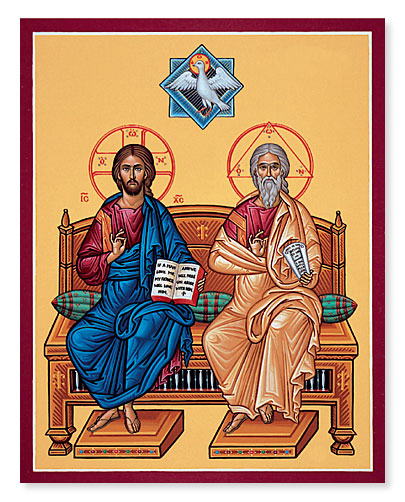
Personal relationships were important to the evangelist, pastor/shepherd, and teacher for it was person-to-person ministry.  An individual’s touch and influence on another human being proves to be life changing.  The prophet also strives for that personal touch, not necessarily the human touch, but the intimacy with a personal loving God who has become their real best friend and the earthly living out of that relationship.

It is God’s desire to commune with His people, to dwell in their personal lives and hearts since their bodies are the temple of the Holy Spirit, and to be in the midst of the congregation. He developed a relationship with Moses where they became best friends.  The relationship with Jesus, God who became flesh, with his Father in heaven is monumental in the way Jesus saw things, heard things, and did ministry.  He looked to his Father, listened to His Voice, and was obedient to what he saw and heard.  God wants that kind of intimacy with mankind, for He proved it can be done through His Son, Jesus.

Sin broke that intimacy between God and man, but God made a way for reconciliation, a way to right a wrong.  He sent his Son Jesus to die for our sins, and make a wrong right. That is called “righteousness”!

The believer who is driven to develop that intimacy in the body of Christ is the prophet.  The prophet not only wants to “see” God, but “hear” God, and “experience” God in his fullness.  The “fullness” of Jesus Christ in a believer’s life is the ultimate relationship man can have with His God, and the prophet is driven toward that experience.  Moments in personal Bible study, personal prayer, and personal worship drives the prophet to a closer relationship with his/her God.  A prophet would love to just live in the heavenlies.  Unfortunately that can also bring his or her demise, for then one can become no earthly good to God’s extension to the earth, the Church.

Instead of business meetings, board meetings, elder’s meetings, and annual conferences that birth and develop church policy, the five fold prophet longs for a time when the members of the body seek that personal intimate experience to see and hear from God to determine His Will for their own private life and the corporate Body life of the Church.  The only requirement is “obedience” to what has been revealed.  The prophet “sees” the need for the heavenly to bond with the earthly in unity that requires revelation and obedience.

Only in the last half a century has the Church again struggled with the role of the prophet in the body of Christ, but one thing is for certain: The Church needs the “vision”, the point of view, the passion of a prophet for intimacy with its creator, its head, Jesus Christ.

The evangelist “sees the needs” of the lost; the pastor/shepherd “sees the needs” of the newborn; and the teacher “sees the need” to make the written Word, the Bible, a Living Rhema Word in every believer’s daily life; and a prophet “sees the need” to bring spirituality to reality to see, hear, and through obedience “do” the Will of the Father in their own private life and the life of the Church.

Vision Series: Part III – The Teacher “Sees the Written Word Become The Living Word”

 The Vision of the Teacher

“Without Vision The People Perish”


One of the major premises of my study of the five fold ministry in the Church is that the five fold is not necessarily offices, but passions, or points of view.  What passion drives a person in his love in and for the Church?  Through what glasses does the believer see things? What is his vision?

The sermon has often been the standard of teaching throughout Church history.  The “hearing of the Word of God”, the reading aloud of the Holy Scriptures, has been pivotal in most church services throughout the ages.  Often though, the way and method of teaching the Word, the Bible, in the Church has become “legal” rather than “living”.  Legalism divides the Church; a Living Word unites the Church.

Today’s Church needs their teachers to break from the Westernization of an “academic” gospel to a more Jewish, Lamad, approach of living out gospel.  The passion of a five fold teacher is to help a believer in Jesus Christ “walk out” his faith journey in his practical life, rather than becoming a Biblical academic scholar.  Jesus never founded a “seminary”, nor a “Christian Bible College”, nor formed “conferences” in hotels during a week or weekend where his 12 disciples or the many new followers gathered to hear His faith message. Jesus walked by their side, in practical living, teaching practical Kingdom of God principles from practical everyday experiences.  People knew how a sower sowed seeds, a harvest was gathered, how to draw water from a well, etc., and Jesus took those experiences to teach His believers kingdom truthes.

The teacher sees the written Word, the Bible, as not only a written document, but a “living” document to be walked out in each believer’s life.  Westernization has taught us Christians how to “talk the talk”, (defend the Bible, refute untruth, debate its meaning through our interpretations, and divide the Church through doctrine), but the Lamad, or Jewish mindset, is to “walk the walk”.

The five fold teacher “sees” what is needed to teach the “walk” that is founded on the “talk”.  If the Word is not a daily practicality in a believer’s life, it becomes mundane theology of only academic value, open for academic debate, that produces division, not unity in the body of Christ.  The early teachings were based the “Apostolic Teachings” which were simplistic and brought unity in the body.

Acts 15 displays the division of “legalistic” teaching of the Pharisees in this new movement of God, verses the “living” teachings that both Peter and Paul witnessed in the living out of this new faith in questioning if Gentiles could be believers and should they be circumcised in this new movement.  Peter and Paul had to share testimonies of the spiritual “visions” they had seen over the question, and the practical “living” that the Gentiles were experiencing, the same faith journey as they had witness in their own personal lives.  The issue was settled in unity through the living Holy Spirit.  “Legalism” fell to “Life”!

The five fold teacher “sees” how to teach “life lessons” that exemplify the Truth of the Written Word, the Bible, the anchor of one’s faith in a practical daily walk.  John I states, “The Word became flesh and dwelt among us.”  The Word became a living Gospel when Jesus came to earth.  He taught us how to walk out this Word in his daily life which is recorded in the Written Word, but the Father sent the Holy Spirit to teach us how to “live out” the Word in each individual believer’s life.

The five fold teacher has to teach individual believers how to walk this walk through the leading of the Holy Spirit.  He has to teach the individual believer to trust the Holy Spirit who was sent to teach him or her all truth.  The believer can then go the to Word, the Bible, and ask the Holy Spirit to teach him/her truth, and how to “live it out”.  The goal of a teacher should be to develope the believer to become independent of their teacher, and dependent on the Holy Spirit to develop him/her into the maturity and fullness of Jesus Christ through their personal reading of the Word, the Bible.  Then the Church will see staggering results in maturity of its believers.

The evangelist sees the “needs” of the lost; the pastor/shepherd sees the “needs” of the newborn; and the teacher sees the “need” to make the written Word, the Bible, a Living Rhema Word in every believer’s daily life. 

Vision Series: Part II – The Pastor/Shepherd “Sees the Needs”

The Vision of a Pastor/Shepherd

“Without Vision The People Perish”


One of the major premises of my study of the five fold ministry in the Church is that the five fold is not necessarily offices, but passions, or points of view.  What passion drives a person in his love in and for the Church?  Through what glasses does the believer see things? What is his vision?

The pastor/shepherd driven believer rejoices with the evangelism over the “new birth” of a person into the kingdom of God, but becomes heavily burdened by the need for the nurture and the care of this new babe in Jesus Christ in his development, his life’s journey now as a Christian, his becoming “mature” in the “fullness of Christ”.  It is a tall order.

The pastor/shepherd is driven to establish a “spiritual nursery” for this “newborn” in Christ.  Early childhood growth is developmental. We rejoice when our own children first “roll-over, or talk, or take their first step to walk.  Humans are helpless at birth. They total rely on their parents, particularly their mother, for nourishment, diaper changes, caring, cuddling, etc. in their early stages of life.  Why should we not expect the same from a “new born” in Jesus Christ. 

This “new life” is just that, “new”!  There is a turning from the old to the new, but the question is how to do that in one’s daily life, one’s daily walk while making daily decisions.  How do you “walk out your faith daily”?  That is the passion of a pastor/shepherd who “sees the needs” of new believers in their development of growing into the mature image of Jesus Christ, and does everything within their physical and spiritual grasp to meet those needs to help this spiritual newborn to take their first steps of faith, learn verbally how to share their faith, and continually grow.

The pastor/shepherd has to teach practical everyday applications of this faith walk in Jesus: To teach the newborn the power of prayer, the foundation of reading the Bible, the need for intimacy in their relationship to God, to Jesus, through the Holy Spirit, total reliance in a practical way on their new found faith in Jesus Christ, and so much more.

Without a pastor/shepherd driven believer who seeks out these new believers and sees their needs, that new believer will be dumped at the doorstep of the world and will not survive. Many a newborn has “back-slidden” or gone back “into the world” because that is where they were dumped after their “new birth” because a pastor/shepherd did not rise from the body of Christ to walk by their side relationally in their every day life to nurture their care in their new faith walk journey. 

That is why it is so important to have a pastor/shepherd and an evangelist side by side in their ministry. The evangelist “sees” the needs of the lost; the pastor/shepherd “sees” the needs of the new believer.  The evangelist “sees” and quotes John 3:16 while the pastor/shepherd “sees” and quotes I John 3:16. How often have we alienated these two passions, these two different points of view, dividing the Church rather than unifying and strengthening the body of Christ?  That is why the five fold ministry and the “laying down your life for your brethren” is so important in not only developing the individual believer, but developing the entire “body of Christ”.

Without the evangelist there is no birth; without the pastor/shepherd there is no development.  Both of their “visions”, their points of view, their passions are needed in the nurture of the Christian and the Church.

Vision Series: Part I – The Evangelist “Sees the Lost”

The Vision of an Evangelist:

“Without Vision The People Perish”


One of the major premises of my study of the five fold ministry in the Church is that the five fold is not necessarily offices, but passions, or points of view.  What passion drives a person in his love in and for the Church?  Through what glasses does the believer see things? What is his vision?

The evangelist “sees the lost”, and his/her heart is broken by what he/she sees.  They are driven to share “the Good News”, the Gospel, with those who have never heard it.  Their passion is to bring the lost into the Kingdom of God.  They see the “needs” of the poor, the effect of poverty, the hopelessness in mankind, and they are driven to bring a message of hope, of salvation, to meet the spiritual need of the lost: Jesus.

"General" William Booth, founder of the Salvation ArmyA person driven by the evangelistic spirit is a creative person who will “birth” innovative ways to share the message of spiritual birth, “you must be born again.”  Wesley and Whitefield broke from the tradition of sinners coming into the house of God to hear the salvation message by taking it to the miners at their work place.  The whole tent-meeting movement was birthed. “General” William Booth packaged it as an Army which became effective in reaching the poor in England, birthing the Salvation Army.  Dwight L. Moody and Billy Sunday developed it into large evangelistic city-wide tent meetings.  Billy Graham used technology to birth an electronic evangelistic message via television to millions.  I am waiting to see who and how the “gospel” will be impacted by today’s “social networking” where the world is but a click away, and the message of “the new birth” will go to the world wide masses.  Evangelists major in “birthing”, and I am sure God will raise up an evangelist to use the technology that is present today.

Amazingly, the most effective form of evangelism doesn’t come from the use of current technology, but by one-one-one contact with believers and nonbelievers on a personal, relational level.  The church is willing to spend large sums of money on large scale city-wide, or television campaigns, but the greatest majority of new believers comes from another common believer sharing his/her faith, his/her walk, his/her journey in Jesus Christ.

Still, the evangelistic spirit breaks the heart of the evangelist in order for him/her to move on, move forward, continuing to explore and birth new ways of telling the message, sharing the message, living the evangelistic message, the gospel, the good news to the next lost, dying individual who needs Jesus who crosses their path.  Being an evangelist is a never-ending battle, a sacrificial lifestyle “driven” by the passion to save the lost.

The Evangelist “sees the lost and the dying” and is driven to share the answer: the new birth of Jesus Christ in each person’s life assuring them of a relationship with the God-head that was broken by sin, but reestablished because of the shed blood of Jesus Christ, the Sacrificial Lamb, giving life and hope to those who chose it in this lost and dying generation. That is how the evangelist sees it; that is what drives the evangelist.

What/Who Are The Church’s Ears?

“He That Has Ears To Hear; Let Them Hear”


Did you ever feel that no one is listening to you.  You have good ideas to share, concerns to be addressed, developed your own opinion, but you don’t think anyone is listening or wants to listen.  You feel isolation, rejection, and loneliness.

Often I hear loud and clear what church leadership believes, thinks, or dictates. We hear it from the pulpit, in private conversations, or in the bulletin or newsletter, but how does church leadership hear from their congregation. Do they need to?  If the church is all about relationships, then it must not only speak, but also listen.

If the five fold is present in a congregation, multiple eyes and ears should be present if the five fold is a passion and point of view.  The evangelist listens to the voice of the “street” to know how to be more effective in meeting the needs and addressing the lost.  Not only does the sheep know their shepherd’s voice, but he knows theirs.  The information a teacher expounds is not of importance if he just lectures or preaches, but a good teacher listens to his student(s), a process that helps him to measure his teaching effectiveness.  A prophet majors in listening to the voice of God, craving its intimacy, but also needs to listen to the voice of the believers and see if it parallel’s God’s.  Listening is critical to the apostle, for not only does he “over-see” the flock, but also “listens” to the many voices in the midst of the congregation.  His gifting is to react to what he hears, leading the congregation towards the heart and voice of God in very practical ways.

As a person who loves to talk, I have had to learn the power of listening, even the power of silence.  Being an extravert, it is so easy to express my thought, my opinion, my knowledge on a subject, but I am continually learning that “silence is truly golden” and listening a very powerful tool.

As a church we need not only to teach the believers under our care how to “hear” to voice of God, but also teach out leadership how to listen to the voices of the believers around them in their attempt to lead. “He who has ears to hear, let him hear.” It is a key to powerful leadership.


Why Do Churches Have Sunday Services?

What is their purpose?


It is Sunday morning(!) or (.) What does that morning mean to you?  Just another morning of the week?  Or as a church person, does it meaning going to a Sunday morning Mass or a Sunday morning Worship Service? 

Some would justify it as a time for God’s people to meet corporately. I ask, “To do what?”

“To worship the Lord.” To which I reply, “How”?

How much does “God’s people”, alias Joe Average Christian, participate in the service?  Is the service really about Joe, or his spiritual journey that week, or his needs in growing into the likeness of Jesus Christ, or his need to fellowship with the saints? Or is it about the institution, the traditions, and the distinctive tenants of that group’s faith that makes them different from the rest of the Body of Christ, or what has been planned and now implemented by the staff?

Some feel Sunday morning is a time to “bring in the lost” and give them the “evangelistic” message of the Gospel, or good news; some feel it is a time to “feed My sheep”; some feel it is a time to minister to the needs of the sick and afflicted through prayer and the laying on of hands; some feel it is a time to sing with hymnals, overhead projection, or power point presentations, or to listen to others sing in the choir, worship teams, or special music.

Is it a time to read a bulletin to see the social and ministerial events the church offers that week, or to take notes of the sermon on the back, or fill in the sheet as an added insert while the sermon is being given, or as I did as a kid (and I still find myself doing when bored), “fill in the empty space in the  “e’s”, “a’s”, and “o’s” with a pencil or pen. No it’s not about reading the bulletin, because there is an “announcement” section of the service to reiterate everything that is in the bulletin under the assumption that you don’t read your bulletin anyhow! If that is the truth, then why did we get one in the first place?

Is it a time to “meet and greet” for five minutes or less, “Hi, glad you’re here (but I will never see you again this week, unless we both come back here next week and sit beside each other and do this same ritual again).

What is the purpose of this service? I have often asked this to church leaders who give me some of the lame answers above, or aren’t sure themselves. What is the target, the objective, of the service? What is supposed to get accomplished during the service? Who is to participate? Who is allowed to participate in what and how? Is there an evaluation of the service? (Yes, over the dinner tables Sunday noon by the congregation, and over business tables by the staff Tuesday mornings!)  What does anyone in the pew remember about the service a month later unless it was the same-old, same-old. They remember the repetition, but specifics? The pastor says, “Do you remember last month when I preached about ____, and the parishioners smile as if they did, but will not admit it has been lost in the recesses of trivial meaningless!

What did Joe Average Christian have to do to “prepare” for the Sunday service, to “participate” in the Sunday Service, and “take with him to walk out for the rest of the week” from the Sunday Service?  Maybe we should ask, “What is the purpose of our Sunday Service?” or better yet, maybe we should ask, “What or how does the Holy Spirit want to edify Jesus Christ this Sunday through all and in all who gather in Jesus’ name?”

The early church gathered at the temple to do what they always did at the temple, even while Jesus was with them, but all that changed at Pentecost when they began to do “different things”, to the point the public thought them drunk.  They gather, but are later forced to scatter because of persecution, and they break way from Temple worship (which also physically gets destroyed) and begin to worship in different cultures and environments with “Gentiles” who mess up this whole Neo-Jewish movement called Christianity.  The Spirit helps us to break away from our Temple (Church building) mentality, to scatter to fulfill the Great Commission, and to reach others (the gentiles of our generation) with the Good News of Jesus Christ.  Let’s allow the Holy Spirit orchestrate our Sunday’s together through His people. Sunday mornings should be about the gathering of the Saints, those who believe in Jesus Christ, and their obedience to the Holy Spirit’s leading. 

Do Not Pass Go; Do Not Collect $200

I Got It; Then Why Not Move Ahead


Have you ever been in a place where you just had a revelation or learned a spiritual principle that was truth and new to your life. You now “got it”, and being a talker, a communicator, one who can’t keep a good thing quiet for I feel I have to tell everyone, you hear the Lord in His still small voice say, “Hold it; be patient; wait!”

“What for what?” I ask.

On Easter weekend “it was finished”. Believers in Jesus Christ got to see God’s sacrificial lamb die for their sins on the cross, the veil in the temple torn from top on down, and to top that an empty tomb, a resurrection with angels and even “resurrected Jesus sightings”!  Then they experience the ascension into heaven! Wow! What a story! I need to tell the world, but…..

“Tarry in Jerusalem until the Holy Spirit comes….”  What wait? We shouldn’t do the great commission just yet? Why?  Simple: It would be us doing it, not the Spirit of Jesus Christ!  How hard is it when we learn something, and the Spirit of the living God says wait, and we question why?  It is the Spirit of Jesus Christ, the Holy Spirit that is to glorify the Son who in turns glorifies His Father in heaven!  It is His job to propagate the Truth, not ours; we may be only the vessel.

My passion burns to reveal truths that I have learned from the Spirit about evangelists, shepherds, prophets, teachers, and apostles, wanting to shout it from the house tops, move forward NOW, but up until now only being allowed to write in private and blog through this medium, this blog, in public.

The Spirit says wait….. wait until the Spirit is ready to launch what He has revealed to you. 

O.K. Lord, I know that Pentecost is 50 days after Easter, but can’t you bring it on now?

The Spirit says “wait”.

Like in the game Monopoly, “Do not pass GO, DO NOT collect $200”…. until I tell you! Wait for the Holy Spirit!  Isn’t that what the five fold is all about? About the moving of God’s Holy Spirit through different passions and points of view to bring unity in the body of Christ and maturity in being like Him? Then wait until the Holy Spirit releases…..

Sammy’s Story: A Story of Struggle

Sammy’s Story Part I


Sammy was lonely, in the depths of despair, bottoming out, lost, but then he met a man who told him that in spite of how he felt, God loved him. The man began to explain how he personally had once been as lost as he, but was introduced to the saving grace of Jesus Christ. Sammy, desperate, listened. When asked if he wanted that saving grace, the man lead him through scripture called the Romans Road before leading through the sinner’s prayer. Sammy’s burden miraculously lifted, giving him an experience he had never known. He found peace.

The man gave him a tract then left to witness to another lonely lost soul, as Sammy sat in solitude, not knowing what to do next. He went to the local church whose address was stamped on the tract and asked to see the Pastor, who kind of looked at him mystified. He received sympathy but was told to come Sunday morning and join in their worship service.  That Sunday Sammy heard another evangelistic sermon with another invitation that seemed to be the pattern every Sunday he attended.

Seeking more, Sammy attended a Bible Study at this church where a man lectured, justifying his lesson with the meaning of Greek words, and having everyone flip from scripture passage to passage justifying his points. Sammy became frustrated because he could not keep up flipping nor cared what the Greeks said. He wanted his own spiritual life to grow. He went and bought his own Bible, which he seemed to get more out of when he read it own his own.  Week after week the Bible study taught legalistic church doctrine, the so called tenants of that church group’s faith, and the does and don’t that they felt were justified through the Bible.

Sammy tried to pray an hour a day as told, but got burned out, tried reading the Bible five chapters a day as told, but quit by the time he was half way through Deuteronomy. He went to the Pastor and asked where all the healings and miracles are which he read in Matthew through John and was told that they were for that time period but are no longer are needed today.  Discouraged he soon dropped out of the Bible Study group; no one came to see him nor seemed to miss his absence. They were to busy preparing for the next Bible study.  He found himself sleeping in on Sundays, now missing church services.

  He found himself back to his old condition sitting on a bench at a bus stop. A man approached him and began telling him that in spite of how he felt, God loved him. It was the same man he originally met with his fervent evangelistic zeal to win the lost, who unfortunately  didn’t recognize him because he was too busy giving him his mechanical dissertation. Before he was done Sammy arose and said, “You don’t even recognize me, nor do you care. I am sorry, but if this is what Christianity is all about…..” He got up and walked away as the man sat there stunned wondering what this wretch’s problem was, those sinners.

(Now Read Part II)

Sammy’s Story: A Story of Success!

Sammy’s Story Part II


(Read Part I first)

Sammy was lonely, in the depths of despair, bottoming out, lost, but then he met a man who told him that in spite of how he felt, God loved him. The man began to explain how he personally had once be as lost as he, but was introduced to the saving grace of Jesus Christ. Sammy, desperate, listened. When asked if he wanted that saving grace, the man lead him through scripture called the Romans Road before leading through the sinner’s prayer. Sammy’s burden miraculously lifted, giving him an experience he had never known. He now felt peace.

This man then introduced him to Ralph, a close Christian friend, who invited him into his home as he began to walk Sammy through his new life as a Christian. Sammy was told that in Christ Jesus all things are new, thus Ralph helped his new friend understand about all this newness in practical everyday terms.

Bob came to Ralph’s place on Tuesday nights to teach a Bible study, noticing Sammy’s curiosity and thirst as he asked question after question. After the gathering, Bob came up to Sammy and asked if he could come over in two days and continue to study with him. Sammy was ecstatic.  For the first time, hearing the Bible seemed to make sense, and Sammy wanted to make this knowledge a reality in his life since all he had was simple naive faith.

Then he met Ruth who came to the next Bible study.  She had a passion to worship like Sammy had never experienced before, and soon Sammy was seeking how to draw nearer to God and learning to listen to the voice of the Holy Spirit.  This Spirit walk, like everything else, was new to Sammy, but Ruth helped him along.

Over the first year, Sammy had grown spiritually at a torrid pace as Ralph nurtured his walk, Bob taught him the Word of God, and Ruth challenged his intimacy with God. Amazingly in just a few years, Sammy found himself nurturing other new Christian as he had learned through Ralph. He loved doing it, for helping new believers in their infant walk of faith in their daily life had become his passion.

Sammy’s Story: A Parable of Soil!

Sammy’s Story Part III


(Read Part I & II first)

Luke 8:4-15

While a large crowd was gathering and people were coming to Jesus from town after town, he told this parable:

A farmer went out to sow his seed. As he was scattering the seed, some fell along the path; it was trampled on and the birds of the air ate it up. Some fell on rock, and when it came up, the plants withered because they had no moisture. Other seed fell among thorns, which grew up with it and chocked the plants. Still other seed fell on good soil. It came up and yielded a crop, a hundred times more than was sown.

When he said this, he called out, He who has ears to hear, let him hear.”

His disciples asked him what this parable meant. He said, The knowledge of the secrets of the kingdom of God has been given to you, but to others I speak in parables, so that “through seeing, they may not see; through hearing, they may not understand.”

This is the meaning of the parable: The seed is the word of God. Those along the path are the ones who hear, and then the devil comes and takes away the word from their hearts, so that they may not believe and be saved. Those on the rock are the ones who received the word with joy when they hear it, but they have no root. They believe for a while, but in the time of testing they fall away. The seed that fell among thorns stands for those who hear, but as they go on their way they are chocked by life’s worries, riches, and pleasures, and they do not mature.  But the seed on good soil stands for those with a noble and good heart, who hear the word, retain it, and by persevering produce a crop.

Thought:  Is this process uncontrollable, beyond our reach as a Church, and should we just accept that we will loose a lot of grain, and only a few become productive and multiply by the hundreds? Or is it just possible that the Church is the soil, and we, the church, are responsible for removing the rocks so the good soil is exposed and weeding out the thorns before they are huge, prickly, and blossoming with seed to pollute even more ground, so the good soil nurtures the seed,

I would like to contend that the evangelist can spread the seed, but we need the shepherd to clear the rocks and help root the new believer.  We need the prophet to separate the wheat from the tares, weeding out those thorns of temptations by life’s worries, riches, and pleasures, by having the new believer focus on his intimate relationship with God, the Father, and the furthering of the Kingdom of God on earth as it is in heaven.  We need the apostle as an overseer to help others prepare the soil no matter what condition it may be in so newly sown seed, new believers, may grow productive and multiply. We need the five fold to equip the saints for the work of preparation for the (harvest).  This may be a new way to look at the five fold, but the outcome is soil preparation for a good harvest.  Jesus said, “the harvest is ready, but the workers are few”, and encourages us to go “harvest what we have not sown.”  The Church needs the five fold to sow the seed, prepare the ground, water the new born plants, and harvest.

Can I Not Look For A Church Like This?

Dare I Dream?


Everybody has their opinion, vision, or dream of what they think the Church should be, and often go on a journey to find it; most times unsuccessfully.  In America we “shop” for a church that meets our needs, our wants, that makes us comfortable.  What programs do they offer? A good youth group, share group, children’s ministry, nursery, musical style that appeals to me, etc.? In America Christian jump from church to church, no longer going to the closest location and giving to their community through their local church.  Many churches’ roles are coated with move-ins, not people just born into the kingdom.  So I began to think, what am I looking for?
An evangelistic church appeals to me, because the Great Commission has called us to “go to all the world”, but not “all the world come into our building”. A local evangelical church advertised this Sunday “free car washes” for visitors in attempt to bring people into their sanctuary. A church the infiltrates the world with the Good News, the Gospel, is a must, and new believer’s enthusiasm is contagious to a congregation.

A shepherding church is mandatory, for if it is to grow, then the new believers, the new Christians, must be developed and be nurtured in Christ-likeness.  Small group life sharing everyday walks of faith help nurture this environment

Of course, the church must be grounded in the Word of God, the Bible, but I also want a prophetic church that takes the Logos Word and converts it into the Rhema Word, or living Word.  Learning to walk in the Spirit and being taught by the Spirit is mandatory.

All this evangelistic, nurturing, teaching, and prophetic work and life of the church is being done by the believers in Christ, and the older they get, the shift toward nurturing and equipping those newer in the faith becomes evident.  It is believers reaching out and developing believers. All this needs to be coordinated by someone(s) who can see the big picture of the congregation, the church, and who encourages, develops, and equips those believers to grow in Christ, never in a controlling spirit, but a serving one.

Have I found this local church? Of course not! Do I think I can find this church? I am pessimistic when looking at church structure, organization, and leadership styles that currently exist in most church paradigms.  I do know that God’s Spirit is no longer to be boxed in, and for those who think out of the box, revival is the answer, for there is where God works at the grass roots. 

I have been in evangelical churches, nurturing churches, strong teaching churches, prophetic churches, and even apostolic churches, but each has been a separate entity instead of coming together, uniting their strength for the common good of equipping the saints. Often staff has been nurtured and developed, not their people. That dream of unity of the gifts for the development of the saints is still burning within me, and I still have to believer that is the wave of the future for the church. I hope, some day, to be a part of that paradigm. Act 2 proclaims that “old men will dream dreams.”  I guess I am one of them!

Secrets of Being Married 34 Years, Today!

A Look Back Through Our Marriage


Wow! Today Deb and I just celebrated our thirty-fourth wedding anniversary, going out to a local restaurant where we have spend several of those anniversary celebrations throughout our marriage, some in good times, some in difficult times, but thirty-four years is quite an accomplishment for all we have been through.

Thinking of the theme of these blogs and this web site, I realized that passions that make up the five fold have been a part of our marriage experience too! 

The excitement of birthing our marriage came thirty-four years ago with a wedding and honeymoon to Washington, D.C. for five days.  We have celebrated several births through our marriage: three special children, each birth has a special place in our memory.

The pastoral or shepherding passion came through parenting our children, walking through and working out their everyday lives, trying to direct them toward a personal relationship with Jesus Christ in their own lives. We have also parented/shepherd several groups of “young’ns” spiritually over the years too! I guess that parenting/pastoral/shepherding role has been imbedded in all of us!

The teacher mode sprung forth in me as I took on studying for a Master’s Degree in Biblical Studies, which I finished and received.  Several years of taking correspondence courses, and two years of studying, researching, and writing a thesis were the price for this accomplishment. This could not have been done without Deb’s constant encouragement to me through the project.

Prophetically, Deb went to a School for Prophets back in the seventies, and our thirst for the written word, the Bible, to become the Rhema Word, the living word, was activated when we received the Baptism in the Holy Spirit, and has been developing and nurturing ever since as we continue to build our marriage relationship around our personal relationships with Jesus together.

Apostolically, seeing the big picture has been difficult because hindsight gives you that view much more readily than foresight called faith, but throughout our marriage, Jesus has been the cornerstone, and faith has been the ingredient that has allowed us to move forward.

Thirty-four years, and counting! God has been faithful.  We have sought Jesus as the center of our marriage through all these years.  Jesus has provided, healed, delivered, sustained, maintained, and come through whenever we needed Him in our marriage.  Often I have declared “God Moments” when we could not continue on without God’s intervention. He always has heard my cries, and has always answered, maybe not the way I would have wanted Him to, but He has! Wow! 34 years and counting.....

A Novel Idea: “Equip; Not Enable”

A Change In Mindset

 Ephesians 4 claims that the purpose of the five fold is to “equip the saints for the work of the service”.  Not equipping the staff, not even myself, but the saints at large!  We, as mature Christians in the Church, have to give up control and begin to teach others how to stand as Christians.  So often we “enable” fellow believers by doing everything for them; for example, we often…..


Do This................................rather than........................... Equip Them For This          .

Read the Bible to them...........................................Have them read the Bible themselves

Interpret the Bible through preaching ................Have the Holy Spirit reveal Truth through the Word

Read or recite written prayers................................Allow one to verbalize their personal faith to God

Have a Bible in the pew..........................................Disciplining one to bring along their Bible

Call the Pastor to lead one to the Lord.................Lead someone themselves into saving Grace

Call the Pastor if someone is sick......................... Lay hands on the sick & anoint them for healing

Call the Pastor to visit the sick...............................Personally visit the sick yourself

Send the needy to the Pastor................................Practice hospitality, make meals, reach out

Go on a missions trip...............................................Minister the same way to those in our own community

Good Sunday School Program..................................Raise ones children in a Godly home environment

Provide a good Youth Group......................................Bonding with ones adolescent during puberty

So we may have to rethink how “we can equip the saints for the work of the service”. It may take a new mindset on how to do it.  How can we equip one to share the evangelistic message, or be hospitable, or search the written word, the Bible, for themselves, or grow in their spirituality, or grow in leadership and oversight?  How do we free the believer in Jesus Christ to be all he can be in Jesus unless we free him, instruct him, and guide and equip him? Studying the passions and the point of view of the five fold may change our way of thinking, and when they do, teaching and equipping others may release them to grow in the Lord as only we can now imagine.


Can’t Box In God

Twice Boxed; Twice Released


On Sunday I usually attend an early service that focuses on prayer, praise, and worship.  I love to just sit quietly and listen to what the Spirit has to say.  During the time of worship, a new revelation came to me.  I had known that when Jesus died on the cross, the veil on the temple had been torn from top to bottom, not bottom to top.  God’s Spirit had been in the Holy of Holies since its inception in the tabernacle, but at the crucifixion of God’s only Son, the Spirit of God rent the veil, freeing His Spirit to go wherever one would receive the Spirit of His Son, Jesus Christ.  The body of His believers would become the temple of the Holy Spirit.

If God’s Spirit was no longer contained at one location, what Satan could no longer prevent in life, he tried to contain in death, thus a huge stone was rolled in front of the tomb where the body of Jesus laid.  Jesus descended to the lowest depths before the power of his resurrection rolled the stone away while Jesus ascended back to life and eventually to the right hand of God, the Father. Death and the grave could not even contain Him.  God’s Spirit, the Spirit of Jesus Christ, would not be boxed in any longer.

I got to see the resurrection power in a new perspective.  How often have we either as an institution called the Church or as individual believers try to box in God?  How often do we want to control God’s Spirit by containing him rather than freeing Him in order to lead or control our lives? The Holy Spirit, God’s resurrection Spirit, is a freeing spirit, not a containing spirit.  We can try to box him into our molds of what Church should be, but His freeing resurrection Spirit breaks through those molds to produce freedom in Jesus Christ. We can try to put Him in a “tomb”, so we can do our things, that usually produces spiritual death, but death and the grave can not contain Him, and his Spirit will break through our dead religious practices.

The Resurrection Spirit of Jesus Christ is a break-through spirit, a powerful spirit, a spirit that produces life, overcoming death.  Let’s embrace this Spirit more often.

Power of Personal Testimony

When God’s People Get To Give

It was refreshing hearing over the car radio testimonies being given how people (a stay home mom, a business man, and 18 year old real estate agent) came to know Jesus Christ as their personal Savior. Their stories were short, sweet, less than 5 minutes apiece, but profoundly powerful!  Common, everyday people told how God touched their lives changing them.  It was not a well polished sermon on salvation, nor the worship team singing about amazing grace, but actual people from in the midst of their congregation who had a story to tell and were aloud by leadership to share it.  This is what I call “worship” when you allow God’s people the chance to give back to the Lord what he has already given them.  The results of this kind of worship is always powerful, productive, and reassuring to the body of Christ.  The evangelistic spirit was released.

If this is true, then why do most churches opt for well scripted, well presented, excellently produced “worship” services over allowing their people to “worship” by giving back to the Lord?  I do not know if they gave an invitation after the testimonies, but I could not help but think that what those people shared had an effect on a visitor who was in their midst who does not know what salvation is in Jesus Christ, and that there would be fruit if leadership had allowed a response.

Holy Harley Hog?

Biker’s BBQ?


Several members of CityView Community Church, 1650 Roosevelt Avenue in York, PA have decided to create an evangelistic endeavor they are calling York’s Biker BBQ on the second Saturday of each month (May 8th, June 12, July 10, August 14, & September 11th) where they will have music vendors, BBQ Chicken and Pulled Pork from 11 a.m. until 2 p.m.  The Buffet is $12. Check out http://www.cityviewyork.com/york-biker-bbq/ for details.

Since the Harley Davidson Plant is located in York, about two miles from the church, one could come visit the plant, tour the Harley Davidson Museum, and catch lunch at the event.  It’s the perfect day if you ride bike, and CityView Community Church parking lot is on top of a hill, overlooking the valley containing York City.  York is centrally located South of Harrisburg, west of Lancaster, east of Gettysburg, and North of Baltimore. I83 North or South, and Rt. 30 East or West will get you to York! CityView is located three traffic lights west of the I83/Rt.30 crossing. Turn Right at the Denny’s restaurant and you can see the Church on top of the hill. Bear Left at the “Y” and take the first right (CityView entrance) up the hill to the event.

Bikers are also benevolent, and these events will also raise money to support the Casa Angelina Orphanage in Teleche, Guatamalo. Several of the bikers heading this event have volunteered to build this orphanage over the years.  (See www.whatmattersmm.org about the orphanage and their ministry.)  This orphanage has been quite effective at saving children off the street, bringing them safety, and changing their lives.  Proceeds from the Buffet go directly to the orphanage.

Those sponsoring the event look at it as a chance to share the fellowship, love, and service of Jesus Christ to the Biker nation as well as raise money to save orphans in Guatamalo.

If you are in the area of York, Pennsylvania the second Saturday between May and September, stop by, meet some neat people, and pig out with the hogs while supporting orphans

An Intimate Worship Service?

What The Heck Is That?

Getting ready for church, I watched a TV preacher talking to a crowd at a Conference for 45 minutes.  The last 15 minutes were filled by his grandson’s pitch to buy his grandpa’s teaching tapes. When I drove home from church this morning, I listened to a radio broadcast of a local church’s “worship service” which consisted of highly polished professional sounding music for 15 minutes and a 45 minute sermon on how to “pick a mate to marry”! “The difference between men and women are coming in the upcoming Sundays in this series,” was promised.  My home’s church “worship service” format was basically the same only interrupted by everyone taking time for handshakes and the reading of announcements that were already in the bulletin. Returning home I listened to an internet “live stream” of another church 60 miles away, and again the format reflected the others I had previously heard with music, offering, hand shakes, and a long sermon.

Looking from the outside at how we “market” Christianity and the church, I didn’t even get a glimpse of really who the Church is, “His people”.  I see and heard its “program”, its elevated “standard of music”, its “professional teachers”, but never a word from or about its people. Even in the music mix, the voices of the congregation could not be heard over the band and worship leaders. “Is this what the church calls a ‘worship service”, the world asks?  If so, what would attract anyone to be a part of it, for there is nothing “intimate” about it. Good show, nice production, high orchestrated, but “intimate”? I don’t think so!

So what part is the congregation, or God’s people, to play in a worship service? Why are they so well hidden in television, radio productions, and online streaming?  Why aren’t they and a relationship with them not the central feature of attraction to that church?  Is there a hidden agenda?

I would like the church to reevaluate what an “intimate worship service” really is. Who is worshiping? If “intimate” means relationships, then how do they exemplify “intimate relationships”? If worship is about an “intimate” relationship, when God is in the midst of His people, then why is not “the midst of His people” become the central part of the Worship Service, which we hide so well?

A Challenge:  If your church eliminated the music section of their service (worship team, band, choir, organ, etc.) and the preaching section of their service (pastor’s sermon) what would be left in your worship service? Announcements & offering? What would happen if “God’s people” were forced to come “prepared” to worship, if they actually “expected” the Holy Spirit to move amongst them, and if they would be open to respond in obedience to the Spirit’s leading. Wow, we just might experience an “intimate” “worship” “service”!

Priest or Priesthood?

The Priesthood Part III: Releasing the Priesthood

Nowhere in the New Testament is the issue of  “a priest” addressed except for Jesus as our High Priest; it only refers to “a royal priesthood, a holy nation, a people of God”.  The Body of Christ, His Church, is that royal priesthood, that holy nation, that people of God. The “priesthood” is not individualistic, but corporate, for God wants “His people” to draw near to Him corporately through intimacy, worship, and service.

So when that Body of Christ gathers, God wants to be in the midst of his people.  It is a special time for God to work through His people, His priesthood, to His people, His priesthood.   This is such a different mindset than the one we practice today where we are taught the trickle effect: God works through his clergy, or staff, to his laity, his people, and it should effect the way we celebrate corporate worship when we gather.

I believe worship is just “giving back to the Lord what He has already given you,” so the gathering of the priesthood should be a time when the priesthood gives back.  If during the week the individual believer has been reading the Word, the Bible, daily and allowed the Holy Spirit to teach him its truths, and that written word has become a living, vibrant, active word in their life, why shouldn’t he be allowed to share the living active truth that he has learned and experienced amongst the people of God?  How dynamic and “intimate” would that “worship service” be if he were allowed? 

We “script” our worship services instead of allowing the Holy Spirit to lead them. Scripted services are “safe” because we are in control of them.  Allowing the Holy Spirit to move among His priesthood, allowing his priesthood to speak His written Logos Word, the Bible, to share His living Rhema Word, and to minister that Logos and Rhema Word to one another is scary or threatening to most of today’s church leadership, for they have to give up control for that to happen.

The question is, “Who is in control”?

If we believe in a “royal priesthood of believers”, then we need to let them function as “priests” for the good of the “priesthood”, the “Body of Christ”. Let the “priests” be accountable to God to be prepared for an “intimate worship service.”  Or we can just “script” the service, print it in a bulletin or handout, make everyone aware of the planned order of worship that they are "expected" to follow, having the “staff” share, teach, and “lead worship” while the “priesthood” remains pew or chair dwellers singing the “scripted” songs and listening to the “scripted message” (and of course all the “announcements” the staff deems important), and is only allowed to give through tithing which will support the “professional staff” for all their efforts “ministering”.

Are we going to continue to play it safe, or should we release this priesthood that already exists in every church to “minister” unto the Lord and to His people. It is a different mindset, for releasing is never safe, but the releasing of this priesthood will produce profound results.

The Answer: A Perpetual Priesthood by the Order of Melchizedek?

The Priesthood Part II:  What Am I To Do As A Priest In The Order Of Melchizedek?

God established a priesthood in order for man to “draw near to God” by establishing His Son, Jesus Christ, as the High Priest who is in the heavens interceding for the saints, His believers, His priests. He who is without sin paid the price for sin, and has been elevated above the heavens, sitting at the right hand of the Father as our High Priest FOREVER.

So if we, the believers in Jesus Christ, are of the priesthood of the order of Melchizedek, what are we to do?  What is our responsibilities, our duties?  Unlike the Levitical system of priesthood, we no longer have to sacrifice animals on the altar for our sins, for Jesus has fulfilled that, and the Levitical system of animal sacrifice is archaic, thus not even practiced among the Jewish faith even today.  Sounds like the priest under the Levitical system has been stripped of most of his duties.

The purpose of the priesthood is to have people who are willing to “draw near to God” and recognize what their High Priest has done and is doing to practice their calling. 

What does it mean to “draw near to God”?

Intimacy:  God not only wants a relationship with his people but an intimate one. When you hug someone, you draw them near your body, bring them as close to your heart as possible, and often intimately hold them there for a while cherishing the closeness. God wants a people he can surround with his loving arms embracing them, drawing them close to his very heartbeat, so they will not only recognize His heartbeat, but “know” it.

Worship: When one draws near to God, an immediate response occurs: one wants to give back to God what he has been given by God, for one realizes that we are only stewards of what he has given us. That is true worship.  Abram, now wealthy, immediately gives 1/10 of what he has to Melchizedek as his response to God’s blessing. 

Service: The giving back, the act of putting the sacrifice back on the altar, is exemplified through acts of service. Serving and giving are the same. Jesus came to earth, not to be served, but to serve, and his life became the supreme example to us from the washing of feet to obediently dying on the Cross. Priests by the order or Melchizedek are called to perpetually serve forever.

So God has set up a priesthood of believers in Jesus Christ, lead by His Holy Spirit, to be intimate with Him, worship him by giving back what He has already given them, and to serve in obedience. That is a far different priesthood than the Levitical priesthood bound by the Law, but not released by grace. We, the Church, need to reestablish this priesthood by the Order of Melchizedek back into the Body of Christ as it is meant to be.

The Question: What Ever Happened To The Priesthood?

The Priesthood Part I:  The Establishment of a Priesthood According to the Order of Melchizedek not Aaron!


I cannot remember the last time that I have heard a sermon about the Priesthood according to Melchizedek.  I remember it was one of the key components taught back in the 1970’s during the Jesus Movement to the masses hungering for revival, but I can’t recall it being taught in a conventional church service. Why?

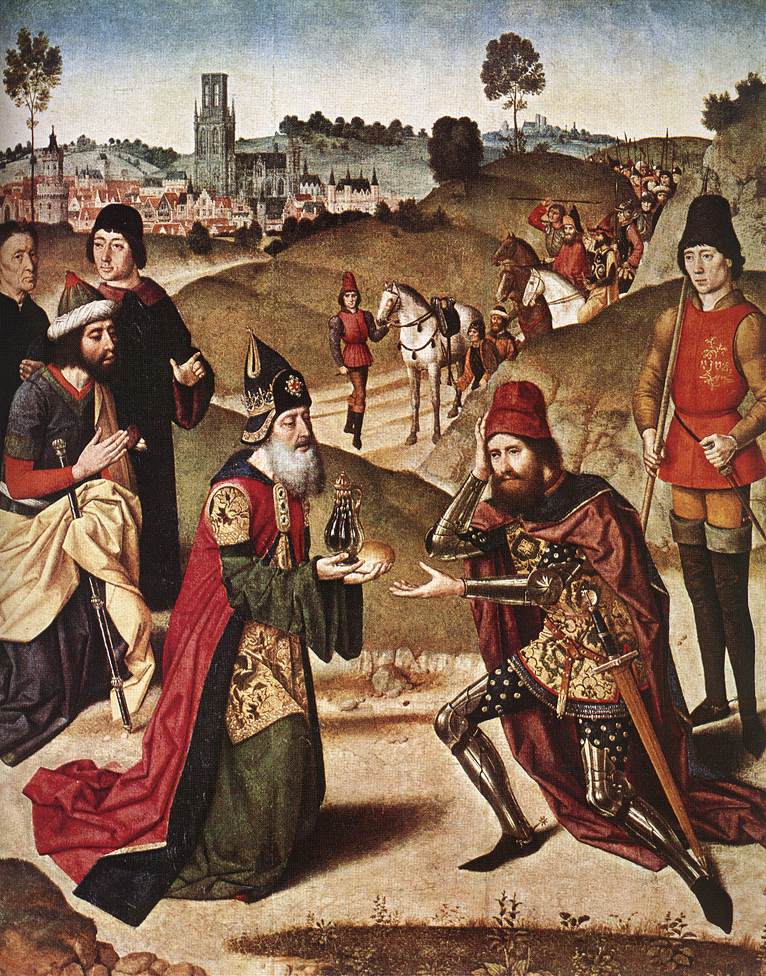
Genesis 14:18-20 records Melchizedek’s meeting with “father” Abraham. “Then Melchizedek king of Salem brought out bread and wine. He was a priest of God Most High, and he blessed Abram… Then Abram gave him a tenth of everything.” Sounds like the first communion and the first tithe recorded in the Bible, and this was hundreds of years before the Levitical Priesthood was to be established. Melchizedek, some believe, is a forerunner figure of Jesus Christ.

So what is its significance? David, hundreds of years later, writes “You are a priest forever, in the order of Melchizedek.” (Psalms 110:4)  This priesthood is a permanent priesthood that is to last forever, not temporary as the Levitical Priesthood has been.

Hebrews 7 records quite a dissertation about the importance of this priesthood with Jesus Christ as its High Priest and it superiority over the Levitical system.  “The former regulation is set aside because it is weak and useless (for the law made nothing perfect), and a better hope is introduced, by which we draw near to God.” (Heb. 7:18) “Therefore he (Jesus, our High Priest) is able to save completely those who come to God through him, because he always lives to intercede for them. Such a high priest meets our need – one who is holy, blameless, pure, set apart from sinners, exalted above the heavens.” (vs. 22-23)

 Because God wanted to reestablish the relationship broken through sin through Adam, God established a priest hood through the sacrifice of His Son, Jesus Christ, “by which we draw near to God.” The purpose of this priesthood is to “draw near to God”.