Part IX – Mindset: Look At The World Through Experience Rather Than Intellectual

Supernaturally Natural: Rethink The Way We, The Church, Worships Corporately – Part IX

from Supernaturally Natural: Chapter 15 manuscript by Anthony Bachman

(First Section)

Stretching our mindset: Maybe we should look at the world through the Jewish, “lamad”, mindset rather than the Western Culture mindset, the experiential way rather than the intellectual.

Western culture has strongly influenced the way today’s Church worships and thinks.  The early Church’s way of processing God and His Ways came through experience and the heart.  Processing only through the intellect only came after the Roman influence became apparent later in the Church’s history.

The Jewish way of teaching, the lamad method, examines the heart and life’s daily experiences rather than the intellect. Saul, the Pharisee of Pharisees, had a resume containing being taught by some of the most phenomenal, famous rabbis of his day.  This caused Saul to have great influence with the Sanhedrin, the Jewish governing body, until he supernaturally got knocked off his horse.  All that Saul had previously learned in the natural became void.  He had to experience new concepts like grace, mercy, forgiveness, humility, and faith before he could again teach.

Now Paul, he discovered how little he really knew about God. Only until he learned to experience God by entering His Presence to get fresh personalized revelation through the Holy Spirit of whom truly God and Jesus are did he get ready to propagate the Gospel as its ambassador.  He had to learn to “know” God, not just know “about” God. 

To the Jew, the lamad, the experience and conditioning of the heart, is central to understanding.  Just read the writings of David in Psalms, or the love poems of Solomon in the Song of Songs, or the teaching and parables of Jesus who made his disciples “experience” living in God, in real time, in the present. God sees men through the “heart”.  David cherished “the heart of God” and became known as “a man after God’s own heart”.  Solomon wrote a romantic love ballad about the heart of God.  Jesus’ mission on earth was to expose the “heart of the Father”, another important concept by which another entire book could be written.  We need to examine a different mindset than just the western. We need to learn to know the “heart of the Father”, and experience what is supernaturally natural to Him.

Part VIII – Mindset: To Go Into “Fulltime Ministry” You Need An Educational Degree

Supernaturally Natural: Rethink The Way We, The Church, Worships Corporately – Part VIII

from Supernaturally Natural: Chapter 15 manuscript by Anthony Bachman

Another mindset that I need to change: To go into “fulltime ministry” you need an educational degree.

Over the centuries Church has developed a Western mentality that the intellect is what separates the clergy from the laity, the learned from the unlearned. Seminaries and universities prepare believers for “fulltime professional ministry”.  We preach our sermons and teach our Sunday Schools, Bible Schools, and Bible Studies from an intellectual perspective, not an experiential one, thus it is hard to understand and allow the Holy Spirit to work in and through our experiences and emotions to get an understanding of God.  Intellectually it is hard to explain the Presence of God, unless it is where he intellectually rationalized who God is and what he does.  We want to “explain” God in the natural, intellectually and rationally, rather than “experience” God.  Intellectual theologians base western theology on intellectual Bible Studies.  A higher level Theology Course is difficult as they study the theories of the great theologians with their intellectual themes over the centuries.

But as we have seen in earlier chapters, the B.A. Degree or B.S. Degree a New Testament believer, a New Testament priest needs is a “Born Again” and “Born of the Spirit” degree, which they both must experience.

Part VII –You Can Give Financially To Someone In Need And Not Have To Go Through the Church Treasury.

Supernaturally Natural: Rethink The Way We, The Church, Worships Corporately – Part VII

from Supernaturally Natural: Chapter 15 manuscript by Anthony Bachman 

Stretching our mindset: You can give financially to someone in need above your tithe and offerings that do not have to go through the church treasury or church financial channels.

If a person is in need, give!  If the Lord had met your need, worship by giving it back to the Lord and/or giving it away! That is true worship.  “But I will lose tax credit if I don’t give it through church channels,” you may protest.  What is your motives, tax credit or giving to a need?  If your intentions are pure, and you are being obedient to what the Holy Spirit has revealed and told you, you better be obedient and give.  Ask Ananias and Sapphira who played games with the Holy Spirit in their giving practices and were struck dead!  You are only a steward of the Lord’s money anyhow. You give, and He will give back! When Jesus faced “April 15th in America, tax time, his disciples caught a fish with a coin in its mouth, paying their taxes. That is what I call the supernatural fulfilling the natural in real life situations.

People and the church as a body have financial blessed me several times in my life because of needs that arose.  I would only be honored to “give back” to someone in need as an act of worship.  It is a shame if I am robbed of that experience. Giving to someone in time of their need at their home is worship, and it does not have to occur at “church”.

Part VI – Mindset: Miracles, Healing, etc. Can Happen Outside The Confines Of Our Church Building

Supernaturally Natural: Rethink The Way We, The Church, Worships Corporately – Part VI

from Supernaturally Natural: Chapter 15 manuscript by Anthony Bachman

Stretching our mindset: Miracles, healing, etc. can happen outside the confines of our church building. 

God’s Presence, His Holy Spirit, isn’t confined to a cubical Holy of Holies without any access, but has been released because of the torn veil due to the cross of Jesus Christ.  We, his believers, his priesthood, have access ANYWHERE, ANY TIME to His Presence by His Spirit! 

I have been burnt by hot water from an overheated car radiator. A brother in the Lord at that moment prayed that I would not experience any pain. That prayer was answered. Even though rushed to the hospital where cold compresses were placed on me for an hour as I cranked off a tremendous amount of heat, even though I had a water blister the size of a ping pong ball from my bottom ear lobe the next day, even though the nurse dressing my wound had one of those “oh my gosh” looks and the doctor reluctant to promise that it will not scare, I never once experienced pain, never took pain medication, and today there is no scaring.  Now, if I come upon a car accident, why can I not pray on the spot for the victim, giving him the healing that I received from my car accident?  I can worship in public without being offensive or weird. I can just give Jesus to those who need him when in need.

My wife and her family have struggled with mental health issues over the years, yet the Lord has been faithful in helping us get through very difficult times.  Can we not reach out to the homeless, the hurting, the many who are also facing mental health issues wherever they are?  Of course we can.  We don’t need to bring them to church; we need the Church to go to them. Jesus always did.

Unfortunately, it is often easier to give to a need of someone outside the church than it is to give to someone inside.  Do you send someone to the “pastor” or his “staff” when there is a need, (which is not scriptural) or are you personally willing to give them Jesus?  Are you willing to teach them how to get into the very Presence of the God Almighty and His Son Jesus, so that the Holy Spirit too can teach them the nature and character of God?  I am not trying to bypass pastors and invalidate their ministries; I am just trying to validate Jesus ministry through His People, His Priesthood, His Body of Believers.  We would not have to “push” every case we think we cannot spiritually handle to the pastor if we, by faith, allow the Holy Spirit to supernaturally penetrate the natural problems we face.  That is the “Cross” in action!  That is the Logos Word becoming the living Rhema Word in action!  That is taking it to the people as Jesus did, not having the people “come into” our “houses of worship” if they wish “to find God”.

Part V - Mindset: All Believers In Jesus Should Be Allowed To “Give Back” To The Lord As An Act Of Worship

Supernaturally Natural: Rethink The Way We, The Church, Worships Corporately - Part V

–from Supernaturally Natural: Chapter 15 manuscript by Anthony Bachman

Another mindset that I need to change: All members of the New Testament priesthood, believers in Jesus, should be allowed to “give back” to the Lord God Almighty what He has given them as an act of worship!

Our second guideline to worship is “Whatever the Lord gives you, give back and/or give away.” Have the believers in Jesus Christ, his royal priesthood, received anything from Jesus this week?  I certainly hope so!  If Jesus has given them His grace, His mercy, His love, His compassion, His tender heart, His Spirit, His healing, His deliverance, His provisions, and on and on, then why do we prevent His people from giving back to Him what He has given them, or the chance to give it to others during our “worship” services?  We have prevented worship and its instinctive flow? We have prevented our brothers and sisters in Jesus from entering into the Holy of Holies, His Presence. Our Pharisaical attitudes should hear the echoes, “Woe to your scribes, your Pharisees, you lawyers, your hypocrites…” that we find throughout the four Gospels. As the children song says, “I don’t want to be a Pharisee, cause they’re not fair, you see”, or “I don’t want to be a hypocrite,” “I just want to be a sheep, baa.” 

If someone has been healed this week, why not let them profess before the congregation of their experience with “the Healer”, Jesus Christ, as a Sacrifice of Praise.  Then why not allow them to give their healing away by the laying on of “their” hands and praying for others in their midst to be healed. “Lord, you have healed me; I give the gift of your healing that you gave me this week to this person whom I am laying hands on right now,” could be their faith confession and personal prayer!  You have confessed the supernatural healing power of Jesus in your life; now you are giving that supernatural healing power to another in need.  There is usually a supernaturally natural response from God who heals, for “I AM your healer.”  When God reveals himself, “I AM”, thus you are IN HIS PRESENCE!  This can happen anywhere when you worship by giving away those things Jesus has given you. Are we going to “trust” the Holy Spirit to not only “draw us near” but also “draw us into” the Presence of God, or do we naturally try to do it ourselves, which doesn’t get supernatural results.  Confession of what Jesus has done, and keeping it in the present by healing others raises the faith level of any congregation.

You know there is power in confession. If you are a member of a church over one hundred members, you probably do not know everyone that attends.  I often look out across a congregation and wonder what are all the different stories, all the different journeys that are housed in this one place at one time. You never get to know their journeys if they sit there in their natural church poses of quietness, “reverence”, sober faced, lifeless looks. Their lives have been touched by the supernatural in accepting Jesus as their Savior.  Just hearing their supernatural experience builds faith in others. Let’s bring on the confession of their faith journeys to build up my individual faith and the congregation’s family faith as we hear their confessions together.

Lets get stretched even farther.  Does Jesus only heal in the synagogue or the church?  When in the synagogue many of the Pharisees were critically, judgmentally looking at Jesus as a “law” breaker if he heals. He told people to “stretch out your wither hand” or “arise, take up your bed and walk” when in the synagogue only inflaming the adverse reactions from the Pharisees.  That Parasitical attitude, unfortunately, still prevails in most churches today. I actually heard from the front platform of a large mega-size church, the senior pastor inform his congregation that there were people in their local community who believe in miracles and warned them to be on alert for them as if they were dangerous. He told his congregation that they were not to be trusted. He became defensive as most Pharisees do by justifying that his church believed in healing, and the elders would pray in a side room with anyone who requested to be prayed for healing after the service, but assured his congregation that they did not believe in miracles as these people.  I thought, where are these believers in the supernatural? Bring them on, I want to meet them!

Part IV – Mindset: Worship Teams and Worship “Leaders” Do Not Have To “Lead” Their People Into Worship

Supernaturally Natural: Rethink The Way We, The Church, Worships Corporately - Part IV

from Supernaturally Natural: Chapter 15 manuscript by Anthony Bachman

A mindset that I need to change: Worship teams and worship “leaders” do not have to “lead” their people into worship nor into the Presence of God.  Allow the Holy Spirit to do that! 

Do we need a worship leader or a worship team to musically bring us into the Presence of God during a church service?  Any believer in Jesus Christ, a New Testament Priest who acknowledges Jesus Christ as his High Priest, can enter the Presence of God ANY TIME, ANYWHERE, not just in “church”.  It is the Holy Spirit’s mission to “draw all men” to Jesus. Unlike the Old Testament priesthood where Levites were to “draw near” to God, the New Testament priesthood can even go farther than just be “near” God; one can actually come “into” His very Presence!  The Priesthood can be “in” the Presence, not just “near” it. 

We can let the Holy Spirit supernaturally orchestrate our worship, or we can opt to do it naturally ourselves.  Are we willing to face the “cross” of the supernatural invading, crossing, dissecting the natural?  Is it really safe to trust the Holy Spirit? Can we trust the Holy Spirit to lead believers into a worship atmosphere if His job is to draw all men unto Him, Jesus?  Who do we trust?  Again, we face the issue of “trust”!

I propose that it is the job of the Holy Spirit to lead us into an intimate relationship, into the very Presence of God through Jesus Christ to edify the Father and His Son.  Worship leaders or teams are only vessels that can be used to help do so, but they do not lead us into worship, the Spirit of Jesus Christ should if we allow His Holy Spirit to do so!

Part III – Who Is Responsible For A Worship Service?

Supernaturally Natural: Rethink The Way We, The Church, Worships Corporately – Part III

From Supernaturally Natural: Chapter 15 manuscript by Anthony Bachman

Those early believers had witness the most supernatural series of events in history, Jesus’ death on the cross and his resurrection, yet they were to wait for the Holy Spirit to come as promised.  I am sure there was excited anticipation for that event even though they did not know in what shape the Holy Spirit would present himself. The same can be true for our churches today!

Can we dare to have a different mind set about the way the Church does corporate worship?   Dare we allow the Holy Spirit, the “creative” spirit of the Creator, Jesus Christ, to be free to activate life, expectancy, and anticipation in our gatherings?  Dare we “let go”, lose control, of the order of the gatherings to allow the Holy Spirit to be the “conductor” to lead one of the greatest “worship symphonies” we have ever witnessed?  Is there really safety in trusting the Holy Spirit, or will letting go produce chaos, shaking, falling down, barking, swinging from chandeliers, just down right embarrassing weirdness?  Haven’t we yet learned:

“There is safety in trusting the Holy Spirit!”

Let’s think outside the box, for the box should not exist since the ultimate box, the Holy of Holies, the Presence of God, has been released with the torn veil to his New Testament Priesthood no matter where they congregate. Let’s just have two simple guidelines for worship: 1) Worship is coming into God’s/Jesus’ very Presence which can happen ANYWHERE since His Spirit, the Holy Spirit, is free to flow and operate ANYWHERE, ANYTIME.  2) Whatever the Lord gives you, give it back and/or give away.

First, whose responsibility is it to “prepare” for Sunday’s worship experience? Is it the Pastor’s who spends hours “preparing” his sermon as the “feature” and “ultimate” teaching/preaching experience of the service?  Is it the Choir Director’s or Worship Leader’s who spend hours preparing his choir, worship team, and musicians for the musical experience of the service?

I propose that we as priests under the order of Melchizedek, New Testament priests, believers in Jesus Christ, should be responsible for the “whole” service.  What is required of us, as churchgoers, in preparation for the Sunday morning service? Usually the only preparation required is writing a tithe check. Other than that we often expect the clergy or his professional staff to orchestrate and “lead” worship.  All I need to do is be a “dumb sheep” and follow their lead!  Nothing more is expected; nothing more is required; everything will be done naturally and in order; nothing more is given.  Everyone knows their positions, their requirements, and their responsibilities so that there will be no surprises and the service will go “without a hitch”.  Soon the service week after week becomes routine, becomes comfortable, and it becomes the natural way we do things.  How safe; how boring! We wonder why soon the youth are asking, “Where is the life?” “Why is church so boring?”

When this occurs, it is time for a supernatural invasion when the church has to face the cross, the vertical supernatural dissecting of the horizontal natural.  Will your church ALLOW IT?  We become the very barriers that we have tried to tear down throughout this book! Don’t you see it? We keep ourselves and everyone else in our congregation, in our church, from entering the Holy of Holies, his very Presence when we don’t require nor allow the priesthood to worship.  It is hard to admit when we have become Pharisees! OUCH! Not me!

Part II – My Story & The Church’s Challenge

Supernaturally Natural: Rethink The Way We, The Church, Worships Corporately – Part II

From Supernaturally Natural: Chapter 15 manuscript by Anthony Bachman

Anthony Bachman, blog's AuthorThe summer of 1974 proved to be a life-changing year for me. That is the summer that I had to learn to trust the Holy Spirit.

I began to hunger for God. As the Youth Advisor of the church that I was attending, I found myself in a precarious position. I had organized many evangelistic endeavors for the youth under my leadership, yet I saw no fruit. I was doing “everything right”, but seeing no fruit. I wanted to see fruit! I became hungry for God.

By the end of that summer my hunger was satisfied.  I would go to the Mennonites First Conference on the Holy Spirit in Landisville, PA and make the commitment of Jesus as my Lord, not just only my Savior. I would then receive the Baptism in the Holy Spirit. Reading my Bible feverishly, I began to highlight passages in various colors. Studying the Bible came alive. For a fortnight I sat under the teaching of Malcolm Smith, a phenomenal Old Testament Teacher, and another fortnight under Gerald Derstine, an ex-Mennonite whose life had been dramatically changed by the yielding to the leading of the Holy Spirit.   Malcolm SmithMy boundaries were extended when traveling to the other side of the state to  attend Jesus 74, a hippy-type” Jesus rally featuring leading national teachers and contemporary Jesus Bands.

I had the distinct privilege of attending several Saturday night meetings at the Presbyterian church in Parkesburg, PA led by a senior saint Presbyterian pastor, Jim Brown. This “Prayer and Praise” meeting, where people came from all around the world to attend, had been vibrant for almost twenty years.  Watching Jim lead this meeting taught me how to the Holy Spirit can work in an organized structure of worship that allowed fluency and flow in its meetings.  Although structured, he allowed that for “special music” that was never planned, testimonies from those in the audience whom he did not know, and ministry to people throughout the service, and bringing order and unity back into the flow by having everyone holding hands while singing the Lord’s Prayer.

“There is safety in trusting the Holy Spirit!”

What would happen if the church allowed the Holy Spirit to unconditionally run the “order of worship” on a Sunday? It is hard to totally let go and yield to the Spirit, but what might happen?

I got a small glimpse of what might happen when I attended a church and saw a dramatic change in their order of worship. Their routine consisted of a two-part service, the former naturally turned into a hymn sing while the later comprised of a sermon. This group’s tradition allowed for anyone to call out a page number from their hymnal/chorus book, and everyone would sing. One hour of singing, one hour of teaching became their natural routine until one Sunday when their routine changed every so insignificantly. On this one Sunday rather than just singing, one person had enough courage to stand and read a scripture that came alive during their private devotional time during the week following by someone yelling out a hymn number as everyone sang. The theme of the hymn paralleled the scripture. Then another person stood and gave a testimony of how that scripture and that hymn applied to their life. Son another arose also giving another scripture, another a testimony, another a hymn number, all sang. When it was time for the sermon, everyone witness the amazement of the theme of the sermon being exactly what the thread of the Holy Spirit had been throughout the time of sharing and singing. This first week viewed as interesting, different, but naturally everyone did not expect it to happen again.

They were wrong! It happened again the following week with even greater vigor. Soon everyone began to “expect” this phenomenon of the Holy Spirit orchestrating the service, and again the theme of the scriptures, testimonies, singing, and the sermon were woven into a tapestry of worship. People could not wait until the next week, for their expectancy grew to the point of “anticipation” that the Holy Spirit would not only show up but also orchestrate the service.

“There is safety in trusting the Holy Spirit!”

How can we get our churches, our congregations, to have an atmosphere of expectancy, of anticipated excitement?  By allowing the Holy Spirit to activate every beleivers’s participation in the service.

There Is Safety In Trusting The Holy Spirit

Supernaturally Natural: Rethink The Way We, The Church, Worships Corporately - Part I

From Supernaturally Natural: Chapter 15 manuscript by Anthony Bachman

“Sir,” the woman said, “I can see that you are a prophet. Our fathers worshiped on this mountain, but you Jews claim that the place where we must worship is Jerusalem.”

Jesus declared, “Believe me, woman, a time is coming when you will worship the Father neither on this mountain nor in Jerusalem.  You Samaritans worship what you do not know; we worship what we do know, for salvation is from the Jews.  Yet a time is coming and has now come when the true worshipers will worship the Father in spirit and truth, for they are the kind of worshipers the Father seeks. God is spirit, and his worshipers must worship in spirit and in truth.”  (John 4:19-24)

“There is safety in trusting the Holy Spirit!”

“There is safety in trusting the Holy Spirit!”

“There is safety in trusting the Holy Spirit.”

“There is safety in trusting the Supernatural!”

In the next series of 27 blogs I will challenge the Church with different mindsets about corporate worship if we are to allow the Holy Spirit to “lead” and “teach” the Church in “all truth.”  Allowing the Rhema Word, the living Word, to activate the Logos Word, the written Word, the Bible, in all the Church does will produce life, expectancy, excitement, and fruit when believers come together to worship.

Actually the following blogs are taken from a manuscript that I have written entitled Supernaturally Natural, Chapter 15 Rethink the Way We Worship Corporately.  I apologize for the length of some of the blogs, but I tried to cut down the chapter into segments, some short, some long. Hopefully the “mindsets” sections will challenge the way we as a Church currently thinks about doing corporate worship, while also encouraging us to allow the Holy Spirit to reshape the Church to prepare the Bride for His return.  Incase we have forgotten, “there is safety in trusting the Holy Spirit”. If we learn to trust the Holy Spirit, then we will worship in “Spirit” and in “Truth” as John 4:19-24 has so amply shown us.

I hope that you take the challenge of this adventure and the challenge of different mindsets towards what worship is and how to do it individually and corporately, which I will try to post daily until its completion.

What Next? 21st Century Revival? When? Where? How

What Is The Next Move of God For This Generation, the 21st Century


Landisville Camp Meeting Ground, Lancaster, PAIn the early 1970’s I went to a Mennonite Camp Meeting Ground and attended the Mennonite’s First Conference On The Holy Spirit.  It was an old place, with old buildings, and a huge covered amphitheater for mass meetings.  I remember the front stage filled with Mennonite youth singing a copula who then went into free worship singing “in the spirit”, a heavenly sound that I will never forget. 

I Googled “camp meetings” to see if there are any within a 50 mile range of my house. I found an article that said Pennsylvania was once the largest area featuring over 175 Camp Meetings during the summer, but today there is only 15 Camp Meeting Grounds in existence in PA, and only 5 that are operational.  After the initial shock, I realized that Camp Meetings were God’s Holy Spirit movement 200 years ago, yet two centuries later, some are still holding onto its history and tradition.  The “Great Awakening” happened in the 1700’s, “Camp Meetings” in the 1800’s, large “City Wide Crusades,” “Jesus Rallies”, and “Azusa St. and the Pentecostal Movement in the 1900’s.  We are in the first decade of the 21st Century, and I ask, “What evangelistic movement of revival is going to be identified with this century?”  How is the Holy Spirit going to move outside the establish church buildings in this century? Is he going to do this century something more shocking that Azusa St. in the last century?

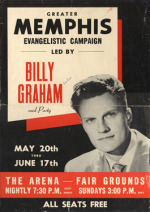
The good signs of God’s mass evangelistic movements is the soul winning; the down side is usually new schisms, new groups, new denominations being birthed rather than the movement bringing unity in the Body of Christ.  Also, with new technology comes new movements: Guttenberg’s invention of the printing press and his mass printing of the Bible ushered in the Age of Enlightenment.  Radio ushered in the movement for World Wide Evangelism, and television took Billy Graham out of large tents and placed on a World Wide stage by televising his mass evangelistic meetings. 

Now with the World Wide Web, what is next?  IChat, Skype, etc. might bring video conferencing with worship to an universal level: two or more different locations worshiping at the same time, conferencing at the same time, and being led by the same Holy Spirit which is “universal”, yet “intimate”.  Can a prophetic word given in Ireland, speak to the brethren in New Zealand, and confirmed by the brethren in the U.K. and U.S.A. at the same moment through the internet?

Is it possible that the five fold could come forth locally, nationally, and universally as the different gifting of each of the five ministers and receives from the others, but the result of this movement being “unity and maturity” into the Body of Christ, preparing the Church to be “without spot or wrinkle” for the return of the Lord?

In Jesus Christ, “all things are possible”, so Lord, my prayer is that what ever You have for the Holy Spirit to do for this century, for me as a believer, for this generation, and for the Church as a whole: Bring It On! Church, be prepared for another movement of God, orchestrated by the Holy Spirit, lifting up the name of Jesus, glorifying the Father in heaven. 

Wouldn’t We Love To Be Accountable To Those Who Serve Us?

Service/Accountability Series: Part 6 – Accountability Through Service


Instead of having the feeling that we are accountable to an individual or group who is “above” us, would we not feel more comfortable being accountable to someone who is in relationship with us as our “peers” but whom we respect?

With most bosses there is a distance, almost a self imposed alienation, because of the pyramidal hierarchy of leadership we have come to know in western civilization.  Even the westernized church has fallen for this type of leadership.  Some seminaries teach not to get close to your parishioners because you will be moved every five to eight years.  The Gospel is all about an intimate relationship made with God through Jesus Christ and what he did on the Cross.  The “family of God” is all about relationships with each other, yet the higher up in leadership one climbs in church hierarchy the more distant one becomes from God’s people.

The five fold pluralistic model I presented in my last blog breaks down these barriers of distance.  One becomes intimate friends with other people who have different points of view and passions than oneself, but are willing to use their gifts to serve you.  It is dynamic to have someone motivated about the “new birth” and the birthing process around you, someone to nurture and disciple your daily walk, someone to teach you the Logos Word, and someone to translate it into the Rhema or living Word, and even someone to guide and coordinate everyone’s gifting toward serving you!  Would not your natural response be to submit to their service?

How does this submission look like?  Basically, the giving back of your gift to impact their life causes a bonding, or a relationship, through Jesus Christ.  If you are accountable to four different points of view and passions than your own, there is a better chance of someone seeing you drifting off the mark and gracefully brining correction before there is a crisis.  Your service to them also opens their eyes to your point of view or passion bringing unity in uderstanding.

I have been taught that sin is “missing the mark”.  There are times that I have sinned, missed the mark, because I did not have a true spiritual shepherd walking me through daily tasks in my life to guide and demonstrate how to walk in faith and love.  I have missed the mark when making the Logos Word the final word through my legalistic interpretation, only to have someone theologically correct me or someone point to the Rhema or living out of the Word.  I have missed the mark because I did not have someone give me proper over sight, helping me work with the different passions, points of view, and mindsets to bring unity instead of division.  I have sinned……

There are four steps to accountability: 1) Stop, 2) Look, 3) Listen, 4) Be Obedient To What You Have Seen and Heard!  The Cross demands accountability:  Vertically – Stop, look to the Father, listen for His heartbeat, listen to His still small voice, then be obedient to the revelation that you have seen and heard.  That is how Jesus functioned as a human while on earth.  Horizontally – Stop, look to others in the Church, the Body of Christ with different points of views and passions, listen from their perspective of point of view though different from yours, then be obedient to what you have seen and have been told.

The result: Accountability at a new and greater level than the Church has experienced in centuries. A balanced, protective, growing discipleship that will continue to develop a believer into being more Christ-like, more maturing into the image of Jesus Christ.  That is the accountability that the Church needs today.

Accountability In The Church: A Five Prong Circular Model

Service/Accountability Series: Part 5 – Accountability Is A Multidirectional Street


Years ago I journaled asking the Lord what this Five Fold Ministry is all about, and he gave me a simple diagram for a simple mind (which fits me).  He showed me how each of the fivefold is to serve the other four, and in return, they serve you, thus a reciprocal back and forth of service through love.  There can be no greater love than “laying down your life for your brethren” (I John 3:16) to those who are “laying down their life for you”.  This selfless, sacrifice of giving and receiving brings an accountability the Church has not seen since its inception.

If you extend the fingers of that diagram from each of the fivefold to the other members, a five pointed star in a circle is created.  You now have an accountability structure between five different mind sets, passions, and points of view which together gives you a picture of unity.

Leadership with this model would be dynamic, for it would replace church counsels, pastor-parish committees, board of elders, strong pastor models, etc. because none of the five is “in charge”.  The Holy Spirit is in charge, and the gifting that is needed at the moment can arise, thus the wheel can rotate when needed.

For example: Hypothetically, let’s say a church with the five fold is seeking how to reach the homeless in their fair city.  Instead of using the “Homeless Evangelistic Model”, or the “Effective Intercity Church Model”, or some other model used by another congregation or famous speaker or preacher, the group actually seeks the Lord to speak to them in a time of fellowship, prayer, and worship.  The prophet speaks a prophetic word, confirmed scripturally through the teacher, affirmed by the pastor, and birthed by the evangelist with the oversight and approval of the apostle. An answer and strategy is reached in unity, and each of the five uses their gifting, strength, and passion in making the answer become reality and a success.  We just took the politics out of church politics, replacing it with sacrificial service resulting in unity.

The evangelist comes to the forefront in an effort to birth the project; then the wheel turns. The pastor comes forth with a plan to shepherd the new flock, to meet their daily needs and teach them how to walk in this new found faith, birthed by the evangelist. The wheel turns again as the teacher shares scriptures from the Word, the Bible, to build up the saints and five direction while the prophet speaks Rhema life into those words. The wheel turns again, and the apostle, who has done nothing but “seen over” this process gives his “oversight” and approval of the whole picture working together in unity and direction.

All this works only if there is trust and faith in one another.  Do we as a Church have the faith to trust the Holy Spirit to give us answers and/or direction?  Do we have the faith and trust in our fellow believers whom we have bonded with to release control of the situation and allow each of the five fold to use their gifting and passion?  Can I trust a brother or sister in the Lord who is different from me: one with an evangelistic heart and spirit to birth, one with a passion for shepherding to pastor, one with teaching talent to decipher the Logos Word, one with a prophetic heart and spirit to bring life to the Word, to the project, and to the group, and one who will over see, or see over what is happening without controlling it, only serving the others who are implementing, doing the work of the ministry? The purpose of the five fold in Ephesians 4 is “to equip the saints for the work of the service”. Doesn’t this look like “equipping” and releasing one another for the common good of the Church?

Can a model like this work in Christianity today? Only with faith and trust. Faith is the essence of things not seen but believed. Can we believe the Holy Spirit for answers and direction? Can what is not seen but revealed by the Holy Spirit be seen through the working out of that revelation through five different mindsets, points of view, and passions working in unity? Trust is letting go, not hoarding, not controlling, but freeing one to follow and serve.  Most of all, none of this will work unless we as Christians begin to “lay down our lives for the brethren.” 

Wow, faith, trust, love… write out of the book of II Corinthians. The first century Church at Corinth struggled with it, and the twenty-first century Church in my local town is still faced with it, unless we continue to ignore it!  Do we have the faith?  Can we trust?  Can we love?  That is the challenge of this blog!

Leadership Accountability

Service/Accountability Series: Part 4 – No “Blame Game”


Where is there accountability in the Church?  How often have I head from the pulpit about “those others who call themselves Christians, but … ‘They’ are false teacher who don’t believe the scriptures and do things differently than ‘us’ who are Bible believing.” No wonder there is division in the Church.  Each faction, sect, denomination, or group that claims to be Christian feels they have the truth and follow it, and the rest of the Body of Christ is in error, so they blame all of the Church’s ills on “them”, the "others".

I once heard a teaching that changed my life and mindset about leadership and the Church. The teacher explained that even though Jesus loved the Church, that is not why he died on the Cross.  He died on the Cross out of “obedience to the Father.”  When on the Cross he took 100% responsibility for your sin, my sin, the sins of the world, and he did not blame the Romans, the Jews, the Pharisees, his accusers, or you or me. Instead he proclaimed, “Father, forgive them for they know not what they do.”

Here is the key to leadership and accountability as exemplified by Jesus on the Cross:  A true leader takes 100% responsibility for that which he/she is responsible, and blames no one!

If a platoon leader and his battle group accidently kills civilians during combat, the President of the United States, the Commander-in-Chief, addresses the nation and takes responsibility for their actions and apologizes to the nation and those offended and does not spread the blame even though he was not directly involved in the incident. That is leadership!

If each leader in the Church would stand up and take 100% responsibility for the Church that he so preciously believes in and supposedly loves, and doesn’t blame every other faction of the body different from him, he would earn my respect.

If a husband takes 100% responsibility for his family and doesn’t blame the wife or the kids, he earns my respect.  Most marital arguments and divorces are nothing but “the Blame Game”, the key to winning custody and postnuptial battles in court.  If the man took 100% responsibility for his family while giving out 0% blame, he would earn his wife’s and children’s respect.  According to the Bible, men are to “love your wives, just as Christ loved the church and gave himself up for her.”  Women are to “respect” their husbands.  I contend that if men practiced this kind of love, their wives would not only willingly submit to them, but run to their arms because they would see Jesus in their husband’s life.

If an employer takes 100% responsibility for his business and doesn’t blame his employees for the company’s faults and ills, every employee would work their tail off for him and the success of the company with pride.

The Cross is all about accountability: vertically – being accountable to God by taking 100% responsibility for one’s actions and sphere of influence (John 3:16); horizontally – being accountable to fellow believers by not “blaming” them, but “laying down one’s life for their brethren” (I John 3:16).

This is the key to Church leadership and relationships within the Body of Christ.

Yo-Yo Effect – Back and Forth?

Service/Accountability Series: Part 3 – Give and Take Accountability


What is accountability in the church?  Is it to a board of elders or deacons, or to a pastor the pastor-perish committee, or to an executive council, or district of denominational board.  Most parishioners are accountable to their church’s leadership.  Most pastors are accountable to some kind of board or council, often limiting their efforts or thwarting them.  Most of these models bring conflict and division.  Church politics can be as ferocious as secular politics.  Many a believer is stung and hurt by the process and leave for another church body if they do not leave the church all together. It has been said that Christians are known to shoot their wounded!

The secular world has painted Christian leadership as the crying Jimmy Sweigarts wailing, “I have sinned”, or the fall of Jim Baker and the PTL Empire with its airconditioned doghouse, or the righteous evangelical spokesman Ted Haggard who fell to his own fleshly desires.  To whom were these men accountable? Sweigart and Baker are both back on TV influencing tens of thousands who watch them.  Haggard has made his way onto Oprah, Larry King, and other TV shows to tell his story.  Lack of accountability helped to bring their fall, and now what “new” form of accountability has been put in place if any?  How often has the downfall of a predominate pastor, teacher, or church leader brought the downfall to their empire or congregation?  How is the church to prevent this?  Can this be prevented?  What changes toward accountability has there been in the last couple decades to address this problem?

I feel the best form of accountability between brethren is the giving and taking of one’s faith, gifting, passion, desire, and point of view to another brother and receiving the same from him.  I asked a “giving” pastor of a substantially large church, “Other than your board or staff, who do you allow to give to you, who do you receive from?” And he stood silent.  If you give to those in your congregation, and you allow them to give back to you, you will build relationships, the golden nugget of Christianity.  The giving and taking is what produces “family”.  We talk about being the “family of God”, yet we keep our distant from other believers prohibiting the process.  Some seminaries even teach their future pastors not to get close to those in their congregations, as if that is not the function of a pastor.

Let’s just look at the evangelist and see how he can benefit by serving a pastor/shepherd, teacher, prophet, and apostle and receive back from them.  This give and take produces relationship, bonding, and trust.  Giving releases service; taking receives accountability from four different point of view and passions that want to serve you for your good and Christian growth.

What does an evangelist have to offer as service: 1) they are in the “birthing process” wanting to win all “the lost” to the Lord; 2) they are forerunners, for they are on the front line of birthing; 3) they also know of rebirth, for “you must be ‘born again’;” 4) They are always in the forefront of revival and restoration. A sign of revival is the lost coming to the Lord; 5) and they can “birth” new programs and new movements. This passion can strengthen and has a direct influence on the other four in the five fold.

What can an evangelist receive from the other four:  1) the encouragement of someone walking out their faith walk on a practical way from a shepherd; 2) the confidence that their theology that they are sharing in their evangelistic message is grounded in the Word of God, the Bible through a teacher; 3) the confidence of learning to hear from God in a very personal, intimate way from a prophet who can also use this gift through personal prophecy to win others to the Lord (Woman at the Well example); 4) and oversight and encouragement by an apostle who sees the big picture and encourages the evangelist to lead the “new” sheep, the “babes” to the pastor/shepherd, have them taught by the teacher, and developing an intimate spiritual growth in them through a prophet.

Although the other four may see from a different point of view, each part of view brings accountability to the evangelist that he never sees. He won’t get blind sided as many who have fallen. He also gets to serve them, and they get to serve him.  Relationships are birthed, trust is built, and a paradigm of accountability is being formed through service from one to the other and receiving of that service.  There is safety in trusting the other passions and points of view and giving to them.

A Parable of Passion and Need

Service/Accountability Series: Part 2 – Differences Can Strengthen?


A Parable:  There was a Christian brother, Ralph, who loved to serve his brethren, always taking time to invite another Christian over for a meal, slipping anonymously money to a brother in need, helping to baby-sit for a young Christian couple so they could preserve their marriage, etc.  Although his motives were pure, with time and continual giving, Ralph found himself experiencing “burn out”. Wanting to give, he found nothing left inside of him.  Recognizing his hurt and his needs, he became depressed.

One person he couldn’t understand, in fact felt repulsed by, was another Christian brother, Tim, who was rather young in the Lord, but was always evangelizing. All Ralph could see was dropped gospel tracks that now littered the street from the point where this young man had handed them to people the whole way to the end of the block.  Tim seemed not to care about what people thought of him nor the trail of litter as he would confront people openly about where they stood with their relationship to God or where they would go upon death. In fact Ralph thought Tim could be quite obnoxious.  Didn’t he know what image he portrayed of the Christian life?

In his ingrained drive to give as part of his Christian walk, Ralph decided to invite Tim to dine with him, which he accepted. While talking over the meal, the young evangelist poured out his passion for the lost; how every moment another person could die and be lost from the wonderful eternal relationship one could have with God through Jesus Christ.  When asked, what he does with young converts, he stood flabbergast. He did not know how to answer. Ralph opened up to tell this young evangelist how he loves new converts too, for his passion is to serve them and help them “walk out this new found faith in Jesus”.  “They are new babes in Jesus,” he chimed, “and I want to walk by their sides just as Jesus did with his disciples.”

“Wow,” the young evangelist gasped. “You are awesome. I wish I could do that, but I am driven to save the lost, so I do not have time to disciple them. You know what? I need you, the Body of Christ, the Church needs you, or all those babes I birthed will leave the Church and could even die. As an evangelist I do not want to see anyone perish, especially these babes in Christ.”

All of a sudden Ralph realized that he was receiving hope, encouragement, and worth from this young evangelist.  Most new Christians are enthusiastic, and an evangelistic spirit brings newness, hope, and new birth.  Ralph reached out his hand to his fellow evangelistic brother and said, “Tim, we need each other. What can I do to help you and those who you are help birthing.  What do you need personally?”

Two kindred spirits, though vastly different, were grafted that day: the newness of the new-birth that an evangelist can give and the caring that a pastoral shepherd can give. They discovered they could give from their strengths to shore up the other’s weaknesses.  This bonding of giving to one another and receiving from the other strengthened and vitalized both believers.

Who’s the Greatest?

Service/Accountability Series: Part 1 – An Overview


The disciples got into a power argument and requested Jesus to settle it. They ask if they could sit on Jesus’ right and left side in the kingdom which would demonstrate their position of power and influence in this new kingdom. This request created quite a fury, and rightfully so, because Jesus instructs his disciples that the one who “serves” will be the greatest of all in this new kingdom.  Jesus also told them that He came not to be served but to serve, and that he exemplified during his whole earthly life, even though he allowed people to serve him, like the woman anointing his feet with oil and drying it with her hair.

The Church boast that it is built on service, but is that so?  Often it has been told me to me, “If you want to be a church leader, you first have to learn or know how to serve like doing janitorial chores (implying that it will prove your servicehood). I am not sure where they got that philosophy, for I know very few Sr. Pastors who do janitorial chores if they have a large staff and building to maintain. Oh, and the janitor, who is part of the staff, gets paid only a fraction of what the Sr. Pastor makes for his “service”.  I question, “Who is doing the most service for the church?  Do the monetary rewards signal the answer to that question?”  The Church also propagates “sacrifice” so it can promote volunteerism, or “free service”.  That has also warped the minds of many church-goers. This “sacrifice” mentality has been so ingrained in Central Pennsylvania, that any service oriented job (pastor, teacher, nurse, caseworker, etc.) is expected to get lower wages than what industry prescribes because they are “service-oriented”, thus they should expect to “sacrifice” for the sake of society.

How does service work. I, as a church-goer, had the mindset that service meant to always give, give, give!  Unfortunately, I was never taught how to receive. If anyone wanted to give to me, I got religiously proud, thanked them for the thought, but I really didn’t need what they were offering me. I rejected their gift. I thwarted their attempt to serve me. I have had to repent of this attitude over the years.  Receiving from someone serving me is often as rewarding as when I serve them.  Serving one another produces a bond of friendship, a relationship with one another, and the gospel is all about relationships.

So how does this principle of “serving” affect the five fold?  It is the keystone to the success of the five fold.  It is built on the principle of serving other believers who have different mind sets, points of view, and passions than my own. I John 3:16 principle of “laying down your life for your brethren” is the key to service.  The reciprocal to all this is to allow those with different points of view and passions than my own to serve me, and I learn to accept with open arms their service of love.  This reciprocal two-prong principle of giving and receiving through service brings accountability between brothers in the kingdom of God, something that is drastically missing in the Church.

In the next several blogs we will look specifically at how to serve other believers with different giftings, points of view, mind-sets, and passions, and how to receive their service. We will hopefully discover the power of I John 3:16 at work and a new paradigm of accountability to the Body of Christ by dynamically challenging to the way the current Church thinks about leadership and accountability.

I invite you to continue with me on this journey over the next several blogs.

Who Do You “Hang Out” With?

It Is All About Relationships


Rather than getting hung up on the Five Fold as offices or even ministries, let’s look at it strictly in the terms of relationship and the need for that relationship.

It has taken me quite a time to learn that I need the Body of Christ, the Church, and the Body of Christ needs me.  I need Jesus, and Jesus needs me for my body is the Temple of the Holy Spirit and this is where His Spirit has chosen to dwell.  The Gospel of Jesus Christ is all about relationship, with Him and with His Body!

If I am to grow in the Body of Christ, I need to make wise choices as to who I “hang out” with, who will influence me, who will be with me day in and day out, who will be my close friend.  These are the personalities and characteristics that I need as a Christian around me:

I need a person who is a new babe in the Lord.  Their enthusiasm and newfound faith are contagious.  They bring life and inspiration into one’s life.  Their faith can be obnoxious at times and their doctrine a little off, but they are like little kids that just discovered Christmas and want to open up all the gifts given to them. They will invite you to play with them and their gifts!

I need a person who wants to grow in the Lord, build character, and continue the change that was started in them during their new birth in Jesus.  Doing Bible study together is enriching; their desire to want to now “walk out this walk” that the Bible outlines.  Walking this daily walk with them strengthens you and keeps your direction true.

I need a person who loves to study the Bible, read the Bible, then use those Biblical applications in walking out their own lives.  I need a person who takes “the Word, and the Word became flesh, and dwelt among us,” a person who makes Jesus alive through the Word.

I strive to be with a person who makes God real in their life, who desires an intimate relationship with Him, who not only knows of Him, but strives to really know Him. “Where two or more are together, there I AM.”  I need others who want to be in God’s Presence through corporate worship.

I need to hang around someone who “sees the big picture”, the body of Christ as a whole, who can give a healthy perspective of the Church.  A person like that builds up my faith and belief of the power of the Church in our age.

Hang out with those five type people, and one is apt to grow in the Lord, maybe even mature in the Lord. Relationships with those five are vital for a well balanced Christian walk. I encourage you to start looking for those kinds of Christian friends to “hang out” with!  The experience in heaven will be “hanging out” with the saints for eternity; let’s start the trend while on earth!

Vision Series: Part VII – “Clarity of Vision!”

“Without Vision The People Perish”


Jesus took the blind man by the hand and led him outside the village. When he had spit on the man’s eyes and put his hands on him, Jesus asked, “Do you see anything?” He looked up and said, “I see people; they look like trees walking around.” Once more Jesus put his hands on the man’s eyes. Then his eyes were opened, his sight was restored, and he saw everything clearly. (Mark 8:22-25)

When we receive the touch from Jesus things change.  Change is imminent!  Jesus criticized the Church people of His day, the Pharisees who he called blind.  In fact he said that they were the “blind leading the blind.”  In our self righteous religious attitudes it is difficult to admit that I can be blind to how the Lord really sees something versus how I think I see it.  I have heard many a preacher preach from his pulpit the warning of “there will be false teachers in the end times.”  Of course it is never he nor his bent or persuasion of Christianity. It is always “them”, the other deceived Christians in the Church.  Could we, who point the finger, be the very one who is blinded or deceived?

Often as Christians we talk the talk without walking the walk.  It has been a long time since I personally have seen someone who is a broken evangelist who is driven to win the lost at all cost.  Most churches I know have “church hoppers” from one church to another rather than winning the lost.  I have seen where a church “rejected” young unsaved youth from their youth groups because they feared they may influence their church kids rather than thinking their youth would be salt and light!

The Church founded schools, colleges, hospitals, etc. in the United States when government was small.  Today, we count on government to help fund and run these “institutions” and “social services”.  What use to be “ministries” have turned into “institutions”.  The Church has often given up its influence.  How often has the Church been blinded, losing its vision, losing its passion, losing its drive, losing its calling to win the lost, build up the body, work as different parts of the body of Christ but remember that it is part of the united Body.  When the Church vision for “ministry” is blinded, it is replaced by an “institution” mentality. That is when it needs “the second touch” of Jesus on its eyes.

Now it is easy to blame “the Church”. Church bashing by the church against the church is a common practice.  Jesus never blamed. He said, “Father forgive them, for they know not what they do.” He saw their blindness rather than their blame. Instead of the Church, we need to begin to personalize the blame, recognizing it is “I” who may be blind.  Do I see the people around me only as “people”, like human trees, stick figures, or do I allow the second touch of Jesus to clear my vision and see the passion, the drive, the desire that drives “ministry”, the act of walking the walk.

What do “I” need to do to bring clarity to my “vision” for Jesus?  How can I prevent “what I should be doing” into becoming something “institutionalized”?  How can I be broken, broken out of the box of my institutionalized beliefs and thoughts, and allow the Holy Spirit to penetrate my spirit, my being? Will I embrace new “mindsets” on what I think about the Church, or will I keep the institutional mindsets that I have always accepted.  Am I willing to say, “Lord, I see people only as trees. Touch my eyes again; clear my Vision”?

Vision Series: Part VI – “I Can See Clearly Now!”

“Without Vision The People Perish”


Jesus took the blind man by the hand and led him outside the village. When he had spit on the man’s eyes and put his hands on him, Jesus asked, “Do you see anything?” He looked up and said, “I see people; they look like trees walking around.” Once more Jesus put his hands on the man’s eyes. Then his eyes were opened, his sight was restored, and he saw everything clearly. (Mark 8:22-25)

I can remember singing in the ‘70’s, “I Can See Clearly Now The Rain Is Gone.”  I would replace “trees” for rain when reading the above scripture. Clarity of vision is so important.  As believers in Jesus Christ we need the touch of Jesus to bring us clarity in every situation.

Can you imagine a believer who cries out, “Lord, give me the heart of an evangelist.” The Lord touches him, and he begins to see people, non-churched people all around him, but his heart isn’t there yet. He confesses, “Lord, I only see people as people; touch my eyes.” His prayer is answered when he sees not just people, but people who are lost, who need Jesus, who need to hear the gospel.  He is a changed man with a changed vision.  His reluctance now becomes his passion, for his vision is now cleared.

Can you imagine a believer who sits in the pew every Sunday, smiling shaking hands, giving informal greetings but feeling cold, alone, and almost displaced and prays, “Lord, touch my eyes to see who these people really are around me.” At first he looks and sees “church people”, people who look as if they got it all together, but then the Lord touches his eyes a second time!  He is shocked seeing people who do not have it all together, but are hurting people, sick people, confused people, lonely people, a needy people. Jesus then touches the heart, and with the proper vision this believer begins to minister to those needs out of compassion which becomes his passion.

Or how about the frustrated teacher who “knows” his material, but it seems no one is interested in what he is teaching or understands the “material”.  Then the Lord touches his eyes. He begins to see those whom he teaches beyond the view of just his material, but he sees them only as “students”.  Only after a second touch, his vision clears; he realized who he teaches is more important that what he teaches.  He begins to look into the heart, the spirit, and the daily lives of what he use to think as his “students” but discovers they have become his personal friend, and pour scriptural truth through practical applications into their lives.  Teaching through walking out his lessons with them in their daily lives becomes his passion.

Or the believer who has learned the truth of intimate worship, that experience of being in the presence of God, through the shed blood of Jesus, led by the Holy Spirit.  During one of those intimate experiences God not only touches their spirit, but also their spiritual eyes.  They discover that God is in the midst of His people, but they are just other “believers” joining in this worship ritual. Only after a retouch by Jesus do they discover the mystery of unity of Spirit as those around worship together with this believer in Spirit and in Truth, taking corporate worship to a totally new level.  The prophetic passion has now burns in these believers’ lives.

Finally, the person who has walked the evangelistic route being ridiculed by the lost, had his pastoral heart crushed by hurt relationships, felt no one listened when he spoke and taught the Word, and has experienced an estranged, almost distant feeling when worshiping, even wondering if God was there.  He knows that what he is now seeing and feeling is not the will of God, so he stops and cries out for a touch from the Savior’s hand for clarity of vision.  When first touched, he sees the hand of God in his past experiences, but he wants a fresh touch for the now, for the future, and Jesus lays his hands back on his eyes.  Now he sees others who are doing the work he use to, but his heart is changed.  For the first time his eyes are open to see “The Big Picture”, the entire Body of Christ. Now he wants to reach out to other believers to encourage them, strengthen then, guide them, and lead them by walking by their sides, not being in front of them. The servant’s heart kicks in to selflessly giving and thinking of others in their spiritual developments. The passion of an apostle is born.

I know I have tried to do what I thought was serving the Lord, serving the Church, for most of my life, thinking I was doing the Lord’s Will until I asked Jesus to touch my eyes again, for all I saw was “non-church people” in my daily life at work and “church people” in the social circles of my life.  Wow! The second touch was dramatic: I discovered the lost; I discovered those already in the Body of Christ who were serving. A passion has now arisen in me to encourage, develop, support, lead through relationships, guide through the leading of the Holy Spirit those believers, those “brothers” and “sisters” who are in my family, the Family of God, the Body of Christ. Jesus, through His Holy Spirit, has truly opened my eyes.

Stop right now.  Ask the Lord to touch your eyes, give you vision.  He will do so.  If the vision at first isn’t entirely clear, ask for that second touch, but I warn you, that second touch will be life changing for a passion will be released in you to further the kingdom of God, in not only recognizing but also developing the body of Jesus Christ, His Church. “Lord, touch our spiritual eyes. Give us clarity of vision; give us Your vision. Amen”

Vision Series: Part V – The Apostle “Sees The Extension of Jesus Christ Today, the Church As A Whole”

The Vision of the Apostle

“Without Vision The People Perish”


One of the major premises of my study of the five fold ministry in the Church is that the five fold is not necessarily offices, but passions, or points of view.  What passion drives a person in his love in and for the Church?  Through what glasses does the believer see things? What is his vision?

If the evangelist “sees the needs” of the lost and is driven to meet their needs through Jesus Christ, and the pastor/shepherd “sees the needs” of the newborns in the Kingdom to be developed into the daily, living, likness of Jesus Christ, and the teacher “sees the need” to make the Written Word, the Logos, the Bible, a Living or Rhema Word in the daily lives of believers, and the prophet “sees the need” to bring a personal intimate relationship with God, the Father, His Son, Jesus Christ, and His Holy Spirit with mankind to bring spirituality into a practical world, then what does an Apostle “see the need” of?

There is debate in Christendom today over what is an apostle. Some debate that an Apostle had to see Jesus when he walked the earth, thus the 12.  Paul earned the right to apostolic leadership because he saw Jesus too, only this time as an extension of His now earthly Body, the Church.  Paul saw the Spirit of Jesus Christ in the midst of His People, Jew and Gentile, as he planted and established the Church outside of Israel into the then Western world.  I believe there are apostles today who “see” Jesus, His Body as revealed today, His Church.

“Seeing” the Body of Christ this way can be gut wrenching, for one has to see Jesus as a unified extension of His Body, not the many groups that divide it.  It is God’s will for an unified body, not a divided body.  Who better to “see” this revelation than a believer with apostolic “vision.”  His point of view is to “see the big picture”, not only seeing its individual parts, but its totality.  The passion of a believer with an apostolic “vision” is to bring the body of Christ together, to unify it, but also to develop the individual believer into maturity, the fullness of Jesus Christ (Eph. 4).

An apostolic vision “sees” the evangelist, the pastor/shepherd, the teacher and the prophet’s visions, their points of views, and understands their passions.  His calling is to now bring the four different visions, points of view, and passions into an understanding of serving one another and receiving from one another that brings unity into the whole Body.  No man can bring the body of Christ together, but a believer who has an apostolic “vision” understands that only the Holy Spirit can do that,  and allows the Spirit to work and move freely among the others in his work of unity.  Being apostolic, the believer can “see” what the Spirit is doing in the midst of His Body, His Congregation, His Church, but does not allow the apostolic believer to “dictate” or control how this unity is to be done.  The apostolic believer “sees the need” to be a servant to mankind, a servant to the other four visions, points of view, and passions of the five fold ministry, and to be a servant to the Father, through the shed blood of Jesus Christ, and through the leading of the Holy Spirit, all through obedience.  To have the “vision” of an apostle, one must also have the heart of a servant, for all he will do and can do is be obedient to what he “sees” and “hears” from the Holy Spirit who is drawing all men unto Him (Jesus) bringing unity to His Body, the Church. The “vision” of an apostle is servanthood to others and obedience to the Holy Spirit.