Peter And The Five Fold


Experiencing/Example Of All Five

Evangelist: Peter before Pentecost denies Jesus in the temple fulfilling personal prophecy Jesus proclaimed over him. This new transformed Peter now returns to the temple and boldly preached the evangelistic message. Acts 4 records his evangelistic dissertation. Result, 3000 join the ranks of believers.
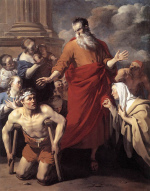
Shepherd/pastor: In the twenty-first chapter of John this same Peter who denied Jesus three times faces a resurrected Jesus who asks Peter three times, “Do you love me?” Upon Peter’s confirmation of his love, Jesus replies then, “Feed my sheep.”  Shepherding became so overwhelming that one of the first delegation of responsibilities from the Apostles to other believers is recorded in Acts 6.  The Apostles elect seven men “filled with the Holy Spirit and wisdom” to become the Church’s first official shepherds/pastors.
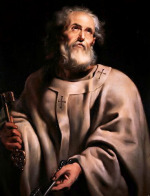
Teacher: Stick your foot in your mouth Peter, now after Pentecost, speaks with authority in the temple teaching about Jesus’ mission to earth and the implications of that event as recorded in Acts 2.  Untrained academically, without any higher educational degree, a fisherman by trade, Peter amazes the leaders in the temple because he teaches with authority.  The results: The Apostles Teaching.  The same principles taught by Peter in Acts 2 in front of the Sanhedrin are the same principles taught by Stephen in Acts 7 before his being stoned to death.

Prophet:  Peter just wanted to be a good Apostle and pray, but while praying he has a prophetic experience as recorded in Acts 10. He has a spiritual vision of sheets, pigs, unclean creatures dropping out of heaven and realizes the message of the vision, what was once unclean is now clean. This vision tested his obedience to go to the house of Cornelius, a non-Jew to proclaim the message of Jesus. The results: Breaking down the barrier between Jew and Gentile allowing all to be saved, come into the kingdom of God, and setting up the Church’s first battle recorded in Acts 15 at a council in Jerusalem, where in UNITY the Church settles the issue for all centuries.

Apostle:  Peter goes from being a brash, bumbling, big mouth, bull headed, believer in Jesus, to a man who is granted the vision of seeing the birth of the Church as a whole and its implications.  He is to proclaim the gospel, to nurture the new Church, to desire a more intimate relationship with the resurrected Jesus, and is granted the vision to see the Big Picture.  He becomes the point man of the Church in Jerusalem with the other eleven as in unity they lead this new Church in physical and spiritual growth, through joys and persecution, needs to fulfillment, pressing on in vision. The book of Acts records the “acts of the apostles”.  After Pentecost Peter and the other eleven were forced to put their faith into “Acts”-tion.

The Five Fold Point Of View

It Is Just The Way You See It!  

I truly believe that the five fold is basically passion and point of view.  When you are passionate, that passion drives you.  I was passionate to get a room in my house built from scratch to finished project. Because of that the dry walling and sanding, the tedious cutting in for painting, etc. were not so bad.  I was driven to get it done the best of my ability.


The beauty of the five fold is “vision” and “Point of View”. The way one perceives his world and his place in it is his passion and point of view. It is no different for the five fold. Let’s briefly look at these “points of view”:


The evangelist is driven by the desire to see birth and rebirth, taking the lost (those not knowing Jesus) to becoming found (finding Jesus as their Savior). General Booth of the Salvation Army is an excellent example. Winning the lost became all consuming to him, thus he founded an army to proclaim salvation to the lost. Unfortunately, when the lost is found, a new birth or rebirth proclaimed, nurturing their growth is not the evangelist’s top priority, for he/she is ready to move on and win yet more for Jesus.


The pastor/shepherd is driven to care for the sheep. Shepherds nurture, feed, and care for their sheep, which becomes a tedious task, for they teach a believer how to make their new found faith into a lifestyle. A pastor’s vision is to hear the words of Matthew 25:35-36: “I was hungry and you gave me something to eat, thirsty and you gave me drink, a stranger and you invited me in, needing clothes and you clothed me, sick and you looked after me, in prison and you came to visit me.”


A teacher’s passion is to validate the Word of God, the written Word, the Logos Word, into the lives of every believer.  They want to validate the believer’s walk with the Word.  The teacher wants to validate this new found faith and lifestyle through the Logos Word, making it a Rhema, or living Word. John 1 says the “Word became flesh and dwelt among us.” The teacher wants that word, now in Spirit, that dwells in each believer to teach that believer the truth and fulfillment of the Logos Word through faith.  Study the scriptures is powerful, but dangerous, for if it is done without the Holy Spirit, believers can become Pharisees, those who knew the Word in Jesus’ time, but opposed the truth and spirit of his teachings.


     If a prophet had his/her way, they would spend all day in worship, in reading their Bible, in intercession and prayer, in intimacy with God the Father, His Son, Jesus, and the Holy Spirit.  Adam and Eve lost their intimacy with God when they sinned, but Jesus’ death and resurrection restored the intimacy lost through sin. Sin has been conquered, death defeated.  A prophet is trying to make up for lost time. Their drive, their passion, their point of view is to be intimate with Jesus. Nothing else matters to them.


An apostle has experienced the pain of seeing the lost and the passion to win them to Christ, has experienced the over whelming passion to feed the sheep physically and spiritually to have them walk the walk in their lifestyle, has experienced the power of teaching with authority the Word of God, has experienced that intimacy with his/her God through Jesus, but unfortunately can not to all of them himself unless he wants to get burned out, which happens to many a man of God who takes on more than he can handle. An apostle’s point of view, his vision, his sight is seeing the Big Picture, the Church as a whole.  Since he cannot do it all himself, he is commissioned to encourage others who have the other four passions and “prepares God’s people for works of service, so that the body of Christ may be built up until we all reach unity in the faith and in the knowledge of the Son of God and become mature, attaining to the whole measure of the fullness of Christ.” (Eph. 4)  His job is to “see over” the Big Picture, not “oversee” it, for that is the Holy Spirit’s job, and to prepare God’s people for the works of service.

     The five fold is five distinctly different points of view that can divide the Church if not led by the Holy Spirit, or be the very tool to unify it.


Is Church A Safe Place?

Let It Be A Training Ground

As a Lay Witness Coordinator, I use to tell God’s people that the altar is a safe place.  I truly believe that!  You and God together cannot go wrong!  I ask though, “Is today’s church a safe place”?

As family, my children learned how to grow in the safety of their family and their home.  Toddlers walked into end tables when learning how to “walk”.  They often made mistakes while learning valuable lessons under the tutorage of loving parents, but is that how the family of God works in our churches?

As church people we shoot our wounded rather than offer healing, which is what the Gospel is all about.  We condemn our brethren rather than offer grace, which again is what the Gospel is all about.  We bring conflict, disagreement, and division amongst each other rather than peace and unity, which is what, supposedly, the church is all about.

Why not allow God’s people to do God’s work rather than the clergy, the paid staff?  And why not equip them so they can do it right?  Then why not release them with the church’s blessing to be free to do the work without tight controls allowing the Holy Spirit to be their guide?  Can’t we trust God’s Holy Spirit?

Is the church a safe place for believers to grow?  Can those not “up front” on the platform be free to minister during a service? To lay hands on others? To prophesy to people? To give monetary gifts secretly to help people in need? To teach or preach if gifted? And if they make mistakes along the way, is the church going to “pastor”, “nurture”, “shepherd” them?  A shepherd will stop what he is doing for one lost sheep, one sick sheep, one wondering sheep, not shoot the sheep and have lamb-chops instead.

What would it be like if a visitor had no idea who the “Sr. Pastor” is when visiting a church because everyone else is ministering out of their passion, gifting, and point of view?  Body ministry from the Body of Christ to the Body of Christ would make an awesome service, and prepare those ministering for training to do it outside the confines of our church buildings in our daily lives, but today’s church is reluctant to allow that mentality because what would happen is something went wrong? Or someone makes a mistake? Control is the best way to prevent error and mistakes, and that is what today’s church opts for instead.  I would like to challenge the church’s leadership to allow their sheep the freedom to make mistakes in order to learn. We do it in almost every other aspect of life, but we could do it in a safe environment of a loving church family in the safe confines of our church buildings.

But we don’t!  I plead to you, the church, to take the challenge, the plunge, and allow those in your Body to grow, make mistakes, but do it in the safety of a loving family in a safe place, the church.  If we cultivate that atmosphere, maybe we will actually begin to equip the “saints”, the common believers, for the work of the service.

Freeing God’s People

Allowing God's People To Minister

The church that I am currently attending has gone to a three “service” format on Sundays of 1) An Intercessory Prayer Time; 2) A Teaching time on basic doctrines; 3) and a Standard Church Service.

The first service has been a time of intercessory prayer, and praying for one another.  Last Sunday people were allowed to share personal testimonies of answered prayer, which were awesome.  One lady shared about praying for her loved ones that did not know the Lord.  I am sitting there thinking, “This woman has an evangelist’s heart”; church activate it!  Another woman, a massage therapist, shared of getting a new job with a doctor who approved that she could pray for patients while laying hands on them.  I am thinking, “Wow, a healer using the power of laying on of hands; church activate it! Another lady shared how the Lord has met her husband and her provisions by having a landlord who was actually dropping their rent.  The Emcee for the morning then said the session was over and dismissed everyone.

I sat there and pondered, “What would have happen if this occurred during the regular worship service when most of the congregation meet, the worship leader led, and the pastor preached?  What would happen if we allowed the lady with the evangelistic spirit to release that spirit on the congregation, inviting those who did not know the Lord to respond by coming forward to her, and she would personally lead them to the Lord. What would happen if we allowed the lady to release her hands and actually lay them on the sick that morning?  What would happen if the lady and her husband had people come forward, and they minister to them to break through spiritual barriers and pray for freedom in the realm of finances?

Why must the Church insist on having an ordained, clergy, evangelist to give an evangelistic sermon instead of releasing God’s people to minister?  Why must the Church have only the clergy lay hands on the laity, and not the laity on each other?  Why must people with financial crisis go to professional Christian Counseling Services, when their brethren can help out?  Is it not the Church’s job to equip the saints for the work of the service (Eph. 4) rather than just leadership doing it?

If common people, the laity, see other common people empowered with an uncommon, supernatural power of the Holy Spirit working in them, would they not want the same for themselves? Let’s begin to free God’s people, equip them, and allow them to be free to use what we have equipped them with?

Purpose of the 5 Points Of View: Part III

Church: Grow Up

Teaching 8th grade student’s gives one an unique prospective on life.  8th graders, 13 year olds, are elementary students caught in bodies that are growing up.  Their maturity has to catch up to their physical growth or they bring consternation to parents, those they influence, and themselves.

I ask them, “What does it mean to ‘grow up’?”

“Be responsible,” is their reply.

So to a Church that is divided, fights among itself, shoots its wounded rather than heals, known for division rather than unity and oneness, what word does Ephesians 4 have for it?

               GROW UP!  BE RESPONSIBLE!

The Church, like those 13 year-old adolescents has grown in size, but not in maturity. This has brought consternation with the world it is to effect and win as well as its very own being. It too needs to show responsibility in bringing unity to “grow up” in Jesus.  How is that to be done?  Through the five different passions or points of view working together to bring unity and the full measure of Jesus Christ.  As we continue these blogs, I will propose two scriptures and their effect as a keystone to bring this unity: John 3:16 & I John 3:16

Purpose of the 5 Points Of View: Part II

The Need For Such Vision

Why do we need five different passions and points of view in the body of Christ as shown in Ephesians 4? Simple, to get different perspectives to bring together the big picture of what the Body of Christ, the Church, will be and do. What is their purpose together:


  • to prepare God’s people for works of service
  • to build up the body of Christ
  • to reach unity in the faith and in the knowledge of the Son of God
  • to become mature, attaining to the whole measure of the fullness of Christ.


Why?


  • so we will no longer be infants,
  • tossed back and forth by the waves
  • blown here and there by every wind of teaching and by the cunning and craftiness of men in their deceitful scheming.

So what are we, the Church to do?

  • speak the truth in love,
  •  and GROW UP
  • into him who is the Head, that is, Christ. 


“From him the whole body, joined and held together by every supporting ligament, grows and builds itself up in love, as each part does its work.”

Purpose of the 5 Points Of View: Part I

Ephesians 4:11-16

“It was he who gave some to be apostles, some to be prophets, some to be evangelists, and some to be pastors and teachers, to prepare God’s people for works of service, so that the body of Christ may be built up until we all reach unity in the faith and in the knowledge of the Son of God and become mature, attaining to the whole measure of the fullness of Christ.

Then we will no longer be infants, tossed back and forth by the waves, and blown here and there by every wind of teaching and by the cunning and craftiness of men in their deceitful scheming.

Instead speaking the truth in love, we will in all things grow up into him who is the Head, that is, Christ.  From him the whole body, joined and held together by every supporting ligament, grows and builds itself up in love, as each part does its work.”

A Prophetic Word To Leadership

Listening To That Still Small Voice

On Sunday, the church that I attend, changed their format of services and had an early service composed of worship music and prayer.  The prayer focus was on the local leadership of the church.

I have discovered that when I am in the midst of worship and prayer, I want to listen to that small still voice rather than petition.  Sometimes I do not know what to petition for, so I listen.  I felt that I heard in my head a distinct prophetic word, went forward and asked if I could share it, which the leadership approved.

The word to this leadership group was the following, “The leadership of this church is in a season where they are to raise their hands.  They are not to drop them, for if they put their hands on anything there will be the urge to control it, so they need to keep their hands raised. The Lord does not want their handprint on the work, but wants the Holy Spirit’s imprint. I asked the Lord where in the Bible has this happened to leadership, and He said through Moses. His calling was ‘to let my people go’, but when he hit the Red Sea, he was told to raise his hands.  He was not to organize his people, tell them how or what to do, only raise his hands.  Eventually his arms got tired, but the people held them up in support.  When the last Israelite got through the column of water, they let his hands down, and the Egyptians swam while everyone rejoiced. The Lord also told me that there will be a day when you can bring your hands down to lay on people, but I warn you of the power that will be produced for healing and impartations.”

Two of the leaders approached me later to tell me the validity of the word, sending chills up their spines because of it being “right on”!  I thanked them for validating that word because it takes faith to give a word, and you want it to be accurate.

The prophetic voice can be a valuable and powerful tool to the Church for direction and encouragement.  It always parallels the written Word, the Logos Word, the Bible if it is valid.  The leadership had already met earlier to pray, seek the Lord’s will, and act on the direction they felt the Lord was leading them.  The prophetic word only confirmed to them the direction they had already taken through a vessel who knew nothing about the situation, but the Holy Spirit knew.

I would like to encourage the church, and you as a believer in Jesus Christ, to embrace the prophetic spirit and the prophetic voice.

Power of Personal Prophecy

Listening To The Still Small Voice

Years ago a lady in our church taught Communion With God by Mark Virkler which began to change the way we thought about the question, “Does God Speak Today”.  Through Bishop Bill Hamon and Christian International in Lakeland, Florida, we studied further the role of the prophet and personal prophecy, eventually training many in our congregation on how to listen to that still small voice of the Holy Spirit that resides in every believer and minister from that source of life.

I marvel at the power of Jesus with the woman at the well. How prophetically he revealed her background and his Messiahship.  Hearing the voice of God has no age limits.  Samuel heard God’s voice as a child, so did my son, who at the age of 10 participated in a prophetic presbytery with other believers.  He told one lady that the Lord told him that she was on a train that was about to run off the tracks if she did not change her ways. She was reduced to tears and repented of the lifestyle she was living, and her life was changed forever.

I began practicing the prophetic spirit when leading Lay Witness Missions, asking if I could give the benediction, or blessing, over the local church that had invited our visiting team to share that weekend. I would listen to that still small voice of God to give me insight on what blessings He wanted to pour on them, what final message he wanted them to hear about the weekend; then I would give the benediction. They were powerful.    

When we learn to listen to the still small voice of the Holy Spirit that God the Father has placed in us through Jesus Christ, we need not always “seek God’s will for our lives.”  We just need to learn how to be obedient to what revelation he has given us, and what he has instructed us to do.

The Spirit of the Prophet

     To "Know" Jesus Christ

A person who is being driven with the passion which possesses a prophet, is a person who strives, desires, yearns for intimacy with his Father, God, his Son, Jesus Christ, through His Spirit, the Holy Spirit.  Adam and Eve lost that intimacy when they sinned, but Jesus made a way out of a circumstance that seemed to have no way out, by being our Sacrificial Lamb. Because of His death, we can have a resurrected life in and through Him. Some day we will be like Him, like the Spirit of Jesus Christ, when we are with Him in heaven. A taste of that intimacy today, here on earth, is what drives the passion of a prophet. 

I know personally, when I was willing to make Jesus not only my Savior but also my Lord, the first thing that changed in my life was my desire to read the Logos Word, the Bible. I asked the Holy Spirit to bring life to passages that I had trouble understanding. I underlined any passage about salvation in red, any passage about the Holy Spirit in yellow, and soon discovered several threads than ran from Genesis through Revelation. The Logos Word, the Bible, became “alive” as the Spirit of Jesus Christ, the Holy Spirit, began to teach me these truths that I had never seen before.

I now yearned, was driven, discovered my desire to “live out” this written Logos Word by allowing the Holy Spirit to make it the Rhema or “Living Word”.  Every believer in Jesus Christ who has allowed Jesus to be their Lord and asked the Holy Spirit, the Spirit of Jesus Christ, to take total control, will attest to the fact that “living out” the Word becomes easier, if not eventually supernaturally natural.  A prophet is a person who takes this yearning, this desiring, this passion to even a higher level of intimacy, for they strive to “know Jesus” even more.  The scripture, the Logos Word, opens up in a new and living way as the Spirit of Jesus Christ is exposed through the Old Testament Patriarch, the Psalmist, and the prophets.  The same Spirit that taught those early believers on the Road to Emmaus, is the same Spirit who can teach today’s believers about Jesus’ fulfillment of all scripture, the Logos Word, the written Word, the Bible.

If teachers of the written Logos Word surrender their control to the Spirit of Jesus Christ, the Holy Spirit, their “academic” knowledge will become “living experience”.  The early followers did not just “know about” Jesus, or “know of” Jesus, but now intimately “knew” Jesus. Jesus the prophet, the teacher, the Messiah, now became a “living experience” in their lives, and the book of Acts became a reality as they “acted” out their lives through the leading of the Holy Spirit, that Spirit of Jesus Christ.

Every believer who relinquishes control to the Spirit of Jesus Christ “grows” in Jesus.  Those who want to take it to an even deeper, more intimate level allow the spirit of the prophet to manifest it self in their lives.  The Church today cannot afford NOT to allow the spirit of the prophet, the passion of the prophet, the point of view of the prophet to manifest it self! Spirit of prophecy, come.

Can We Trust The Holy Spirit?

Am I Willing To Surrender My Control?

I want religion, for religion is me working out my own walk under my own conditions where I feel that I am in control.  Relationship means I have to work with someone else and may have to share control or maybe even relinquish it.  That is scary.

I think that is why many Christians and the churches they attend are reluctant to partner with the Holy Spirit.  We say we want to partner with Jesus, have a personal relationship with Him, but we shy away from having a personal relationship with the “Spirit” of Jesus Christ!  The Holy Spirit is the Spirit of Jesus Christ.  Jesus is Spirit, and believers claim that the Spirit of Jesus is inside them when they make a personal decision to accept Jesus Christ into their hearts, but are fearful to give up, or to lose, control they cherish.

What happens if I relinquish my control to the Holy Spirit?  Will He send me to Africa to chuck spears with the natives, or to the jungles of South America where there are cannibals?  Giving up my garbage, my faults, my sins in reward for forgiveness of sin and eternal life was inviting, but giving up control to make Jesus Lord of my life is frightening?  Why should we be afraid?  Is Jesus not our Shepherd, our Banner, our Protector, and our King?  Pentecost is allowing that “Passover” Spirit of Jesus Christ, that we accepted into our heart, to become “a living, active” Spirit when we make him Lord of our lives.  The price for Passover, our salvation, was giving up our sinful life, our garbage; the price for Pentecost is giving up CONTROL! What relinquishing that control brings is LIFE!

I have several questions to you, if you are a believer in Jesus Christ:  1) What has kept you from making Jesus Lord of you life, allowing him “total control” of your life?  2) Are you willing to give that up for an intimate relationship with Him?  3) Can you trust the Holy Spirit, the Spirit if Jesus Christ? If you can’t, “why not”?  If you can, “why not” let go, relinquish that which has held you back from this intimate relationship, and begin TRUSTING!  If you are willing to truthfully answer these three questions, write the results in the comment section below so others can see that “trusting the Holy Spirit” is a safe place to be! 

The Need for Laws

The Need For The Spirit


One day in class, my 8th grade students and I discussed the need for Laws.  The first day of school, that is all they hear: the “rules of the school”, the “disciplinary rules” of each teacher, the “rules for science labs”, etc.  They have a Student Handbook that has grown in thickness over the years as new rules were added: Drugs, Drug Look-alikes, Cell Phones and their use, Cyber-Bullying, etc.  As the fashion world changes, so does the “dress code” laws. 

I explained that we only need Laws when we violate another person as a human being, when we have a negative influence or hurt him negatively.  If people did not get drunk, we would not need D.U.I., Driving Under the Influence, laws!  Cell phones are good, but misuse of them by taking pictures of partially nude friends, texting answers during a test, etc. caused the birth of new rules.  If we just followed the Golden Rule, most rules could and would be eliminated.

When Adam and Eve sinned, they violated God’s will for mankind, that of communing with the Father, thus rules had to be made and eventually hewed into stone. As each of the 10 Commandments became violated, subsections were added to the Law, and soon we had volumes of does and don’ts!  No matter how hard man has tried to keep these Laws, those Commandments, he has not been able to do it on his own, failing, proving his guilt.  Even today we try to “legislate” laws to protect the innocent, but those laws hardly ever change the nature of those who break them.

But God made a way through the death and resurrection of His Son Jesus to pay the penalty for sin, the fine, the sentence.  No longer under the Law of Sin because of His act of Redemption on our behalf, we can live the life we could not under the written Law only through the following of the Holy Spirit for whom the believers were to anticipate and wait. When the Holy Spirit fell on them at Pentecost, they began to live out a life they could not do before this event.  The Logos, written Word, now became the Rhema, the living Word, and the believers in Jesus Christ began “living out” the Word. As the book of John begins, Jesus was the “word” and dwelt among us and “lived out that word”.  Now we, His believers, can live out that word because the “living word”, the Spirit of Jesus Christ, is in us!

As I have heard somewhere, “if we have the Word without the Spirit, we will dry up; if we have the Spirit without the Word we will burn up.”  Jesus said there would be a day when we can worship in ‘spirit’, the Rhema Word, and in ‘truth’, the Logos Word. We are living in that day, even now.  We cannot survive without the Logos written Word or the Rhema living Word. Jesus “fulfilled” the Law, lived it out for He was without sin, and now has sent his precious Holy Spirit so that his believers too can live out that life. We need recognized that Jesus, the Word, the Logos, the written Word, and the Rhema, the living word, are all the same Word, the same truth, producing the same “life”!


Pentecost: The Written Becomes Alive

Bringing Life To Legalism

I saw a local church’s TV clip that was supposed to be funny.  It was titled “What To Do To Fit Into Any Church Service!”  The clip suggested things like: do not smoke during service, do not breed your pet ferrets in church, do not play a tuba while sitting in the pew, etc.  It was cute but the “DO NOT’s” rang loud and clear in my head.  That is just what most non-church people think about church; it is a place filled with a lot of “do nots”!

Pentecost in the Old Testament is called the Feast of Weeks. It celebrates when Moses received the two stone tablets on Mt. Sinai.  From 10 simple commandments hewed in stone came the Torah, the first five books of the Bible, the written Word, and the Talmud, the Jewish book to explain the Laws in the Torah.  The books of Leviticus, Numbers, and Deuteronomy are also books of Law, the “do’s” and “do nots” of the Jewish faith, which conservative Jews follow to the hilt.   Often in the Old Testament prophets would arise to warn Israel of what their sins would do only to be stoned for their unpopular revelations of righteousness. Unfortunately all but two would fell dead in the Wilderness of Sin, never entering the Promise Land. 

Pentecost in the New Testament is when the promise of the Holy Spirit came upon the Church to teach them all truth.  The written Word, the Logos, became the living Word, the Rhema.  The band of men criticized for breaking the Sabbath, not washing their hands ceremoniously at meals, eating grain from the fields, etc. when with Jesus, were now living out the Law, the Word, the Logos, that they could not do before the coming promise of the Holy Spirit.  Here too, prophets arose and functioned in the church to encourage and to keep the Church’s spiritual life healthy, so that it wouldn’t go back into legalism or apostasy, those very traps the Church found itself in when not allowing the Holy Spirit to lead it.

Today, in the five fold ministry, the prophet is a necessary component, wanting to hear the “heartbeat of the Father”, wanting to “listen to the still voice of the Holy Spirit” and be obedient to it, wanting to bring holiness and righteousness back into the Bride of Christ, the Church, guarding the Church’s “spiritual” life.  A person, driven by the passion and point of view of being a prophet, longs for intimate worship with the Father through His Son Jesus lead by His precious Holy Spirit.  This type of believer wants the written Word, the Logos Word, to be a “living Word” in his life and in the life of the Church. 

A hospital asks a patient if he/she has a “living will” incase they face a death situation.  The believer in Jesus Christ has passed from life through death to everlasting life because of the Jesus’ death on the Cross and his resurrection.  Prophets want to now know the “will of the Father” that “will” bring “life” to himself and the Church.  He wants to know the “living will” of the Father to bring “life”, the Rhema, to the Logos Word, the written Word of the Father.

As we shall see in the next series of blogs, if there ever was a time when the Church needs the passion and point of view of its believers to hear the “heartbeat of the Father” and to feel “alive” in the Word by actively living out the Word, it is today!  Join me in this prophetic adventure. 

Failing Churches!

Can This Be?

I’ve been haunted over the past 24 hours with the image I saw Sunday: a huge sanctuary in what was once considered a large denominational church with only a handful of people.  It brought back the image of the National Cathedral in Washington when I visited it, a beautiful, magnificent edifice of granite, marble, and stained glass, but hardly any people in it, a place where the sculptures of past church leaders over their tombs surpassed the live of the saints who were alive.  In the midst of architectural beauty was the absence of life.

As a public school teacher, since the 1990’s, all I have heard was the mantra about “failing schools”.  American society has learned to blame institutions for their failures. Conservative talk radio blames everything on the President, liberals, and Democrats.  People are always blaming the government.  Locally the schools are targeted as the ill of society, yet as Americans we fail to look at ourselves in a mirror, or better yet, within ourselves.

Young adults in their 20-30’s claim that they do not want to do church, or are tired of church, yet they strive for relationships.  Relationships are important to them, but they have to go elsewhere other than the church to find what they are shopping for, the consumer mentality of America.

Can we admit that maybe the church in America is failing too as an institution?  In my area of America, there is a church in almost every block of the city, and every mile in the country, yet few if any are even half full. In fact, attendance is still declining. Or is criticizing the church a “sacred cow”? As institutions, churches always criticize other churches. They have it down to a science.  I have heard it from the pulpit since my childhood how “they” aren’t following the Bible like “us”.

In the midst of our country in a “health care” battle debating if we should be taking care of the sick in this country who can not afford it, I find it hard to believe that once the church was very active in building hospitals, soup kitchens, food and clothing distribution centers, etc. Gosh, the Holy Spirit Hospital is only 30 miles from me!  We did not need the government, or capitalism, etc. when the church clothed the naked, fed the hungry, visited the sick, etc. The church, for whatever reason, has abandoned many of the institutions they have founded.  In the spirit of the critical mindset we have in American, should we also be wondering if, as an institution, the church too is failing? 

Maybe the church should not be the “scapegoat”, but we should look to and for the “Savior”, Jesus Christ, to save us, you, me, from the relationships we have allowed to slip through out fingers resulting in institutions instead.

Relationship To Religion!

Sunday School Orchestra of the early 1900's.Increase To Decrease

Several years ago I attended a Law Witness Mission at a church that once boasted a “Sunday School Orchestra” of 90 members! That was just the orchestra.  In their “Sunday School Section” there were balconies so that several classes could be held in one general area.  Today there is less than 90 members in the entire church.

Once a local church boasted of over a 1,000 who crammed into their service and even had Billy Graham in his early days preach there.  Today they are less than 200.

 Today, I attended church in a huge sanctuary that use to host hundreds on a Sunday morning, but today they have three services, two with only twenty-five each attending, and one with ninety!

So what does this say about the lasting power of large churches with great numbers in the wake of the mega-church movement?  Many questions rise instead: Why the incline?  Why couldn’t these churches maintain the numbers they had? Is church life “cyclical”?  Did the buildings that housed the masses become the albatross to maintain in later years? These are all questions needing to be asked in an age where the number of people attending a church defines their “success” to many.

New churches feature relationships when they are infants, but as churches grow in numbers, it is easily to get lost in the crowd unless there is a “pastoral”, or “shepherding” component in the church’s ministry.  Often churches that were evangelistic at birth grow quickly in numbers, wane when unable to nurture the new babes, this is why having a “shepherding” ministry is so crucial.  If we do not learn lessons from history, we are doomed to repeat it.  We need all five of the five fold ministries. We need the shepherd no matter how small or how large the congregation is.

Shepherding

     The Glue To Community

On a Dr. Phil Show recently there were women talking about today’s woman who said they need a “village”, their word for community.  Years ago one lived near parents, near to the place of their birth, in the town or community that they were raised, around people they have known most of their lives.  No necessarily so today.

Today’s generation is more transient, moving five to ten times during their adult lives, changing jobs, not staying in one career, thus creating a need to continually make new friends while hoping to stay in touch with old ones, thus the social media craze of My Space, Face Book, texting, twittering, and blogging.

What was interesting was listening to one young woman tell who comprised her village since parents and family did not live close by her: Day Care Center attendant, Public School Teacher, baby sitter, friends also with children, etc. I stopped to think, “How about the Church?”  As a kid, the church was central to my family’s social life as well as spiritual life. What has happened to create this detachment as part of an American’s life?

In terms of the “five fold”, if a pastor is an evangelist by passion, or a teacher by gifting, or a prophet, or acting as an apostle as Senior Pastor, the passion, calling, and influence of a “shepherd” is missing.  Mega-churches don’t have enough staff to facilitate their large numbers individually. The small community pastor who was a part of everyone’s life seems to be a phase of bygone days.

The Church needs their shepherds to bring the flock together, take care of the flock, lead the flock, allow the flock to graze, grow, and give. I’ve gone to a church where I felt I had to call during “office hours” to get to the pastor, and felt guilty if it was in the evening when I knew he needed to be with his family. Shepherding is a tough “calling”, because availability is a key to their service, yet it is one of the most fulfilling because of the relationships that are built for life. “Caring” is central to the “calling”, and caring becomes reciprical.

If you are fortunate enough to have a pastor, elder, leader, of fellow believer whose passion is being a “shepherd”, honor them, respect them, and take “care” of them too!  You are fortunate!  You know how shepherds keep the flock, village, community together.  The Church needs the shepherd in the five fold ministry.

Why We Need Ephesians 4

Equipping

I know of a current congregation that is losing its current pastor after growing under his leadership and becoming quite attached to his teaching style, vision, and leadership. In a recent question answer forum he instructed the congregation the procedures that would lie ahead as they seek a new pastor when he leaves.

One person asked, “Since there are other teachers in the congregation, could they fill the pulpits some Sundays.”

“I never thought of that,” was his reply. “That would be awesome. Can some one do it next week?”

During his term as Senior Pastor, he apparently did not equip the saints for the “work of the service” as for developing teachers since that was his strong suit. His in-house teachers never got to preach when he was there, why would it be awesome to let them do it now?  I am sure the next pastor will want his pulpit back.

Wouldn’t it be awesome if the saints were equipped and “doing the work of the service” and the new pastor would wonder what his role is when he arrived!  Churches offer “Discipleship” courses, but I hardly know of any that truly equip their saints to become evangelists, teachers, shepherds, prophets, or apostles for the life of the local congregation. Leadership should work themselves out of a job, not create vacuums so they are needed and “outsiders” must come in to fulfill them.  

If the next pastor isn’t a “teaching” pastor, but a true “shepherd” or an “evangelist”, will the congregation be disappointed? Often local congregational visions are those of the pastor. Emphasis and focus of ministry change with the change of a pastor.

Wouldn’t it be neat if a congregation had their own evangelist, pastor/shepherd, teacher, prophet and pastor from among their own who were birthed, nurtured, and developed by their elders.  We work hard as parents to “equip” our children with what they need to face life as adults.  Why should the leadership of the church not “equip” their “children of God” to face the future?

We need new mindsets of what we are doing as leaders.  "Reproduction" is not just birthing! Are we equipping others to replace us, and then are willing to step back or be sent out when they mature?  We need to think about that!

Pew Accountability to Leadership

The "Calling"

How accountable are we in the pew for what goes on in church?  We hire people to do the work (alias a pastor and staff).  All we need to do is show up on Sunday and sing along with them, listen to them teach, and financially support them; thus they wonder why the laity is lethargic. As long as we meet budget, everyone is happy. What would happen if the laity would be thrust into leadership instead of a professional staff?  Seems like a novel, rebellious idea, but it isn’t. It already exists, and I was at a 100th Anniversary under this system just last week.

I grew up at New Fairview Church of the Brethren where they still practice a “free ministry” of pluralistic leadership of “elders”.  They have as many as five to seven “elders” who get ordained and lead their congregation for the rest of their lives. By the way, they do not get paid, thus the “free” ministry; they do not have salaries. Who are these elders? They are magazine editors, publish school administrators, contractors, butchers, and farmers who worked their “day job” to support their family and minister in shared leadership.

How do they get these elders? They have a “calling”.  During one of these “callings” the congregation meets, and a visiting minister goes to a back room.  Each member of the congregation, one by one, goes into that room and tells him who they think would be the best man to lead them.  Every man of God who has faithfully served that congregation is in fear and trembling, for the people of their church community, of their faith, may deem them as a candidate worthy of their trust in leadership. 

It is a principle of raised leadership from within the congregation to lead that congregation as a lifetime commitment while sharing leadership and replenishing leadership as needed.  You don’t have a change of clergy or pastors every so often, but have a thread of stability of existing leadership as well as new blood with young leaders or elders. 

But can you imagine yourself one Sunday sitting in the pew during a church service, only to be placed in the chair of leadership next week?  Because of your walk with Jesus, those around you who have seen Jesus exemplified in your life now want you to share your faith walk in leading them down the path, your Road to Emmaus, with them? Under the system of most churches this cannot happen because you would have to leave your congregation to go to college, and/or seminary for several years to be trained.  The odds of coming back to your “old” congregation to be their pastor is minimal, at the least, and to be a “tent maker”, like Apostle Paul, rather than a salary is unthinkable.

But I do not have to worry: the offering plate just passed by, I sang the psalms, hymns and spiritual songs, and all I have to do is make it through the sermon now!  As Alfred E. Newman of MAD magazine fame would probably say, “When little is required, little is given.”

Worship: Part VII

Bringing In The Harvest 

Whatever the Lord has given you, give it back!

*Go Back to Part I and read the series.

Connected with every festival and feast in the Bible is some kind of harvest and wave offerings of the “first fruit” in the Temple.  It was a common practice to give back to the Lord the “first fruits”, representing their all, in the Temple in Old Testament days. 

 Because I went to a church in the country as a child, “Harvest Home” service was a big deal when you would bring things from the harvest to church as well as canned good you preserved to give to the poor, or orphanage, or rescue mission, or food bank, or other ministry.  It was a time of “giving back”, literally, the harvest of one’s garden or farm.

Many churches pray for “the harvest”. The Bible tells how the harvest is great, but the workers are few!  If we want harvests, fruits of our ministries, then maybe we should have “Harvest Home” services again, but the fruit does not have to be vegetables and garden items, but anything that the Lord has given you that year that you could give back to Him.  In other words, “true worship”.  Every Sunday could be a “harvest” Sunday, if we allow those in the congregation who are to do the reaping, and harvesting, to bring the fruits of their spiritual labors into the “storehouse”, the church, as an act of worship.

Worship: Part VI

Me Accountable?

Whatever the Lord has given you, give it back!

*Go Back to Part I and read the series.

What would happen if I, Joe Christian, felt accountable for what happened on a Sunday Morning?  Would I be prepared?  What would happen if the Sunday Service was a time of total silence unless someone came with something to give?  We, I know I, usually feel uncomfortable with silence if I know there should be noise!

Some people come Sundays to get lost in the crowd, some to “be fed”, some to be part of the “community” of believers, whatever that means.  Most come to receive for themselves, for their needs. How selfish!  Would “church attendance” drop off if every believer was accountable to give something, somehow on a Sunday morning? Probably, and we measure a church’s success, often, by the number of people who attend. How sad!

Could someone else other than the pastor or staff “hear from the Lord”? Yes, of course!  Could someone else receive “a word” and give the sermon, lesson, or teaching on a Sunday morning? Yes, of course! Could someone else have a “new song”, an original song they wrote other than the choir director, director of music, or worship leader? Yes, of course. Then why not release that potential, that power, those gifting? Could someone pray an original prayer than a staff member or a reading from a bulletin? Yes, of course.

If a congregation has a vibrant private devotional life, spiritual life can not help but arise.  What comes out of that private devotional time, can be the very catalyst for a corporate experience that is vibrant, relevant, dynamic, and powerful, for it is body ministry, for the Body from the Body.  The people in the congregation are some of the most untapped natural, or supernatural, resources a church has that needs to be released to minister to the Body and to the hurting world. 

Could a Sunday morning service be a “safe place”, for the body to practice the giftings they want to release on the world when the Great Commission becomes a reality?  Yes, of course! Then let the church get a different mindset of creating a “safe place” for body ministry to release their faith, develop their gifting and skills, and prepare themselves to be “sent out” by the laying on of hands by the Body. 

Wow, to let the Body function on a Sunday morning in its own sanctuary! What a novel idea. Really!